South Africa is not one trip. It is a country of routes.
Start Here
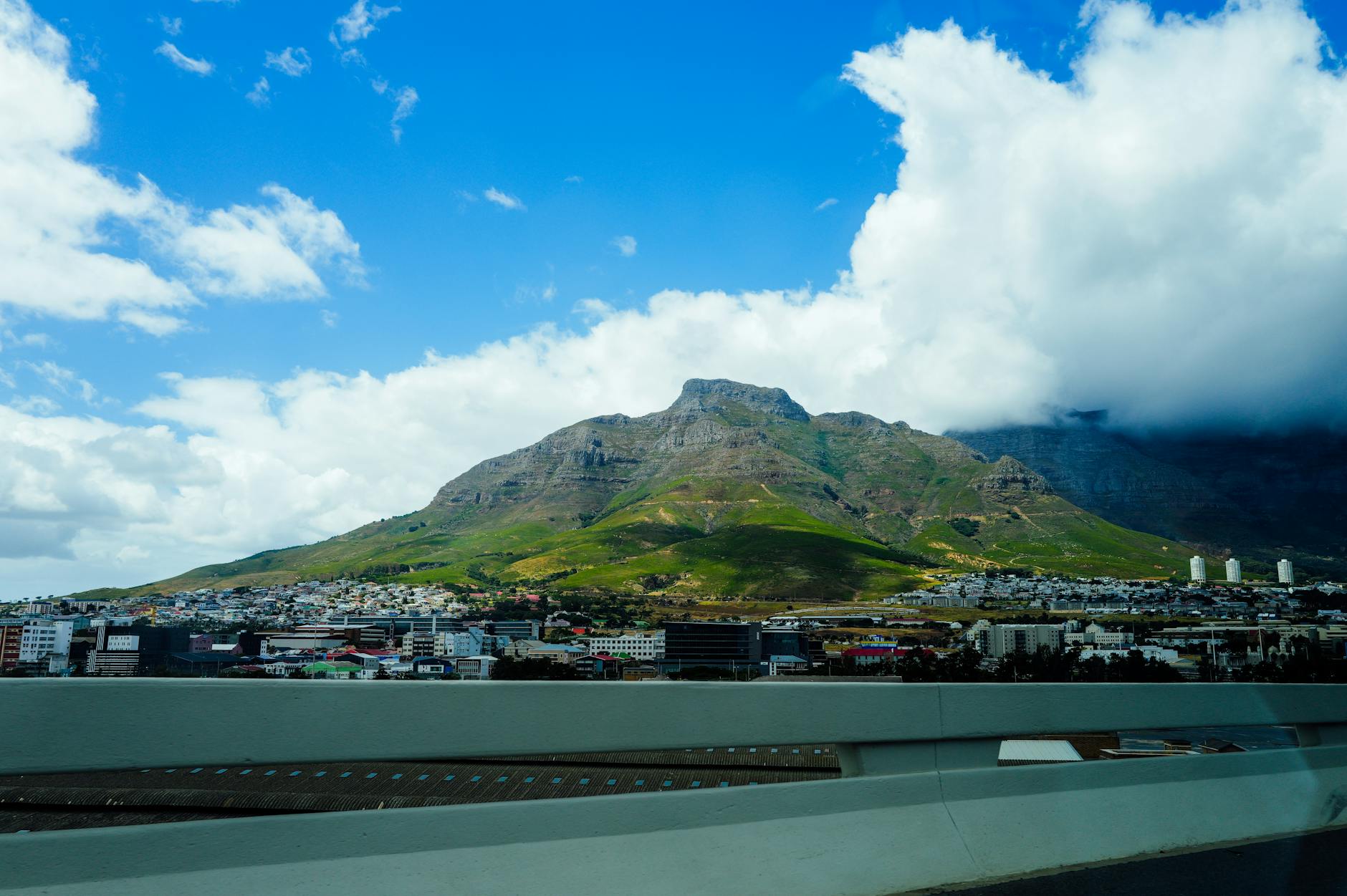
It is Cape Town wrapped around a mountain and two oceans. It is vineyards under granite ridges, penguins on a boulder-strewn beach, a whale tail off the Overberg coast, a lion crossing a gravel road at dawn in Kruger, a Johannesburg gallery speaking in the language of a complicated democracy, a Durban curry eaten beside the Indian Ocean, the red dust of the Kalahari, the escarpment views of Mpumalanga, the silence of the Karoo, the cliffs and green folds of the Drakensberg, the long self-drive rhythm of the Garden Route, and the uneasy, necessary fact that beauty and practical caution often sit side by side.
Most first-time visitors arrive with three images: Cape Town, safari, and maybe the Garden Route. Those are excellent instincts. But the country is bigger, more varied, and more logistically demanding than that starter pack suggests. South Africa rewards travelers who choose a coherent route and respect distance, season, safety, and the difference between public parks, private reserves, cities, beaches, mountains, wine country, and the bush.
A weak South Africa itinerary tries to do Cape Town, the Winelands, Garden Route, Johannesburg, Soweto, Kruger, Durban, Drakensberg, Wild Coast, and maybe Victoria Falls in one breath. A strong South Africa itinerary chooses a spine: Cape Town plus safari, Cape Town plus Garden Route, Johannesburg plus Kruger, Cape Town plus KwaZulu-Natal, or a deeper regional trip.
The country’s great advantage is variety. The planning trap is believing variety means everything is nearby.
South Africa in one sentence: South Africa is a country of spectacular contrasts—mountain, ocean, safari, wine, city, history, and wilderness—where the best trip comes from choosing one clear route, moving deliberately, and balancing wonder with practical street-smart travel.
Quick Verdict
| Question | Answer |
|---|---|
| Best for | Safari, Cape Town, mountains, wine, road trips, beaches, food, wildlife, photography, history, design, family travel, adventure, whale watching, gardens, craft, and travelers who like big contrasts in one country. |
| Not ideal for | Travelers who want seamless public transport everywhere, low-friction spontaneous logistics, very late-night urban wandering, or a country where safety can be ignored. South Africa is deeply rewarding, but it is not a casual autopilot destination. |
| Ideal first trip length | 10 to 14 days. Seven days works for Cape Town plus one safari or Cape Town plus Winelands/Garden Route. Two weeks lets the trip breathe. Three weeks allows a serious Cape + safari + KwaZulu-Natal or Northern Cape extension. |
| Best first-timer route | Cape Town + Cape Peninsula + Winelands + safari. If you want less flying and a gentler family trip, use the Garden Route plus Eastern Cape safari. If safari is the main event, use Johannesburg + Kruger/private reserve + Panorama Route, then add Cape Town. |
| Best time overall | September to November and March to May are excellent shoulder seasons for many routes. May to September is strong for Kruger-region wildlife visibility. December to February is summer beach and holiday season but busy, hot in places, and rainy in much of the interior/east. Cape Town has a Mediterranean-style winter rainfall pattern while much of the rest of the country is summer-rainfall territory. |
| Biggest planning mistake | Underestimating distance and over-trusting the map. South Africa is a large country. A “simple” Cape Town-to-Kruger combination usually means a flight, not a casual drive. |
| One thing to book early | Safari lodges and Kruger rest camps, peak-season Cape Town hotels, Robben Island tours, Table Mountain Cableway weather windows if using timed tickets, popular Winelands restaurants, and December/January coastal accommodation. |
| One thing to leave unscheduled | Weather-dependent Cape Town days. Keep flexibility for Table Mountain, Cape Peninsula, beach time, wine estates, and scenic drives. In the bush, let wildlife drives happen without trying to script sightings. |
| Best value move | Build a route that minimizes backtracking. South Africa can be affordable compared with many long-haul destinations, but bad logistics burn money fast through extra flights, transfers, and one-night stays. |
| Most important warning | Treat urban safety and road safety as real planning categories, not footnotes. Use reputable transfers, avoid isolated areas after dark, do not display wealth, keep car doors locked and windows up, and avoid night driving between regions where possible. |
The Move
For a first trip, choose one of three clean structures:
- Cape Town + Winelands + safari if you want the iconic South Africa sampler.
- Cape Town + Garden Route + Eastern Cape safari if you want a self-drive, family-friendly, malaria-conscious route.
- Johannesburg + Kruger/private reserve + Cape Town if safari is the trip’s emotional center.
Do not try to make South Africa behave like a compact European country. It is a regional-routing destination.
Who Will Love South Africa?
You will probably love South Africa if you want:
- A trip that can combine a great city, mountains, beaches, wine, wildlife, food, and history.
- Safari without giving up strong hotels, restaurants, domestic flights, and self-drive infrastructure.
- Cape Town’s mixture of urban beauty, coastline, mountain access, restaurants, design, and day trips.
- A road trip with real variety: whale coast, wine valleys, forests, lagoons, semi-desert, surf towns, farms, and safari lodges.
- Wildlife without only luxury options. South Africa has public national parks, private reserves, and malaria-free safari areas.
- A destination where modern culture and painful history are both central to understanding the place.
You may struggle with South Africa if you want:
- A country where public transit solves most travel problems.
- A trip where you can wander anywhere late at night without thinking.
- A safari where sightings are guaranteed on demand.
- A destination where every region has the same season.
- A simple “one base” vacation that covers everything.
- A place where social and economic inequality stays invisible.
South Africa is not a destination to be feared. It is a destination to be approached intelligently. The difference matters.
South Africa at a Glance
| Practical | Detail |
|---|---|
| Country | Republic of South Africa. It has nine provinces: Eastern Cape, Free State, Gauteng, KwaZulu-Natal, Limpopo, Mpumalanga, Northern Cape, North West, and Western Cape. |
| Major visitor gateways | O.R. Tambo International Airport near Johannesburg, Cape Town International Airport, King Shaka International Airport near Durban, plus regional airports such as George, Gqeberha, Hoedspruit/Eastgate, Kruger Mpumalanga International, Skukuza, Nelspruit/Mbombela, and Port Elizabeth/Gqeberha depending route. |
| Capitals | South Africa has three capital functions: Pretoria/Tshwane is administrative, Cape Town is legislative, and Bloemfontein is judicial. Most visitors think in terms of travel hubs rather than capitals. |
| Largest travel hubs | Cape Town, Johannesburg, Durban, Kruger region, Garden Route towns, Winelands towns, and key safari airports. |
| Languages | South Africa has multiple official languages. English is widely used in tourism, hotels, restaurants, signage, airports, and business, but many South Africans speak isiZulu, isiXhosa, Afrikaans, Sepedi, Setswana, Sesotho, Xitsonga, siSwati, Tshivenda, isiNdebele, South African Sign Language, or other languages in daily life. |
| Currency | South African rand, written as ZAR or R. Cards are widely used in cities, hotels, restaurants, malls, fuel stations, and lodges, but cash remains useful for tips, markets, informal parking attendants, rural stops, and small purchases. |
| Payment style | Card-first in many formal settings; carry modest cash but avoid carrying large visible amounts. Use ATMs in banks, malls, airports, or supervised areas. |
| Time zone | South Africa Standard Time, UTC+2 year-round. No daylight saving time. |
| Electricity | 230V, 50Hz. Plug type N is increasingly standard, and type M is still common. Bring a universal adapter that specifically supports South African sockets. |
| Driving side | Left. Most rental cars are right-hand drive. Manual transmission is common; reserve automatic early if needed. |
| Tap water | Generally drinkable in many major urban areas, but water quality can vary locally. Lodges and hotels will advise if bottled or filtered water is better. |
| Emergency numbers | Police: 10111. Mobile emergency number: 112. Ambulance: 10177. Local emergency numbers may vary by city/province; save hotel/lodge emergency contacts too. |
| Main planning apps | Google Maps or Apple Maps for navigation, airline apps, rideshare apps in major cities, weather apps, park/lodge booking confirmations, and load-shedding/power-status tools if relevant. |
| Official tourism sources | South African Tourism, provincial tourism boards, SANParks, Table Mountain Aerial Cableway, Robben Island Museum, Gautrain, ACSA airports, and relevant park/reserve authorities. |
First-Timer Mistake
The wrong question is, “Can I see the whole country?” The right question is, “Which South Africa do I want first: Cape, safari, coast, wine, mountains, city history, or wilderness?”
2026 Visitor Notes
Entry Rules Are Passport-Specific
South Africa’s official government guidance says visitor visas for tourism or business are generally issued for 90 days, and that some countries are exempt from visa control. The practical meaning is simple: do not rely on a generic “South Africa is visa-free” statement. Check your passport nationality, permitted stay, blank-page requirements, and whether you need a visa, eVisa, or Electronic Travel Authorisation process before departure.[1][2][3]
Many visa-exempt tourists are commonly admitted for short stays, but permitted stay and documentation are not something to improvise at the airport. Airlines may check documents before boarding.
The move: Confirm your passport has at least two blank visa pages and enough validity beyond your planned exit. Also check rules if you are entering more than once, traveling with children, coming from a yellow fever risk country, or connecting through one.
Yellow Fever Rules Matter for Some Routes
South Africa requires proof of yellow fever vaccination for travelers arriving from, or transiting for a threshold period through, countries with yellow fever transmission risk. This is not a general South Africa vaccination requirement for everyone; it depends on where you are coming from or transiting through.[4][5]
The move: If your flight connects through parts of Africa or South America, check yellow fever rules before booking. A cheaper routing can become a document problem.
Safety Advice Needs to Be Built Into the Guide, Not Tacked On
South Africa is highly traveled and deeply rewarding, but violent crime, carjackings, robberies, road incidents, and protests are real considerations. Foreign-government advisories repeatedly emphasize heightened caution, especially in major city centers, townships, isolated areas, after dark, and on roads.[6][7][8]
This does not mean “do not go.” It means a good guide must treat safety as practical routing: reputable transfers, careful neighborhood choices, no flashy valuables, no night driving between regions, locked doors, windows up, guarded parking, and common-sense movement after dark.
Load Shedding Has Improved, But Power Resilience Still Belongs in Planning
South Africa’s long-running electricity crisis affected travel for years. As of the current Eskom load-shedding status checked for this sample, Eskom indicated that national load shedding was not underway, and government communications in 2026 reported a sustained period without load shedding.[25][26]
The move: Do not overstate old information as current. check live Eskom status close to publication and advise travelers to choose hotels and lodges with backup power where reliability matters.
Safari Inventory Books Early
South Africa’s safari system is split between public national parks, private game reserves, private concessions, and independent lodges. Kruger National Park is one of the country’s flagship wildlife destinations and is large enough to require real route planning, while private reserves and lodges can sell out far ahead in peak periods.[14][17]
The move: For safari-focused trips, choose the safari region first, then build the rest of the route around flights, transfers, gate times, and lodge check-in/out rhythm.
How to Understand South Africa
South Africa becomes easier when you stop thinking of it as a list of highlights and start reading it as five overlapping travel systems:
- The Cape system: Cape Town, Cape Peninsula, Winelands, Overberg, West Coast, and Garden Route.
- The safari system: Kruger, Sabi Sand/private Greater Kruger reserves, Timbavati, Manyeleti, Madikwe, Pilanesberg, Waterberg, Eastern Cape, Addo, KwaZulu-Natal reserves, and Kalahari parks.
- The city-history system: Johannesburg, Soweto, Pretoria/Tshwane, Cape Town, Durban, Robben Island, museums, townships, Constitution Hill, District Six, and apartheid/liberation heritage.
- The mountain/coast system: Drakensberg, KwaZulu-Natal coast, Wild Coast, Garden Route, Tsitsikamma, Cederberg, and Cape mountains.
- The desert/wildland system: Karoo, Kalahari, Northern Cape, Namaqualand flowers, Richtersveld, and long-distance self-drive wilderness.
Trying to combine all five in one trip creates shallow travel. Choosing one or two produces depth.
The Country’s Visitor Geography
| Travel zone | Main role in a trip | Best for |
|---|---|---|
| Cape Town and Cape Peninsula | Iconic city base and scenery anchor | Table Mountain, beaches, Cape Point, food, design, history, day trips. |
| Cape Winelands | Wine, food, mountain towns, slower stays | Stellenbosch, Franschhoek, Paarl, fine dining, estates, scenery. |
| Overberg and Whale Coast | Coastal self-drive between Cape Town and Garden Route | Hermanus, whales, fynbos, farm towns, coastal scenery. |
| Garden Route | Classic self-drive corridor | Knysna, Plettenberg Bay, Tsitsikamma, forests, beaches, families. |
| Eastern Cape safari | Malaria-conscious safari add-on to Garden Route | Addo, private reserves, family-friendly safari, self-drive links. |
| Johannesburg and Gauteng | Urban history, art, airport hub | Apartheid history, Soweto, Constitution Hill, Cradle of Humankind, galleries. |
| Kruger and Greater Kruger | Flagship safari | Big wildlife, public park self-drive, private lodges, Panorama Route. |
| Mpumalanga escarpment | Scenic add-on to Kruger | Blyde River Canyon, God’s Window, waterfalls, Panorama Route. |
| KwaZulu-Natal | Beaches, Durban, Drakensberg, Zulu history, wildlife | Indian Ocean, curry, mountains, battlefield routes, iSimangaliso, Hluhluwe-iMfolozi. |
| Northern Cape and Kalahari | Big-sky wilderness | Namaqualand flowers, Augrabies, Kgalagadi, desert landscapes, stargazing. |
| Wild Coast | Remote coastal culture and scenery | Hiking, rural Xhosa coastline, slow travel, less polished infrastructure. |
Local Logic
South Africa is relatively easy to book and hard to improvise well. Flights, rental cars, good roads on major routes, well-developed hotels, and private lodges make it more logistically accessible than many visitors expect. But the gaps are real: city crime risk, rural distances, road hazards, regional climate differences, uneven service delivery, and route-specific health considerations.
South Africa is a country where a ten-minute planning choice can change a trip: which side of Cape Town to stay on, which road to take to Kruger, whether to fly or drive, whether to use a guide in Johannesburg, whether your safari is malaria-risk or malaria-free, whether you’re traveling in school holidays, whether you booked an automatic car, whether you planned Table Mountain with weather flexibility.
The Central Contrasts
South Africa’s narrative power comes from visible contradictions:
- Beauty vs inequality: some of the world’s most spectacular scenery sits beside sharp social and economic divides.
- Luxury vs vulnerability: world-class lodges and restaurants exist in a country where safety and infrastructure cannot be ignored.
- Wildlife vs management: safari feels wild, but the experience depends on conservation, fences, anti-poaching work, private land, community benefits, and strict park rules.
- Urban creativity vs urban risk: Johannesburg and Cape Town can be culturally thrilling and practically demanding.
- Freedom story vs unfinished history: apartheid ended formally in 1994, but its spatial and social consequences still shape daily life.
- Compact tourist routes vs huge national scale: many highlights are accessible, but the country itself is not small.
A serious South Africa guide should not flatten these contrasts into either romance or fear. It should help travelers move through the country with intelligence.
Choose Your South Africa Trip
Choose South Africa If You Want
| Trip type | Best route |
|---|---|
| First-timer classic | Cape Town + Winelands + safari, either Kruger/Greater Kruger or Eastern Cape. |
| Safari-first trip | Johannesburg + Greater Kruger/private reserve + Kruger National Park + Panorama Route, then Cape Town if time allows. |
| Self-drive coast trip | Cape Town + Overberg + Garden Route + Addo/Eastern Cape safari. |
| Food and wine trip | Cape Town + Winelands + Overberg + Garden Route, with optional Johannesburg food/art add-on. |
| Family trip | Cape Town + Winelands + Garden Route + Eastern Cape or Madikwe/Pilanesberg safari. |
| Adventure trip | Cape Town hiking + Garden Route + Tsitsikamma + Drakensberg or KwaZulu-Natal coast. |
| History and culture trip | Johannesburg/Soweto + Pretoria + Cape Town/Robben Island/District Six + battlefields or KwaZulu-Natal. |
| Beach and warm water | Durban/KwaZulu-Natal coast, iSimangaliso, northern KZN, or Mozambique add-on. |
| Flowers and desert | Cape Town + West Coast + Namaqualand + Cederberg/Northern Cape in flower season. |
| Second-time South Africa | KwaZulu-Natal, Wild Coast, Northern Cape, Kalahari, Drakensberg, or deeper Johannesburg/Cape culture. |
First-Time Visitor? Start Here
For a first trip, build around one of these:
Option A: Cape Town + Kruger/Greater Kruger
- Best if safari is central.
- Usually requires flying between Cape Town/Johannesburg/Kruger-area airports.
- Strong for couples, wildlife lovers, photographers, and luxury travelers.
- More expensive if using private lodges.
Option B: Cape Town + Garden Route + Eastern Cape safari
- Best if you want a self-drive, scenery, beaches, forests, and family-friendly pacing.
- Easier to make malaria-conscious.
- Less iconic for safari purists than Greater Kruger, but very practical.
Option C: Johannesburg + Kruger + Cape Town
- Best if flights naturally route through Johannesburg.
- Gives urban history, classic safari, and Cape Town.
- Works in 10 to 14 days if paced well.
Option D: Cape Town only, done properly
- Best for a short trip of 5 to 7 days.
- You can include Table Mountain, Cape Peninsula, Winelands, Robben Island, beaches, food, and one or two slower neighborhood days.
- Do not call it “South Africa.” Call it a Cape Town trip.
Best Time to Visit South Africa
South Africa is a year-round destination, but the best time depends heavily on the route. The country sits in the Southern Hemisphere, so summer is roughly December to February, autumn March to May, winter June to August, and spring September to November.[10]
The key climate rule is that the Western Cape receives much of its rain in winter, while most of the rest of the country is generally a summer-rainfall region.[11]
Best Overall Periods
September to November is one of the best all-around windows. Spring brings wildflowers in some regions, Cape Town becomes more reliable than winter, safari visibility remains strong in many northern areas, and weather is often more comfortable than peak summer.
March to May is another excellent window. Summer crowds thin, the Cape often has warm days, the bush can still be green, and regional travel can be pleasant before winter cold reaches the interior.
May to September is often best for Kruger-region wildlife viewing because vegetation is thinner and animals tend to concentrate around water. Nights and early mornings can be cold.
December to February is peak summer and school-holiday energy. It is excellent for many coastal trips, but Cape Town, Garden Route, and beaches can be busy and expensive. The interior and Kruger regions can be hot, humid, and rainy.
Best Time by Trip Type
| Trip type | Best months | Why |
|---|---|---|
| Cape Town and Winelands | October–April for warm weather; March–May and September–November for balance | Better outdoor dining, beaches, mountain days, vineyards, and less winter rain risk. |
| Kruger safari | May–September for classic dry-season game viewing; October–April for green season/birding/newborns | Dry season improves visibility; green season is lush and dramatic but hotter/wetter. |
| Garden Route | September–May | Mild coastal climate, good road-trip weather, family-friendly pacing. |
| Whale Coast/Hermanus | June–November, often peaking around August–October | Southern right whale season along the Cape coast. |
| Namaqualand flowers | Usually August–September, rainfall dependent | Wildflower bloom timing varies by winter rainfall and local conditions. |
| Drakensberg | April–May and September–November for hiking; winter for clear cold days; summer for green landscapes and storms | Mountain weather can shift quickly. |
| KwaZulu-Natal beach/coast | April–October often comfortable; summer is warm but humid/rainy | Indian Ocean coast is warmer than the Cape coast. |
| Kalahari/Northern Cape | April–September for cooler travel | Summer heat can be severe. |
Season-by-Season
| Season | What to expect | Best for | Watch out for |
|---|---|---|---|
| Spring: September–November | Warming weather, flowers in some regions, strong safari conditions, good Cape balance. | First-timers, flowers, safari + Cape combinations. | Wind in Cape Town, variable flower timing, early heat inland. |
| Summer: December–February | Peak holiday season, hot inland, rainy in much of the interior/east, dry and busy in the Cape. | Beaches, Cape Town, long daylight, festive energy. | Crowds, heat, thunderstorms, higher rates, busy roads. |
| Autumn: March–May | Settled weather, grape harvest atmosphere, good road trips, less pressure. | Food/wine, self-drive, first-timers, Cape + safari combos. | Cooler nights later in season, variable safari vegetation. |
| Winter: June–August | Dry in much of safari country, wet/cooler in Western Cape, cold nights inland. | Safari, whales, fireside lodges, lower Cape crowds. | Cape rain, cold mornings, mountain snow/ice in places. |
Rain Plan
South Africa is too regionally varied for one rain plan. In Cape Town, build flexibility: Table Mountain and Cape Peninsula are weather-dependent. In the bush, game drives usually continue through some weather, but roads and sightings change. In summer thunderstorm regions, early starts and afternoon flexibility help. In the Drakensberg and mountains, lightning and sudden weather are not background details; they are safety issues.
How Many Days You Need
The Honest Answer
You need 10 to 14 days for a strong first South Africa trip. Seven days can work if you choose one region plus one add-on. Three weeks lets the country open up.
| Length | What it feels like |
|---|---|
| 3–4 days | Cape Town city break or one safari lodge stay only. Do not try to “do South Africa.” |
| 5–7 days | Cape Town plus Winelands/Cape Peninsula, or Johannesburg plus Kruger, or Cape Town plus a short Eastern Cape safari. |
| 8–10 days | A real first trip: Cape Town + Winelands + safari, or Cape Town + Garden Route + Addo/Eastern Cape safari. |
| 11–14 days | Ideal first visit. Allows Cape Town, Winelands, either Garden Route or Johannesburg history, and a proper safari. |
| 15–21 days | Strong deeper trip. Add KwaZulu-Natal, Drakensberg, Wild Coast, Northern Cape, or a second safari style. |
| One month | Regional immersion: Cape + safari + KZN + Karoo/Northern Cape, or slow road travel with less flying. |
Minimum Worthwhile Trips
- Cape Town properly: 5 full days.
- Cape Town + Winelands: 6–7 days.
- Kruger/private reserve safari: 4–5 nights minimum if flying in/out; longer if self-driving.
- Garden Route: 5–7 days from Cape Town to Gqeberha/Addo without rushing.
- Cape Town + safari: 8–10 days minimum.
- Johannesburg + Kruger + Cape Town: 10–12 days.
Itinerary Philosophy
A good South Africa itinerary usually has:
- One major city base: Cape Town or Johannesburg.
- One nature/wildlife anchor: Kruger, private reserve, Eastern Cape safari, Drakensberg, Garden Route, or Kalahari.
- One slower regional pause: Winelands, Overberg, Garden Route town, lodge downtime, or coastal stay.
- Enough logistical spacing: no back-to-back one-night stays unless necessary.
The move: Treat safari days like real days, not transfers with animals attached. You usually want at least two or three nights in one safari area.
Regions and Route Families
Cape Town and the Cape Peninsula
Best for: First-timers, food, scenery, beaches, history, design, mountain access, day trips.
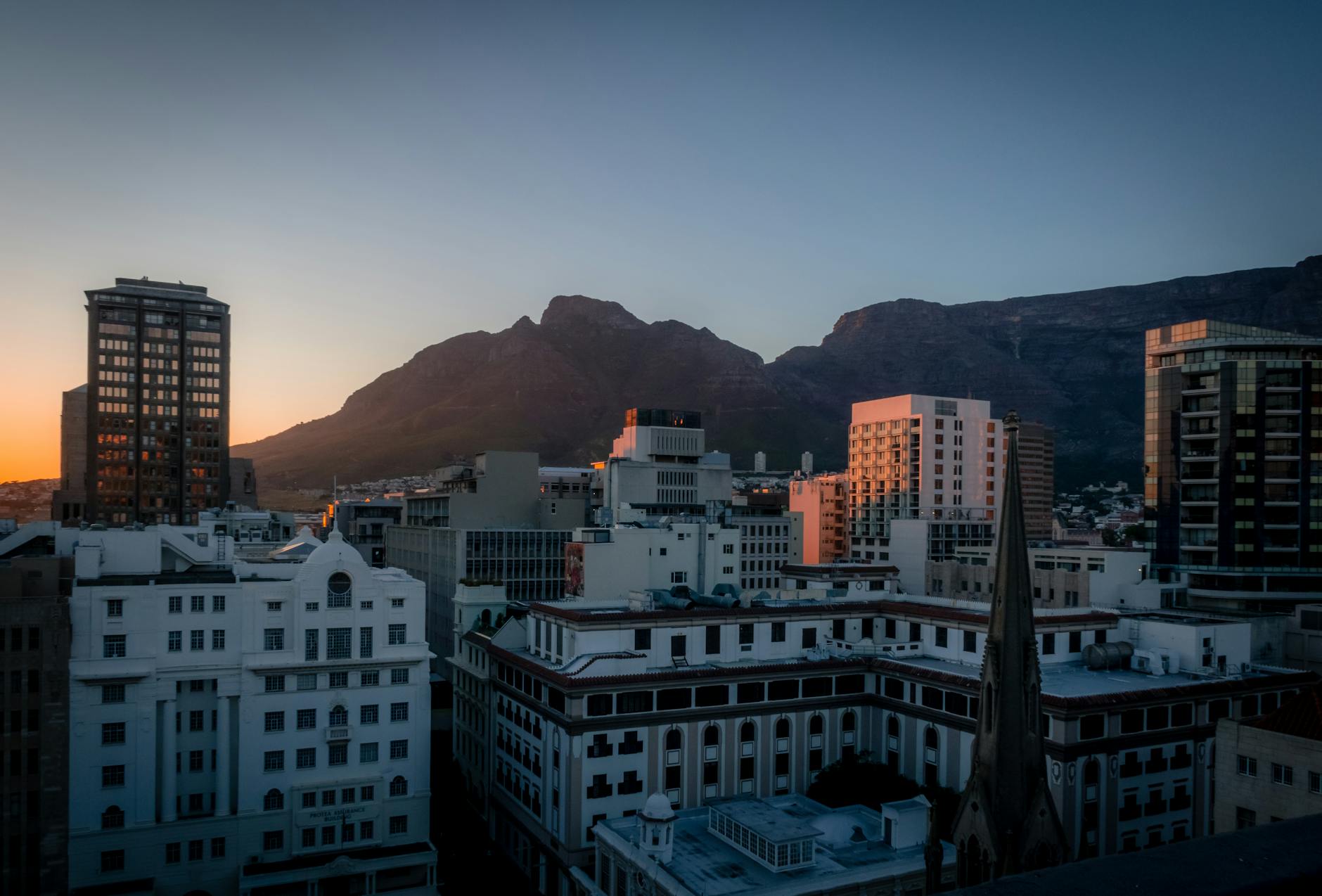
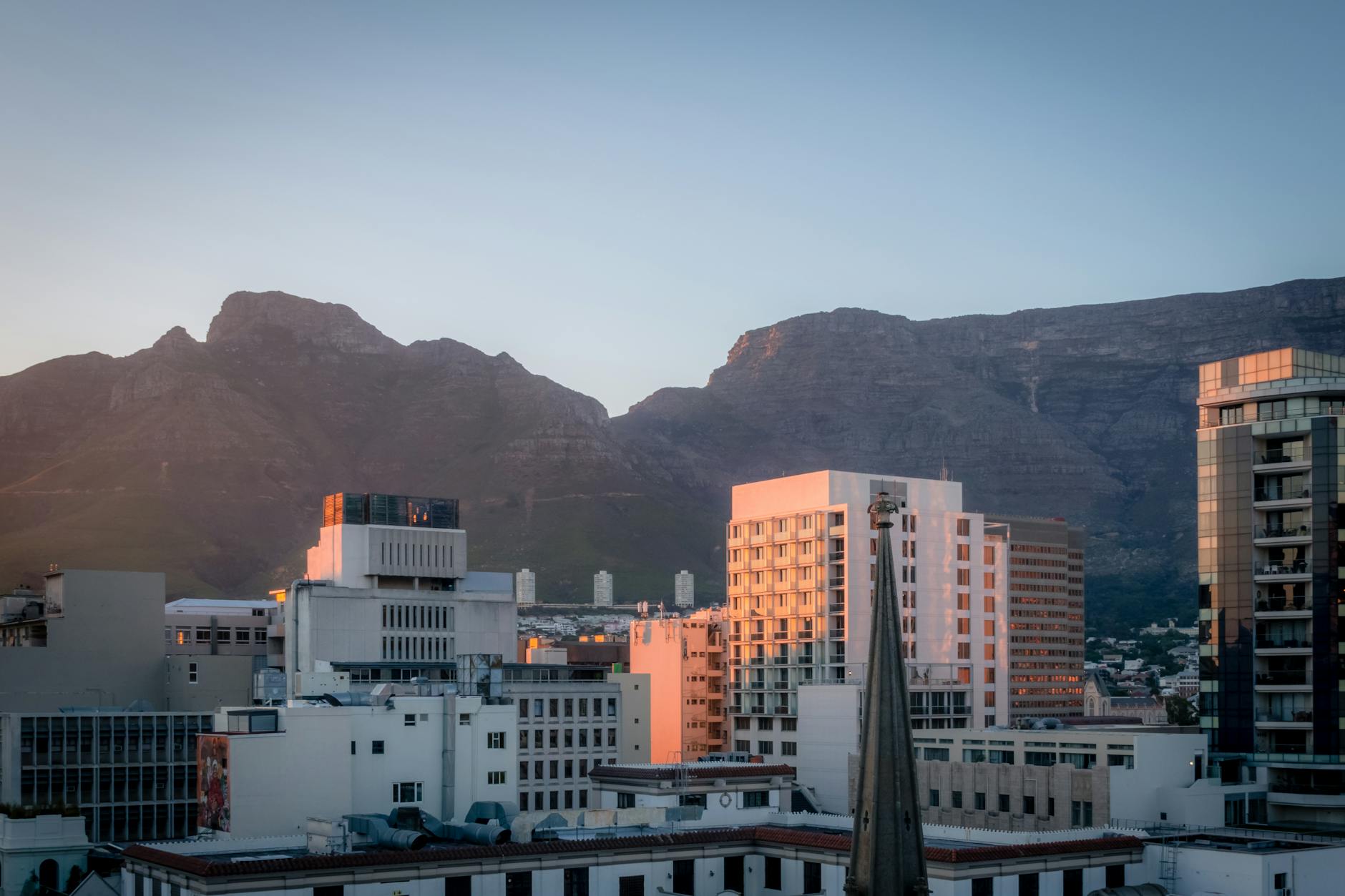
Cape Town is the country’s most obvious visitor magnet because it compresses so much into one area: Table Mountain, Atlantic beaches, Cape Point, Kirstenbosch, Robben Island, Bo-Kaap, wine country nearby, restaurants, design, harbor life, and coastal roads.
It is also a city where neighborhood choice and safety behavior matter. The safest-feeling tourist experience often comes from staying in well-managed hotel zones, using rideshare or reputable transfers after dark, and planning hikes or township visits with good guidance.
Do not miss:
- Table Mountain or Lion’s Head/Signal Hill views.
- Cape Peninsula drive: Hout Bay, Chapman’s Peak, Cape Point, Boulders Beach if penguins interest you.
- Kirstenbosch Botanical Garden.
- Robben Island if the schedule and ferry conditions work.
- District Six Museum, Iziko museums, or a well-led history walk.
- V&A Waterfront for convenience, food, ferries, and first-night ease.
- Bo-Kaap respectfully, without treating residential streets as a backdrop only.
Best base areas: V&A Waterfront, Sea Point, Green Point, Gardens, City Bowl, Camps Bay for beach/scenery, Constantia for wine/quiet, and selected central hotels with strong transport support.
Common mistake: Scheduling Table Mountain for one fixed hour and assuming the weather will cooperate.
Cape Winelands
Best for: Wine, food, mountain scenery, slow travel, couples, design hotels, day trips from Cape Town.
Stellenbosch, Franschhoek, and Paarl are the core names, but the wider Cape wine world includes Constantia, Robertson, Hemel-en-Aarde, Swartland, and smaller regions. The Winelands are not only about tasting rooms; they are about landscape, restaurants, farm stays, gardens, architecture, and long lunches.
Best for first-timers: Stellenbosch or Franschhoek.
Stay overnight if: Food/wine is a priority, you want a slower romantic trip, or you dislike day-trip rushing.
Day trip works if: You only want a tasting, lunch, and scenery.
Common mistake: Trying to visit too many estates in one day. Two or three well-chosen stops are better than five rushed tastings.
Overberg and Whale Coast
Best for: Hermanus, whale watching, coastal roads, farm towns, fynbos, shark-cage/diving discussions where ethically appropriate, and a slower link between Cape Town and the Garden Route.
Hermanus is the classic whale-watching base. The Overberg also works for travelers who want coastal scenery without immediately jumping to the Garden Route.
Best season: Whale season roughly winter to spring; general coastal travel is pleasant much of the year.
The move: Use the Overberg as a pacing tool. One night between Cape Town and the Garden Route can make the drive more rewarding.
Garden Route
Best for: Self-drive, families, forests, beaches, lagoons, light adventure, scenery, and a gentler introduction to South African road travel.
The Garden Route is not one town; it is a coastal-corridor experience. Mossel Bay, Wilderness, Knysna, Plettenberg Bay, Nature’s Valley, and Tsitsikamma all play different roles. It pairs naturally with Cape Town and an Eastern Cape safari.
Best bases:
- Wilderness: nature, beaches, slower pace.
- Knysna: lagoon, food, central location.
- Plettenberg Bay: beaches, families, polished stays.
- Tsitsikamma/Storms River: forests, adventure, suspension bridge, hiking.
Common mistake: Driving too fast through it. The Garden Route is not a highway transfer; it is a stop-and-wander region.
Eastern Cape Safari and Addo
Best for: Malaria-conscious safari routes, Garden Route add-ons, families, first safari without complex flights.
Addo Elephant National Park is run by SANParks and is one of South Africa’s major national parks. SANParks describes Addo as the country’s third-largest national park and home not only to the traditional Big Five but also the “Big 7” when its marine environment is included.[16]
Private reserves around the Eastern Cape can offer guided lodge safaris with easier logistics from Gqeberha/Port Elizabeth or the Garden Route. Safari density and wilderness feeling vary by reserve, so choose carefully.
Best for: Families, malaria-conscious travelers, Cape-to-safari self-drives.
Not ideal for: Travelers whose primary goal is the largest, wildest, most classic Greater Kruger-style safari.
Johannesburg, Soweto, Pretoria/Tshwane, and Gauteng
Best for: Apartheid history, contemporary art, food, urban culture, airport access, Cradle of Humankind, and a serious understanding of modern South Africa.
Johannesburg is not as immediately beautiful as Cape Town, but it is intellectually and culturally essential. It is the country’s economic engine and one of the best places to understand twentieth- and twenty-first-century South Africa. Constitution Hill, the Apartheid Museum, Soweto, Maboneng/Braamfontein-style creative areas, galleries, and guided city tours can be powerful.
How to do it well: Use a guide or curated transport for history-heavy areas; choose lodging in secure, practical neighborhoods; avoid casual wandering after dark; be selective and intentional.
Best bases: Rosebank, Sandton, Melrose/Illovo, parts of Parkhurst/Parktown North, or well-managed hotels suited to your itinerary.
Common mistake: Treating Johannesburg only as an airport connection. It deserves at least a day if history and contemporary culture matter.
Kruger National Park and Greater Kruger
Best for: Classic safari, wildlife, self-drive public-park experience, private lodge safaris, photography, serious wildlife trips.
Kruger is enormous and varied. A Kruger trip can be budget-friendly self-drive in SANParks rest camps, high-end private lodge safari in nearby reserves, or a combination. Greater Kruger private reserves such as Sabi Sand, Timbavati, Manyeleti, Klaserie, and private concessions offer guided game drives, often with off-road viewing in certain areas and higher guiding intensity.
Best for first safari: A private lodge for ease, or 2–4 nights in a well-chosen Kruger rest camp if you are confident self-driving.
Best for value: Kruger self-drive.
Best for luxury and leopard-focused wildlife: Private reserves, especially Sabi Sand, depending lodge and budget.
Malaria note: Kruger is a malaria-risk area. Speak with a travel-health professional and use mosquito precautions.[15][5]
Common mistake: Booking one night near Kruger and expecting a complete safari.
Panorama Route and Mpumalanga Escarpment
Best for: Blyde River Canyon, God’s Window, Bourke’s Luck Potholes, waterfalls, scenic drives, pre/post-Kruger pacing.
The Panorama Route is often paired with Kruger. It is most useful when treated as a one- or two-day scenic buffer, especially if driving between Johannesburg and the Lowveld or flying into Kruger-area airports.
Common mistake: Treating it as a quick detour after a full safari day. Scenic stops need daylight.
KwaZulu-Natal: Durban, Drakensberg, Battlefields, and iSimangaliso
Best for: Warm Indian Ocean coast, Zulu history, Durban food, Drakensberg hiking, wildlife, wetlands, battlefield history, iSimangaliso, and a less standard second route.
KwaZulu-Natal can be its own trip. Durban has a distinct Indian Ocean identity and famous food culture, especially Indian South African dishes such as bunny chow. The Drakensberg offers mountain landscapes and hiking. The battlefields region has Anglo-Zulu and Anglo-Boer War history. iSimangaliso Wetland Park is a UNESCO-listed natural area on the KwaZulu-Natal coast.[21][22]
Best for: Repeat visitors, warm-water coast, families who want Durban + game reserve + mountains, history travelers.
Common mistake: Adding KZN casually to a Cape Town + Kruger itinerary. It often deserves its own route.
Northern Cape, Namaqualand, Kalahari, and Karoo
Best for: Empty landscapes, flowers, desert light, stargazing, red dunes, slow road travel, big skies.
The Northern Cape is not a normal first-timer add-on. It rewards travelers who love space, geology, flowers, and remote road travel. Namaqualand flower season is highly weather-dependent and usually linked to winter rainfall and spring bloom timing. Kgalagadi Transfrontier Park and Augrabies Falls are major wilderness draws, but distances are long.
Best for: Photographers, desert lovers, second/third visits, longer self-drive trips.
Common mistake: Underestimating fuel, distance, heat, and remoteness.
Wild Coast
Best for: Remote coastline, hiking, rural stays, Xhosa culture, slow travel, adventure.
The Wild Coast is not the Garden Route. Infrastructure can be rougher, roads slower, and logistics more demanding. It is not ideal for a polished first South Africa trip unless you have local help or a specific guided plan.
Best for: Adventurous travelers with time and realistic expectations.
Common mistake: Expecting Garden Route ease.
Where to Base Yourself
For a First Trip
| Goal | Best base |
|---|---|
| Cape Town with easy logistics | V&A Waterfront, Green Point, Sea Point, Gardens, City Bowl. |
| Cape Town beach mood | Camps Bay, Clifton, Sea Point, Bantry Bay, or nearby Atlantic Seaboard areas. |
| Wine and food | Franschhoek, Stellenbosch, Constantia, or a Cape Town base with a Winelands day trip. |
| Garden Route | Wilderness, Knysna, Plettenberg Bay, or Storms River/Tsitsikamma depending pace. |
| Kruger private safari | Sabi Sand, Timbavati, Manyeleti, Klaserie, or private concessions depending budget and route. |
| Kruger self-drive | Southern Kruger camps for first-timers, or central/northern camps if wildlife style and drive times fit. |
| Johannesburg culture | Rosebank, Sandton, Melrose/Illovo, or a well-reviewed secure boutique hotel area. |
| Durban/KZN coast | Umhlanga, Ballito, Durban beachfront areas chosen carefully, St Lucia/iSimangaliso, or north-coast lodges. |
| Drakensberg | Central or northern Drakensberg lodges depending hiking/battlefield plans. |
Lodging Types
South Africa’s lodging landscape is broad:
- City hotels and serviced apartments.
- Boutique guesthouses.
- Wine estates and farm stays.
- Beach villas and coastal apartments.
- Safari lodges.
- SANParks rest camps and chalets.
- Private game reserve lodges.
- Backpacker lodges.
- Luxury trains and rail journeys.
- Guest farms in the Karoo and countryside.
- Family-friendly self-catering units.
Booking Mistakes
- Choosing the cheapest Cape Town area without considering safety and transport.
- Booking a safari lodge based only on wildlife photos, not reserve location, malaria risk, transfer logistics, child policy, and included game drives.
- Underbooking Cape Town in peak summer.
- Treating Franschhoek or Stellenbosch as just a two-hour detour if food/wine is a priority.
- Booking one-night safari stays.
- Assuming all “Kruger” lodges are inside Kruger National Park.
- Ignoring whether a lodge is fenced, self-drive, guided only, public park, or private reserve.
- Forgetting that check-in/out times can conflict with game-drive schedules.
Best Things to Do
1. Plan Cape Town Around Weather, Not Ego
Table Mountain is one of the great urban natural landmarks in the world. But the weather decides when it is visible and when the cableway can operate. The official cableway notes operations are weather permitting.[19]
Best for: First-timers, photography, orientation, hiking, city drama.
Time needed: 2–4 hours for cableway visit; longer if hiking.
Book ahead? Consider tickets, but keep flexibility.
The move: As soon as the mountain is clear and wind is acceptable, go. Do not save it for your final morning.
2. Drive the Cape Peninsula Slowly
Cape Peninsula days can include Chapman’s Peak Drive, Hout Bay, Noordhoek, Cape Point, Boulders Beach, Simon’s Town, Kalk Bay, and Muizenberg depending pace. It is one of the world’s great urban-adjacent scenic drives.
Best for: Scenery, coastal towns, penguins, photography, first-timers.
Time needed: Full day.
Common mistake: Trying to cram it into a late afternoon after Table Mountain.
3. Visit Robben Island With Context
Robben Island is not just a ferry excursion. It is part of South Africa’s political memory. Official Robben Island Museum tours depart from the Nelson Mandela Gateway at the V&A Waterfront, and standard tours include ferry time and island/prison interpretation.[20]
Best for: History, Nelson Mandela context, apartheid history.
Time needed: Around 3.5 to 4 hours depending boat and conditions.
Book ahead? Yes, and expect weather-related ferry disruption.
The move: Pair it with District Six Museum, Constitution Hill, or a serious history walk, not just a waterfront lunch.
4. Spend a Real Day in the Winelands
A good Winelands day is not a drinking marathon. It is a route through landscape, architecture, food, gardens, cellars, and mountains.
Best for: Food, wine, couples, design, slow travel.
Time needed: One full day minimum; two nights if serious.
Common mistake: Driving yourself if everyone wants to taste. Use a driver, guide, wine tram where appropriate, or stay overnight.
5. Go on Safari Properly
Safari is not a zoo with better scenery. It is time, patience, ecology, luck, and guiding. A three-night safari is usually much better than a one-night safari because it gives you multiple morning and evening drives.
Best for: Wildlife, photography, families, couples, once-in-a-lifetime trips.
Time needed: 3 nights minimum for most first-timers; 4–5 nights if safari is central.
Common mistake: Comparing every minute to a highlight reel. Quiet drives are part of the experience.
6. Self-Drive the Garden Route
The Garden Route is a classic because it gives accessible variety: beaches, forests, lagoons, small towns, adventure stops, and easy links to safari.
Best for: Families, self-drivers, road trippers, light adventure.
Time needed: 5–7 days from Cape Town to Eastern Cape if doing it well.
The move: Sleep in fewer places. Two or three bases beat unpacking every night.
7. Take Johannesburg Seriously
Johannesburg is where the country’s history and present feel sharpest. Constitution Hill, Soweto, the Apartheid Museum, contemporary art, food, and guided urban walks can be essential.
Best for: History, politics, art, urban culture.
Time needed: 1–3 days.
Safety note: Use trusted guides/transfers and plan areas carefully.
8. See the Drakensberg
The Drakensberg is South Africa’s mountain cathedral: cliffs, green valleys, hiking, rock art, weather, and big skies. It pairs well with KwaZulu-Natal trips.
Best for: Hiking, scenery, families, slower nature travel.
Time needed: 2–4 nights depending ambition.
Common mistake: Treating mountain weather as a minor inconvenience.
9. Visit iSimangaliso and the KZN North Coast
iSimangaliso Wetland Park is one of South Africa’s major natural heritage areas and was South Africa’s first World Heritage Site.[21] It combines wetlands, beaches, dunes, wildlife, birds, turtles, and coastal ecosystems.
Best for: Wildlife, beaches, birding, families, KZN routes.
Time needed: 2–4 nights.
Pair it with: Hluhluwe-iMfolozi, Durban, or Drakensberg.
10. Time a Whale Coast Trip
Hermanus and the Overberg coast are famous for whale watching, especially southern right whales in winter/spring.
Best for: Coastal scenery, wildlife, low-effort day/overnight from Cape Town.
Time needed: Day trip to 2 nights.
Common mistake: Expecting whales outside season or in poor viewing conditions.
11. Chase Flowers Carefully
Namaqualand wildflowers can be extraordinary, but they are weather-dependent. Timing, rainfall, sunlight, and local bloom reports matter.
Best for: Photographers, botanists, road trippers.
Time needed: Several days.
Common mistake: Booking fixed dates months ahead and assuming peak bloom will obey.
12. Use Museums and Memory Sites to Ground the Trip
South Africa’s best travel is not only scenic. District Six Museum, Apartheid Museum, Constitution Hill, Robben Island, Hector Pieterson Museum, Zeitz MOCAA, Iziko museums, local galleries, and battlefield sites all help travelers understand what they are seeing.
Best for: Context, responsible travel, deeper itineraries.
The move: Do one major history/context experience early, not at the end.
Safari Planning
Safari is often the reason people choose South Africa, and it is also the part most likely to be misunderstood.
The Big Safari Choice
| Safari type | Best for | Tradeoff |
|---|---|---|
| Kruger self-drive | Value, independence, public national park experience, wildlife lovers who like planning. | You must manage routes, camps, gates, sightings, and meals; guiding quality depends on you unless you book drives. |
| Kruger rest camps + guided drives | Budget-to-midrange safari with some structure. | Less luxurious; more vehicles around popular sightings. |
| Private Greater Kruger lodge | Ease, guiding, luxury, high wildlife focus, first safari, couples. | More expensive; experience varies by reserve and lodge. |
| Sabi Sand-style private reserve | Leopard, guiding, luxury, high-density wildlife areas. | Costly and often booked early. |
| Eastern Cape safari | Families, malaria-conscious routes, Garden Route combinations. | Often less vast-feeling than Kruger/Greater Kruger. |
| Madikwe/Pilanesberg/Waterberg | Malaria-free or malaria-conscious alternatives, especially from Johannesburg. | Some areas are costly or less convenient without transfers. |
| Kgalagadi/Kalahari | Desert wildlife, photography, remoteness, repeat visitors. | Long distances, heat, fewer first-time comforts. |
Kruger vs Private Reserve
Kruger National Park gives scale, independence, affordability, and the feeling of a large public wilderness system. You can self-drive between rest camps and choose your own pace.
Private reserves/lodges give guiding, tracking, open vehicles, included drives, better food/lodge comfort, and often a higher chance of quality sightings in less time. Some private reserves permit off-road viewing under controlled conditions; public Kruger does not operate the same way.
The move: If this is your first safari and budget allows, do 3 nights in a private lodge. If you love independence and value, do Kruger self-drive. If you have 5–7 safari nights, combine both.
How Many Safari Nights?
| Safari nights | Verdict |
|---|---|
| 1 night | Usually too short unless it is a quick add-on near an existing route. |
| 2 nights | Acceptable minimum for a lodge, but still brief. |
| 3 nights | Best first-timer minimum. Gives multiple drives and time to settle. |
| 4–5 nights | Strong if safari is a major reason for the trip. |
| 6+ nights | Excellent for photographers, wildlife lovers, mixed reserves, or slow safari. |
Safari Season
Dry season: May to September in the Kruger region is often best for visibility and game viewing because vegetation is lower and wildlife gathers near water. Mornings can be cold.
Green season: November to March/April can be lush, hot, stormy, excellent for birds, and beautiful for photography. Mosquitoes and malaria precautions matter more.
Shoulder months: April/May and September/October can be excellent transition periods.
Malaria Considerations
Kruger and parts of northeastern South Africa are malaria-risk areas. SANParks advises travelers visiting Kruger to consider chemoprophylaxis and consult a physician.[15] CDC guidance also identifies malaria considerations for South Africa by destination and traveler type.[5]
Malaria-free or lower-malaria alternatives often discussed for families include Eastern Cape reserves, Madikwe, Pilanesberg, and Waterberg, but always verify current health guidance.
Safari Ethics
Choose operators and lodges that:
- Avoid baiting or harassing wildlife.
- Limit vehicle pressure around sightings.
- Respect park speed limits and rules.
- Support conservation and local employment.
- Are transparent about captive/wildlife interaction policies.
- Do not promote cub-petting, walking with lions, or exploitative animal encounters.
Safari Packing
- Neutral clothing layers.
- Warm jacket for winter morning drives.
- Hat and sun protection.
- Binoculars.
- Camera with dust protection.
- Closed shoes.
- Light rain shell in green season.
- Insect repellent.
- Personal medications.
- Power bank.
- Small soft bag if using light aircraft transfers.
Itineraries
These itineraries are planning models, not commandments. Adjust by season, flight schedule, safety guidance, lodge availability, and traveler style.
7 Days: Cape Town + Safari Snapshot
Best for: First-timers with limited time and budget for flights.
Day 1: Arrive Cape Town. Settle in near V&A Waterfront/Sea Point/City Bowl. Easy dinner.
Day 2: Table Mountain weather window + city orientation + Bo-Kaap/District Six or Kirstenbosch.
Day 3: Cape Peninsula full-day drive.
Day 4: Winelands day trip or overnight.
Day 5: Fly to Kruger-area airport or Eastern Cape safari region. Afternoon/evening game drive if timing works.
Day 6: Full safari day.
Day 7: Morning game drive, depart.
Verdict: This works, but it is compressed. Add two or three days if possible.
10 Days: Classic Cape Town + Kruger
Day 1: Arrive Cape Town.
Day 2: Table Mountain + city context.
Day 3: Cape Peninsula.
Day 4: Winelands.
Day 5: Flexible Cape Town: Robben Island, Kirstenbosch, beaches, food, or weather backup.
Day 6: Fly to Johannesburg/Kruger-area airport. Transfer to lodge.
Days 7–8: Safari.
Day 9: Safari + Panorama Route or lodge downtime.
Day 10: Depart via Johannesburg or continue.
The move: Do not schedule a long international departure immediately after a remote lodge transfer if timing is tight.
12 Days: Cape Town + Garden Route + Eastern Cape Safari
Best for: Families, self-drivers, malaria-conscious travelers, road-trip lovers.
Day 1: Cape Town arrival.
Day 2: Table Mountain + city.
Day 3: Cape Peninsula.
Day 4: Winelands or Constantia.
Day 5: Drive to Hermanus/Overberg.
Day 6: Continue to Wilderness/Knysna.
Day 7: Garden Route: Knysna/Plett beaches, forests, lagoon.
Day 8: Tsitsikamma/Nature’s Valley.
Day 9: Drive to Addo or private Eastern Cape reserve.
Days 10–11: Safari.
Day 12: Fly out from Gqeberha or return route.
Verdict: One of the best first trips for varied scenery and easier logistics.
14 Days: Johannesburg + Kruger + Cape Town + Winelands
Best for: Serious first-timers who want history, safari, and Cape beauty.
Day 1: Arrive Johannesburg. Stay in Rosebank/Sandton area.
Day 2: Guided Johannesburg/Soweto/Constitution Hill or Apartheid Museum day.
Day 3: Fly/drive to Kruger region. Transfer to lodge or rest camp.
Days 4–6: Safari.
Day 7: Panorama Route or fly to Cape Town.
Day 8: Cape Town orientation.
Day 9: Table Mountain + city/food.
Day 10: Cape Peninsula.
Day 11: Robben Island/District Six/Kirstenbosch.
Days 12–13: Winelands overnight.
Day 14: Depart Cape Town.
The move: Use Johannesburg for context, not just transit. It changes how the rest of the country reads.
14 Days: KwaZulu-Natal Focus
Best for: Repeat visitors, families, warm-water coast, mountains, wildlife, history.
Day 1: Arrive Durban.
Day 2: Durban food/culture/coast.
Days 3–5: Drakensberg.
Days 6–7: Battlefields or Midlands Meander.
Days 8–10: Hluhluwe-iMfolozi / private KZN reserve.
Days 11–13: iSimangaliso/St Lucia/north coast.
Day 14: Depart Durban.
Verdict: A complete South Africa trip without Cape Town. Good for second-timers or travelers who want a different story.
Three Weeks: Big South Africa
Days 1–4: Johannesburg and Kruger/private reserve.
Days 5–6: Panorama Route or extra safari.
Days 7–11: Cape Town.
Days 12–13: Winelands.
Days 14–18: Garden Route and Tsitsikamma.
Days 19–21: Eastern Cape safari or Wild Coast add-on.
Alternative: Replace Garden Route/Eastern Cape with KwaZulu-Natal/Drakensberg.
Special-Interest Itineraries
Safari Lover’s South Africa
- 3 nights Sabi Sand/private Greater Kruger.
- 2 nights Kruger self-drive or different private reserve.
- 2–3 nights Madikwe/Eastern Cape/Kalahari if time and budget allow.
- Add Cape Town only if you have enough days.
Food and Wine South Africa
- Cape Town restaurants and markets.
- Constantia.
- Stellenbosch/Franschhoek/Paarl.
- Hemel-en-Aarde/Hermanus.
- Overberg farms.
- Optional Johannesburg food/art add-on.
- Optional Durban for Indian South African food.
Family South Africa
- Cape Town 4–5 nights.
- Winelands 1–2 nights with family-friendly estates.
- Garden Route 4–5 nights.
- Eastern Cape safari 3 nights.
- Avoid overloading children with long single-day drives.
History and Context South Africa
- Johannesburg/Soweto/Constitution Hill/Apartheid Museum.
- Pretoria/Tshwane or Cradle of Humankind.
- Cape Town/District Six/Robben Island.
- Battlefields in KwaZulu-Natal or liberation heritage sites.
- Add safari only if time allows without compressing the history.
Adventure South Africa
- Cape Town hiking and ocean activities.
- Cederberg or Drakensberg hiking.
- Garden Route kayaking/forest/coast.
- Tsitsikamma.
- Wild Coast guided hiking.
- Optional shark/whale experiences where ethical and seasonal.
Food and Drink
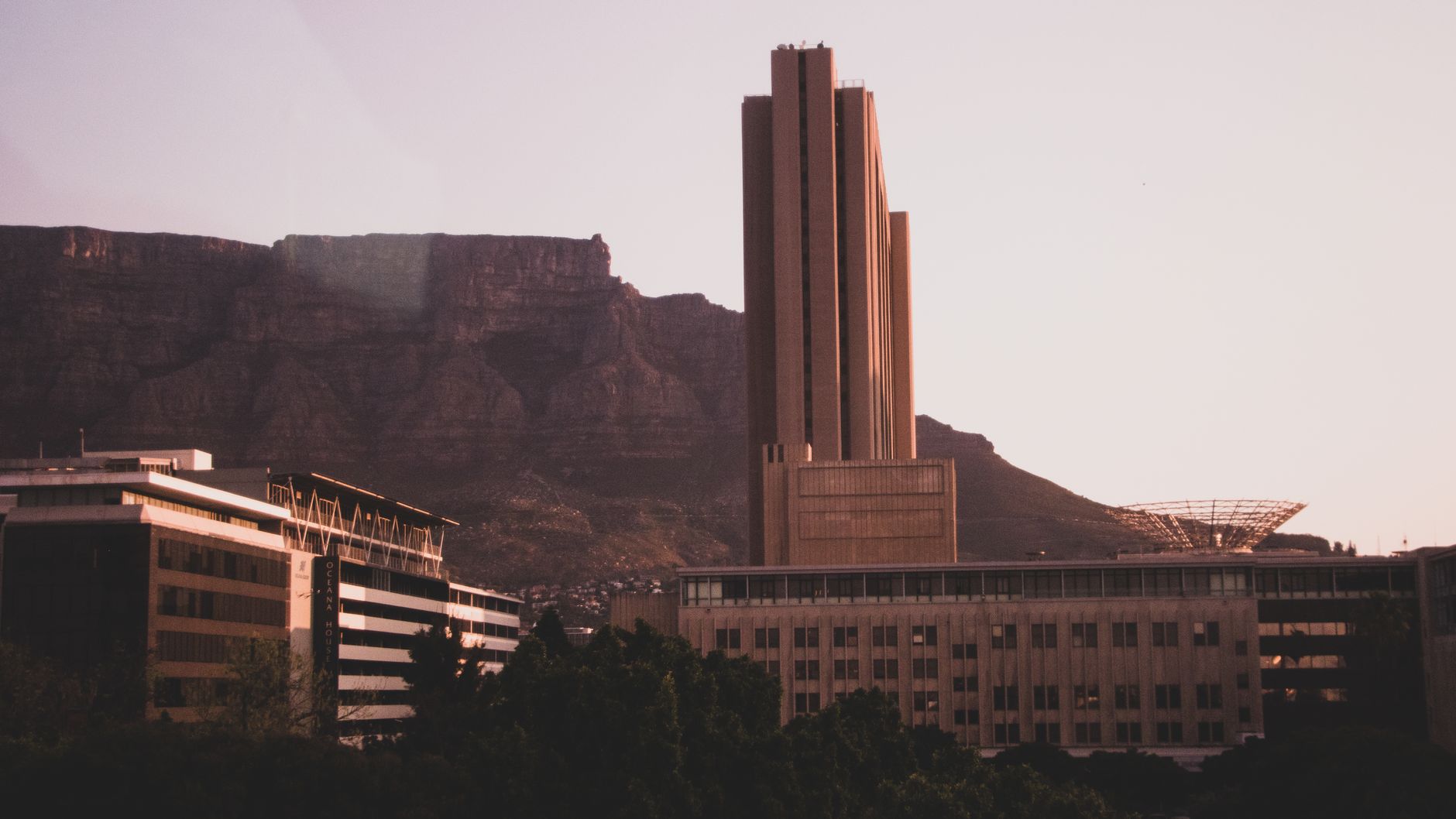
South African food is regional, layered, and better than many first-time visitors expect. It reflects Indigenous, Dutch, Malay, Indian, British, French Huguenot, African, Portuguese, Jewish, German, and contemporary global influences, plus the country’s agricultural abundance.
South African Food Identity
Expect:
- Braai culture: grilled meat, fire, social eating.
- Cape Malay food: spiced, fragrant dishes rooted in Cape Muslim communities.
- Indian South African food: especially in Durban and KwaZulu-Natal.
- Afrikaans farm cooking: stews, baked puddings, preserves, meat dishes.
- Township food: shisa nyama, kota, pap, chakalaka, street food.
- Seafood: especially in the Cape, West Coast, Garden Route, and KwaZulu-Natal.
- Wine country cuisine: modern South African fine dining and farm-to-table menus.
- Safari lodge food: from simple camp cooking to luxury multi-course meals.
What to Eat
| Dish or experience | What it is | Where to try it |
|---|---|---|
| Braai | South African barbecue, often social and meat-focused. | Lodges, homes, markets, restaurants, farm stays. |
| Biltong and droëwors | Cured/dried meat snacks. | Butcheries, markets, shops, road-trip stops. |
| Bobotie | Spiced minced meat bake with egg topping, associated with Cape Malay/Cape cooking. | Cape Town, Winelands, traditional restaurants. |
| Cape Malay curry | Mild-to-aromatic spiced curry tradition. | Cape Town, Bo-Kaap-related food tours/classes. |
| Bunny chow | Hollowed-out bread filled with curry, strongly associated with Durban Indian South African food. | Durban/KwaZulu-Natal. |
| Boerewors | Spiced sausage, often grilled. | Braais, markets, casual eateries. |
| Pap and chakalaka | Maize meal staple with spicy relish. | Township food, braai spots, casual restaurants. |
| Potjiekos | Slow-cooked stew made in a cast-iron pot. | Farm stays, lodges, traditional meals. |
| Snoek | Local fish, often smoked or grilled. | Cape coast, West Coast. |
| Malva pudding | Sweet baked pudding, often with custard. | Restaurants, lodges, home-style menus. |
| Koeksisters / koesisters | Syrupy fried pastry versions with different cultural roots and styles. | Bakeries, markets, Cape communities. |
| Rooibos | Caffeine-free herbal infusion from the Cederberg region. | Everywhere, but especially Western/Northern Cape. |
Where to Eat by Situation
| Situation | Best approach |
|---|---|
| First night in Cape Town | Stay close to your hotel; use a reputable restaurant and rideshare/transfer after dark. |
| Winelands lunch | Book ahead and make it the anchor of the day. |
| Safari lodge meals | Expect fixed schedules around drives; tell lodges dietary needs well ahead. |
| Durban food day | Build around Indian South African food, markets, curry, and beach/coast neighborhoods. |
| Road trip meals | Use farm stalls, reputable restaurants, lodge meals, and planned stops rather than random late-night roadside eating. |
| Vegetarian/vegan | Cape Town and Johannesburg are easiest; safari lodges can accommodate if told early; rural areas vary. |
| Halal | Cape Town and Durban have strong options; ask restaurants and hotels directly. |
| Gluten-free/allergies | Major cities and lodges can often help, but carry clear written explanations and confirm. |
Restaurant Practicalities
- Dinner reservations are important in Cape Town, Winelands, and high-season coastal towns.
- Tipping is customary in restaurants; 10–15% is common when service is not already included.
- Many restaurants are card-friendly, but smaller markets and informal vendors may need cash.
- Do not walk long distances after dinner in uncertain areas; use rideshare or arranged transport.
- Wine estates often require designated drivers or transfers if tasting.
Wine, Beer, Coffee, and Nightlife
Wine
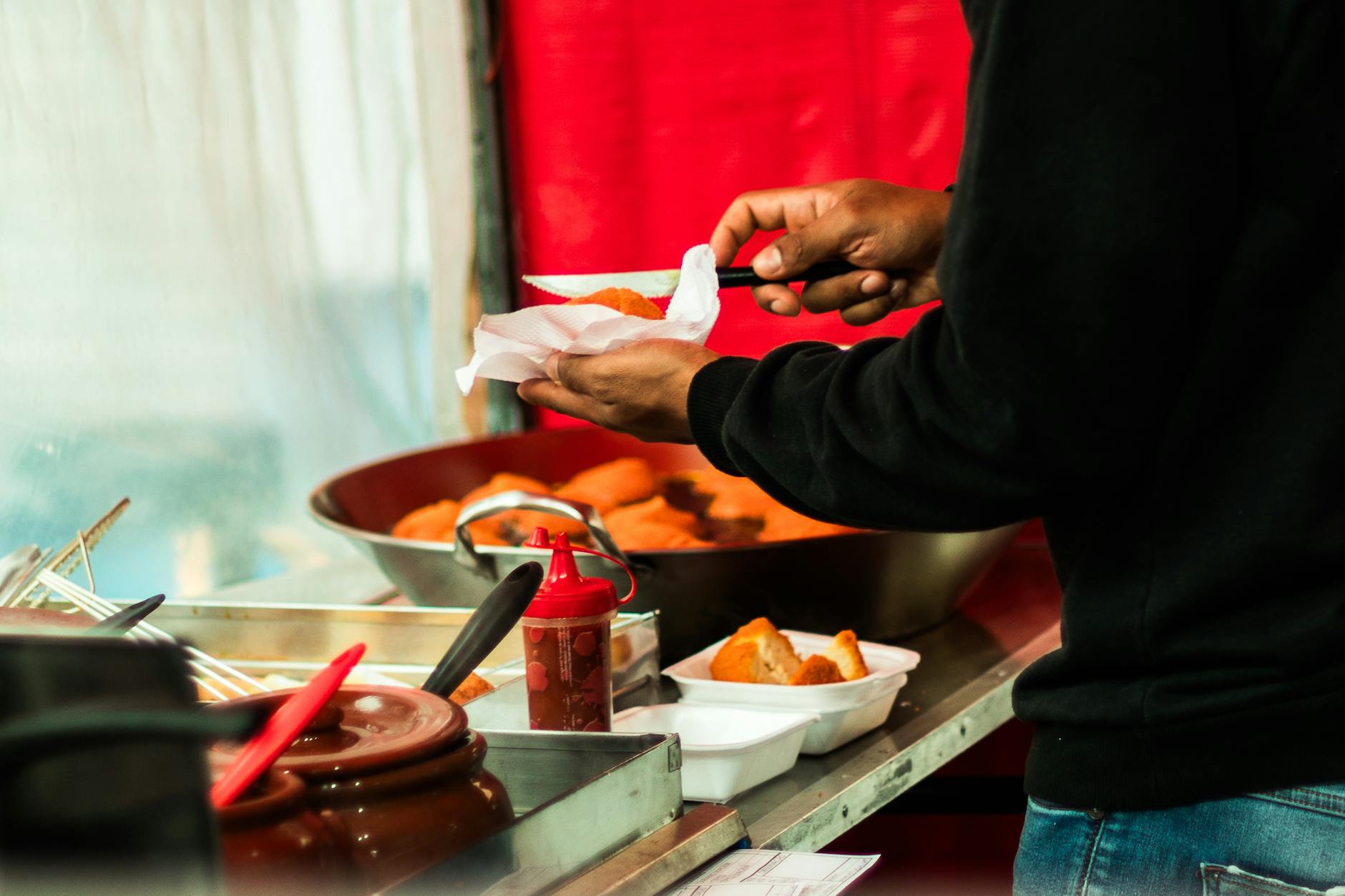
South Africa is one of the world’s great wine destinations. The Cape Winelands are the obvious core, but good wine experiences also appear in Constantia, Swartland, Hemel-en-Aarde, Robertson, Elgin, and other regions.
Best for first-timers: Stellenbosch and Franschhoek.
The move: Choose wine estates by food, scenery, varietal interest, and route—not just name recognition. Book lunch ahead.
Beer, Spirits, and Nonalcoholic Drinks
Craft beer, gin, cider, brandy, and nonalcoholic drinks are increasingly visible in cities and Winelands towns. Rooibos is an essential South African drink and a good food souvenir.
Nightlife
Cape Town, Johannesburg, and Durban have nightlife, but nightlife safety requires planning. Choose venues intentionally, avoid isolated streets, do not flash valuables, use rideshare/arranged transfers, and keep groups together.
Best nightlife zones: Cape Town central/Atlantic Seaboard areas, Johannesburg Rosebank/Sandton/Parkhurst-type areas, Durban selected beach/Umhlanga areas, and event-specific venues.
Common mistake: Assuming that a safe-feeling daytime area is equally safe for walking at midnight.
Getting Around
Arrival Airports
Airports Company South Africa operates major airports including O.R. Tambo International, Cape Town International, King Shaka International, George, Chief Dawid Stuurman/Gqeberha, and others.[23]
O.R. Tambo International Airport: Main international hub near Johannesburg. Best for Kruger connections, Johannesburg history, domestic flights, and southern Africa connections.
Cape Town International Airport: Best for Cape Town, Winelands, Garden Route connections, and many direct international routes.
King Shaka International Airport: Best for Durban and KwaZulu-Natal.
Domestic Flights
Domestic flights are often the right answer. Cape Town to Kruger, Johannesburg to Cape Town, Durban to Cape Town, and Johannesburg to coastal cities are usually flights, not road-trip segments, unless the drive itself is the point.
The move: Use flights to connect route systems, then rent cars within regions.
Rental Cars
Self-driving is common on major tourist routes, especially Cape Town, Winelands, Garden Route, Overberg, Drakensberg, and Kruger self-drive. But it comes with safety rules.
Driving tips:
- Drive on the left.
- Keep doors locked and windows up in cities.
- Avoid displaying bags/phones.
- Use secure parking.
- Avoid night driving between towns when possible.
- Keep fuel above half a tank in rural areas.
- Check tolls and road conditions.
- Do not stop for suspicious roadside situations.
- Use reputable routes even if GPS suggests a shorter road.
Foreign advisories emphasize risks from road hazards, crime, and night driving outside metropolitan areas.[6][7][9]
Gautrain
Gautrain is useful in parts of Gauteng, especially between O.R. Tambo International Airport, Sandton, Rosebank, Pretoria, and other stations, depending route and schedule. Official Gautrain schedules should be checked close to travel.[24]
Best for: Airport to Sandton/Rosebank-type transfers when schedules align.
Not enough for: Full Johannesburg tourism. You still need rideshare, guide, or private transfer.
Public Transit
Cape Town, Johannesburg, Durban, and other cities have some public transport, but most visitors rely on rideshare, private transfers, rental cars, organized tours, or lodge transfers. Minibus taxis are central to local life but not usually visitor-friendly without local knowledge.
Long-Distance Buses and Rail
Long-distance bus networks exist, but many first-time visitors will find domestic flights or self-drive easier. Passenger rail for ordinary intercity travel is not as central to tourist logistics as in Europe or Japan. Luxury trains such as Rovos Rail or The Blue Train are experiences rather than practical transport.
Safari Transfers
Safari transfers may involve:
- Scheduled lodge road transfers.
- Private transfers.
- Light aircraft flights.
- Rental car to lodge gate.
- SANParks self-drive entry.
- Airport shuttle from Hoedspruit, Skukuza, Kruger Mpumalanga, or Nelspruit/Mbombela.
Ask before booking:
- Which airport is best?
- Are transfers included?
- What arrival time is needed for afternoon game drive?
- What departure time works after morning drive?
- Are there luggage limits?
- Are children allowed on all drives?
- Is the reserve inside Kruger, private Greater Kruger, or outside the park?
Budget and Costs
South Africa can offer strong value, but costs vary wildly by safari style, season, flights, and accommodation.
Daily Budget Ranges
| Traveler type | Daily estimate, excluding international flights and high-end safari | What it means |
|---|---|---|
| Shoestring | R700–R1,500 | Hostels/backpackers, self-catering, public/shared transport where viable, few paid tours. |
| Budget comfort | R1,500–R3,000 | Guesthouses, rental car split, casual meals, selected attractions. |
| Mid-range | R3,000–R6,000 | Good hotels/guesthouses, rental car, restaurants, guided day trips, some domestic flights. |
| Comfortable | R6,000–R12,000 | Strong hotels, private transfers at times, good restaurants, guided touring, quality safari add-ons. |
| Luxury | R12,000+ | High-end hotels, private guides, premium safari lodges, business-class domestic logistics, top restaurants. |
Safari can blow up these numbers. Private lodges may price per person per night and include meals/drives, while SANParks self-drive can be far more affordable.
Cost Categories
| Item | Cost tendency |
|---|---|
| Cape Town hotels | Seasonal; expensive in peak summer and major event periods. |
| Winelands dining | Good value compared with global fine dining, but not cheap at top estates. |
| Safari lodges | Biggest cost swing. Public rest camps are far cheaper than luxury private lodges. |
| Domestic flights | Useful and often necessary; book early for popular dates. |
| Rental cars | Good value if split, but insurance and one-way fees matter. |
| Fuel/tolls | Manageable but should be budgeted for self-drive routes. |
| Guides/transfers | Worth paying for in Johannesburg, townships, wine days, and certain nature routes. |
| Activities | Table Mountain, Robben Island, guided tours, shark/whale activities, and park fees add up. |
Best Value Moves
- Choose a route that avoids backtracking.
- Use a rental car for Garden Route/Winelands, but not necessarily inside Cape Town every day.
- Do 2–3 nights public Kruger plus 2 nights private lodge if you want both value and guided luxury.
- Stay in guesthouses outside peak season.
- Book domestic flights early.
- Make lunch your splurge in the Winelands.
- Use fewer bases and better pacing.
- Avoid one-night lodge stays.
Splurge-Worthy
- A well-located Cape Town hotel or guesthouse.
- A private guide for Johannesburg or Cape Town history.
- A great Winelands lunch.
- A 3-night safari lodge.
- A scenic helicopter only if budget allows and safety/operator quality is strong.
- A private transfer after long flights.
- Binoculars for safari.
Usually Not Worth It
- Flying across the country for a one-night safari.
- Renting a car in Cape Town if you are anxious about urban driving and parking.
- Chasing too many famous wine estates.
- Overpaying for generic township tours that do not benefit communities or treat residents respectfully.
- Poorly reviewed wildlife-interaction attractions.
- Overstuffed “South Africa in 7 days” group tours.
Safety, Health, and Scams
This section should be calm, specific, and practical. South Africa is not a place to panic about; it is a place to move with good judgment.
General Safety
Foreign-government advisories consistently flag violent crime, robberies, carjackings, assault, and theft risks in South Africa, particularly in major city centers, townships, isolated areas, and after dark.[6][7][8]
Practical rules:
- Avoid walking alone at night.
- Use rideshare, hotel cars, or reputable transfers after dark.
- Keep phones and cameras discreet.
- Do not wear flashy jewelry or watches.
- Avoid ATMs on the street; use banks/malls.
- Keep car doors locked and windows up.
- Do not leave anything visible in parked cars.
- Ask locals/hotels which areas are safe on foot.
- Use guides for townships, Johannesburg history, and remote hikes when appropriate.
- Avoid demonstrations and large gatherings.
Car Safety
- Lock doors.
- Keep windows up at intersections.
- Do not stop for people trying to flag you down in isolated areas unless it is clearly safe.
- Avoid night driving between cities or rural areas.
- Use guarded parking.
- Plan fuel stops.
- Avoid routes flagged by local advice as risky, even if GPS suggests them.
- Be cautious at traffic lights, highway off-ramps, and informal parking areas.
Hiking and Mountain Safety
Cape Town, Table Mountain, Lion’s Head, Drakensberg, and other mountain areas are beautiful but can be dangerous due to weather, route exposure, crime in some areas, dehydration, and poor preparation.
Rules:
- Do not hike alone in isolated areas.
- Use popular routes or guides.
- Check weather.
- Carry water, layers, sun protection, phone battery, and offline maps.
- Start early.
- Tell someone your route.
- Do not take valuables.
Beach and Ocean Safety
- Cape waters can be cold and rough.
- Rip currents are serious.
- Swim where lifeguards operate.
- Follow shark, jellyfish, and local safety signs.
- Indian Ocean beaches around KwaZulu-Natal are warmer but still require caution.
- Do not underestimate surf.
Wildlife Safety
- Stay in vehicles where required.
- Keep distance from animals.
- Never feed wildlife.
- Do not exit vehicles in parks except designated areas.
- Follow lodge guide instructions.
- Baboons, monkeys, elephants, hippos, buffalo, and predators can all be dangerous.
Health
CDC travel-health guidance for South Africa includes routine travel-vaccine review, yellow fever entry rules for certain routes, malaria considerations for some areas, and food/water precautions.[5]
Health basics:
- Consult a travel-health professional for malaria, vaccines, and personal medications.
- Use mosquito precautions in malaria-risk areas.
- Use sun protection.
- Hydrate.
- Bring prescription medication in original packaging.
- Consider travel insurance with medical evacuation coverage, especially for safari and remote travel.
- Check tick-bite risk if hiking/bushwalking.
- Be cautious with food/water in informal or remote settings.
Malaria
Malaria risk is not countrywide. It is route-specific, especially around Kruger and northeastern areas. Get medical advice before travel if going to risk zones.
Yellow Fever
Yellow fever proof is required only for relevant arrival/transit histories; check your routing.
Scams and Annoyances
- ATM help scams.
- Fake parking attendants or aggressive tipping demands.
- Overpriced unofficial guides.
- “Closed attraction” redirect scams.
- Unclear taxi pricing.
- Tourist-shopping pressure.
- Car-window smash-and-grab.
- Fuel-station card distractions.
- Wildlife encounter marketing that hides unethical treatment.
Emergency Plan
Before you go:
- Save 10111, 112, 10177, hotel, lodge, rental-car emergency number, and travel insurer.
- Keep digital and paper passport copies.
- Share itinerary with someone.
- Know where you are staying each night.
- Have offline maps.
- Keep emergency cash/card separated.
Accessibility and Mobility
South Africa’s accessibility varies sharply by city, hotel, attraction, and region. Newer hotels, malls, airports, major museums, and some lodges can be accessible. Older guesthouses, mountain trails, beaches, game vehicles, small boats, historical sites, and rural areas can be difficult.
What Helps
- Major airports and larger hotels.
- Private transfers.
- High-end lodges with accessible rooms and adapted vehicles in some cases.
- Malls and newer urban developments.
- Custom safari operators.
What Is Hard
- Uneven sidewalks.
- Lack of step-free access in older buildings.
- Steep Cape Town terrain.
- Sand, gravel, boardwalks, and beach access.
- Safari vehicles requiring climbing.
- Remote lodges with limited medical/accessibility support.
- Robben Island/cableway/weather disruptions.
- Rural public restrooms.
Lower-Mobility Strategy
- Use Cape Town hotels with verified step-free access and easy vehicle pickup.
- Use private guides/transfers.
- Choose Winelands estates with accessible facilities.
- Ask safari lodges specific questions about vehicles, bathrooms, paths, distances, and medical support.
- Avoid itineraries that require many one-night stops.
- Build rest time into every day.
Families, Solo Travelers, LGBTQ+ Travelers, and Special Considerations
Families With Children
South Africa can be excellent for families: wildlife, beaches, penguins, cable cars, gardens, pools, farm stays, family lodges, and road-trip variety. The trick is pacing.
Best family routes:
- Cape Town + Winelands + Garden Route + Eastern Cape safari.
- Cape Town + Madikwe/Pilanesberg safari via Johannesburg.
- Cape Town + malaria-conscious safari lodge.
- Durban/KZN coast + game reserve + Drakensberg.
Family tips:
- Check safari lodge minimum ages for game drives.
- Check malaria risk.
- Avoid long driving days.
- Book family rooms early.
- Use self-catering for some meals.
- Keep Cape Town flexible for weather.
- Carry child documents if advised by official rules/airlines.
Solo Travelers
Solo travel is possible, especially in Cape Town, Johannesburg with guided days, safari lodges, and organized trips. But safety planning matters more than in some destinations.
Solo tips:
- Choose secure accommodation.
- Use rideshare/transfers at night.
- Join guided walks or small-group tours.
- Do not hike alone.
- Avoid isolated beaches/streets.
- Share itinerary.
Women Traveling Solo
Many women travel South Africa successfully, but should use heightened urban caution, especially at night, in nightlife zones, and on isolated routes. Choose reputable accommodation, avoid solo night walking, use trusted transfers, and consider guided group activities.
LGBTQ+ Travelers
South Africa has strong constitutional protections compared with many countries and visible LGBTQ+ life in major cities, especially Cape Town and Johannesburg. Social attitudes vary by area and context, so use normal discretion in conservative or rural settings.
Older Travelers
South Africa can be excellent for older travelers if logistics are smoothed: private transfers, fewer bases, accessible rooms, guided touring, and well-chosen safari lodges. Avoid overlong drives and one-night stays.
Travelers of Color
South Africa’s racial history and contemporary realities are central to the country. Black travelers, mixed-race travelers, Asian travelers, and other travelers of color may experience South Africa differently depending background, accent, nationality, and setting. A good guide should not assume a single traveler experience. Guided history and cultural context can be especially valuable.
Jewish, Muslim, Hindu, Christian, and Other Religious Travelers
Major cities offer diverse religious services and food options. Cape Town and Durban are especially relevant for Muslim and Indian diaspora food/culture, respectively. Kosher and halal options exist in major cities but require planning. Rural and safari areas need advance dietary communication.
Culture, History, and Context
Short History for Travelers
South Africa’s visitor experience is inseparable from history.
The region has deep human history, including some of the world’s most important hominin fossil sites. Khoisan peoples, Bantu-speaking communities, complex kingdoms, pastoralists, farmers, traders, and many distinct cultures shaped the land long before European colonization.
In the seventeenth century, Dutch settlement at the Cape developed into a colonial society tied to trade, slavery, land dispossession, and frontier expansion. British colonial rule later reshaped the Cape and broader region. Nineteenth-century conflicts involved African kingdoms, Boer republics, British imperial power, mineral wealth, land, labor, and sovereignty. Diamonds and gold transformed the economy and helped create Johannesburg.
The twentieth century brought formal apartheid: a state system of racial classification, segregation, forced removals, disenfranchisement, and repression. Resistance movements, including the African National Congress and many others, fought apartheid through political, legal, cultural, labor, underground, and international campaigns. Nelson Mandela’s imprisonment on Robben Island became globally symbolic, but the liberation struggle involved many people and communities.
In 1994, South Africa held its first democratic elections. The country’s modern identity is shaped by hope, constitutional democracy, cultural creativity, inequality, corruption debates, land questions, service delivery, migration, crime, and the unfinished work of justice.
A good trip should include beauty and context. Cape Town without District Six/Robben Island, Johannesburg without apartheid/liberation history, safari without conservation/community context, and Winelands without labor/land awareness all become too thin.
Cultural Norms
- Greet people politely.
- Tipping matters in restaurants, guiding, parking, and hospitality contexts.
- Do not photograph people as “local color” without consent.
- Be sensitive around townships, poverty, and informal settlements.
- Do not enter rural or township communities with voyeuristic intent.
- Understand that “African,” “Coloured,” “Indian,” “white,” and other identity terms have specific South African historical and social contexts.
- Avoid simplistic political takes after two days in the country.
- Listen more than you pronounce judgment.
Museums and Context Sites
| Site | Best for |
|---|---|
| Robben Island | Political imprisonment, Nelson Mandela, anti-apartheid history. |
| District Six Museum | Forced removals and Cape Town memory. |
| Apartheid Museum | Systemic apartheid history, Johannesburg context. |
| Constitution Hill | Law, incarceration, democracy, constitutionalism. |
| Hector Pieterson Museum | Soweto uprising and youth resistance. |
| Cradle of Humankind / Maropeng / Sterkfontein | Human origins, fossil history. |
| Zeitz MOCAA | Contemporary African art. |
| Iziko museums | Cape history, art, natural history. |
| Battlefields KZN | Anglo-Zulu and Anglo-Boer War history. |
UNESCO World Heritage Sites
UNESCO lists multiple World Heritage properties in South Africa, including the Fossil Hominid Sites of South Africa, Robben Island, Maloti-Drakensberg Park, Mapungubwe Cultural Landscape, Cape Floral Region Protected Areas, Vredefort Dome, Richtersveld Cultural and Botanical Landscape, ǂKhomani Cultural Landscape, Barberton Makhonjwa Mountains, and others including newer inscriptions.[22]
The move: Do not treat UNESCO as a checklist. Use it to understand the country’s breadth: human origins, political memory, biodiversity, mountains, desert culture, geology, and ancient landscapes.
Seasonal and Month-by-Month Guide
January
Peak summer. Cape Town and coastal areas are busy, sunny, and expensive. Kruger and interior regions can be hot and rainy. Good for beaches and festive energy, less ideal for budget or heat-sensitive travelers.
February
Still summer, often hot. Cape Town remains strong for outdoor dining and beaches. Interior storms continue. Good for Winelands, Cape coast, and slower summer trips.
March
Excellent transition month. Cape weather remains strong, summer crowds ease, and road trips become calmer. Good for Cape Town, Winelands, Garden Route, and safari combinations.
April
One of the best general months. Autumn light, milder temperatures, good travel balance. Easter holidays can affect prices and road traffic.
May
Great shoulder month. Safari conditions improve as dry season approaches; Cape is cooler but still often pleasant. Good for first-timers who want fewer crowds.
June
Winter begins. Western Cape can be wet and cool. Kruger dry season strengthens. Whale season begins along parts of the Cape coast. Good for safari and cozy wine-country stays.
July
Winter peak. Cold mornings in safari areas but strong game viewing. Cape can be rainy. School holidays may affect domestic travel. Good for whales, safari, and fireplaces.
August
Late winter. Safari remains excellent. Namaqualand flowers may begin depending rainfall. Cape still variable. Good for wildlife and flower-watchers who track conditions.
September
Spring. One of the best months overall: flowers, safari, warming Cape, whales. Book key routes early if chasing bloom/whales.
October
Excellent all-round month. Warmer Cape, strong outdoor weather, safari transitions toward heat/green season. Good for first-timers.
November
Late spring, early summer. Good for Cape and Garden Route before peak holiday crush. Interior can become hot. Good value before December spikes.
December
Peak domestic holiday season. Cape Town, Garden Route, beaches, and coastal towns are busy and expensive. Book far ahead. Great energy if you plan well; stressful if you wing it.
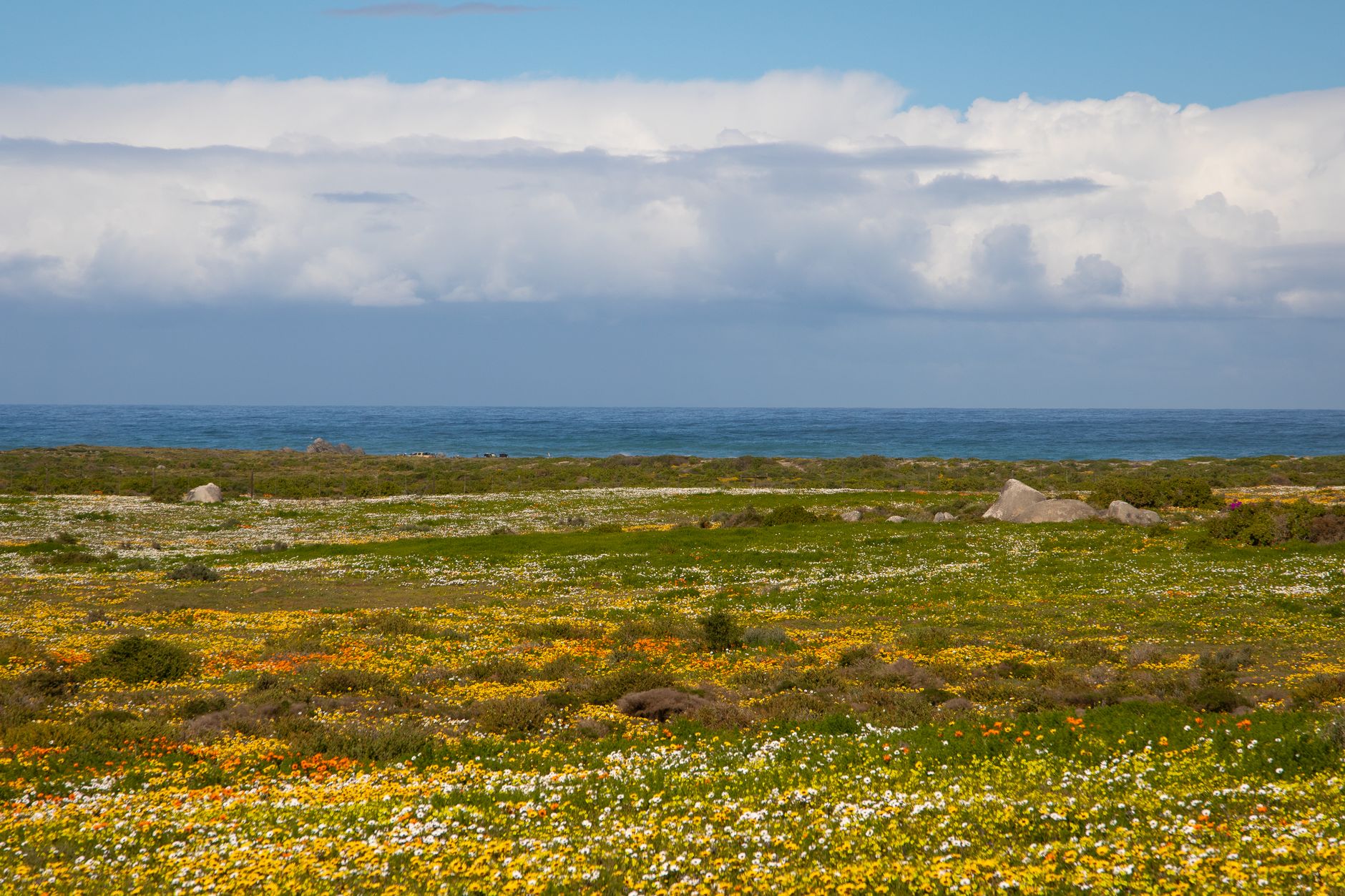
Side Trips and Regional Add-Ons
Lesotho
Best paired with Drakensberg or KwaZulu-Natal. Mountain culture, high passes, pony trekking, snow in winter in some areas, and serious road considerations. Border rules are separate.
Eswatini
Can pair with Kruger/KwaZulu-Natal routes. Useful for travelers interested in culture, crafts, landscapes, and a regional loop. Border rules are separate.
Botswana
Best for safari travelers extending beyond South Africa. Chobe, Okavango Delta, and Kalahari routes usually require a separate safari plan.
Namibia
Best for desert lovers. Namibia is a full trip, not a casual add-on unless flying.
Mozambique
Best for beach and diving add-ons from Kruger/KZN/southern Africa routes. Border, visa, road, and safety considerations need current checks.
Victoria Falls: Zambia/Zimbabwe
Common add-on from Johannesburg by air. It is not in South Africa and should be treated as a separate country/border/visa/health planning item.
The Move
If you have under two weeks, do not add another country unless it is a clean, flight-based extension. South Africa alone has enough depth.
What to Skip
Skip: “All of South Africa” in 10 Days
You will see airports, roads, and hotel rooms.
Better alternative: Cape Town + safari, or Cape Town + Garden Route + Eastern Cape safari.
Skip: One-Night Safari Unless Necessary
One night usually means one afternoon drive and one morning drive at best. That is not enough for the rhythm of the bush.
Better alternative: Three nights in one reserve.
Skip: Driving Cape Town to Kruger Because It Looks Adventurous
It is a very long drive across a huge country. Unless the road trip itself is the point and you have time, fly.
Better alternative: Fly between Cape Town/Johannesburg/Kruger-area airports.
Skip: Random Township Tourism
Township visits can be meaningful if community-led and respectful. They can also become voyeuristic.
Better alternative: Choose guides/operators with local ownership, transparency, and clear community benefit.
Skip: Wildlife Interaction Attractions With Red Flags
Cub-petting, walking with lions, exploitative elephant interactions, and captive predator tourism are serious ethical problems.
Better alternative: Wild safari, reputable sanctuaries with no breeding/handling agenda, conservation-focused operators.
Skip: Night Driving Between Regions
Road hazards and crime risk make night driving a bad value.
Better alternative: Start early, end before dark, or fly.
Skip: Cape Town Without a Weather Plan
Fixed plans for Table Mountain, Robben Island ferries, and beaches can fail.
Better alternative: Keep flexible days and swap indoor/history/food plans when weather turns.
Common Mistakes
- Trying to do too much. South Africa punishes shallow checklist travel.
- Underestimating distances. Cape Town, Kruger, Durban, Garden Route, and Johannesburg are not next-door highlights.
- Booking a safari for only one night. It is almost always too short.
- Ignoring safety advice. This is avoidable bad planning.
- Walking at night in the wrong areas. Use transport.
- Leaving valuables in the car. Even hidden valuables are risky.
- Driving after dark between regions. Avoid it.
- Booking Cape Town activities without weather flexibility.
- Choosing safari by lodge photos only. Reserve, season, guiding, and logistics matter.
- Assuming Kruger and private reserves are the same thing.
- Forgetting malaria planning.
- Treating Johannesburg as only an airport.
- Overdrinking in the Winelands without transport.
- Underpacking warm layers for safari mornings.
- Assuming beaches are always swimmable or warm.
- Not checking school holidays and December peaks.
- Expecting Europe-style trains.
- Booking an automatic rental car too late.
- Treating poverty as a photo opportunity.
- Using outdated load-shedding information without checking current status.
Responsible Travel
Do
- Use reputable local guides and community-owned experiences.
- Tip fairly.
- Support conservation-minded lodges.
- Respect park rules.
- Avoid exploitative wildlife encounters.
- Ask before photographing people.
- Learn some historical context before visiting memory sites.
- Use water carefully in drought-prone regions.
- Stay on trails in fragile fynbos and mountain environments.
- Buy local crafts from legitimate makers.
- Be patient with service differences and infrastructure challenges.
- Treat domestic workers, guides, rangers, drivers, and lodge staff with respect.
Do Not
- Enter communities as spectacle.
- Block roads around wildlife sightings.
- Feed animals.
- Chase risky selfies with wildlife, cliffs, or waves.
- Ignore fire warnings.
- Support cub-petting or captive predator breeding operations.
- Assume every safari lodge benefits conservation equally.
- Wear expensive jewelry in public urban settings.
- Dismiss local safety advice because “it felt fine yesterday.”
Local Logic
South Africa gives visitors extraordinary access: mountain trails, wild coastlines, self-drive safaris, wine estates, cities, beaches, and communities. That access depends on responsibility. The best travelers do not just consume beauty; they move through it carefully.
Packing List
Essentials
- Passport with blank pages and required validity.
- Travel insurance with medical evacuation.
- Copies of passport, visa/ETA/eVisa if applicable, and bookings.
- Credit/debit cards plus modest cash.
- Universal adapter supporting South African plugs.
- Power bank.
- Comfortable walking shoes.
- Sun hat, sunglasses, sunscreen.
- Light daypack.
- Reusable water bottle.
- Personal medications and prescriptions.
- Insect repellent for bush/malaria-risk areas.
- Binoculars for safari.
- Camera/phone dust protection.
- Warm layer for safari mornings.
- Rain jacket depending season/region.
- Offline maps.
Safari Additions
- Neutral clothing.
- Fleece/down layer in winter.
- Beanie/gloves for cold morning drives.
- Closed shoes.
- Small flashlight/headlamp.
- Soft-sided luggage if flying light aircraft.
- Lip balm and moisturizer.
- Malaria medication if prescribed.
- Motion-sickness tablets if needed.
Cape Town and Coast Additions
- Wind layer.
- Beachwear.
- Dressier outfit for restaurants.
- Hiking shoes if doing Table Mountain/Lion’s Head.
- Light sweater even in summer evenings.
Winter Additions
- Warm jacket.
- Scarf.
- Layers.
- Rainwear for Western Cape.
- Warm sleepwear for inland lodges.
What Not to Pack
- Flashy jewelry.
- Too much formal clothing.
- Hard-sided oversized luggage if using small aircraft.
- Heavy boots unless hiking seriously.
- Drone without checking local rules and permits.
- Assumptions that everything can be bought easily near remote lodges.
FAQ
Is South Africa worth visiting?
Yes, if you are willing to plan seriously. It is one of the world’s most varied travel countries: safari, Cape Town, mountains, wine, beaches, food, history, and road trips. It is not a destination to do lazily.
How many days do I need?
Ten to fourteen days is the best first-trip range. Seven days can work for Cape Town plus a short safari or Cape Town plus Winelands/Garden Route sampler. Three weeks is ideal for a deeper route.
Is South Africa safe for tourists?
Many tourists visit successfully, but safety must be part of the plan. Crime risk is real, especially in major city centers, townships, isolated areas, and after dark. Use reputable transport, avoid displaying wealth, do not walk at night in uncertain areas, and follow local advice.
What is the best first-time itinerary?
Cape Town + Winelands + safari. Choose Kruger/Greater Kruger for the classic safari feel, or Garden Route + Eastern Cape safari for a smoother self-drive and family-friendly route.
Cape Town or Johannesburg?
Cape Town is the stronger scenic first-timer base. Johannesburg is essential for history, contemporary culture, and Kruger logistics. If you can, include both; if you only have a week, focus on Cape Town plus one add-on.
Kruger or Eastern Cape safari?
Kruger/Greater Kruger is stronger for classic safari scale and wildlife density. Eastern Cape is easier to combine with the Garden Route and often better for malaria-conscious family itineraries.
Do I need malaria pills?
It depends where you go. Kruger and some northeastern areas have malaria risk. Ask a travel-health professional. Cape Town, Garden Route, Winelands, and many other areas are not the same malaria-risk category as Kruger.
Do I need a car?
Often, yes for Winelands, Garden Route, self-drive safari, Drakensberg, and rural/coastal routes. In Cape Town and Johannesburg, many visitors use rideshare, guides, and transfers instead of driving daily.
Can I use public transport?
Not as your main countrywide strategy for most first-time trips. Use domestic flights, rental cars, transfers, Gautrain where useful in Gauteng, and guided tours.
What should I book ahead?
Safari lodges/rest camps, peak Cape Town hotels, Robben Island, top restaurants, Winelands lunches, domestic flights, rental cars, December/January coastal accommodation, and family rooms.
What is the best safari length?
Three nights is the best first-timer minimum. Four or five nights is better if safari is a major reason for the trip.
Is Cape Town enough for a first trip?
Cape Town can fill a week easily, but it is not the whole country. A Cape Town-only trip is excellent if labeled honestly as a Cape trip.
When is the best time for safari?
For Kruger, May to September is classic dry-season wildlife viewing. Green season is lush, hot, and excellent for birds but can be wetter and denser.
When is the best time for Cape Town?
October to April is best for warmer weather and outdoor life. Winter can be beautiful but brings more rain and cooler conditions.
Can I combine South Africa with Victoria Falls?
Yes, often by flying through Johannesburg, but Victoria Falls involves another country, entry rules, and separate planning. Do not add it casually to a short itinerary.
Source Notes
Date-sensitive details in this guide were checked against official or high-reliability sources where possible. Re-check every price, schedule, fare, ticket rule, visa rule, safety advisory, weather alert, and park policy before publication.
- 1. South African Government, “Apply for a visa,” https://www.gov.za/services/temporary-residence/visa
- 2. Department of Home Affairs, South Africa eVisa portal, https://ehome.dha.gov.za/epermit/home
- 3. Department of Home Affairs, South African ETA portal, https://eta.dha.gov.za/
- 4. South African Tourism, “Yellow fever entry requirements,” https://www.southafrica.net/gl/en/travel/article/yellow-fever-entry-requirements
- 5. CDC Travelers’ Health, “South Africa,” https://wwwnc.cdc.gov/travel/destinations/traveler/none/south-africa
- 6. U.S. Department of State, “South Africa Travel Advisory,” https://travel.state.gov/en/international-travel/travel-advisories/south-africa.html
- 7. Government of Canada, “Travel advice and advisories for South Africa,” https://travel.gc.ca/destinations/south-africa
- 8. Australian Government Smartraveller, “South Africa Travel Advice & Safety,” https://www.smartraveller.gov.au/destinations/africa/south-africa
- 9. UK FCDO, “Safety and security - South Africa travel advice,” https://www.gov.uk/foreign-travel-advice/south-africa/safety-and-security
- 10. South African Embassy, “Seasons and Climate,” https://www.southafrica.org.tr/index.php/south-africa/seasons-and-climate
- 11. South African Government, “Geography and climate,” https://www.gov.za/about-sa/geography-and-climate
- 12. South African Tourism, “South Africa’s provinces,” https://southafrica.net/gl/en/travel/category/south-africas-provinces
- 13. South African Tourism, “Explore itineraries to South Africa,” https://www.southafrica.net/uk/en/travel/category/travel-trade-uk/itineraries
- 14. SANParks, “Kruger National Park,” https://www.sanparks.org/parks/kruger
- 15. SANParks, “Malaria – Kruger National Park,” https://www.sanparks.org/parks/kruger/useful-information/malaria
- 16. SANParks, “Addo Elephant National Park,” https://www.sanparks.org/parks/addo-elephant
- 17. SANParks, “Online Bookings,” https://www.sanparks.org/
- 18. SANParks, “Table Mountain National Park,” https://www.sanparks.org/parks/table-mountain
- 19. Table Mountain Aerial Cableway, “Operating Hours,” https://www.tablemountain.net/plan-your-visit/operating-hours/
- 20. Robben Island Museum, “Tour Types,” https://www.robben-island.org.za/tour-types/
- 21. iSimangaliso Wetland Park official site, https://isimangaliso.com/
- 22. UNESCO World Heritage Convention, “South Africa,” https://whc.unesco.org/en/statesparties/za
- 23. Airports Company South Africa, https://www.airports.co.za/
- 24. Gautrain, “Schedule,” https://www.gautrain.co.za/commuter/schedule
- 25. Eskom, “Load shedding status,” https://loadshedding.eskom.co.za/
- 26. South African Government, “Eskom marks 300 days without loadshedding,” https://www.gov.za/news/media-statements/eskom-marks-300-days-without-loadshedding-13-mar-2026