Stavanger is one of those cities that suffers from being useful.
Start Here
It is useful as an arrival point. Useful as a base for southwest Norway. Useful for airport access, ferry departures, and the whole powerful landscape economy around Lysefjord and Preikestolen. The city is so efficient at serving larger regional dreams that many travelers subconsciously demote it before they even begin. Stavanger becomes the place where you sleep before “the real thing.”
That is the weak version of the trip.
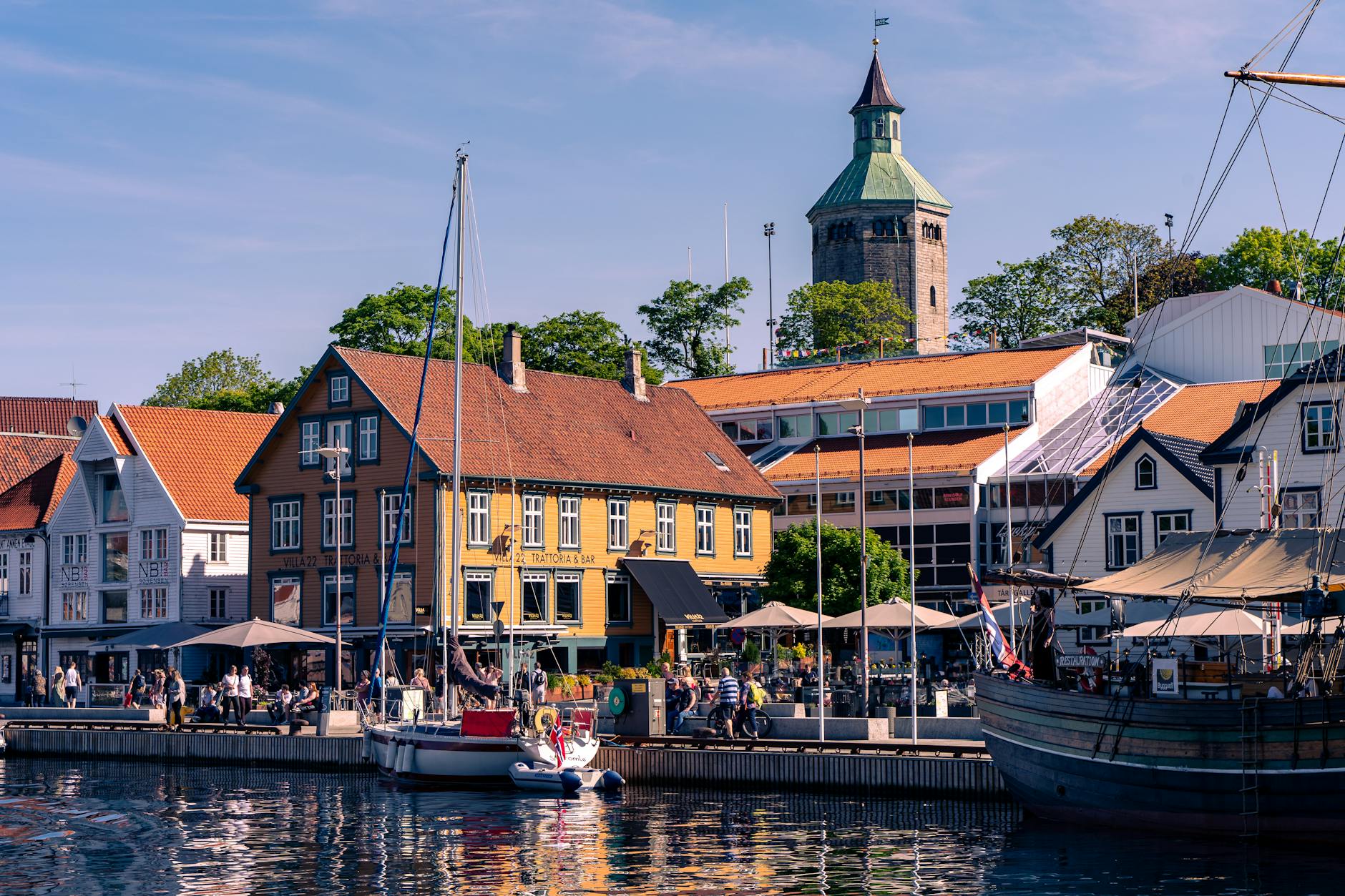
The stronger version starts by noticing that Stavanger itself is unusually well made. This is a harbor city with scale, discipline, and layers. It has Old Stavanger’s wooden-house intimacy, a waterfront that actually organizes the day, a cathedral that reminds you how old the city is, and a modern identity shaped by canning history, shipping, and the petroleum era. It is not wild, but it is not bland. It is compact, but it is not slight. The city has a steadiness that many Norway itineraries badly need.
That steadiness is part of its charm. Stavanger does not have to perform like Bergen or announce itself like Oslo. It often works through cleanliness of structure. You can arrive, understand the harbor, settle into a strong hotel, walk through the center and Old Stavanger, cross into another layer of the city, eat well, and feel that the place holds together. This is a substantial achievement in a destination that many visitors treat only as infrastructure.
It also helps that Stavanger has a specific tension inside it. The pretty side is obvious: quays, boats, white wooden houses, polished streets, and the general visual confidence of a wealthy coastal city. But there is also an industrial and modern side that keeps the city from becoming precious. The oil museum is not an optional gimmick. It is one of the reasons Stavanger feels like a real Norwegian city of work, technology, and consequence rather than a heritage illustration.
This is why hotel choice, route design, and city-versus-excursion balance matter so much. If you surrender every strong hour to fjord logistics, Stavanger stays flat. If you give the city one or two days of real attention, it becomes one of the best short coastal city stays in Norway.
The city in one sentence: Stavanger is a compact harbor city whose best first trip comes from balancing Old Stavanger, waterfront rhythm, industrial and petroleum history, food, and regional access instead of treating the place as a sleeping platform for nearby scenery.
Basic data
| Population | About 145,000 in the municipality |
|---|---|
| Area | 71 km2 |
| Major religions | Christian heritage with a strongly secular contemporary public culture |
| Political system | Municipality inside a parliamentary constitutional monarchy |
| Economic system | High-income mixed economy led by energy services, maritime industries, services, and tourism |
Quick Verdict
Best for: couples, solo travelers, first-time Norway routes, food-minded travelers, harbor-city travelers, short coastal breaks, and anyone who wants a useful base that is also a real destination.
Not ideal for: travelers who only care about headline scenery, people who want very large museum density, or anyone determined to spend every day outside the city from dawn onward.
Ideal first visit: 2 to 3 full days.
Minimum worthwhile stay: 2 nights.
Best overall months: May, June, September, and early October.
Best summer case: if you want long light, strong waterfront use, day-trip flexibility, and a city that feels open without losing coherence.
Biggest planning mistake: giving Stavanger only logistical status and assuming the city itself does not deserve its own time.
One thing to prioritize: the base. Staying in the right central harbor zone makes the whole city easier to use and much more persuasive.
One thing to leave flexible: one city day around the waterfront and Old Stavanger. Stavanger often improves when you stop trying to race through it.
The blunt version: Stavanger is much better than the “base for Preikestolen” cliché, but only if you let the city carry real weight.
Who Will Love Stavanger?
Stavanger works especially well for travelers who like cleanly structured coastal cities. It is easy to read, easy to use, and stronger than many first-time visitors expect once they stop comparing it to places it is not trying to imitate. This is not a city of huge drama. It is a city of balance.
Couples tend to do well here because Stavanger can produce a very complete short stay without much friction. A good hotel, one waterfront walk, one historical district, one serious museum or cathedral block, and one well-chosen dinner can already make for a satisfying day. You do not need to overprogram the place.
Solo travelers also do well because Stavanger is socially comfortable and practically legible. The center is compact enough to relax inside, but varied enough that a solo pace does not feel underfed. You can spend time with the harbor, the old town, museums, coffee, and food without the city becoming repetitive.
The city is also good for travelers who care about how modern Norway actually became modern. Stavanger’s canning past and oil present give it a different texture from towns that are sold only through old houses and pretty quays. That industrial layer matters. It gives the city seriousness.
It is less ideal for travelers who need every urban destination to have huge-scale capital energy. Stavanger is too composed for that. Its strength is not magnitude. It is use.
Stavanger at a Glance
| Question | Practical Answer |
|---|---|
| Main airport | Stavanger Airport Sola (SVG) |
| Best airport move | Airport bus into central Stavanger |
| Main local transport operator | Kolumbus |
| Best first-time base | Central harbor core near Vågen / Skagen / Old Stavanger edge |
| Signature district | Old Stavanger |
| Signature modern-history anchor | Norwegian Petroleum Museum |
| Signature urban structure | Harbor and waterfront |
| Best all-weather city anchor | Petroleum Museum plus cathedral/center walking |
| Car needed? | No |
| Emergency number | 112 |
| Tap water | Safe to drink |
| Currency | Norwegian krone |
| Power plugs | Type C and F |
2026 Visitor Notes
Airport Access Is Easy, But The Ticket Systems Are Not Identical
Avinor’s current airport guidance and Flybussen’s Stavanger ticket information make the main point clear: the airport bus is the simplest central arrival for many visitors.[1][2] That matters because the city benefits from a clean harbor-hotel arrival. It also matters that Flybussen and Kolumbus are not the same thing.
Kolumbus Is Straightforward Once You Know The Basics
Kolumbus’s current ticket pages make the local structure easy enough to grasp: single tickets, 24-hour tickets, and local movement in the Stavanger area are simple, with one-zone city travel especially easy to manage.[4] In a city this size, transit mostly supports rather than dominates the trip.
Old Stavanger Is Still One Of The City’s Core Arguments
Visit Norway’s current Old Stavanger material continues to stress the area’s 173 wooden buildings and preservation significance.[5] That is correct, but the district is best when treated as a lived environment, not a museum lane.
The Oil Museum Is Not Just For Industry Enthusiasts
The Norwegian Petroleum Museum’s own presentation makes clear that it is not simply a specialist archive. It is one of the clearest explanations of how offshore oil and gas reshaped modern Norway.[6][7] In Stavanger, that context belongs inside a serious first visit.
The Airport Bus Helps Keep Stavanger Car-Free
Flybussen’s current Stavanger page and ticket information keep the car-free logic intact: central access is easy, and ticketing is well defined.[2][3] For a normal first-time Stavanger trip, this is a city you should use without a rental car.
The Cathedral Matters As More Than A Checklist Stop
Region Stavanger’s guided-walk material still frames Stavanger Cathedral as one of the city’s essential historical stops and notes that it is the only Norwegian medieval cathedral to retain its original architecture and remain in continuous use since the Middle Ages.[8] That gives the city more historical weight than many first-timers assume.
How to Understand Stavanger
Stavanger works through five forces.
The first is the harbor. This is the city’s organizing face. Arrival, orientation, evening walking, and much of the visitor’s emotional reading begin here.
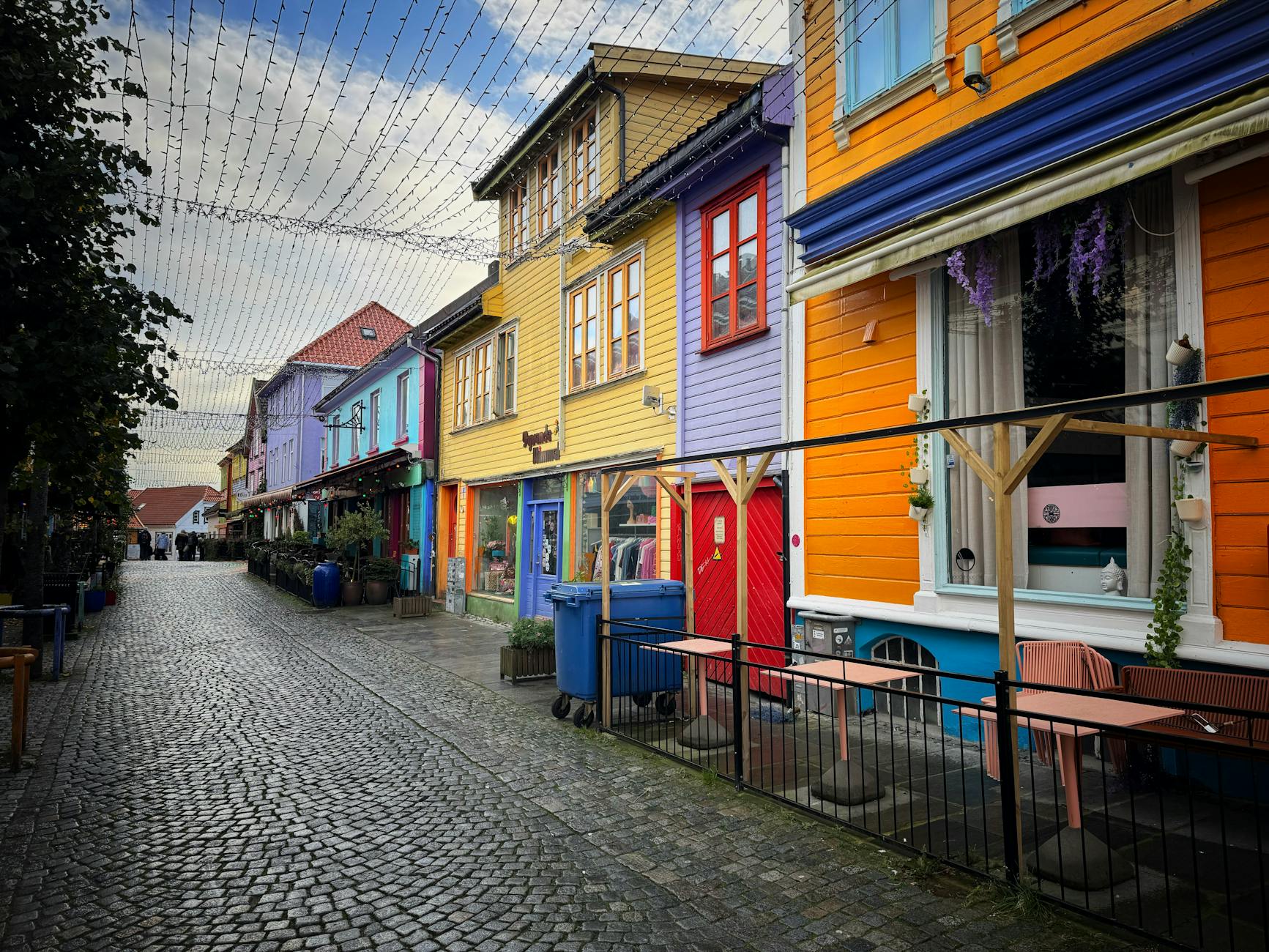
The second is the old wooden city. Old Stavanger is not the whole place, but it is a core reminder that the city’s charm is rooted in real built continuity.
The third is industrial-modern Norway. Canning, shipping, and petroleum are not side notes. They explain why Stavanger feels wealthy, self-assured, and contemporary.
The fourth is gateway pressure. The city’s relationship to Lysefjord, Preikestolen, and the wider region constantly pulls attention outward.
The fifth is scale. Stavanger is compact enough to feel easy and substantial enough to justify staying.
The Five Stavangers A Visitor Actually Meets
Harbor Stavanger: quays, ferries, hotels, waterfront restaurants, and the version of the city most visitors meet first.
Old Stavanger: white wooden houses, preserved streets, and the city at its most intimate and photogenic.
Historic Stavanger: cathedral, old center, and the city’s earlier civic depth.
Industrial Stavanger: canning memory, oil identity, and the modern economy that keeps the city from becoming heritage scenery.
Gateway Stavanger: excursion desks, ferries, buses, and all the regional pressure that can either enrich or flatten the trip.
The Main Mental Shift
Do not ask, “What can I do from Stavanger?” Ask, “What kind of coastal city am I in before I leave it?” That is the question that improves the whole stay.
What Stavanger Does Better Than People Think
Stavanger is better than people think at being complete without being large. You can get history, food, harbor atmosphere, and real modern context in one compact frame.
It is also better than many travelers expect at balancing prettiness with seriousness. Old Stavanger can look almost too neat, but the wider city’s industrial and petroleum story prevents the place from becoming shallow.
The city is stronger than some first-time visitors realize at supporting a mixed itinerary. It can hold one excursion day and still justify city time. It can also hold a city-only break more comfortably than many “base towns” can.
Stavanger is also very good at urban ease. Distances are manageable, hotels are useful, and the harbor-center logic keeps the trip from becoming operationally annoying.
Finally, it is better than people think at food-led short stays. You do not need a gigantic dining scene here; you need a city where one or two strong meals feel well placed, and Stavanger can do that well.
Where Stavanger Fits in a Norway Trip
Stavanger fits a Norway trip best as the city that proves useful does not have to mean secondary.
That matters because many Norway itineraries still sort places into scenic “essentials” and urban infrastructure. Stavanger gets placed too easily into the second category because it is such an effective launchpad. But a city that serves fjord ambitions so well can still be a destination in its own right. In Stavanger’s case, it often should be.
Used properly, Stavanger works in four especially strong ways.
The first is as a short standalone coastal city break. The harbor, old town, museum layer, and compact center make a complete urban stay possible without much friction.
The second is as a first urban stop in Norway. Stavanger introduces coastal Norway through a format that is legible, comfortable, and far less overwhelming than a bigger city.
The third is as a city-plus-scenery base. If you want one regional excursion without sacrificing the city entirely, Stavanger handles that balance well.
The fourth is as a repeat-Norway city. Once you stop demanding that every Norwegian stop prove itself through dramatic landscape only, Stavanger becomes easier to appreciate for its historical and modern coherence.
What it is not is merely the hotel attached to someone else’s fjord day.
Stavanger Versus Bergen
This comparison matters because both cities are major western-Norway names and both are often asked to carry harbor atmosphere, old-town charm, and regional access at the same time.
Bergen is more theatrical. The harbor image is more iconic, the scale is a little broader, and the city carries more immediate cultural and tourist weight. It wins faster on drama.
Stavanger is more controlled. It is easier to use, cleaner in structure, and often more satisfying for a short trip precisely because it asks less of the traveler while still feeling substantial. Where Bergen can sometimes sprawl into its own significance, Stavanger tends to stay composed.
If you want the louder and more obvious harbor city, Bergen is stronger. If you want the tighter and more edited one, Stavanger may be better.
First-Time Visitors Versus Repeat Visitors
First-time visitors often make one of two mistakes in Stavanger. Either they reduce it to a practical base and never let the city become the point, or they reduce it to Old Stavanger plus one harbor walk and call it understood.
Repeat visitors tend to do better because they stop asking the city to prove itself instantly. They know where to stay. They know the harbor should be walked more than once. They know the oil museum belongs in the trip because it explains the city’s confidence. They start using Stavanger’s compactness as an advantage instead of mistaking it for lack.
This is one reason Stavanger often improves on a second visit. The first may still be negotiating the city’s status. The second usually starts by trusting it.
Best Time to Visit Stavanger
Stavanger is workable year-round, but not every season offers the same version of the city.
Best Overall Months
May, June, September, and early October are the safest recommendations. These periods usually give a good balance of usable daylight, harbor atmosphere, and enough weather stability for both city time and optional excursions.
Summer
Summer is the easiest season to like Stavanger quickly. The harbor is lively, outdoor dining works better, Old Stavanger looks especially inviting, and regional movement is easiest. The risk is that some visitors surrender too much city time to nearby scenery.
Early Autumn
Early autumn may be the smartest season for many travelers. The city often feels slightly calmer, the light can be excellent, and the whole place reads more as a real city than as a launchpad.
Winter
Winter Stavanger is a more interior, more weather-led product. This can still be very good if you want a Norwegian coastal city rather than a sightseeing machine. But the city needs to be chosen deliberately in this season.
Spring
Spring is transitional but strong, especially when the weather begins to open the harbor and the walking routes back up again.
Warm-Weather Stavanger Versus Cold-Weather Stavanger
Warm-weather Stavanger is easier to like quickly. The harbor opens out, outdoor eating improves, and one or two waterfront repetitions can carry a large part of the city’s emotional value. The city feels more social and more breathable.
Cold-weather Stavanger is more interior and more weather-led. It can still work very well, but it depends more on good hotel use, museums, shorter walks, and a willingness to let the city be coastal and restrained rather than bright and open.
How Many Days You Need
One Day
Enough for a first impression, not enough to understand why the city is stronger than its reputation.
Two Days
The minimum respectable stay. One day should belong mainly to Stavanger itself. The second can support either a city deepening or a regional move.
Three Days
Ideal for many first-timers. This gives room for a full city day, a mixed day, and one slower harbor-and-neighborhood rhythm.
Four Days
Very good if Stavanger is anchoring a southwest Norway route or if you want one more substantial regional outing without flattening the city.
Why One Proper City Day Matters
Travelers sometimes assume Stavanger is too useful to need a full city day of its own. That is exactly how the place gets flattened.
One proper city day means a day where Stavanger itself carries the argument. The harbor gets more than one pass. Old Stavanger gets enough time to feel lived rather than merely pretty. The petroleum layer explains the modern city. One good meal belongs to the route. Without that day, Stavanger can remain a clean impression. With it, the city becomes anchored in memory.
Where to Stay in Stavanger
Where you stay matters because Stavanger’s main luxury is ease. A weak base wastes that advantage.
Fast Answer
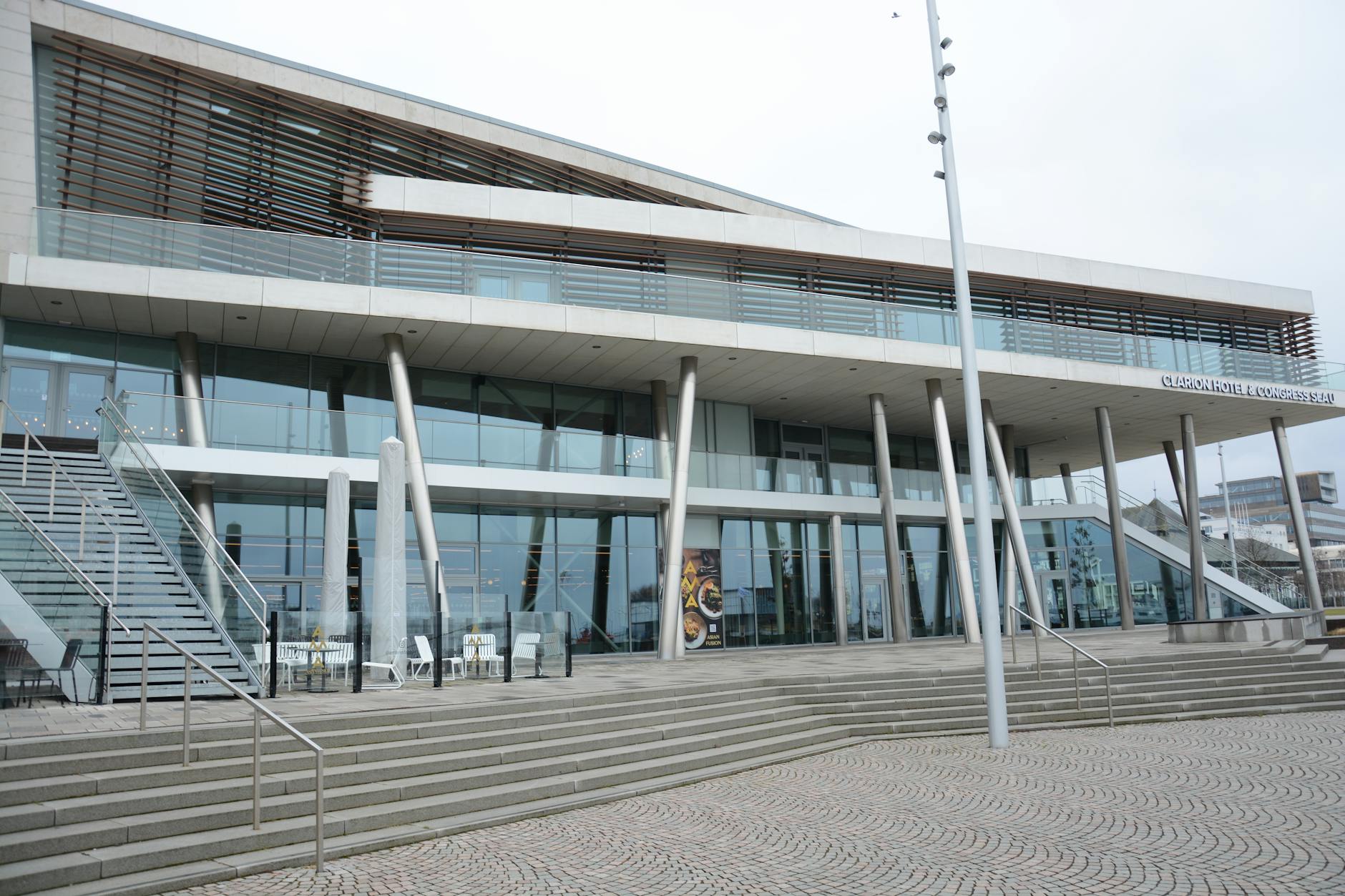
For most first-time visitors, stay in the central harbor core or very near it, ideally with easy walking access to Old Stavanger and the central waterfront.
Neighborhood Decision Table
| Traveler Type | Best Area |
|---|---|
| First-time visitor | Harbor core / Vågen side |
| Couple weekend | Harbor edge or Old Stavanger-adjacent stay |
| Practical short stay | Central core with clean airport-bus access |
| Food-and-walk trip | Harbor-center balance |
| Excursion-heavy route | Still central; do not exile yourself outward |
Harbor Core
Best for: most travelers. Why it works: orientation, waterfront atmosphere, dining, and easy movement all start here. Tradeoff: slightly more visible tourist flow and higher demand. Best use: the default strong choice.
Old Stavanger Edge
Best for: visitors who want the prettiest version of the city close at hand. Why it works: atmosphere, preserved wooden streets, and calm. Tradeoff: can tempt you into reading Stavanger too narrowly through one district. Best use: short romantic stays and travelers who already know they will still use the rest of the center properly.
Why The Base Matters More Than Visitors Expect
Because Stavanger is compact, visitors often assume any central hotel is good enough. In practice, the exact base still shapes the trip a great deal.
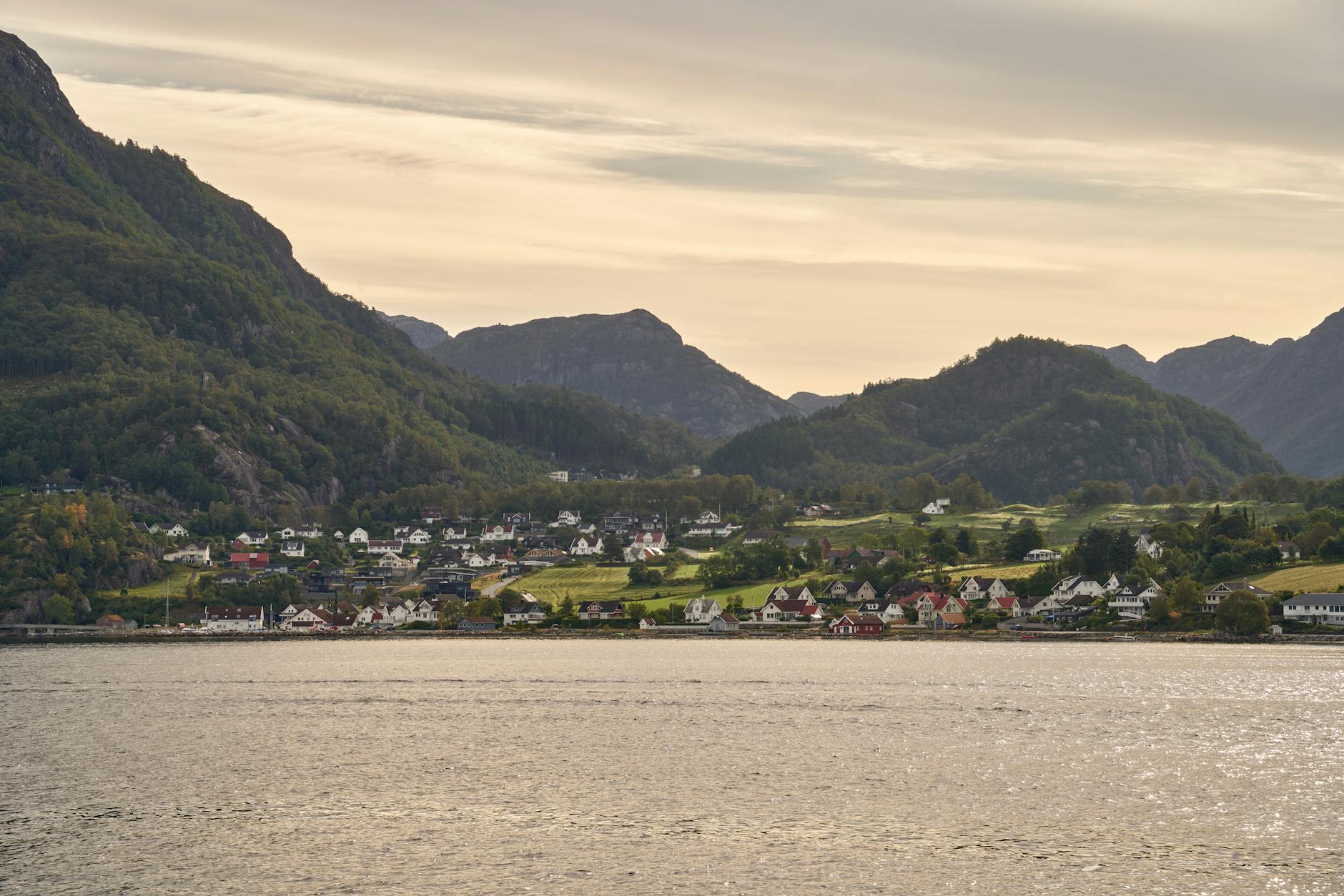
A harbor-core hotel makes the city feel fluid and easy. An Old-Stavanger-adjacent stay increases atmosphere but can tempt you to read the city too prettily. A weaker outer location undermines one of Stavanger’s great strengths, which is how cleanly the center, harbor, museums, and daily life connect on foot.
This is why the base matters. In Stavanger, centrality is not just convenience. It is part of the city’s identity.
Area Profiles
Harbor side: best for all-around first-time use.
Old Stavanger edge: best for atmosphere and charm.
Center beyond the waterfront: best for practical access while staying fully in the city.
Neighborhood Guide: Where to Explore, Not Just Sleep
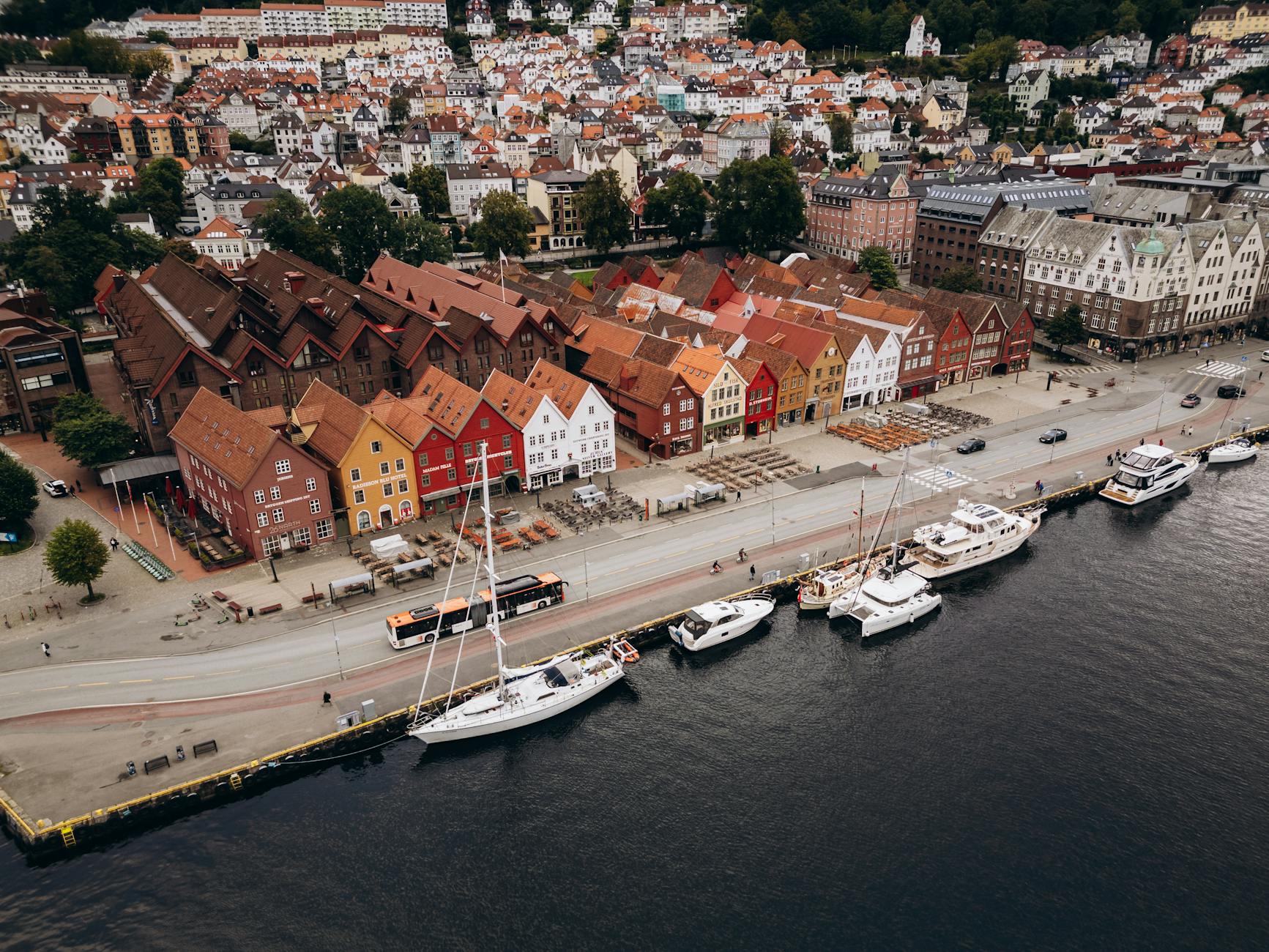
The waterfront and central harbor are where Stavanger begins to make sense. This is where the city feels useful, coastal, and slightly polished. It is not only a nice place to stroll. It is the city’s operating front.
Old Stavanger matters because it gives the city intimacy.[5] The white wooden houses, careful preservation, and lived-in streets create one of the strongest historic quarters in urban Norway. But it should not be treated as the whole city. Its role is to humanize Stavanger, not replace it.
The area around the Petroleum Museum adds another necessary layer. Stavanger’s modern consequence is tied to the North Sea energy story, and the museum keeps that reality visible.[6][7]
The central shopping-and-cafe streets matter less as attractions in themselves than as proof that the city is not a set. Stavanger feels more convincing when you let ordinary center-city life into the trip.
Day Stavanger Versus Evening Stavanger
Daytime Stavanger is where structure is easiest to read. You see how the harbor, old quarter, museum layer, and center all cooperate. The city feels crisp and well organized.
Evening Stavanger is when the harbor does more of the work. The water reflects more light, the city’s polished side becomes more persuasive, and the difference between simply arriving in Stavanger and actually staying in Stavanger becomes clearer. This is one reason weak trips underperform: they understand the city in transit hours and not in lived hours.
Why The Gateway Logic Should Not Own The Whole Trip
Regional access is one of Stavanger’s strengths, but it becomes weaker when it is allowed to define the whole stay.
If every conversation is about what lies beyond the city, Stavanger shrinks into administration. A better trip lets the excursion logic support the city instead of replacing it. The regional landscape is part of the appeal, but the city should still have authority.
The Best Things to Do in Stavanger
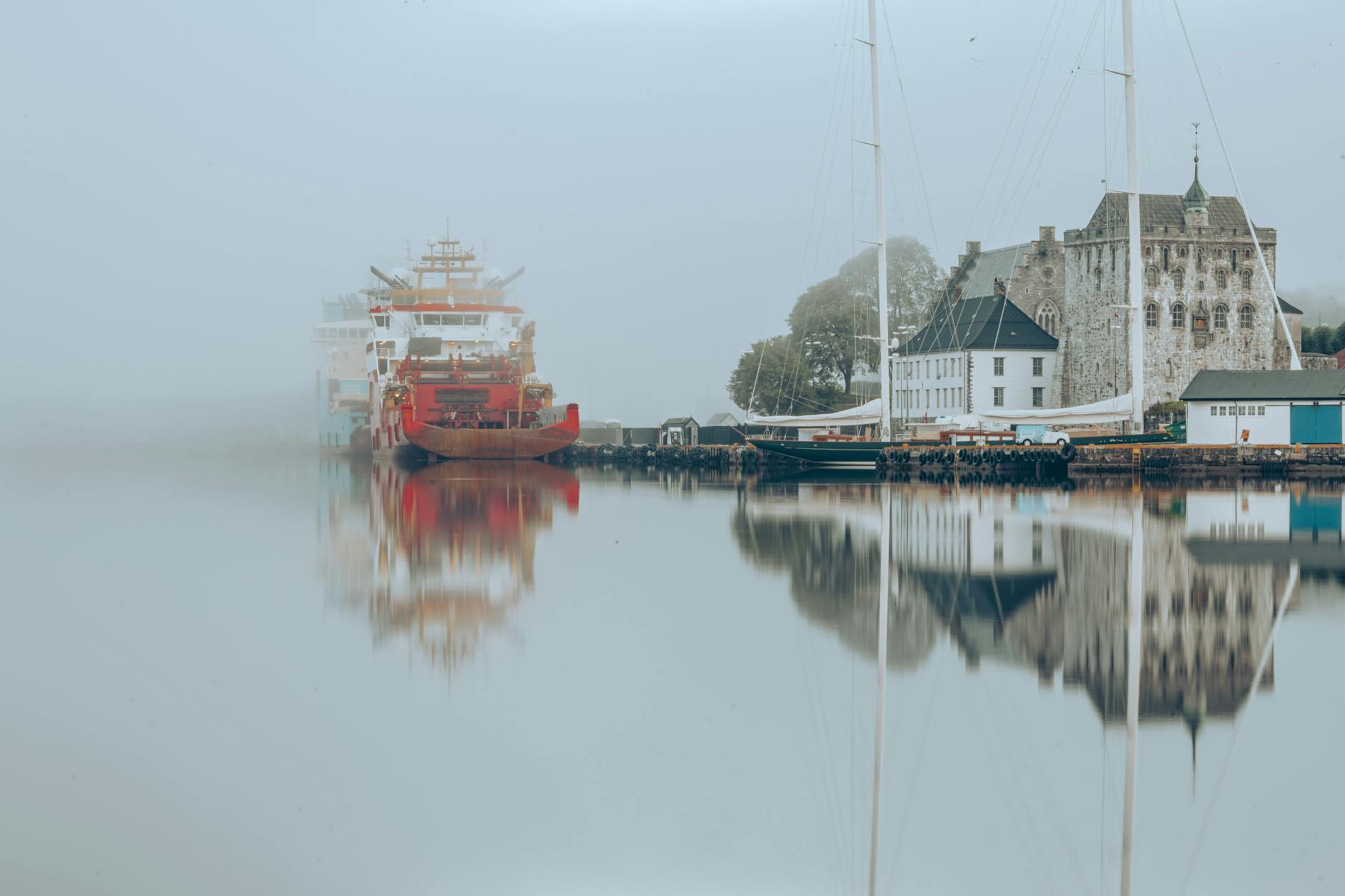
- Walk the harbor more than once, at different times of day.
- Give Old Stavanger enough time to feel lived and not merely photographed.[5]
- Visit the Norwegian Petroleum Museum if you want Stavanger to make sense as a modern Norwegian city.[6]
- Include the cathedral and surrounding center so the visit does not become only quays and wooden houses.[8]
- Let one meal and one coffee or wine stop happen in direct relationship to the waterfront or old core rather than in purely functional locations.
Itineraries
If You Have Two Days
Use day one for Stavanger itself: harbor, Old Stavanger, cathedral area, and the Petroleum Museum. Use day two either for a regional excursion or a slower city day with more food and waterfront rhythm.
If You Have Three Days
This is the best first-time structure. Keep one full city day, add one regional day if you want it, and keep one mixed day that lets Stavanger stay emotionally central to the route.
If You Have Four Days
Use the extra time to keep Stavanger from becoming only a base. The city should still own at least part of the trip’s identity.
Itineraries By Traveler Type
For Couples
Stay near the harbor, walk Old Stavanger in lower-pressure hours, and let one dinner and one evening waterfront walk do most of the work. Stavanger does not need theatrics.
For Solo Travelers
Use the city on foot, let Kolumbus support rather than dominate, and make sure you give one day to the city itself before heading outward.
For Norway First-Timers
Treat Stavanger as proof that coastal Norway can be urban, historical, and modern at once. Do not reduce it to excursion administration.
For Food-First Travelers
One strong dinner and one slower lunch or cafe block are enough to make Stavanger feel well used. This is a city where placement matters more than quantity.
Food and Drink
Stavanger is not a city where you need twenty must-eat places. It is a city where one or two good decisions go a long way. The harbor and center make dining feel naturally integrated into the day, and that is one of the city’s advantages.
The best approach is to eat in a way that supports the waterfront rhythm rather than ignores it. One lunch that breaks up walking intelligently, one good dinner that feels tied to place, and one smaller coffee, pastry, or wine stop can already make the trip feel much richer. You are not trying to conquer a giant dining capital here. You are trying to use a coastal city properly.
Why Food Is Structural, Not Decorative
In Stavanger, meals are not simply what happen between walks and departures. They help determine whether the city feels like a stay or a base.
One lunch placed well can break up a harbor day and keep the route coherent. One dinner tied clearly to the waterfront or center can make the city feel more complete. Poorly placed meals make Stavanger feel generic. Well-placed ones reinforce its calm, coastal intelligence.
Getting Around
Stavanger is mainly a walking city for a normal first stay. Kolumbus supports local movement well enough, and its ticket structure is simple once you know what you need.[4] But most of the city’s best first-use logic happens on foot.
The airport bus is separate practical infrastructure and should be treated that way.[2][3] This is not difficult. It is just worth being clear.
Why Stavanger Often Works Better Than It Sounds
If you describe Stavanger lazily, it can sound like a neat little harbor city with a cute old quarter and a very practical relationship to bigger landscape goals. That summary misses what makes it worthwhile.
Stavanger works because the elements reinforce one another. The harbor gives it ease. Old Stavanger gives it intimacy. The cathedral gives it age. The petroleum museum gives it consequence. The surrounding regional access gives it usefulness without erasing the city. It is not trying to overwhelm. It is trying to hold together.
Why Stavanger Often Improves On The Second Visit
On a first visit, many travelers are still deciding whether Stavanger is mainly a city, mainly a base, or mainly a convenient stop. That uncertainty weakens the stay.
On a second visit, the city often gets better quickly. You know what district suits you. You understand how much harbor repetition matters. You stop treating the oil museum as optional. You begin using the city with more confidence and less comparison.
How Stavanger Changes Over The Course Of A Stay
On arrival, Stavanger can seem almost too orderly. The airport connection is easy, the harbor is obvious, and the center feels immediately manageable. Some travelers conclude too quickly that the city will therefore remain slight.
By the second day, if the route is well shaped, the city starts separating into clearer layers. Old Stavanger becomes more than prettiness. The harbor becomes more than orientation. The petroleum story begins to explain the contemporary city. The hotel starts feeling like part of the experience rather than only accommodation.
By the third day, Stavanger often feels more persuasive precisely because it has stopped needing to announce itself. Its value lies in proportion, polish, and modern coastal substance.
Why Movement Changes The Meaning Of Stavanger
In Stavanger, movement is not only practical. It is one of the ways the city explains itself. Walking the harbor, then turning into Old Stavanger, then coming back through the everyday center changes the reading each time. The city keeps shifting between polished waterfront, preserved intimacy, and modern working Norway.
That is why Stavanger weakens when every move is reduced to an excursion transfer. If the city is used only between transport moments, it becomes administrative. If movement is allowed to reveal the city’s layers, Stavanger becomes much more memorable.
Why Stavanger Should Not Be Overprogrammed
Because Stavanger is compact and useful, travelers often assume they can load it with one more excursion, one more harbor meal, one more museum, one more ferry or bus decision. On paper, all of that can seem manageable.
In practice, overprogramming weakens one of the city’s central virtues, which is composure. Stavanger works best when one part of the day is allowed to stay local and when one meal or walk can deepen rather than merely fill time. The stronger stay is edited, not maximized.
Why Stavanger Rewards A Chosen Lane
Stavanger does not require every traveler to want the same city. In fact, it becomes much stronger once you admit that different visits should privilege different versions of it.
A harbor-and-food traveler may want the waterfront, a good hotel, the oil museum, and slower center-city rhythm. A scenic-Norway traveler may still need one protected city day so Stavanger does not vanish into logistics. A couple may want Old Stavanger and evening harbor walks to matter most. A repeat Norway traveler may care less about covering attractions and more about how the city’s modern and historical layers sit together.
The point is not to build the perfectly balanced Stavanger. The point is to choose your lane and let the city support it. Once that happens, Stavanger stops feeling like a neat platform and starts feeling like one of Norway’s most intelligently proportioned short stays.
What To Skip
Skip demoting the city into a bed for someone else’s landscape. Skip seeing Old Stavanger once and assuming you now understand the place. Skip ignoring the petroleum layer because it sounds too technical. Skip staying in a weak outer location just to save a little money when the city’s greatest asset is central usability.
Common Mistakes
- Giving every strong hour to Lysefjord logistics.
- Treating the city center as generic because it feels easy.
- Reducing Stavanger to Old Stavanger plus a harbor selfie.
- Missing the industrial-modern layer that explains the city’s confidence.
- Failing to choose a central base in a city where centrality matters so much.
My Blunt Advice
Use Stavanger as a city first and a regional platform second. Stay central. Walk the harbor in different light. Let Old Stavanger be one layer rather than the whole story. Put the oil museum into the trip so the city’s modern identity becomes legible. Eat well once or twice. If you take an excursion, fine, but do not let it steal the city’s authority.
If you do that, Stavanger becomes what it actually is: one of Norway’s most useful and most underrated short city stays, with enough history, enough polish, enough waterfront calm, and enough real-world substance to feel much bigger in memory than on the map.
That is the right first Stavanger. Not just a base. A stay.
Source Notes
- 1. Avinor, official Stavanger Airport public transportation page: [https://www.avinor.no/en/airport/stavanger/info/public-transportation/](https://www.avinor.no/en/airport/stavanger/info/public-transportation/)
- 2. Flybussen Stavanger, official ticket information page: [https://www.flybussen.no/en/airports/stavanger-airport/ticket-information/](https://www.flybussen.no/en/airports/stavanger-airport/ticket-information/)
- 3. Flybussen Stavanger, official route/news page: [https://www.flybussen.no/en/news/flybussen-boreal-stavanger/](https://www.flybussen.no/en/news/flybussen-boreal-stavanger/)
- 4. Kolumbus, official single ticket page: [https://www.kolumbus.no/en/tickets/-prices-and-products/single-tickets/](https://www.kolumbus.no/en/tickets/-prices-and-products/single-tickets/)
- 5. Visit Norway / Region Stavanger, official Old Stavanger page: [https://www.visitnorway.com/places-to-go/fjord-norway/the-stavanger-region/listings-stavanger/old-stavanger/1854/](https://www.visitnorway.com/places-to-go/fjord-norway/the-stavanger-region/listings-stavanger/old-stavanger/1854/)
- 6. Norwegian Petroleum Museum, official visit page: [https://www.norskolje.museum.no/en/home/visit-the-museum/](https://www.norskolje.museum.no/en/home/visit-the-museum/)
- 7. Norwegian Petroleum Museum, official about page: [https://www.norskolje.museum.no/en/om-museet/](https://www.norskolje.museum.no/en/om-museet/)
- 8. Visit Norway / Region Stavanger, official Stavanger guided city walk page: [https://www.visitnorway.com/places-to-go/fjord-norway/the-stavanger-region/listings-stavanger/stavanger-guided-city-walk/240679/](https://www.visitnorway.com/places-to-go/fjord-norway/the-stavanger-region/listings-stavanger/stavanger-guided-city-walk/240679/)