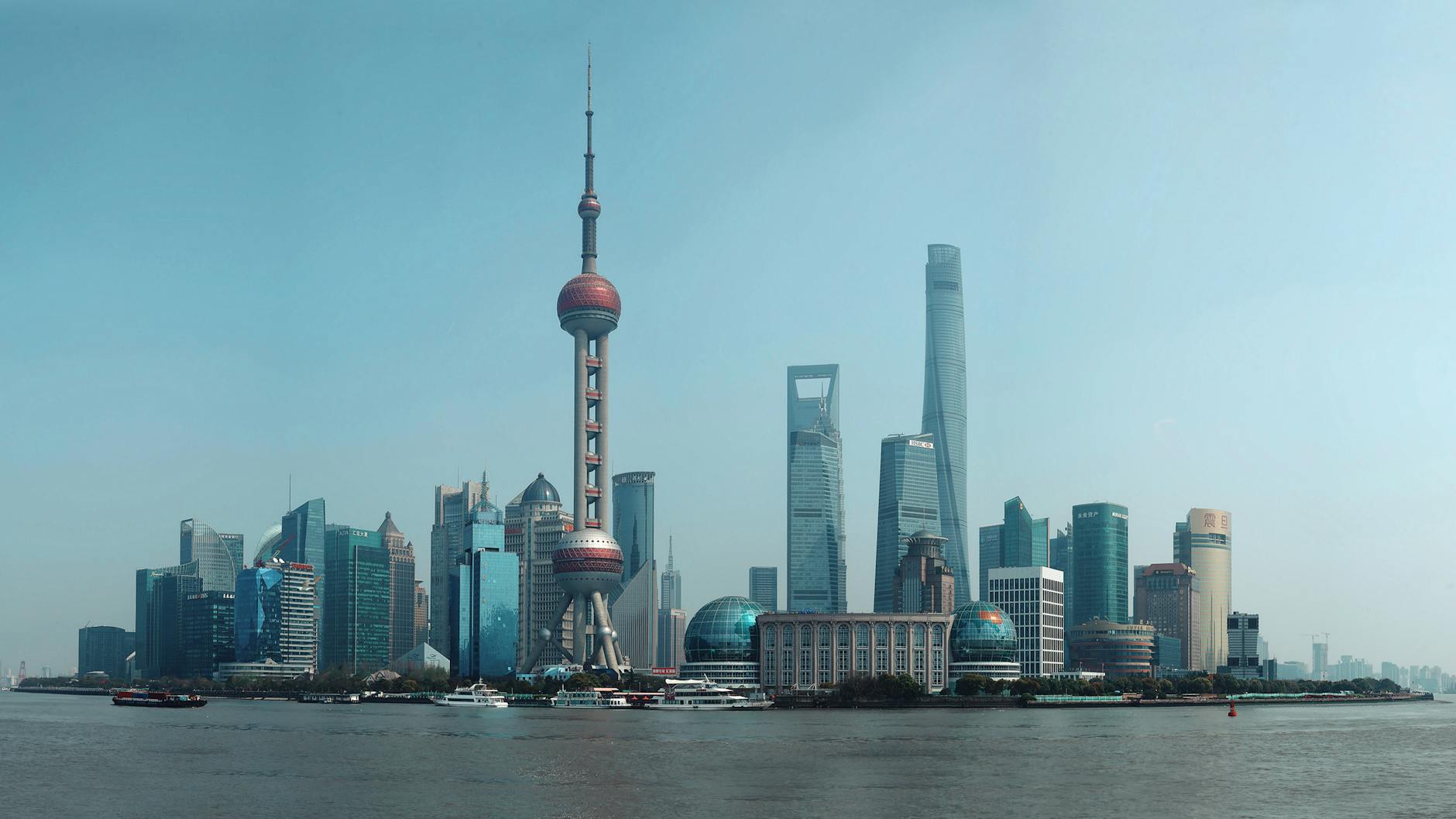
Shanghai is one of the easiest cities in Asia to misunderstand.
Start Here
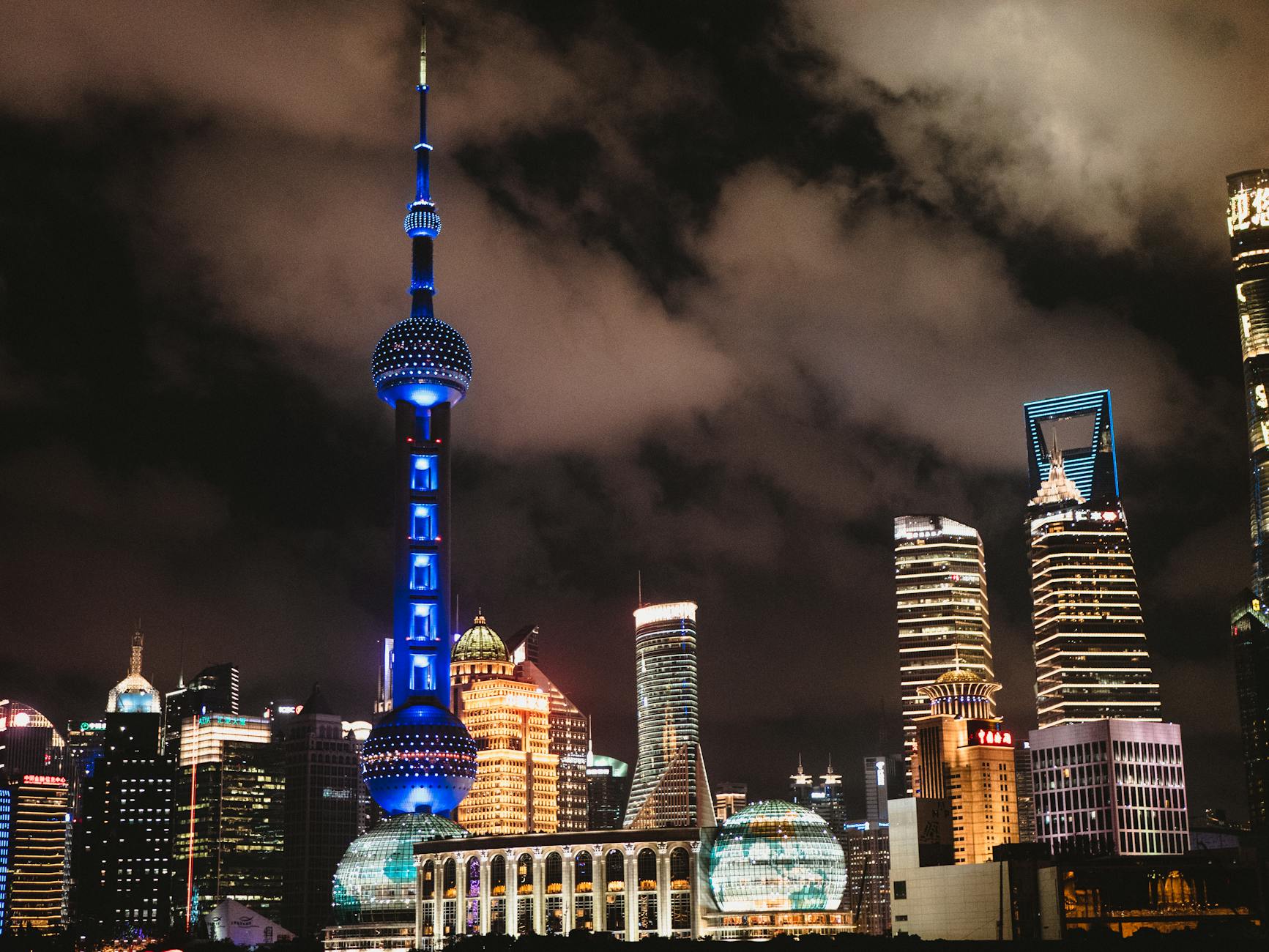
The surface is so strong that it can crowd out the city. The Bund at night, the Lujiazui towers across the Huangpu, the neon commercial canyons, the luxury hotels, the maglev train, the shopping malls, the art museums, the cocktail bars, the fast elevators, the old plane trees in the former French Concession, the lanes behind them, the line outside a dumpling shop, the ferry crossing from Puxi to Pudong, the coffee in a converted warehouse, the wet market smell at breakfast, the quiet of a side street after rain: all of these are Shanghai, but none of them is the whole city.
Many first-time visitors come looking for China's most international city and leave having seen only the most international-looking parts. They walk the Bund, go up a tower, eat xiaolongbao, shop on Nanjing Road, wander Xintiandi, maybe take the maglev, and conclude that Shanghai is glamorous, efficient, and slightly less "Chinese" than they expected. That is not exactly wrong, but it is incomplete. Shanghai is not a generic global city pasted onto China. It is a river city, a port city, a treaty-port city, a merchant city, a migrant city, a finance city, a design city, a food city, a neighborhood city, and one of the most important urban laboratories in the world.
Shanghai is also a city where practical setup matters more than many visitors expect. The city is physically easy: the Metro is excellent, taxis are abundant, hotels are polished, airports are capable, and signage is better than in many Chinese cities. But the trip can become clumsy if you arrive without payment apps, offline maps, translation tools, a plan for internet access, awareness of accommodation registration rules, and a realistic understanding of China's entry requirements. Shanghai rewards the traveler who handles that friction early, then lets the city open up.
The best Shanghai trip is not a checklist of towers and old streets. It is a sequence of contrasts. You cross the river and understand that Pudong is not just a view but a statement. You stand on the Bund and realize that Shanghai's history is both architectural and political. You walk under plane trees in Xuhui and see a softer city built at domestic scale. You move through People's Square and Nanjing Road and watch public life, shopping, transit, tourism, and office routines collide. You spend time in museums and art districts because Shanghai's modern cultural confidence is not incidental. You eat both the sweet, oily, delicate local dishes and the broader foods of a city fed by migrants from across China. You use Shanghai not only as a destination but as a rail base for Suzhou, Hangzhou, water towns, and the Yangtze Delta.
This guide is designed to prevent the shallow version of Shanghai. It explains where to stay, how to choose between the Bund, People's Square, Jing'an, Xintiandi, the former French Concession, Pudong, and Hongqiao; how to handle Pudong and Hongqiao airports; how payment works for visitors; how to move around without turning every ride into an app problem; what the Bund is worth and what it is not; when to cross the Huangpu; how to eat beyond one famous dumpling line; how many days Shanghai deserves; what to book ahead; what to skip; and how to make the city feel like a living place rather than a skyline stop.
Shanghai in one sentence: Shanghai is China's great river-facing modern city, where the best trip comes from pairing practical app-and-transit setup with slow neighborhood walking, serious eating, museum time, Bund-Pudong contrast, and the discipline to look beyond the postcard skyline.
Basic data
| Population | About 25 million |
|---|---|
| Area | 6,341 km2 |
| Major religions | Largely secular public life with Buddhist, Christian, Muslim, and Daoist communities |
| Political system | Direct-administered municipality inside a socialist one-party state |
| Economic system | Upper-middle-income mixed economy centered on finance, trade, logistics, technology, and services |
Quick Verdict
| Question | Answer |
|---|---|
| Best for | First China trips, urban design, skyline views, museums, food, shopping, art, architecture, cafes, luxury hotels, business travel, rail day trips, Disney trips, modern China context, river walks, neighborhood wandering, and travelers who like cities that are both efficient and layered. |
| Not ideal for | Travelers who want a small historic city, mountain scenery, rural immersion, old-town romance without modern interruption, easy Western internet access, a cashless trip without setup, or a China visit that can be planned without checking entry and payment logistics. |
| Ideal first visit | 4 full days if Shanghai is a real destination. Three days works for the Bund, Pudong, former French Concession, museums, food, and one deeper neighborhood day. Five or six days is better if you add Disney, Suzhou, Hangzhou, or water towns. |
| Minimum worthwhile trip | Two full days can work for a fast urban introduction, especially on a longer China route, but one night is too short unless Shanghai is only a transit stop. |
| Best months | April, May, October, and November are the easiest for walking. March can be good but variable. December can be crisp and urban. June is humid and rainy. July and August are hot, humid, and draining. September can be good but still carries heat and storm risk. |
| Best first-timer base | People's Square/Nanjing Road for central convenience, the Bund for a view-led splurge, Jing'an for comfort and food access, Xintiandi/former French Concession for polished walkability, Pudong/Lujiazui for business and skyline hotels, and Hongqiao only if rail, airport, or business geography demands it. |
| Biggest planning mistake | Treating Shanghai as a skyline-and-dumpling stop while failing to set up payment, maps, translation, and internet before arrival. The city is easy after setup and needlessly annoying without it. |
| One thing to book ahead | Better hotels during major events and holiday periods, Shanghai Disney tickets and date planning, popular restaurants, museum reservations when required, high-speed rail tickets for peak periods, and any timed observation-deck or special exhibition plans. |
| One thing to leave unscheduled | Neighborhood walking in the former French Concession, Xuhui, Jing'an, Suzhou Creek, North Bund, West Bund, and small food streets. Shanghai's best mood often appears between planned stops. |
| Best free or low-cost pleasures | The Bund promenade, Huangpu river ferries, Suzhou Creek walks, Fuxing Park, plane-tree streets in Xuhui, old lane-house districts where open to public streets, ferry views, food courts, mall basements, neighborhood markets, and evening skyline watching from Puxi. |
| Most important warning | Do not arrive assuming foreign cards work everywhere, Google services will work normally, or every app you use at home will be available. Shanghai is highly convenient, but it runs on Chinese systems. |
The Move
For a first Shanghai trip, build around one Bund/Pudong contrast day, one former French Concession/Jing'an walking day, one museum-and-river day, one food-and-neighborhood day, and one Yangtze Delta decision. If Disney matters, it gets its own day. If Suzhou or Hangzhou matters, do not pretend it is a casual afterthought.
Who Will Love Shanghai?
You will probably love Shanghai if you want:
- A first China city that is dense, modern, visually clear, and easier to navigate than many inland destinations.
- A place where China's 20th- and 21st-century stories sit in the same frame: treaty-port architecture, socialist-era urban fabric, reform-era growth, and contemporary finance.
- Strong hotels, reliable transit, serious restaurants, museums, galleries, shopping, coffee, and nightlife.
- A city where you can walk from luxury to lane-house texture in a few minutes.
- A destination that works for business travelers who want real cultural depth around meetings.
- A base for Suzhou, Hangzhou, water towns, Nanjing, and the broader Yangtze River Delta.
- A city that rewards observation: street corners, ferry queues, malls, markets, parks, and the choreography of daily life.
You may struggle with Shanghai if you want:
- A preserved old capital where history is the dominant visual language.
- A China trip that avoids app setup, digital payment, translation tools, or internet planning.
- A city where famous sights alone explain the place.
- Quiet, low-rise charm as the default mood.
- Easy spontaneous access to every attraction without reservations, ID checks, security screening, or changing ticket rules.
- A destination where Western cards, Western websites, and Western mapping habits work exactly as they do at home.
Shanghai's difficulty is not usually physical. It is procedural. The streets are walkable in many central districts. The Metro is superb. Airports and railway stations are competent. Major hotels are easy. But the city can feel opaque when your phone does not work, your payment app is not set up, your map cannot find Chinese names, your hotel is far from the places you actually want, or your day-trip ticket is sold out because you assumed Chinese rail worked like a suburban train.
The solution is not to over-plan every hour. The solution is to handle the infrastructure early: passport and visa rules, payments, internet, maps, translation, hotel location, rail bookings, museum reservations, and a few Chinese addresses saved in advance. Once those are handled, Shanghai becomes one of the easiest great cities in China to enjoy with intelligence.
Shanghai at a Glance
| Practical | Detail |
|---|---|
| Country | China. Shanghai is one of China's four direct-administered municipalities, governed at provincial level rather than as an ordinary city within a province. |
| Region | East China, on the Yangtze River Delta. The city sits near Jiangsu and Zhejiang, which makes Suzhou, Hangzhou, Nanjing, water towns, and other delta destinations logical extensions. |
| Language | Mandarin is the practical travel language. Shanghainese is locally important but not needed for visitors. English is common in major hotels, high-end restaurants, airports, and business districts; it is not universal in taxis, smaller restaurants, markets, or residential neighborhoods. |
| Currency | Chinese yuan / renminbi, abbreviated CNY or RMB. Mobile payments dominate daily life. International cards are improving at major transport points and hotels, but Alipay, WeChat Pay, cash, and a backup card are still practical. |
| Time zone | China Standard Time, UTC+8 year-round. China does not use daylight saving time. |
| Main airports | Shanghai Pudong International Airport (PVG) is the main long-haul international airport. Shanghai Hongqiao International Airport (SHA) is closer to the central west side and is tied to the Hongqiao railway hub. |
| Main railway stations | Shanghai Hongqiao for many high-speed rail routes, Shanghai Railway Station for central and intercity routes, Shanghai South for some services, and Shanghai West for limited services. Check exact station before booking; "Shanghai" is not one rail terminal. |
| Core transit | Shanghai Metro, taxis, ride-hailing, buses, ferries, airport buses, the maglev between Pudong Airport and Longyang Road, and high-speed rail for regional trips. |
| Payment setup | Link foreign cards to Alipay and/or WeChat Pay before arrival where possible, keep a physical bank card and some cash backup, and test small purchases early. Shanghai has expanded foreign-card support on transport, but small merchants still often expect QR payment.[5][6][7] |
| Metro payment | Visitors can use Shanghai Metro through ticket machines/service centers, Shanghai Public Transportation Card options, supported apps, and expanded foreign bank card tap-to-ride pilots across the urban rail network. Always keep a backup method in case a card, device, or gate does not cooperate.[8][9] |
| Emergency numbers | Police: 110. Fire: 119. Ambulance: 120. For U.S. travelers, the State Department also notes China-specific safety and legal issues; travelers from other countries should check their own advisories.[14] |
| Tap water | Not generally treated as drinking water by visitors. Use bottled, filtered, or boiled water unless your hotel provides a reliable filtered source. |
| Tipping | Not customary in ordinary restaurants, taxis, and hotels. Upscale international hotels may have service charges; follow the bill and local norms. |
| Best first-timer mode | Metro plus walking inside central neighborhoods, taxi or ride-hail for awkward late-night or cross-river trips, ferries for river texture, and high-speed rail only when day-trip timing is realistic. |
First-Timer Mistake
The classic Shanghai mistake is choosing a hotel because it says "near the Bund" or "near the French Concession" without checking the exact Metro station, river side, walking environment, and taxi reality. Shanghai is large, and several names cover broad areas. A hotel that looks central on a booking map can still create daily friction if it is on the wrong side of your actual itinerary.
2026 Visitor Notes
Entry Rules Are Changing Often Enough To Check Carefully
China's entry rules have changed repeatedly in recent years, including broader unilateral visa-free access for some ordinary passport holders and a 240-hour visa-free transit policy for eligible travelers transiting to a third country or region.[1][2] Eligibility depends on nationality, passport type, route, purpose, length of stay, and current policy. A traveler flying London-Shanghai-Hong Kong may not be treated the same as one flying London-Shanghai-London. A traveler entering visa-free for tourism may not have the same rights as one working, studying, reporting, or doing paid activity.
The move: Check official Chinese embassy, consulate, National Immigration Administration, airline, and Shanghai government information for your exact passport and routing. Do not build a China trip from a generic social-media statement about visa-free entry.
240-Hour Visa-Free Transit Is Useful, But It Is Not A Loophole
Shanghai is one of the key gateways for China's 240-hour visa-free transit policy. The policy can allow eligible foreign citizens to stay for up to 10 days while transiting onward to a third country or region, and Shanghai Pudong International Airport, Shanghai Hongqiao International Airport, and Shanghai Port Passenger Terminal are among the covered Shanghai ports in current Shanghai government guidance.[1]
But this is still a transit policy. Travelers need valid travel documents, onward tickets, eligible ports, and an itinerary that qualifies under the rules. Working, studying, and some other purposes may require appropriate visas or approvals.
The move: If you plan to use transit visa-free entry, save proof of onward travel, hotel details, and official policy screenshots close to departure. Airlines may check before boarding.
Accommodation Registration Is Not Optional
Foreign visitors in China must be registered at their place of stay. Hotels normally handle the registration during check-in. If you stay in a private residence, apartment, or with friends, the guest or host may need to register with local public security channels within 24 hours of check-in, including online self-registration options in Shanghai.[3][4]
The move: For a first Shanghai trip, a properly licensed hotel is simpler. If you use an apartment or private stay, confirm registration procedures before arrival and keep documentation.
Payment Has Improved, But Setup Still Matters
Shanghai has made a visible push to make payments easier for international visitors: foreign cards, Alipay, WeChat Pay, public transport payment options, and service counters have all improved.[5][6][7] That does not mean you can arrive with one foreign credit card and assume every noodle shop, taxi, cafe, attraction, vending machine, and app will work smoothly.
The move: Before departure, install Alipay and WeChat, attempt card linking and identity checks, bring the physical card, carry some RMB cash, and know how to show your hotel address in Chinese. Test a small purchase on day one before depending on an app for a late-night taxi or restaurant bill.
Internet Access Needs A Plan
Many foreign websites and services can be restricted or unreliable in mainland China. Messaging, maps, email, cloud documents, two-factor authentication, ride-hailing, banking, and translation all matter more when you travel. International roaming, a travel eSIM, a local SIM, hotel Wi-Fi, and VPN choices each have tradeoffs and legal considerations.
The move: Decide your internet plan before flying. Download offline materials, save hotel addresses in Chinese and English, make sure two-factor codes can reach you, and do not rely on a single blocked service for maps, tickets, reservations, or communication.
Pudong And Hongqiao Are Very Different Arrivals
Pudong is the main long-haul airport east of the city. Hongqiao is closer to many central-west districts and integrated with one of China's busiest high-speed rail hubs. Pudong can be handled by Metro, maglev plus Metro/taxi, airport bus, taxi, or ride-hail depending on arrival time, luggage, and destination. Hongqiao can be easier for Jing'an, Xuhui, the former French Concession, Hongqiao/Gubei, and rail connections.
The move: Choose airport transfer after choosing your hotel. Do not assume the maglev is the fastest door-to-door option; it is fast between Pudong Airport and Longyang Road, but you still have to finish the trip from there.[10]
Shanghai Disney Is A Full-Day Decision
Shanghai Disney Resort is not central Shanghai sightseeing. It sits in Pudong, requires dated planning, and can absorb a full day, especially with families, major events, seasonal shows, and crowd management. Official park hours, tickets, show times, and attraction closures change by date.[11][12]
The move: If Disney is important, give it a dedicated day and stay either near Disney or in a base with a clear transfer plan. Do not pair it with a serious Bund, museum, or Suzhou day.
Museums And Special Exhibitions May Require Reservations
Shanghai's museum and art scene is one of the reasons the city deserves more than two days. But major museums, special exhibitions, and peak-period cultural sites can require advance booking, timed entry, ID, or current app-based procedures. Shanghai Museum and its newer east-side presence are especially important for first-time visitors interested in Chinese art and history.[13]
The move: Check reservation rules a week or two before travel, then again the day before. Bring the passport used for booking.
Weather Is A Real Planning Variable
Shanghai's spring and autumn walking seasons are excellent, but summer heat and humidity can exhaust visitors. Rainy periods, typhoons, air-quality variation, and winter dampness affect comfort. The city has enough indoor alternatives to survive bad weather, but outdoor plans should not be stacked without flexibility.
The move: In summer, build mornings and evenings around walking, use museums and malls during the hottest hours, hydrate seriously, and do not underestimate how draining the city can feel in July and August.
How to Understand Shanghai
Shanghai makes more sense when you stop asking whether it is "old China" or "new China." It is both, and also neither in the simple way visitors often mean. Its identity comes from layers: fishing settlements, market towns, walled-city history, treaty-port concessions, foreign banks and clubs, Chinese entrepreneurship, leftist and nationalist politics, Japanese occupation, socialist industry, reform-era opening, real-estate transformation, finance, design, digital consumer life, and the enormous movement of people from across China into the city.
The result is a city that can look spectacularly modern and still be deeply local. A luxury mall may sit near a lane-house neighborhood. A French Concession street may carry a coffee shop, boutique, residential gate, old apartment block, delivery scooter, and elderly resident in the same frame. A river crossing may take you from colonial-era facades to a skyline that exists because China chose to make Pudong into a symbol of national economic ambition. A dumpling shop may be famous among tourists, locals, and office workers for different reasons. A museum may sit inside a converted industrial site because Shanghai keeps turning production spaces into cultural spaces while still remaining an economic machine.
The Five Shanghais A Visitor Actually Meets
| Shanghai | Where you feel it | What it gives you |
|---|---|---|
| The river city | The Bund, Lujiazui, North Bund, ferry crossings, West Bund, Huangpu riverfront | The essential visual logic: Puxi history facing Pudong futurism across the Huangpu. |
| The concession-and-lane city | Xuhui, Hengshan/Fuxing areas, Wukang Road, Anfu Road, Sinan Road, lane-house streets | Plane trees, low-rise texture, apartments, cafes, boutiques, old villas, and the domestic-scale Shanghai many visitors prefer. |
| The commercial city | Nanjing Road, Huaihai Road, Jing'an, Xintiandi, malls, department stores, food halls | Shopping, brands, restaurants, nightlife, office life, and Shanghai's polished consumer confidence. |
| The cultural city | Shanghai Museum, East Museum, West Bund, M50, Rockbund, Power Station of Art, smaller galleries | Art, archaeology, design, contemporary culture, and a stronger museum scene than skyline-only itineraries suggest. |
| The delta hub city | Hongqiao, high-speed rail stations, Suzhou Creek, day trips to Suzhou/Hangzhou/water towns | Shanghai as a base inside the Yangtze Delta, not an isolated destination. |
You do not need every Shanghai on a first trip, but you should understand which one you are emphasizing. A traveler staying on the Bund and going to a tower will experience the river city beautifully. A traveler staying in Jing'an and walking Xuhui will experience the plane-tree city. A traveler based at Hongqiao for meetings may barely touch the postcard city unless they plan for it. All can be valid. The problem is drifting into a version of Shanghai you did not choose.
The Huangpu River Is The Key
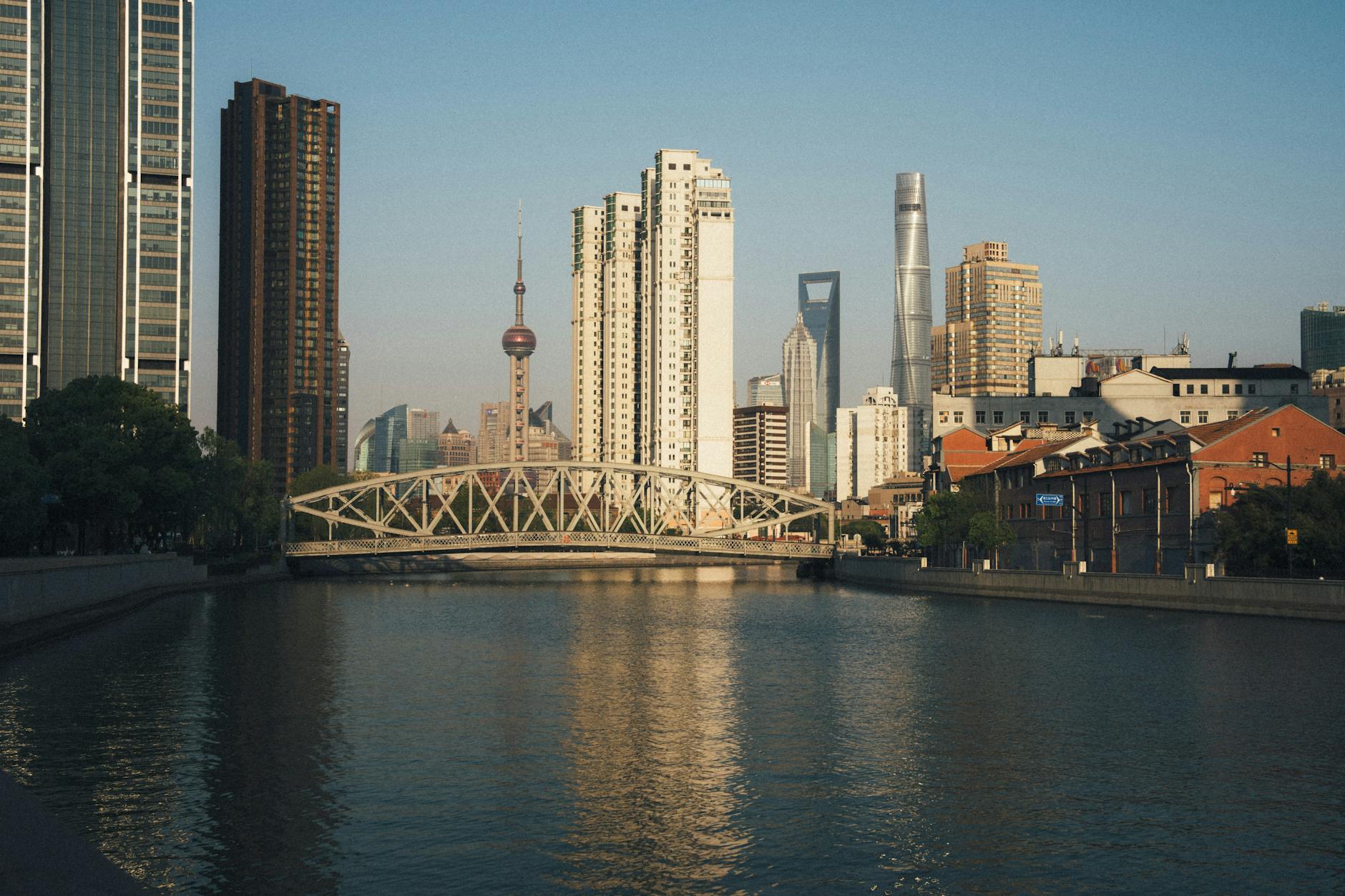
The Huangpu is not just scenery. It is the organizing device of first-time Shanghai. On the west side, Puxi holds the Bund, older central districts, People's Square, Nanjing Road, Xintiandi, Jing'an, the former French Concession, Suzhou Creek, and most of the walking neighborhoods visitors imagine when they think of historic Shanghai. On the east side, Pudong holds Lujiazui, major skyscrapers, business districts, the Shanghai Tower, the Oriental Pearl Tower, large hotels, the Science and Technology Museum area, Disneyland farther east, and Pudong airport beyond.
The classic view is from Puxi across to Pudong. That matters because many visitors instinctively want to stay in the view. A Pudong skyline hotel can be excellent, especially for business, luxury, and tower views, but it often places you away from the evening walking texture that makes Shanghai feel human. A Bund hotel may cost more but gives you the river theater. A Jing'an or Xuhui hotel may give less spectacle and better daily life.
The river also creates a useful itinerary rhythm. See the Bund in daylight, then again after dark. Cross to Pudong not only for a tower but to reverse the view. Use a ferry at least once if timing allows. Walk North Bund or West Bund if you want river space without only postcard crowds.
Shanghai Is Not Only The Bund
The Bund is essential. It is also overrepresented. If all you do is walk the Bund, look at Pudong, and go to Nanjing Road, Shanghai can feel like a financial postcard with shopping attached. The better city sits behind that frame. Walk west into Huangpu and Jing'an. Spend time in Xuhui's old residential streets. Use Suzhou Creek to understand newer urban renewal. Go to West Bund for a more contemporary cultural riverfront. Visit a museum before assuming Shanghai is short on depth.
The Bund explains Shanghai's global-facing image. It does not explain Shanghai's everyday life, its food rhythms, its residential textures, or its modern cultural ambition. It is the opening scene, not the full film.
Shanghai Is A City Of Friction Hidden Inside Ease
Shanghai looks easy because it is clean, efficient, vertical, and well-connected. In many ways it is easy. But the visitor friction is often invisible until it matters:
- A restaurant accepts mobile payment but not your foreign card.
- A map name appears differently in English, pinyin, and Chinese.
- A taxi driver needs the Chinese address, not an English hotel name.
- A museum reservation asks for passport details.
- A ride-hailing app works only after payment verification.
- A website you rely on is blocked or slow.
- A high-speed train route has multiple "Shanghai" stations.
- A private accommodation requires registration steps you did not anticipate.
This is why Shanghai benefits from practical planning. You are not planning every minute. You are building a smooth operating system for the trip.
Shanghai's Scale Is More Subtle Than Beijing's Or Tokyo's
Shanghai is enormous, but first-time visitors often underestimate it because the core attractions cluster more neatly than in Beijing and the Metro makes distances feel solvable. That can create overloaded days: Bund, tower, Yu Garden, French Concession, museum, dinner, and nightlife all jammed into one route. The map says possible. Your feet, heat tolerance, jet lag, reservation timing, and phone battery may disagree.
Think in clusters:
- Bund / Nanjing Road / People's Square / Shanghai Museum
- Yu Garden / Old City / Bund south
- Lujiazui / Pudong towers / riverfront
- Xintiandi / Fuxing Park / Sinan Road
- Jing'an / Nanjing West Road / temples / malls
- Xuhui / Wukang / Anfu / Hengshan / former French Concession
- Suzhou Creek / M50 / North Bund
- West Bund / Long Museum area / riverside art
- Hongqiao / Gubei / business and rail geography
- Disney / outer Pudong
One or two clusters per day usually feels better than a citywide scatter.
Shanghai Is A Food City, But Not Always In The Way Visitors Expect
Shanghai cuisine is often described as sweet, rich, soy-braised, oily, delicate, and refined. That is partly true. But Shanghai as a food city is broader than "Shanghainese food." It is a city of regional migration and business dining, with excellent Jiangnan cooking, xiaolongbao, shengjianbao, noodles, crab-season dishes, red-braised meats, breakfast foods, bakeries, hotpot, Cantonese restaurants, Xinjiang food, Japanese dining, international restaurants, cafes, cocktail bars, and mall food courts that are better than the phrase "mall food court" suggests.
The mistake is to reduce Shanghai to one xiaolongbao shop and one fancy dinner. The better move is to eat across formats: one classic local restaurant, one dumpling or bun breakfast, one noodle lunch, one food hall, one regional Chinese meal, one cafe or bakery stop, and one evening where you choose by neighborhood rather than list.
Shanghai Is A Great First China City, But Not A Complete China Trip
Shanghai can be a superb introduction to China because it is navigable, global-facing, wealthy, connected, and packed with context. It is also unusual. If Shanghai is your only China stop, you will learn something real about China, but you will not have seen Beijing's imperial scale, Xi'an's ancient capital logic, Chengdu's Sichuan rhythm, Guilin/Yangshuo's karst landscapes, Yunnan's ethnic and geographic diversity, or the smaller industrial and county-level worlds that shape much of the country.
That is not a reason to undervalue Shanghai. It is a reason to be honest. Shanghai is one of China's essential cities, not a shorthand for the whole country.
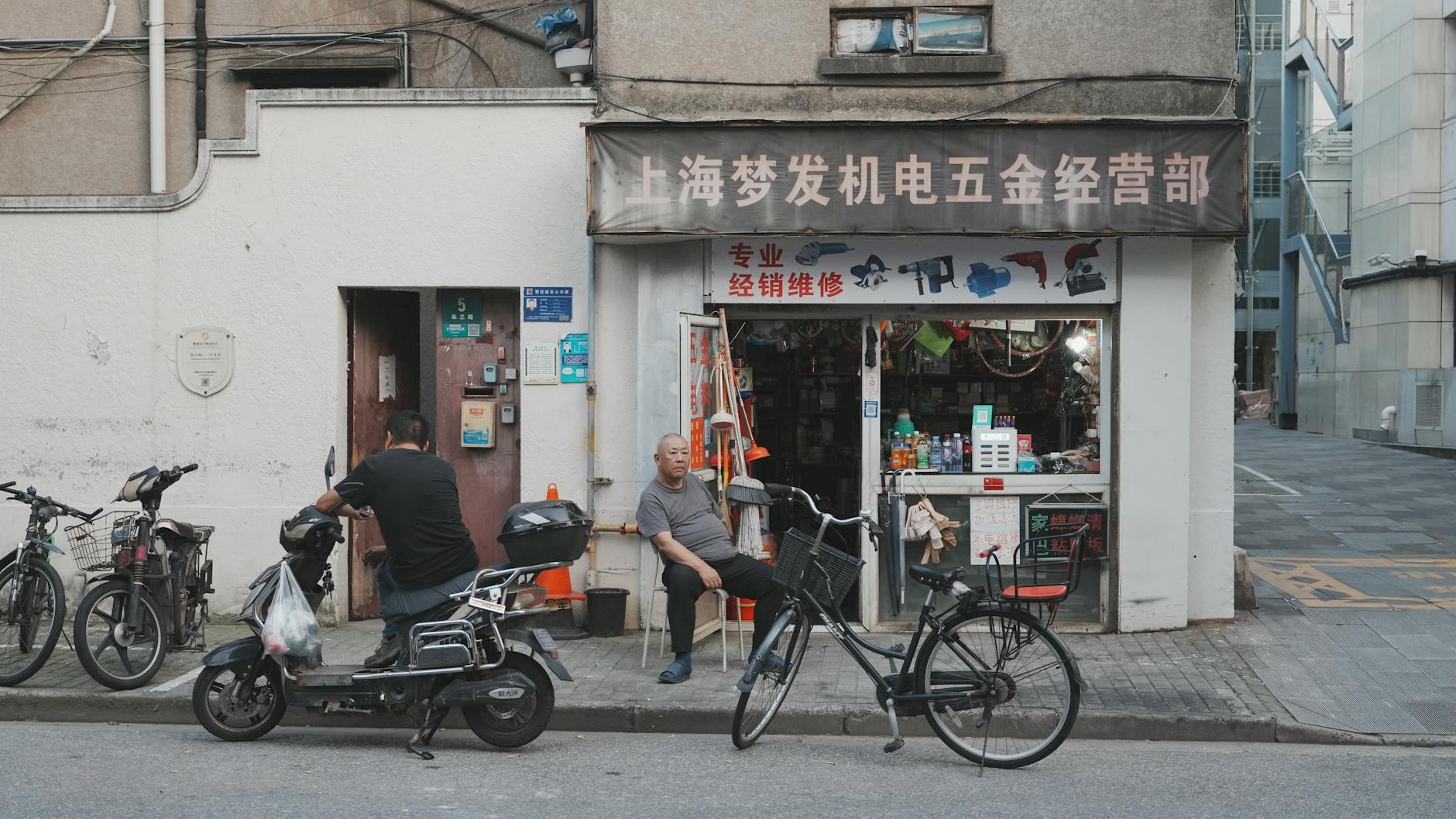
Best Time to Visit Shanghai
Shanghai is a year-round urban destination, but the quality of the trip changes dramatically by weather. The city is walk-heavy if you do it well: Bund promenades, former French Concession streets, Suzhou Creek, West Bund, markets, parks, shopping districts, ferry crossings, and museum-to-food transitions. When the weather is kind, Shanghai feels elegant and open. When it is hot, humid, rainy, or stormy, the same itinerary can feel punishing.
Best Overall Months
April and May are the easiest spring months for most visitors. The city has green streets, better walking weather, cafe terraces, park life, and comfortable evenings. Some spring rain is normal, but the city feels alive. Public holidays can affect crowds and prices, so check Chinese holiday calendars before assuming any week is ordinary.
October and November are the safest broad recommendation. Humidity drops, skies can be clearer, walking is more pleasant, and Shanghai's parks, riverfronts, and former concession streets become easier to enjoy. Autumn also works well for Suzhou and Hangzhou day trips.
March and December can be good value months if you accept variability. March can still be cold and damp but begins to open up. December is crisp, urban, and strong for shopping, museums, food, and skyline nights, though it lacks the softness of spring and autumn.
Summer: Useful But Demanding
June, July, August, and sometimes early September can be hot, humid, wet, and tiring. June may bring plum-rain season conditions. July and August can be oppressive, especially for visitors who plan long outdoor walks. Thunderstorms, typhoon-related disruptions, and heat advisories can affect plans.
Summer is not impossible. Shanghai has excellent indoor infrastructure: museums, malls, cafes, hotels, restaurants, galleries, and Metro access. But summer requires a different rhythm:
- Walk early and late.
- Reserve museums and indoor attractions for the afternoon.
- Keep lunches close to where you already are.
- Use taxis when humidity turns a transfer into a slog.
- Carry water and expect to sweat.
- Do not schedule Disney as if heat is irrelevant.
- Give older travelers and children more rest breaks.
The city can still be fun in summer, but the margin for overplanning is smaller.
Winter: Colder Than The Latitude Suggests
Shanghai winters are not usually severe by northern standards, but they can feel damp and penetrating. Wind along the river can be unpleasant. Older buildings may not feel as warmly insulated as visitors from colder countries expect. Still, winter has advantages: fewer leisure tourists than peak seasons, strong food appeal, atmospheric river views, museum time, shopping, and crisp photography when skies cooperate.
January and February are heavily shaped by Lunar New Year timing. Some restaurants and small businesses may close or adjust hours. Travel across China can be crowded around holiday periods. Shanghai can feel quieter in some neighborhoods and extremely busy in transport corridors.
Spring Blossoms And Autumn Leaves
Shanghai has blossoms and foliage, but it is not Kyoto. That is useful. You can enjoy seasonal beauty without making the entire trip depend on one fragile peak. Parks, riverfronts, university areas, residential streets, and day trips all improve in spring and autumn. But you should not plan Shanghai as a blossom-chasing trip unless you are flexible.
For a first visit, choose Shanghai for urban texture, food, museums, river views, and rail access. Let seasonal beauty be a bonus.
Major Holidays And Events
Chinese public holidays affect hotel rates, train tickets, attraction crowds, museum reservations, restaurant availability, and airport flow. The most important periods to watch are Lunar New Year, Qingming, Labor Day/May holiday, Dragon Boat Festival, Mid-Autumn Festival, and National Day/Golden Week. Large trade fairs, conferences, sports events, and cultural events can also move rates sharply.
The move: Before booking, check Chinese public holidays and Shanghai event calendars. If you are traveling during a holiday, book rail and hotels earlier and reduce the number of day trips.
Month-By-Month Snapshot
| Month | What to expect | Best use |
|---|---|---|
| January | Cold, damp, quieter outside holiday peaks. | Museums, food, shopping, luxury hotels, winter city photography. |
| February | Lunar New Year effects, variable closures, cold weather. | City lights, holiday atmosphere, food if reservations/closures are checked. |
| March | Transitional, sometimes chilly or wet. | Early spring walking, lower-pressure first trips. |
| April | One of the best months. Green streets and good walking. | Former French Concession, Bund, Suzhou/Hangzhou side trips. |
| May | Excellent but holiday-sensitive. Warmer, lively, comfortable. | Full city itineraries, river walks, food, museums, day trips. |
| June | Humid, rainy, less predictable. | Museum-heavy plans, flexible indoor/outdoor days. |
| July | Hot and humid. | Short outdoor windows, indoor afternoons, evening skyline. |
| August | Hot, humid, storm-aware. | Family trips if school schedules require it, but plan carefully. |
| September | Improving late in month; still warm and storm-aware. | Food, shopping, early autumn city days. |
| October | Excellent but National Day can be crowded. | Walking, museums, day trips after holiday peak. |
| November | Excellent, cooler, often the best balance. | Deep city walking, Suzhou/Hangzhou, art and food. |
| December | Crisp, urban, sometimes damp. | Shopping, food, skyline, museums, shorter daylight routes. |
How Many Days You Need
Shanghai punishes both underestimation and overextension. Two days gives you a functional introduction. Three days makes the city intelligible. Four days is the first truly satisfying visit. Five or six days lets you add Disney, Suzhou, Hangzhou, or a water town without stealing from Shanghai itself. A week is not too long if you like cities, food, museums, design, and day trips.
One Day
One day is a layover or business add-on, not a real Shanghai trip. Use it honestly:
- Morning: People's Square / Shanghai Museum if reservation timing works, or Yu Garden and the Old City if you want older texture.
- Afternoon: The Bund in daylight, then cross or view Pudong.
- Evening: Lujiazui skyline, Bund lights, or dinner in Jing'an/Xintiandi/former French Concession depending hotel location.
Do not try to include Disney, Suzhou, Hangzhou, and the former French Concession. With one day, choose the river and one neighborhood.
Two Days
Two days can work if you are already on a broader China trip:
Day 1: Bund, People's Square or Shanghai Museum, Nanjing Road, Pudong tower or river crossing, evening skyline.
Day 2: Former French Concession/Xuhui/Jing'an walking, Xintiandi or Fuxing Park, food-focused dinner, possibly Yu Garden if you start early.
This version gives you skyline plus human-scale Shanghai. It is still thin on museums, art districts, and day trips.
Three Days
Three days is the minimum for a balanced first visit:
Day 1: Bund/Pudong/river orientation.
Day 2: Former French Concession, Xuhui, Jing'an, food, and cafes.
Day 3: Shanghai Museum or East Museum, Yu Garden/Old City, Suzhou Creek or North Bund, evening food neighborhood.
Three days lets Shanghai become more than a skyline. It still leaves hard choices: no Disney unless you sacrifice a core city day, and no Suzhou/Hangzhou unless you reduce Shanghai depth.
Four Days
Four days is the ideal first visit for most city-focused travelers:
Day 1: River, Bund, Pudong, skyline.
Day 2: Former French Concession, Xuhui, Jing'an, food.
Day 3: Museums, Yu Garden/Old City, People's Square, Nanjing Road, evening around the Bund or Xintiandi.
Day 4: West Bund/M50/Suzhou Creek/North Bund, or a themed day for food, shopping, art, business, or family travel.
Four days gives you enough looseness to handle weather, reservations, jet lag, and app friction.
Five Or Six Days
Five or six days is best if you add one major extra:
- Disney: one full day.
- Suzhou: one day for gardens, canals, museums, and old streets.
- Hangzhou: one long day or better as an overnight.
- Water town: one day, with careful expectations.
- Nanjing: possible as a long day, better as an overnight for serious travelers.
- Deep Shanghai: art, cafes, food, shopping, parks, ferry rides, and neighborhoods at a slower pace.
The key is not adding everything. A five-day Shanghai trip with Disney and Suzhou can still feel rushed if you do not protect city time.
One Week
A week in Shanghai is excellent for travelers who like cities and context. A smart week might look like:
- 4 days Shanghai proper.
- 1 day Suzhou.
- 1 day Hangzhou or water town.
- 1 flexible day for Disney, art, shopping, or rest.
Or, for a China-first route, use Shanghai for 3 or 4 days, then continue by high-speed rail to Hangzhou, Suzhou/Nanjing, Beijing, Xi'an, or beyond.
How To Decide Your Length
| Trip style | Recommended Shanghai time |
|---|---|
| Business add-on | 1-2 days if meetings dominate. |
| First China gateway | 3-4 days before continuing elsewhere. |
| City-lover trip | 5-7 days with day trips and deeper neighborhoods. |
| Family with Disney | 4-6 days, depending Disney and rest needs. |
| Luxury hotel and food trip | 4-5 days. |
| Art/design/shopping trip | 4-6 days. |
| Yangtze Delta base | 5-7 days if you add Suzhou/Hangzhou/water towns. |
The blunt advice: if Shanghai is your first city in China, give it at least three nights. If it is your only China city, give it four or five nights. If you are only transiting, do less and enjoy it cleanly.
Where to Stay in Shanghai
Where you stay in Shanghai determines the personality of the trip. The city is too large for "central" to be enough. A Bund hotel, a Jing'an hotel, a former French Concession boutique stay, a Pudong tower hotel, and a Hongqiao business hotel can all be good choices, but they produce different days and nights.
For first-timers, the safest hotel zones are:
- People's Square / Nanjing Road: central convenience and easy Metro access.
- The Bund: view-led, high-impact, expensive, excellent for first-night drama.
- Jing'an / Nanjing West Road: polished, practical, food/shopping strong, good for repeatable comfort.
- Xintiandi / Huaihai Road / former French Concession edges: walkable, stylish, neighborhood-friendly.
- Pudong / Lujiazui: business, luxury towers, skyline views, less ideal for human-scale evening wandering.
- Hongqiao / Gubei: business, rail, airport, expat comfort, not the best first leisure base unless geography demands it.
Best Overall: Jing'an / Nanjing West Road
Jing'an is the best default for many first-time visitors who want comfort without being trapped in tourist theater. It has strong hotels, restaurants, malls, Metro access, cafes, bars, temples, shopping, and good links to the former French Concession, People's Square, the Bund, and Hongqiao. It feels more livable than the Bund and less chaotic than Nanjing East Road.
Stay here if you want:
- A polished but not purely tourist base.
- Strong food and shopping nearby.
- Easy Metro and taxi access.
- A good balance between business and leisure.
- A base that works for repeat visits.
Watch out for:
- Hotel pricing can rise sharply.
- "Jing'an" covers a broad district; check the exact station.
- Some areas are mall-heavy rather than charming.
Best For First-Time Convenience: People's Square / Nanjing Road
People's Square is practical because it sits near major Metro lines, Shanghai Museum, Nanjing Road, the Bund approach, and central Puxi. For a short trip, it reduces routing complexity. Nanjing East Road is tourist-heavy but useful. Nanjing West Road shades more upscale and businesslike as you move toward Jing'an.
Stay here if you want:
- Central sightseeing convenience.
- Easy access to the Bund, museum, shopping, and multiple Metro lines.
- A short stay where location beats neighborhood subtlety.
Watch out for:
- Nanjing East Road can feel crowded and commercial.
- Some hotels trade on location more than charm.
- The area is convenient, but not always the city's most interesting evening base.
Best For Drama And Views: The Bund
The Bund is where Shanghai performs for first-timers. A good Bund hotel can make the trip feel cinematic from the first evening. You step outside to the river, the skyline, old facades, and the most legible symbol of the city. For a first night or a luxury stay, it can be worth it.
Stay here if you want:
- Iconic views.
- A special-occasion hotel.
- Easy access to the Bund promenade and old financial district architecture.
- A trip where the river is the emotional center.
Watch out for:
- Expensive rates, especially for view rooms.
- Crowds on the promenade.
- Less intimate neighborhood life immediately outside the tourist frame.
- Taxi and traffic friction at peak times.
Best For Walkable Style: Xintiandi / Huaihai Road / Former French Concession Edges
This is the base for travelers who want Shanghai to feel leafy, stylish, and walkable. Xintiandi itself is polished and commercial, but nearby streets toward Fuxing Park, Sinan Road, Huaihai Road, and Xuhui give access to the old plane-tree city. Boutique hotels and higher-end stays can work well here.
Stay here if you want:
- Cafes, boutiques, bars, restaurants, and pleasant walking.
- Easy access to former concession streets.
- A softer alternative to the Bund and People's Square.
- A base that works for couples, solo travelers, and style-focused trips.
Watch out for:
- "Former French Concession" is a loose label used aggressively in hotel marketing.
- Some stays are farther from Metro than expected.
- Xintiandi can feel curated and expensive; use it as a base, not the whole neighborhood experience.
Best For Business And Towers: Pudong / Lujiazui
Pudong is not only a skyline; it is a major business district. Lujiazui hotels can be excellent: high floors, strong service, river views, convenient for Pudong meetings, and dramatic architecture. If you want to sleep inside the skyline, this is where you do it.
Stay here if you want:
- Business convenience in Pudong.
- Luxury tower hotels and views.
- Easy access to Shanghai Tower, Oriental Pearl, and Pudong riverfront.
- A more controlled, high-rise environment.
Watch out for:
- Evenings can feel less textured than Puxi.
- You may cross the river constantly for food, walking, and nightlife.
- Pudong is large; "Pudong" alone is not a hotel location.
Best For Rail, Airport, And Business Logistics: Hongqiao / Gubei
Hongqiao is highly practical for domestic flights, high-speed rail, trade fairs, business parks, and some family or expat-oriented stays. Gubei has international restaurants and a more residential expat feel. This can be the right choice for specific trips, especially if you will take early trains or have meetings nearby.
Stay here if you want:
- Hongqiao Airport or Hongqiao Railway Station access.
- Business convenience west of the center.
- A calmer, more residential base.
- Easy rail day trips from Hongqiao.
Watch out for:
- It is not the best base for a first leisure trip focused on the Bund, Xuhui, and central Shanghai.
- Evenings can feel detached from classic Shanghai.
- Taxi/Metro time to central sightseeing adds up.
Best For Families
Families should choose by itinerary:
- Disney focus: consider a Disney-area hotel for the park portion, or split the stay.
- City plus Disney: Jing'an, People's Square, or Xintiandi can work, then dedicate a transfer day to Disney.
- Food and parks: former French Concession edges, Jing'an, or Xuhui can feel easier than the Bund.
- Rail day trips: People's Square or Hongqiao depending routes.
Families should prioritize elevators, room size, breakfast, laundry access, nearby Metro, nearby simple food, and whether taxis can easily stop at the hotel.
Where Not To Stay On A First Visit
Avoid choosing a hotel only because it is cheap and "near Metro" in an outer district. Shanghai's Metro is excellent, but a 45- to 70-minute commute each way will drain a short trip. Also be cautious with apartments unless you understand registration rules, payment, check-in language, and building access.
The hotel should make the city easier. If it makes you solve logistics every morning, it is not a bargain.
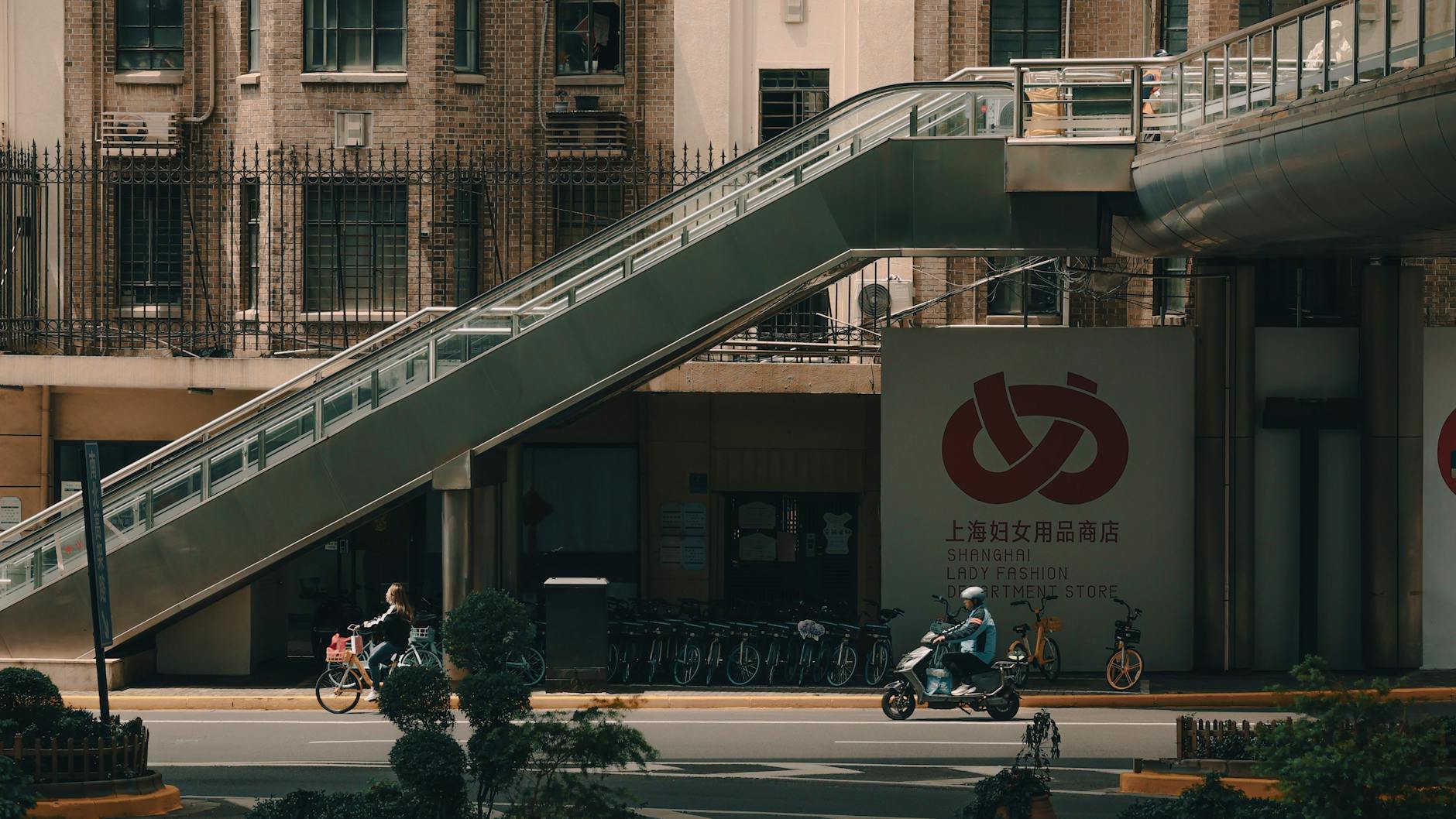
Neighborhood Guide
Shanghai's neighborhoods do not behave like tidy tourist zones. Names overlap, districts are large, and commercial labels can be vague. Think in practical visitor areas rather than administrative boundaries.
The Bund
The Bund is Shanghai's mandatory first act: a riverfront promenade lined with early 20th-century banks, clubs, and commercial buildings facing the Pudong skyline across the Huangpu. It is beautiful, crowded, symbolic, and still worth it.
Go twice if you can: once in daylight to read the architecture, and once after dark to understand the theater. Daylight reveals stone, proportion, plaques, facades, and river traffic. Night turns Pudong into spectacle and the Bund into a grandstand.
Best for:
- First-time orientation.
- Photography.
- River walks.
- Luxury hotels.
- Architecture context.
- Seeing Shanghai's old and new image in one frame.
Do not expect:
- Quiet local life.
- Cheap food.
- A complete understanding of Shanghai.
The Bund is essential, but it is not a neighborhood to consume and leave. Walk behind it into the old financial streets, continue toward Suzhou Creek or Yu Garden, or use it as the starting point for a ferry crossing.
Lujiazui / Pudong
Lujiazui is the skyline district: Shanghai Tower, Shanghai World Financial Center, Jin Mao Tower, Oriental Pearl Tower, elevated walkways, finance offices, malls, hotels, and riverfront views back toward Puxi. It can feel futuristic, corporate, and slightly abstract, but it matters because Shanghai made Pudong into a national symbol of modern development.
Best for:
- Observation decks.
- Skyline hotels.
- Business travel.
- Reversing the Bund view.
- Families who want tower-and-mall logistics.
Watch out for:
- Distances between towers, malls, and riverfront can be less pleasant than they look.
- Elevated walkways are useful but not intimate.
- Restaurants can be expensive or mall-based.
The best Lujiazui visit often combines one tower or river viewpoint with a walk that lets you see how planned Pudong differs from older Puxi.
People's Square / Nanjing Road
People's Square is the civic and transit heart of central Shanghai. Shanghai Museum, major Metro access, theaters, parks, shopping streets, office life, and tourist movement all converge here. Nanjing Road runs east toward the Bund and west toward higher-end commercial Shanghai.
Best for:
- Short-stay convenience.
- Museum access.
- Shopping.
- Transit.
- Classic first-day orientation.
Watch out for:
- Nanjing East Road can feel generic and crowded.
- Tourist scams and aggressive approaches have historically been associated with busy pedestrian zones; stay polite and firm.
- The area is useful more than charming.
Use People's Square as a connector and cultural anchor, not just a shopping corridor.
Yu Garden / Old City / Huangpu Old Town
Yu Garden and the surrounding old-city commercial area give many visitors their most obvious "traditional" Shanghai image: roofs, bridges, snacks, shops, crowds, lanterns, and garden architecture. The garden itself is historically important and can be lovely when not overwhelmed. The surrounding bazaar is touristy but still useful for first-timers.
Best for:
- A classic Shanghai garden stop.
- Families.
- First-time visual contrast.
- Snacks and souvenir energy.
- Pairing with Bund south or Old City walking.
Watch out for:
- Crowds can be intense.
- The commercial area is not the same as everyday old Shanghai.
- Souvenir quality varies.
Go early if you care about atmosphere. Pair it with a more ordinary neighborhood walk afterward so your "old Shanghai" impression is not only a tourist market.
Xintiandi
Xintiandi is a redeveloped shikumen-style commercial district of restaurants, bars, shops, and preserved/renovated lane-house architecture. It is polished, expensive, and sometimes criticized as too curated. It is also useful, attractive, and easy.
Best for:
- First-night drinks or dinner.
- Travelers who want low-friction dining.
- Architecture-as-commercial-space context.
- Access to Fuxing Park, Huaihai Road, and nearby former concession walks.
Watch out for:
- It can feel like a lifestyle district more than a living neighborhood.
- Prices are higher.
- It is not enough by itself.
Use Xintiandi as a comfortable hinge, then walk beyond it.
Former French Concession / Xuhui Plane-Tree Shanghai
"Former French Concession" is one of the most overused and still useful labels in Shanghai travel. The area covers a broad swath of streets associated with tree-lined avenues, old villas, lane houses, apartments, cafes, small boutiques, bakeries, wine bars, and a more human-scale city.
For first-timers, the most rewarding walking zones often include Wukang Road, Anfu Road, Ferguson Lane area, Fuxing Road, Sinan Road, Hengshan Road, Huaihai Road edges, Fuxing Park, and the smaller streets between them. The point is not to chase one famous building. The point is to walk slowly enough to notice domestic scale.
Best for:
- Walking.
- Cafes.
- Boutiques.
- Photography.
- Couples and solo travelers.
- Understanding Shanghai beyond towers.
Watch out for:
- Some streets are overcrowded by photo traffic.
- Many buildings are residential; be respectful.
- Hotel listings using the label may be geographically loose.
This is where many visitors fall for Shanghai. Build in time to wander without a hard checklist.
Jing'an
Jing'an combines temple history, high-end shopping, office life, malls, restaurants, cafes, hotels, and central-west convenience. Jing'an Temple itself sits in the middle of a very modern commercial district, which is exactly the kind of contrast Shanghai does well.
Best for:
- Hotels.
- Shopping.
- Dining.
- Comfortable transit.
- Business-leisure hybrid trips.
- Repeat visits.
Watch out for:
- Malls can dominate the experience if you do not deliberately walk side streets.
- Prices can be high.
Jing'an is the practical adult in the room. It rarely gives the most dramatic first photo, but it often gives the smoothest trip.
Suzhou Creek / M50 / North Bund
Suzhou Creek has become one of Shanghai's most interesting urban-renewal corridors. Walks along the creek reveal bridges, warehouses, new public spaces, residential edges, and changing industrial architecture. M50 offers gallery and studio context in a former industrial area, while North Bund adds riverfront views and a less classic angle on the skyline.
Best for:
- Second-visit or deeper first-visit wandering.
- Art and photography.
- Urban transformation.
- River and creek walks.
- Escaping the obvious Bund-only route.
Watch out for:
- Not every stretch is equally scenic.
- Gallery hours and exhibitions vary.
- The area rewards walkers more than checklist travelers.
This is a strong day-three or day-four Shanghai area because it helps connect history, industry, art, and public-space renewal.
West Bund
West Bund is Shanghai's culture-and-riverfront statement: museums, galleries, converted industrial land, riverside promenades, event spaces, and a more spacious contemporary atmosphere than central Puxi. It is not as compactly charming as the former French Concession, but it shows Shanghai's ambition in art, design, and urban redevelopment.
Best for:
- Art-focused travelers.
- Architecture and design.
- River walks without only Bund crowds.
- A slower contemporary afternoon.
Watch out for:
- Check museum hours and exhibitions.
- Distances can be larger than expected.
- Food planning matters; do not assume every stretch has easy snacks.
West Bund is where Shanghai feels less like a postcard and more like a city deciding what its cultural future should look like.
Hongkou / North Of The Bund
Hongkou contains important Jewish refugee history, literary associations, older neighborhoods, and North Bund development. It is less polished for first-timers than Jing'an or Xuhui, but it adds depth if you are interested in Shanghai's 20th-century history.
Best for:
- Repeat visitors.
- History-focused travelers.
- North Bund views.
- A less obvious urban walk.
Watch out for:
- Attractions and sites are more dispersed.
- Some context requires reading beforehand.
Hongqiao / Gubei
Hongqiao and Gubei are practical rather than classic. Hongqiao is rail, airport, convention, and business infrastructure. Gubei is more residential and international, with restaurants and services oriented toward expats and long-stay residents.
Best for:
- Business travel.
- Early trains.
- Hongqiao Airport.
- Families or travelers needing west-side convenience.
Watch out for:
- It can feel far from Shanghai's core visitor pleasures.
- Not ideal for a first leisure base unless logistics dominate.
Disney / Chuansha / Outer Pudong
Shanghai Disney Resort sits far enough from central Shanghai that it should be treated as its own geography. Some families stay near Disney for one or two nights, then move into central Shanghai. That can be smarter than commuting repeatedly with tired children.
Best for:
- Disney-focused trips.
- Families prioritizing the park.
- Avoiding late-night cross-city returns.
Watch out for:
- It is not a good base for central Shanghai sightseeing.
- Food and neighborhood variety are limited compared with Puxi.
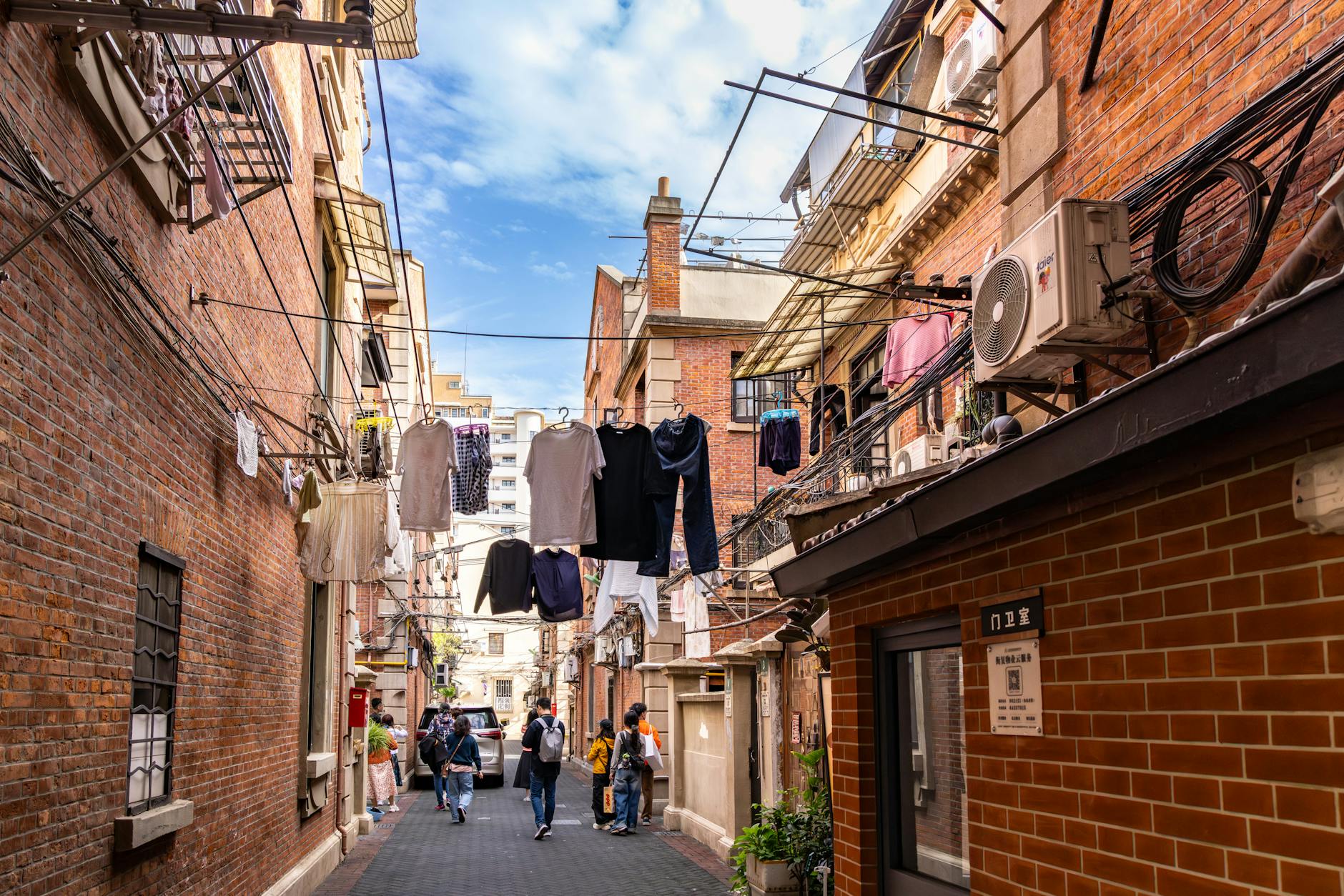
Best Things to Do
Shanghai's best experiences are not all attractions. Some are views, some are walks, some are logistical contrasts, and some are simply the feeling of moving through a city that knows how to stage modern life. A strong first trip combines icons, neighborhoods, museums, food, transit, and at least one slower half-day.
Walk The Bund Twice
The Bund is worth its fame. Go in daylight for architecture and context. Return after dark for spectacle. If you only go once, go near dusk and stay as the lights come on, but expect crowds.
In daylight, look at the old bank and trading buildings, the width of the river, the movement of barges and ferries, and the way the promenade functions as a public stage. At night, let the skyline do what it is designed to do. Then remind yourself that this is Shanghai's front cover, not its full story.
Practical tips:
- Early morning is best for quiet, joggers, older residents, and softer light.
- Evening is best for skyline drama.
- Weekends and holidays can be crowded.
- Keep belongings secure in crowds.
- Do not accept invitations from strangers to tea, art shows, or private venues in tourist zones.
Cross To Pudong And Reverse The View
Many visitors stare at Pudong from the Bund and never properly cross the river. Cross. Lujiazui gives you the reverse view: the Bund as historic facade, Puxi as density, and the river as the line between old international Shanghai and new financial Shanghai.
You can go up an observation deck, walk elevated routes, visit malls, or use the riverfront. Choose one tower if views matter, not all of them. The Shanghai Tower, Jin Mao Tower, Shanghai World Financial Center, and Oriental Pearl all offer different versions of height and spectacle; pick by current access, weather, price, and preference.
Practical tips:
- Do not pay for an observation deck on a hazy day unless the experience itself matters.
- Sunset slots can be popular.
- Leave time for security and elevators.
- If you stay in Pudong, deliberately schedule Puxi evenings.
Ride A Huangpu Ferry
The ferry is one of Shanghai's simplest pleasures. It is cheap, local, practical, and more revealing than many expensive river cruises. You see commuters, scooters, bikes, office workers, tourists, and the city as a crossing rather than a view.
A cruise can be pleasant, especially for first-timers who want a relaxed skyline experience, but the ferry gives texture. Use it at least once if weather, route, and timing cooperate.
Visit Shanghai Museum Or East Museum
Shanghai Museum is one of the city's essential cultural institutions. Its collections help ground a Shanghai trip in Chinese art and material culture rather than only modern urban spectacle. The newer east-side museum presence expands the institution's footprint and can change how visitors plan museum time.[13]
Practical tips:
- Check current opening hours, reservation rules, and which collections/exhibitions are at which site.
- Bring passport ID if required for booking or entry.
- Do not rush it between lunch and a tower reservation if you care about the collection.
- Pair People's Square museum time with Nanjing Road/Bund, or East Museum time with Pudong planning.
Walk The Former French Concession Slowly
This is not one attraction. It is a mood and a set of streets. The reward comes from slow walking: plane trees, old apartment blocks, villas, cafes, bakeries, boutiques, cyclists, delivery riders, residents, school gates, pocket parks, and the way Shanghai's domestic life appears behind glamour.
Good walking anchors include:
- Wukang Road.
- Anfu Road.
- Fuxing Park.
- Sinan Road.
- Hengshan Road.
- Huaihai Road edges.
- Tianping Road and surrounding small streets.
- Ferguson Lane area.
Do not photograph residents through gates, block sidewalks for social-media shots, or treat residential lanes as museum displays. The area is beautiful because people live there.
Visit Yu Garden And The Old City With Clear Expectations
Yu Garden is a classic Jiangnan garden and a worthwhile stop. The surrounding commercial area is crowded, touristy, and visually memorable. If you expect untouched old Shanghai, you may be disappointed. If you expect a historic garden inside a dense tourist district, you can enjoy it.
Go early, especially on weekends. Pair it with a walk toward the Bund or a meal nearby. Do not spend your entire "old Shanghai" curiosity in the bazaar; look for additional history in museums, old-city lanes where publicly accessible, and better-contextualized walks.
Spend An Afternoon In West Bund
West Bund is one of the best ways to see contemporary Shanghai's cultural ambition. The riverfront is broader and less iconic than the Bund, but museums, galleries, converted industrial spaces, and public promenades create a different version of Shanghai: less treaty-port postcard, more global art city.
Check current exhibitions before choosing the day. West Bund works well in good weather and for travelers who like architecture, design, photography, and slower cultural days.
Explore Suzhou Creek And M50
Suzhou Creek offers a useful counterpoint to the Huangpu. Its bridges, warehouses, residential edges, and renewed public spaces show urban change at a more intimate scale. M50 adds galleries and creative-industry context, though exhibitions vary.
This is not the first thing to do in Shanghai, but it is an excellent second-layer experience. Pair it with North Bund, Jing'an, or a food plan rather than treating it as a standalone checklist.
Eat A Proper Shanghainese Meal
Shanghai food is more than xiaolongbao. Make time for a proper local meal: red-braised pork, river shrimp, smoked fish, eel, seasonal greens, tofu dishes, crab-season specialties if timing works, noodles, cold dishes, and sweets. The cuisine may taste sweeter and richer than visitors expect, but that is part of the identity.
Ask hotel staff or local contacts for a restaurant that fits your comfort level. High-end versions exist, but a satisfying Shanghainese meal does not have to be formal.
Eat Breakfast Like The City Is Awake Before You
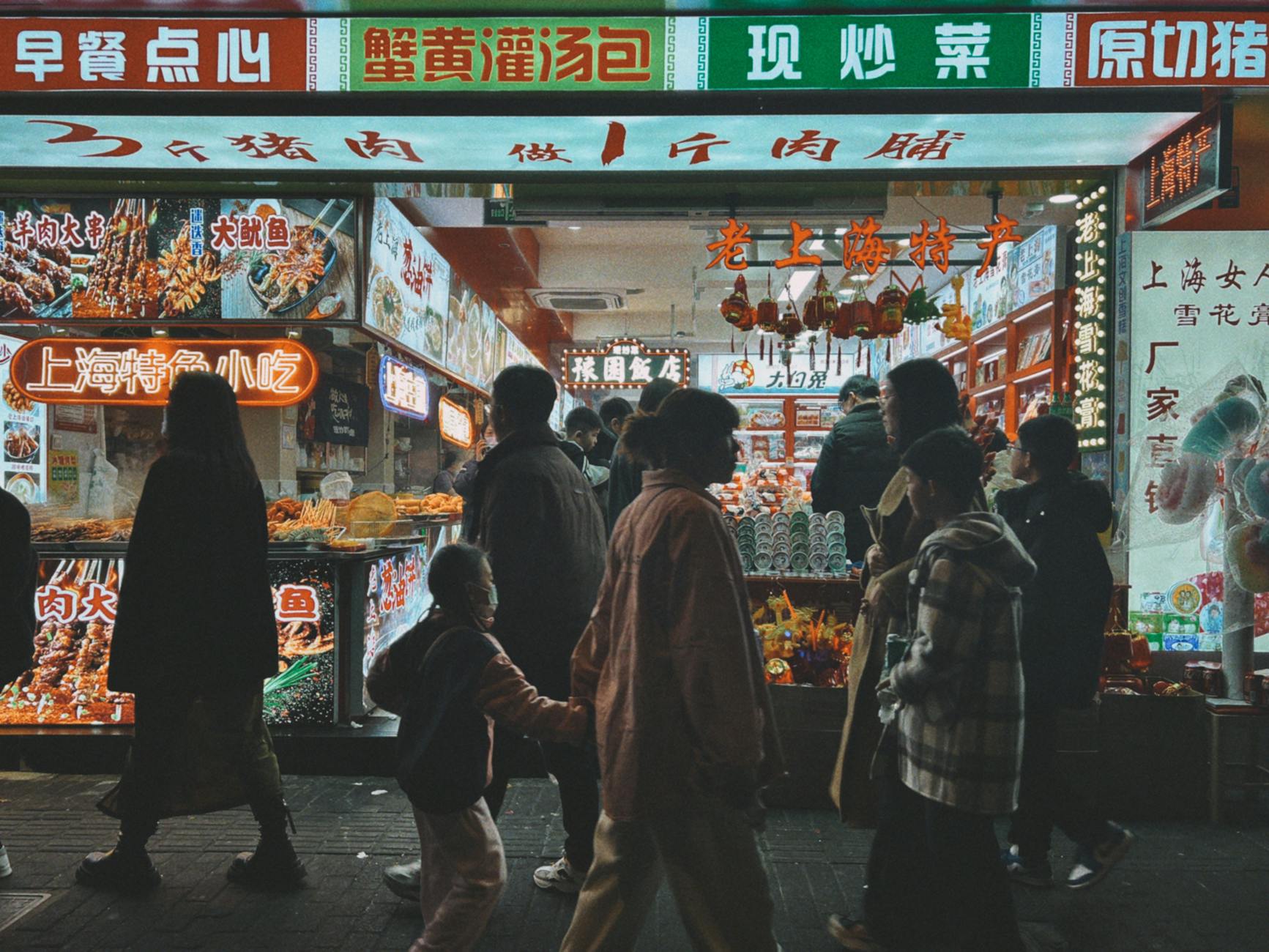
Shanghai breakfast is one of the best ways to feel the city. Look for shengjianbao, cifantuan, soy milk, youtiao, scallion pancakes, noodles, wontons, and small bakeries. Some famous places draw lines, but ordinary neighborhood breakfast can be more revealing.
Breakfast is also a test of your payment setup. Bring cash backup, use translation politely, and do not hold up a tiny shop while learning an app for the first time.
Use A Department Store Basement Or Mall Food Floor
Shanghai's malls are not just shopping; they are weather shelters, food systems, transit connectors, bathrooms, and social spaces. Department-store basements and mall food floors can be excellent for snacks, gifts, tea, bakeries, casual meals, and watching the city's consumer life.
This is especially useful in bad weather or summer heat. Do not dismiss mall food automatically. In Shanghai, the mall is part of the city.
Take A Day Trip Only If You Protect Shanghai Time
Suzhou and Hangzhou are obvious add-ons. Water towns are tempting. Nanjing is possible. But every day trip steals from Shanghai. Do not add a day trip because it is famous; add it because it serves the trip.
If you have three days, stay in Shanghai. If you have four days, choose either deep Shanghai or one light day trip. If you have five or six days, add Suzhou or Hangzhou with less regret.
Consider Shanghai Disney If It Fits The Trip
Shanghai Disney Resort is a major attraction and can be excellent for families and Disney fans. It is not, however, a casual add-on to a classic city day. Treat it as its own day, check official hours and tickets, understand transport, and decide whether a Disney-area hotel makes sense.[11]
If nobody in your party cares about Disney, skip it without guilt. Shanghai has enough depth.
Shanghai Itineraries
Shanghai itineraries should be cluster-based, not checklist-based. The city is efficient enough to tempt you into overloading days, but the best experiences come when walking, food, weather, and transit have room.
One-Day Shanghai: The Honest Layover
Morning: People's Square or Yu Garden
If you care about museums and can secure entry, start at Shanghai Museum. If you want older visual texture, start at Yu Garden before crowds peak.
Lunch: Central Puxi
Eat near People's Square, Huangpu, or the Old City depending route. Keep it simple; one-day trips should not spend an hour crossing town for a viral restaurant.
Afternoon: The Bund
Walk the Bund in daylight. Look at the buildings, not only the skyline. Continue toward Nanjing Road if you want the shopping corridor, or toward the old financial streets if you prefer architecture.
Evening: Pudong or Bund lights
Cross to Lujiazui for the reverse view or stay on the Bund for lights. Eat in Jing'an, Xintiandi, or near your hotel.
Rule: one day means no Disney, no Suzhou, no Hangzhou, and no serious former French Concession wandering unless you drop something else.
Two-Day Shanghai: Skyline Plus Human Scale
Day 1: River And Icons
- Bund in daylight.
- Old financial district backstreets.
- Nanjing Road / People's Square.
- Shanghai Museum if timing works.
- Pudong tower or riverfront.
- Evening skyline.
Day 2: Former French Concession And Food
- Morning cafe or breakfast in Xuhui.
- Wukang/Anfu/Fuxing/Sinan walking loop.
- Lunch in the former French Concession or Jing'an.
- Jing'an Temple / Nanjing West Road / Huaihai Road depending energy.
- Dinner focused on Shanghainese food or a strong regional Chinese restaurant.
This is the first itinerary that prevents skyline-only Shanghai.
Three-Day Shanghai: The Balanced First Visit
Day 1: Bund, Pudong, River
Start with the Bund, cross the river, choose one tower or viewpoint, and use a ferry or river walk if weather works. End with skyline lights.
Day 2: Former French Concession, Jing'an, Xuhui
Walk plane-tree streets, stop for coffee or bakery, see Fuxing Park or Jing'an Temple, shop lightly, and eat in a neighborhood rather than a tourist zone.
Day 3: Museums, Old City, Suzhou Creek
Use the morning for Shanghai Museum, East Museum, or another major cultural site. Add Yu Garden/Old City if not already done. Spend late afternoon along Suzhou Creek, North Bund, or M50. Choose a local dinner.
This is the best minimum itinerary for visitors who want to understand the city.
Four-Day Shanghai: The Recommended First Trip
Day 1: River Orientation
Bund, old financial streets, ferry, Pudong, skyline.
Day 2: Human-Scale Shanghai
Former French Concession, Xuhui, Fuxing Park, Anfu/Wukang/Huaihai, Jing'an dinner.
Day 3: Culture And Old City
Shanghai Museum or East Museum, People's Square, Yu Garden, Nanjing Road if wanted, evening food plan.
Day 4: Contemporary Shanghai
Choose West Bund for art, Suzhou Creek/M50 for urban renewal, North Bund for river views, or a food/shopping day. Keep the evening loose.
This itinerary lets Shanghai breathe. It also gives you a weather-flex day.
Five-Day Shanghai: City Plus One Big Extra
Add one of the following:
- Disney day: full day, especially for families.
- Suzhou day: gardens, canals, museum, old streets.
- Hangzhou day: West Lake and tea context, though overnight is better.
- Water town day: if you accept tourist infrastructure and choose carefully.
- Deep Shanghai day: extra museums, cafes, shopping, food, parks, and neighborhoods.
The fifth day should be intentional. Do not add a day trip just because a train exists.
Family Itinerary
Day 1: Easy arrival, hotel setup, Bund lights if energy allows.
Day 2: Yu Garden early, ferry or Pudong tower, mall lunch, aquarium or riverfront if children are interested.
Day 3: Former French Concession parks/cafes, simple food, rest window, evening skyline.
Day 4: Shanghai Disney or a museum/aquarium day.
Day 5: Suzhou or relaxed Shanghai, depending child age and stamina.
Families should avoid heroic walking routes. Shanghai is convenient, but heat, crowds, security lines, and app problems can drain children quickly.
Food-Focused Itinerary
Day 1: Shanghainese dinner after Bund orientation.
Day 2: Breakfast buns/noodles, former French Concession cafes and bakeries, local dinner in Jing'an/Xuhui.
Day 3: Market or food-street breakfast, regional Chinese lunch, food hall or mall basement exploration, cocktail or tea evening.
Day 4: High-end Chinese meal, casual dumpling/noodle contrast, late-night snacks if energy holds.
The goal is variety: breakfast, street-side, old-school local, refined local, regional Chinese, contemporary cafe, and one splurge if budget allows.
Rainy-Day Itinerary
When rain is heavy:
- Use Shanghai Museum or East Museum.
- Use malls and food floors strategically.
- Visit galleries or West Bund if transit and umbrellas are manageable.
- Choose a hotel-area restaurant rather than crossing town.
- Save the Bund for a clearer window.
- Use taxis for awkward transfers.
Shanghai is good in bad weather if you stop pretending it is a walking day.
Business Traveler Add-On
If you have evenings around meetings:
- Evening 1: Bund lights and dinner near the hotel.
- Evening 2: Jing'an or Xintiandi dinner, short former concession walk.
- Morning window: Shanghai Museum, Fuxing Park, or a river walk.
- Free half-day: Bund/Pudong contrast if not already done.
Business travelers often see the hotel, meeting room, and skyline bar. Add one real neighborhood walk and the city changes.
Food and Drink
Shanghai is a better food city than many first-time visitors realize, partly because they arrive with too narrow a list. They know xiaolongbao. They may know shengjianbao. They may have heard that Shanghainese food is sweet. Then they get distracted by international restaurants, hotel breakfasts, and whatever is convenient near the Bund.
The better approach is to eat Shanghai across formats.
What Shanghai Food Tastes Like
Classic Shanghainese and broader Jiangnan cooking often emphasizes sweetness, soy, oil, seasonal vegetables, river and lake ingredients, braising, delicate textures, and a polished sense of comfort. It can be richer than visitors expect and subtler than spicy cuisines like Sichuan or Hunan. Some dishes are glossy, brown, and deeply savory-sweet. Others are light and seasonal.
Important dishes and formats to know:
- Xiaolongbao: soup dumplings associated with Jiangnan cuisine, not just one tourist shop.
- Shengjianbao: pan-fried buns with juicy filling and crisp bottoms.
- Hongshao rou: red-braised pork.
- Congyou banmian: scallion oil noodles.
- Yellow croaker noodles: a comforting noodle format.
- Smoked fish: often served as a cold appetizer.
- Drunken chicken: wine-scented cold chicken.
- River shrimp: seasonal and delicate.
- Hairy crab: highly seasonal, usually autumn, and logistics/price vary.
- Cifantuan: sticky rice breakfast roll.
- Soy milk and youtiao: classic breakfast pairing.
- Wontons: breakfast, lunch, or simple comfort food.
You do not need to eat every famous dish. Aim for a pattern: one breakfast, one dumpling/bun stop, one local restaurant, one noodle meal, one regional Chinese meal, and one modern Shanghai cafe or bakery.
Xiaolongbao Without The Myth
Xiaolongbao are delicious, but they carry too much tourist pressure. A good Shanghai food trip should include them, but it should not revolve around finding a single "best" basket. Lines, branches, quality variation, and changing hype make absolutist claims silly.
How to handle them:
- Go early or off-peak if a place is famous.
- Learn the eating method: bite or pierce carefully, sip broth, use vinegar/ginger if offered.
- Do not burn yourself.
- Try a neighborhood option as well as a famous one if you have time.
- Do not judge all Shanghai food by one tourist-heavy dumpling shop.
Shengjianbao: The Better First Bite For Some Travelers
Shengjianbao can feel more immediately Shanghainese to some visitors: crisp-bottomed, juicy, hot, usually eaten quickly, and excellent as breakfast or snack. They are messy. That is part of the point.
Practical tips:
- The filling can be extremely hot.
- Use chopsticks carefully and let steam escape.
- Lines move fast at good breakfast places.
- Cash or mobile payment may be easier than cards.
Breakfast Is Essential
Shanghai breakfast gives you the city before it becomes glossy. Office workers, retirees, schoolchildren, delivery riders, and travelers all move through small shops and stalls. Eat simply:
- Shengjianbao.
- Cifantuan.
- Scallion pancake.
- Soy milk.
- Wontons.
- Noodles.
- Bakery items.
Choose a place near your hotel or walking route. The best breakfast is often not the most famous one; it is the one that lets you watch the neighborhood wake up.
Local Restaurants
A proper Shanghainese restaurant should be part of the trip. If you are unfamiliar with the cuisine, order a mix:
- One braised meat dish.
- One fish or shrimp dish if you eat seafood.
- One vegetable.
- One tofu or eggplant-style dish.
- One noodle or rice staple.
- One cold appetizer.
Bring a translated menu app, use photos, or ask hotel staff to write dish names. In higher-end restaurants, English may be easier. In smaller restaurants, pointing and patience help.
Regional Chinese Food In Shanghai
Shanghai is also a place to eat China beyond Shanghai:
- Sichuan.
- Hunan.
- Cantonese.
- Yunnan.
- Xinjiang.
- Jiangsu/Zhejiang.
- Hotpot.
- Lanzhou-style noodles.
- Dongbei food.
This matters because Shanghai is a migrant and business city. A week of only Shanghainese food would be interesting, but a week of broader Chinese regional eating may be more satisfying.
Coffee, Bakeries, And Cafes
Shanghai's cafe culture is serious. The former French Concession, Jing'an, Xuhui, Xintiandi edges, and many mall districts have strong coffee, bakeries, patisserie, tea, and dessert options. Some are beautiful; some are overhyped; many are useful for rest.
Do not over-romanticize every cafe as local culture, but do use cafes as Shanghai uses them: social spaces, work spaces, style spaces, and shelter from weather.
Bars And Nightlife
Shanghai has cocktail bars, wine bars, hotel bars, clubs, live music, and late-night restaurants. The scene changes quickly, so current local listings matter. For first-timers, a Bund view bar can be worth doing once, but the more interesting nights may be in Jing'an, Xuhui, or smaller bar streets depending taste.
Nightlife cautions:
- Avoid aggressive invitations from strangers in tourist areas.
- Confirm prices before ordering in unfamiliar venues.
- Use known bars or hotel recommendations for first nights.
- Keep enough phone battery and payment backup to get home.
- Do not overdrink in a city where language and app friction can complicate late-night logistics.
Tea
Tea in Shanghai can be simple or ceremonial, cheap or expensive, traditional or modern. Be wary of unsolicited "tea ceremony" invitations in tourist areas. Instead, choose a reputable teahouse, museum cafe, hotel lounge, or shop recommended by a trusted source.
Tea is worth exploring, but not through a stranger who approaches you near People's Square or the Bund.
Vegetarian And Dietary Needs
Vegetarians can eat well in Shanghai, but the challenge is communication. Meat stock, lard, seafood, oyster sauce, and small pork additions can appear in dishes that look vegetable-based. Vegan travelers need more preparation.
Practical tips:
- Save dietary phrases in Chinese.
- Use Buddhist vegetarian restaurants where helpful.
- Use international restaurants as relief when needed.
- Confirm broths and sauces.
- Carry snacks for travel days.
Gluten-free travel is harder because soy sauce, wheat noodles, dumpling wrappers, and cross-contamination are common. Serious allergies require translated allergy cards and careful restaurant choice.
Food Safety
Shanghai is not a high-risk food destination compared with many places, but normal caution helps:
- Eat at busy places.
- Be careful with shellfish if you are sensitive.
- Drink bottled/filtered/boiled water.
- Wash hands or use sanitizer.
- Keep medication for stomach issues.
- Avoid pushing unfamiliar street food immediately after a long flight.
Most food problems come from overexcitement, heat, alcohol, jet lag, and eating too much too quickly.
How To Choose Restaurants
Do not plan every meal from international listicles. Use a mix:
- One classic Shanghainese place.
- One hotel or concierge recommendation.
- One local app or current list if you can navigate it.
- One neighborhood find.
- One food hall or mall basement.
- One regional Chinese restaurant.
- One splurge if the trip calls for it.
Shanghai rewards both research and improvisation. The trick is knowing which meals need reservations and which should be left loose.
Getting Around
Shanghai is one of the easier Chinese cities for visitors to move around, but only if you understand the systems. The Metro is the backbone. Taxis and ride-hailing fill gaps. Ferries add texture. Walking works inside clusters. High-speed rail makes day trips possible. Airport transfers depend heavily on which airport and hotel you use.
Shanghai Metro
The Shanghai Metro is extensive, efficient, and usually the best way to move around the city. It reaches both airports, major railway stations, commercial districts, tourist zones, residential areas, and many outer destinations. English signage is common. Security screening is standard at station entrances.
Payment options have improved for foreign visitors, including service-center support for foreign bank cards and expanded tap-to-ride pilots across the urban rail network.[8][9] Apps and public transport cards can also work. But because device/card compatibility can vary, smart travelers keep a backup.
Metro tips:
- Avoid peak commute hours when possible.
- Let passengers exit before boarding.
- Stand to the side on escalators according to local practice and current signage.
- Keep bags controlled during security.
- Save the Chinese name of your destination.
- Check last-train times if out late.
- Remember that transfers can involve long walks.
Taxis And Ride-Hailing
Taxis are useful for luggage, late nights, rain, heat, older travelers, and cross-river routes not well served by Metro. Ride-hailing can be convenient if your app and payment work. Street taxis may not accept foreign cards. Drivers may not speak English.
Taxi tips:
- Keep your hotel card or Chinese address saved.
- Use official taxi queues at airports and stations.
- Avoid unlicensed drivers who approach you inside terminals.
- Confirm the driver starts the meter if not using app pricing.
- Keep small cash backup.
- Check traffic before choosing taxi over Metro.
Airports
Pudong International Airport (PVG)
Pudong is east of the city and handles many long-haul international flights. Transfer options include Metro, maglev to Longyang Road plus onward Metro/taxi, airport buses, taxis, and ride-hailing. The maglev is fast between airport and Longyang Road, but not necessarily fastest door to door.[10]
Use Pudong strategies:
- Bund/People's Square/Jing'an: taxi/ride-hail can be easiest with luggage, but traffic matters; Metro or maglev+Metro can work if you pack light.
- Pudong/Lujiazui: taxi/ride-hail may be straightforward; Metro also possible.
- Hongqiao rail connection: allow generous time; cross-city transfers are not trivial.
- Late arrivals: check Metro/maglev operating hours and use official taxi/ride-hail if needed.
Hongqiao International Airport (SHA)
Hongqiao is west of central Shanghai and connected to Hongqiao Railway Station. It is excellent for domestic flights, some regional flights, business travel, and high-speed rail connections.
Use Hongqiao strategies:
- Jing'an/Xuhui/former French Concession: often easier than Pudong.
- High-speed rail: Hongqiao is a major station; confirm terminal/station walking times.
- Bund/Pudong: allow time; it is still across the city.
Railway Stations
Shanghai's railway station names matter:
- Shanghai Hongqiao Railway Station: major high-speed rail hub, west side, connected to airport/Metro.
- Shanghai Railway Station: central, useful for some intercity routes.
- Shanghai South Railway Station: south side, route-specific.
- Shanghai West and other stations: less common for first-time visitors.
Before booking a day trip, check the departure and arrival station. A train from Hongqiao may be fast, but getting to Hongqiao can take time. A "30-minute train to Suzhou" is not a 30-minute door-to-door trip.
Ferries
Huangpu ferries are cheap, atmospheric, and practical. They are not luxury sightseeing, which is exactly why they are valuable. Use them to cross the river, see commuters, and break the habit of treating the Huangpu only as a photo backdrop.
Schedules and routes can change, so check locally. Ferries can be less pleasant in heavy rain, heat, or crowded holiday periods.
Walking
Shanghai is walkable inside neighborhoods, not across the whole city. The best walking areas include:
- The Bund.
- Former French Concession/Xuhui.
- Jing'an side streets.
- Xintiandi to Fuxing Park.
- Suzhou Creek.
- North Bund.
- West Bund.
- Yu Garden/Old City edges.
Walking cautions:
- Scooters and delivery bikes can surprise visitors.
- Crosswalk behavior may differ from home.
- Summer heat can make short walks feel long.
- Sidewalks can narrow or break around construction.
- Use comfortable shoes.
Buses
Buses are extensive but less necessary for most first-time visitors because Metro and taxis cover the usual routes. They can be useful for specific neighborhoods, but language, route complexity, and payment setup make them less intuitive.
Bicycles And Shared Bikes
Shared bikes can be useful for experienced urban cyclists with working apps and local comfort. For first-time visitors, traffic patterns, bike-lane behavior, app setup, and navigation may make walking/Metro easier. Do not learn Chinese road logic on a busy central commute route.
Driving
Do not rent a car for a Shanghai city trip. Foreign licenses are not automatically valid in China, parking is difficult, traffic is complex, and public transport is better. Hire a car with driver for specific private excursions if needed.
Airport And Station Arrival Checklist
Before leaving the terminal/station:
- Phone connected.
- Payment app working or cash available.
- Hotel name/address saved in Chinese.
- Passport accessible for hotel check-in.
- Transport route chosen.
- No unlicensed driver accepted.
- Screenshot of booking details saved.
This five-minute pause prevents many first-night problems.
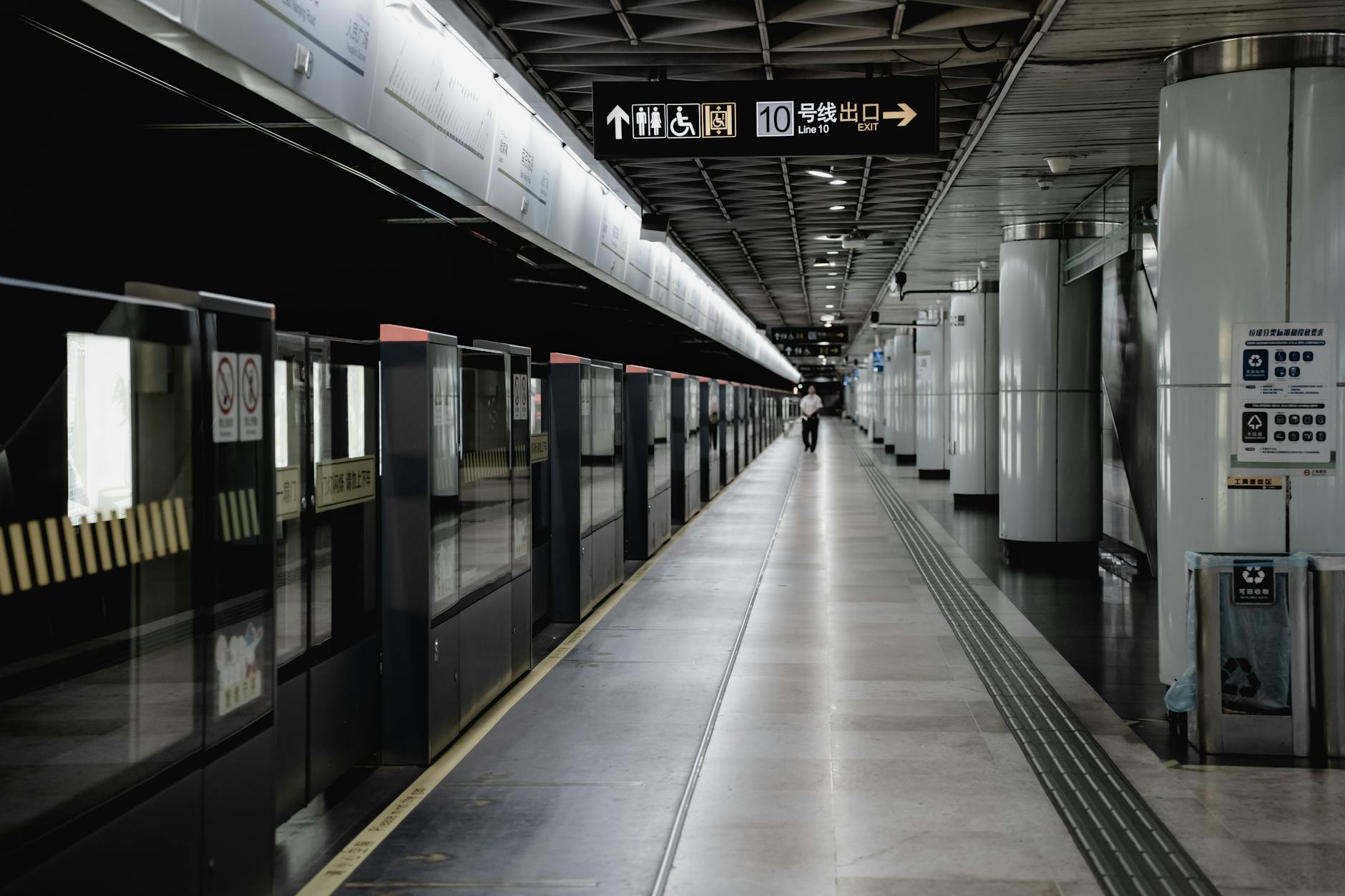
Budget and Costs
Shanghai can be expensive or surprisingly manageable depending on hotel choice, dining style, season, and how much luxury you buy. It is one of China's wealthiest and most international cities, so high-end prices can be very high. But transport, casual food, Metro rides, public spaces, and some museums can keep a trip reasonable.
Budget Traveler
A careful budget traveler can keep costs moderate by staying outside the highest-demand hotel zones, using Metro, eating local breakfasts and simple meals, choosing free walks, and limiting paid towers/bars.
Expect tradeoffs:
- Smaller rooms.
- Longer Metro rides.
- More language/payment friction.
- Fewer English-speaking staff.
- Less flexibility during holidays.
Budget travelers should not save money by choosing a far outer hotel unless the time cost is acceptable.
Mid-Range Traveler
Mid-range Shanghai is often excellent: comfortable hotels in Jing'an, People's Square, Xuhui, or near good Metro stations; casual and proper restaurants; one or two splurges; museums; and occasional taxis. This is the sweet spot for many visitors.
Spend money on:
- Hotel location.
- A reliable first-night transfer if arriving late.
- One strong Shanghainese meal.
- Museum or exhibition access.
- A tower/view experience only if weather supports it.
Save money on:
- Unnecessary passes.
- Repeated skyline bars.
- Overpriced souvenir streets.
- Too many taxis when Metro is faster.
Luxury Traveler
Shanghai luxury is strong: Bund hotels, Pudong tower hotels, high-end Chinese restaurants, international fine dining, private guides, designer shopping, spa hotels, chauffeur transfers, and river-view suites. The risk is that luxury can insulate you from the city.
If you are staying high-end, deliberately add:
- A ferry crossing.
- A local breakfast.
- A former French Concession walk.
- A museum beyond a hotel concierge's default suggestion.
- A neighborhood dinner outside the hotel.
Shanghai luxury is best when it frames the city, not when it replaces it.
What Costs More Than Visitors Expect
- Bund and river-view hotels.
- Popular holiday periods.
- Disney tickets and premium access products.
- Cocktails with views.
- High-end Chinese restaurants.
- International restaurants and brunches.
- Private guides and cars.
- Last-minute high-speed rail during peak travel.
- Special exhibitions.
What Can Be Good Value
- Metro rides.
- Ferries.
- Breakfast shops.
- Noodle meals.
- Parks.
- The Bund promenade.
- Suzhou Creek walks.
- Mall food floors.
- Some museums and public cultural spaces.
- High-speed rail when booked smartly.
Passes And Tickets
Do not buy a pass because it sounds efficient. Shanghai's value is not only paid attractions. If you stack observation decks, museums, cruises, and Disney without thinking, costs rise fast and the trip becomes mechanical.
Build the day first, then decide whether any ticket bundle, Metro pass, or attraction product makes sense.
Money Strategy
Bring:
- Primary foreign card.
- Backup foreign card.
- Alipay and/or WeChat Pay set up.
- Some RMB cash.
- ATM plan.
- Hotel address in Chinese.
- Emergency contact and bank fraud numbers.
Keep money tools separated. A lost phone should not mean losing every payment method.
Safety, Health, and Scams
Shanghai is generally comfortable for visitors, with low violent-crime risk compared with many large cities. The main issues are practical: legal and political sensitivity, payment problems, traffic, scams in tourist zones, heat, air quality variation, medical access, lost property, nightlife judgment, and ordinary urban fatigue.
Legal And Advisory Context
China has strict laws and enforcement norms that may differ sharply from a visitor's home country. The U.S. State Department currently advises increased caution in China due to arbitrary enforcement of local laws, including exit bans; other governments publish their own advisories.[14] This does not mean ordinary tourists should panic. It does mean travelers should avoid political activity, protests, drugs, illegal work, sensitive reporting activity without appropriate credentials, and careless assumptions about rights or procedures.
Common Tourist Scams
The best-known Shanghai visitor scams involve friendly strangers near major tourist areas inviting travelers to tea, art shows, student exhibitions, bars, or private venues, then producing inflated bills or pressure. These approaches have been reported for years around People's Square, Nanjing Road, the Bund, and other busy areas.
Simple rule: if someone you did not approach proposes taking you somewhere, decline politely and keep walking.
Taxis And Transport
Use official taxi queues at airports and railway stations. Avoid unofficial drivers who approach inside terminals. With taxis, use the meter unless using an app with fixed pricing. Have your destination in Chinese.
For Metro, the main issues are crowds, pickpocketing risk in busy situations, and fatigue. Keep bags zipped and phones secure.
Traffic And Street Safety
Pedestrians should be cautious. Scooters, delivery bikes, turning vehicles, and quiet electric bikes can move differently than visitors expect. Do not step into a crosswalk assuming traffic will behave like it does at home. Watch locals, then cross carefully.
Heat And Weather
Summer heat and humidity are serious. Heat exhaustion can creep up during what looks like an ordinary city walk. Drink water, take air-conditioned breaks, wear breathable clothing, and avoid stacking outdoor sites in the afternoon.
Typhoon-related weather can disrupt flights, trains, ferries, riverfront plans, and Disney days. Watch forecasts in late summer and early autumn.
Air Quality
Shanghai's air quality varies. Many days are fine for ordinary visitors, but sensitive travelers should monitor conditions, bring necessary medication, and adjust heavy outdoor activity when air quality is poor.
Medical Care
Shanghai has strong hospitals and international clinics, but costs, language, insurance, and payment procedures matter. Travel insurance is wise. Carry prescription documentation and check China medication rules before travel, especially for controlled substances, ADHD medications, strong pain medications, and injectables.
Water And Stomach Health
Visitors generally use bottled, filtered, or boiled water for drinking. Hotel kettles are common. Food hygiene is usually manageable in central Shanghai, but use normal caution, especially with seafood, unfamiliar street snacks, and heat.
Documents And ID
Carry your passport when required for hotels, trains, museum reservations, and major ticketed attractions. For daily wandering, follow current local requirements and your risk tolerance; at minimum, keep a passport copy and know where the original is. Do not lose the passport. Replacement procedures can consume days.
Digital Safety
Use secure connections where possible, protect payment apps, and be cautious with public Wi-Fi. Because your phone is central to payment, maps, translation, and tickets, losing it creates more disruption than in many destinations. Use a passcode, back up important documents, and keep emergency details offline.
Women Travelers
Many women travel comfortably in Shanghai, including solo travelers. Usual large-city precautions still apply: watch drinks, avoid isolated late-night streets, use reputable transport, keep phone battery, and trust instincts in nightlife areas. The most common problems are not usually street harassment but transport, language, and late-night logistics.
LGBTQ+ Travelers
Shanghai is one of China's more cosmopolitan cities, but legal rights, public visibility, venue scenes, and social norms differ from many Western destinations. Discretion may be prudent in public spaces. Check current community resources if LGBTQ+ nightlife or events matter to the trip.
The Real Safety Rule
Most Shanghai travel problems begin with one of five things:
- Phone/payment failure.
- Heat and fatigue.
- Overdrinking.
- Unlicensed transport.
- Following strangers into private venues.
Handle those, and Shanghai becomes much easier.
Accessibility and Mobility
Shanghai is more accessible than many cities in China in terms of modern transit, elevators in major buildings, wide commercial districts, and high-end hotels. It is still uneven. Older lanes, crowded Metro transfers, curbs, construction, small restaurants, public toilets, security checks, and long station walks can create challenges.
Metro Accessibility
Many Metro stations have elevators or accessible features, but not every route is simple. Transfers can be long. Elevators may be hard to find, crowded, out of service, or located at specific exits. Security screening adds another step.
Travelers with mobility needs should:
- Research station exits before travel.
- Choose hotels close to step-free stations where possible.
- Use taxis for difficult transfers.
- Avoid peak commute times.
- Build extra time into museum, rail, and airport days.
Taxis And Ride-Hailing
Taxis may be easier for some mobility needs, but vehicle type, trunk space, driver communication, and curb access vary. Have destination addresses in Chinese. Hotels can help arrange transport, especially for airport transfers and medical needs.
Walking Surfaces
Central Shanghai has many good sidewalks, but older neighborhoods can be uneven. Former French Concession walks are beautiful but can involve narrow sidewalks, bikes, roots, construction, and crowds around photo-famous corners. The Bund promenade is broad but crowded.
Hotels
Hotel choice is the most important accessibility decision. Confirm:
- Elevator access.
- Step-free entrance.
- Accessible room dimensions.
- Bathroom setup.
- Distance to Metro.
- Taxi drop-off.
- English-speaking staff.
- Breakfast and restaurant access.
Do not rely only on booking-site icons. Email the hotel if accessibility is essential.
Museums And Attractions
Major museums, malls, towers, and Disney are generally better equipped than older small attractions, but current procedures matter. Check official accessibility pages or contact venues for wheelchair rentals, elevators, companion policies, and ID requirements.
Older Travelers
Older travelers often enjoy Shanghai because the city has strong hotels, taxis, elevators, restaurants, and indoor spaces. The main risks are heat, long Metro transfers, too many steps in a day, and airport/station fatigue. A slower itinerary with taxis and central hotels is usually worth the extra cost.
Families, Solo Travelers, LGBTQ+ Travelers, and Special Considerations
Shanghai works for many traveler types because it has infrastructure, safety, food variety, and enough indoor options. The differences come from pacing and setup.
Families
Shanghai can be excellent with children:
- Shanghai Disney.
- Shanghai Ocean Aquarium.
- River ferries.
- Parks.
- Observation decks.
- Malls and food courts.
- Hotel pools.
- Short Metro rides.
- Easy snacks and bakeries.
Family cautions:
- Summer heat is tough.
- Disney is a full day.
- Strollers can be awkward in Metro transfers and older lanes.
- Food communication matters for picky eaters and allergies.
- Jet lag can make ambitious first days miserable.
Family strategy: stay central, keep breakfasts easy, plan one major activity per day, use taxis when tired, and do not make every meal an adventure.
Solo Travelers
Solo travelers can do very well in Shanghai. The city is safe enough for confident urban wandering, has strong cafes and museums, and is easy to navigate by Metro. Solo dining is common in casual formats.
Solo strategy:
- Stay in Jing'an, People's Square, Xuhui, or a central well-connected area.
- Keep evening transport simple.
- Use cafes, museums, and food halls as low-pressure anchors.
- Be cautious with strangers inviting you to venues.
- Keep phone/payment backup.
Solo travelers who enjoy observation will find Shanghai especially rewarding.
Couples
Shanghai is a strong couples' city if you avoid over-scheduling:
- Bund sunset.
- Former French Concession walks.
- Cocktail or tea night.
- West Bund art.
- A good Shanghainese dinner.
- Ferry crossing.
- Hotel with a view or a leafy boutique base.
The romantic version of Shanghai is not only the skyline. It is also the walk after rain under plane trees.
LGBTQ+ Travelers
Shanghai is comparatively cosmopolitan, but China does not operate like the most openly LGBTQ+-visible destinations. Public affection, venue life, events, and community resources can be more discreet. International hotels are generally professional. Dating apps and online resources may behave differently due to internet restrictions.
LGBTQ+ travelers should check current local resources, use discretion where appropriate, and choose central, reputable hotels.
Business Travelers
Business travelers should build a realistic leisure layer around meeting geography. If meetings are in Pudong, a Pudong hotel may be right, but schedule one Puxi evening. If meetings are near Hongqiao, do not assume you can casually pop to the Bund between appointments. If meetings are central, Jing'an is often an excellent compromise.
Business strategy:
- Save Chinese addresses for all venues.
- Leave more time for cross-city transfers than map estimates suggest.
- Use hotels with strong concierge support.
- Add one museum or neighborhood walk to avoid a meeting-room-only trip.
First-Time China Travelers
Shanghai is a good first China city, but do the setup:
- Entry rules.
- Payment apps.
- Internet access.
- Translation.
- Maps.
- Hotel registration.
- Chinese addresses.
- Train station names.
Once these are handled, the city is much less intimidating.
Travelers With Dietary Restrictions
See the food section, but the short version is: prepare translated dietary cards, choose hotels with breakfast options, use international restaurants when needed, and be careful with hidden meat/seafood/soy/wheat. Serious allergies require extra caution.
Long-Stay And Remote Work Travelers
Shanghai can be comfortable for longer stays, but visas, work rules, internet access, housing registration, tax, payment systems, and local law matter. A tourist guide is not enough for relocation or remote-work legality. Check official rules and get professional advice where needed.
Shopping and Souvenirs
Shanghai is one of Asia's great shopping cities, but the best shopping is not only luxury brands. The city offers malls, designer boutiques, bookstores, museum shops, tea, ceramics, local snacks, fashion, vintage, art books, stationery, eyewear, electronics, and food gifts. The trap is spending all shopping time on Nanjing Road and leaving with generic souvenirs.
Where To Shop
Nanjing Road: useful, famous, crowded, commercial. Good for first-time orientation but not the only shopping district.
Nanjing West Road / Jing'an: high-end malls, fashion, beauty, restaurants, and polished retail.
Huaihai Road: stylish, central, good for fashion and walking.
Xintiandi: boutiques, restaurants, polished gifts, and lifestyle shopping.
Former French Concession / Xuhui: smaller boutiques, cafes, design shops, bookstores, and fashion.
Museum shops: often better for thoughtful gifts than tourist souvenir streets.
Department-store basements and food halls: snacks, tea, sweets, packaged foods, and edible gifts.
West Bund / art districts: art books, design items, gallery shops, exhibition merchandise.
What To Buy
Good Shanghai gifts can include:
- Tea from a reputable shop.
- Chinese ceramics or tableware.
- Museum reproductions or art books.
- Stationery and paper goods.
- Local snacks and sweets.
- Silk or textile items from reputable sellers.
- Independent fashion or accessories.
- Coffee or tea accessories.
- Design objects from museum/galleries.
Be careful with antiques, wildlife products, counterfeit luxury goods, and anything that may create customs problems.
Tax Refunds And Procedures
China has tax refund procedures for eligible purchases by overseas visitors, and Shanghai has expanded departure tax-refund shopping services in recent years. Procedures, thresholds, participating shops, refund methods, customs validation, and documentation can change.
The practical advice: if tax-free shopping matters, ask the shop before purchasing, keep receipts and forms, bring your passport when required, and check airport procedures before your departure day.
Bargaining
In malls, boutiques, department stores, museum shops, and most normal shops, prices are fixed. Bargaining may apply in some markets or informal settings, but Shanghai is not a universal bargaining city. Do not bargain in places where it is not appropriate.
Counterfeits
Counterfeit goods can create legal, ethical, and customs issues. Avoid them. If a luxury item price seems impossible, assume a problem.
Shopping Strategy
Do not dedicate a whole first Shanghai day to shopping unless that is the trip's purpose. Instead:
- Use malls for weather breaks.
- Buy museum gifts after museum visits.
- Use Xuhui/Jing'an boutiques during walking days.
- Save food gifts for the end so they travel better.
- Check customs rules for food, tea, plant products, and liquids.
Arts, Culture, History, and Context
Shanghai is often described as a future-facing city, but its cultural depth comes from history colliding with modernity. To understand it, visitors need at least a few frames.
Treaty-Port Shanghai
After the mid-19th century, Shanghai became a major treaty port with foreign concessions, international trade, banks, clubs, newspapers, and legal/political complexity. The Bund is the most visible architectural trace of this era. But treaty-port Shanghai was not only foreign glamour; it was also Chinese entrepreneurship, labor, inequality, migration, crime, nationalism, publishing, cinema, and political ferment.
When you walk the Bund, remember that the buildings are not just pretty facades. They represent power, capital, empire, and Shanghai's role as a gateway between China and the world.
Shikumen And Lane Life
Shikumen lane houses are one of Shanghai's signature urban forms: a hybrid of Chinese and Western domestic architecture, dense social life, gates, lanes, and neighborhood intimacy. Many have been demolished, renovated, commercialized, or preserved selectively. Xintiandi presents one polished version. Residential lanes elsewhere show a more complicated reality.
Visitors should not treat living lanes as theme parks. Respect privacy. The architecture matters because it shaped how people lived, not because it is a backdrop.
Revolutionary And Political Shanghai
Shanghai was important in modern Chinese politics, labor organizing, publishing, and revolutionary history. Sites associated with the early Chinese Communist Party, leftist writers, and political movements give the city a deeper frame than shopping and skylines. Even if you do not build a full political-history itinerary, knowing this layer changes how Shanghai feels.
Jewish Refugee History
Shanghai accepted many Jewish refugees during the Second World War, especially in Hongkou. The history is specific, moving, and worth learning for travelers interested in 20th-century global migration and wartime refuge. If you visit related sites, read beforehand and go with seriousness.
Industrial And Socialist Shanghai
Before the skyline, Shanghai was also an industrial and working city. Some contemporary art districts and redevelopment zones sit in or near former industrial spaces. M50, West Bund, and other converted sites make more sense when seen as transformations of production landscapes into cultural and commercial landscapes.
Reform-Era Pudong
Pudong's transformation from relatively low-rise east-bank land into a financial skyline is one of the central urban stories of reform-era China. The towers are not just architecture. They are policy, ambition, capital, and image made visible. That is why crossing the river matters.
Museums And Cultural Institutions
Build at least one museum into a serious Shanghai trip:
- Shanghai Museum / East Museum for Chinese art and material culture.
- Power Station of Art for contemporary culture in a striking building.
- West Bund institutions for art and design.
- Smaller museums for city history, Jewish refugee history, propaganda poster collections where available, film, urban planning, or specialist interests.
Check current hours and reservations. Shanghai's cultural scene changes quickly.
Parks And Public Life
Parks are where Shanghai becomes social at human scale: dancing, tai chi, card games, children, elderly residents, dating corners, exercise, music, and daily routines. Fuxing Park, People's Park, Zhongshan Park, and smaller green spaces all reveal city life beyond consumption.
Do not photograph people intrusively. Watch respectfully.
Architecture
Shanghai architecture is a study in layers:
- Bund neoclassical and Art Deco.
- Lane houses and shikumen.
- Former concession villas and apartments.
- Socialist-era residential blocks.
- Pudong towers.
- Contemporary museums and commercial complexes.
- Adaptive reuse of industrial sites.
A good Shanghai walk notices transitions. The city is rarely one style for long.
Seasonal and Month-by-Month Guide
Shanghai's seasons should shape the pace more than the destination list. The same city can feel elegant in April, cinematic in November, exhausting in August, and damp but food-friendly in January.
Spring
Spring is one of the best times to visit. The former French Concession gets greener, parks become more pleasant, river walks improve, and outdoor dining/cafe stops feel natural. Rain is possible, so bring a light waterproof layer.
Best spring experiences:
- Former French Concession walks.
- Fuxing Park.
- Bund and North Bund.
- Suzhou Creek.
- West Bund.
- Suzhou/Hangzhou day trips.
- Museum plus park days.
Watch out for:
- Holiday crowds.
- Variable temperatures.
- Pollen if sensitive.
Summer
Summer is Shanghai in endurance mode. It can still be worthwhile, especially for families tied to school holidays, but plan carefully.
Best summer experiences:
- Museums.
- Malls and food floors.
- Early morning Bund walks.
- Evening skyline.
- Hotel pools.
- Indoor art districts.
- Short food-focused outings.
Watch out for:
- Heat exhaustion.
- Humidity.
- Thunderstorms.
- Typhoon disruptions.
- Long outdoor queues.
- Disney fatigue.
Summer rule: one major outdoor window per half-day, maximum.
Autumn
Autumn is arguably Shanghai's best season. Walking returns, riverfronts improve, food feels better, and day trips become easier. October can be holiday-crowded around National Day, but later October and November are excellent.
Best autumn experiences:
- Bund at dusk.
- Xuhui and Jing'an walks.
- Suzhou and Hangzhou.
- Hairy crab season if interested and timing works.
- West Bund art days.
- Parks.
Watch out for:
- Holiday train demand.
- Popular weekends.
- Early-evening restaurant pressure.
Winter
Winter is underrated for urban travelers. The city can be damp and gray, but hotels, food, museums, shopping, and skyline nights work well. Crowds can be lower outside holiday periods. Lunar New Year can alter business hours and travel demand.
Best winter experiences:
- Shanghainese meals.
- Museums.
- Hotel bars with views.
- Shopping.
- Short crisp walks.
- Tea houses.
- Photography on clear days.
Watch out for:
- Damp cold.
- Holiday closures.
- Shorter daylight.
- Wind along the river.
Best Season By Trip Type
| Trip type | Best season | Why |
|---|---|---|
| First-time sightseeing | April-May, October-November | Best walking weather and easiest balance. |
| Food trip | Year-round; autumn/winter especially good | Richer foods and seasonal dishes feel satisfying. |
| Art and museums | Year-round | Indoor depth makes weather less important. |
| Family/Disney | Spring/autumn best, summer possible with caution | Outdoor waiting and heat matter. |
| Luxury hotel trip | Year-round; winter can be good value | Hotels, dining, and views carry the trip. |
| Day trips | Spring/autumn | Suzhou, Hangzhou, and water towns are more pleasant. |
| Shopping | Year-round | Malls and retail are weather-proof. |
Day Trips and Side Trips from Shanghai
Shanghai sits in one of China's richest travel regions. The temptation is to use it as a base for everything. Resist that unless you have enough time. Day trips are best when they add contrast rather than merely another famous name.
Suzhou
Suzhou is the most obvious Shanghai day trip: gardens, canals, silk history, old streets, museums, and a slower Jiangnan atmosphere. High-speed trains can be quick, but door-to-door time includes getting to the correct Shanghai station, security, boarding, arrival, and local transport.
Best for:
- Classical gardens.
- Jiangnan culture.
- Canal-side walking.
- First China trips needing contrast.
Watch out for:
- Garden crowds.
- Too many gardens in one day.
- Train station logistics.
- Tourist streets that can feel staged.
Best strategy: choose two gardens, one old street/canal area, and one good meal. Do not try to "do Suzhou" entirely in a day.
Hangzhou
Hangzhou is famous for West Lake, tea culture, temples, causeways, and a softer landscape identity. It can be done as a long day from Shanghai, but it is better as an overnight if you care about atmosphere. West Lake rewards morning and evening, not only midday arrival.
Best for:
- Lake scenery.
- Tea fields if planned well.
- Romantic city contrast.
- An overnight extension.
Watch out for:
- Crowds around West Lake.
- Large city scale; Hangzhou is not a village.
- Train and local transport time.
- Weather dependency.
Best strategy: overnight if possible. If day-tripping, keep expectations modest and choose a focused route.
Zhujiajiao
Zhujiajiao is a water town within Shanghai municipality and is one of the easiest canal-town experiences from the city. It offers bridges, waterways, old streets, snacks, and tourist infrastructure.
Best for:
- A low-commitment water town.
- Families or travelers who do not want a long train day.
- Canal atmosphere.
Watch out for:
- Crowds.
- Commercialization.
- Weekend pressure.
Best strategy: go early or off-peak, enjoy it for what it is, and do not expect untouched rural China.
Tongli, Wuzhen, Nanxun, And Other Water Towns
Other water towns can be more atmospheric or more polished depending choice, season, and crowd levels. They often require more transport planning than Zhujiajiao. Some are better as overnights if you want evening atmosphere after day-trippers leave.
Best for:
- Photogenic canals.
- Slower Jiangnan add-on.
- Travelers with five or more days in the region.
Watch out for:
- Similarity fatigue.
- Tourist staging.
- Transport complexity.
- Weather.
Best strategy: choose one water town, not three.
Nanjing
Nanjing is historically important and reachable by high-speed rail, but it deserves more than a casual day if you care about history. It has Ming history, Republican-era history, museums, memorial sites, city walls, temples, mountains, and a deeper political identity than most day-trippers can process quickly.
Best for:
- Serious history travelers.
- Overnight extension.
- A China route beyond Shanghai.
Watch out for:
- Emotional weight of some sites.
- Large city scale.
- Too much for a light day trip.
Best strategy: overnight if possible. If day-tripping, choose one or two serious sites and do them respectfully.
Disneyland As A "Side Trip"
Shanghai Disney is inside Shanghai municipality, but for itinerary purposes it behaves like a side trip. It needs a full day, dated tickets, crowd strategy, transport planning, and stamina. Families may want a hotel split.
Qibao
Qibao is an old-town-style area within the city, accessible by Metro and useful for a shorter old-street experience. It is more of a half-day urban excursion than a major side trip.
Best for:
- Limited time.
- Snack streets.
- A small old-town taste without long travel.
Watch out for:
- Crowds and commercialization.
Which Side Trip Should You Choose?
| If you want... | Choose |
|---|---|
| Classical gardens and canals | Suzhou |
| Lake scenery and tea | Hangzhou |
| Easy water town | Zhujiajiao |
| More atmospheric water town with planning | Nanxun, Tongli, Wuzhen, or similar |
| Serious modern/imperial history | Nanjing |
| Family theme-park day | Shanghai Disney |
| Short old-street excursion | Qibao |
If you have only four days, choose either Suzhou or deeper Shanghai. If you have five or six, add one major side trip. If you have a week, add two, but not at the cost of turning every day into a station day.
What to Skip
Skipping well is part of planning Shanghai. The city has more than enough to fill a trip, and some famous experiences are optional or context-dependent.
Skip Multiple Observation Decks
One tower or high view is enough for most visitors. The skyline is spectacular, but repeating paid height can become expensive and repetitive. Choose by weather, location, and interest. If visibility is poor, skip the tower and enjoy the river from ground level.
Skip A Water Town If You Have Only Three Days
Water towns can be lovely, but a three-day Shanghai trip needs the city itself. Do not sacrifice the former French Concession, museums, food, or river time for a rushed canal excursion unless that is your main priority.
Skip Nanjing Road As A Shopping Destination If You Dislike Crowds
Nanjing Road is famous and central, but it is not always the best shopping experience. If you want style, boutiques, or high-end retail, Jing'an, Huaihai Road, Xintiandi, Xuhui, and museum shops may suit you better.
Skip Tea Invitations From Strangers
This is not a cultural opportunity. It is a known risk pattern. Choose your own teahouse.
Skip Far-Flung Cheap Hotels
Saving money on a distant hotel can cost the trip time, energy, and taxi fares. In Shanghai, location has real value.
Skip A Restaurant Because It Is Famous If The Line Is Absurd
Shanghai has too much good food to spend half a day in a line unless the line itself is part of your chosen experience. Have a backup plan.
Skip Disney If Nobody Cares
Shanghai Disney is excellent for the right traveler. It is not mandatory Shanghai. If your trip is history, food, art, architecture, and neighborhoods, skip it without guilt.
Skip Over-Scheduled Day Trips
Suzhou, Hangzhou, water town, Nanjing, and Disney in a five-day Shanghai stay is not ambition; it is self-sabotage. Choose the one or two that fit.
Common Mistakes
Mistake 1: Arriving Without Payment Setup
Shanghai is not impossible with cash and cards, but mobile payment makes the city much smoother. Arriving without Alipay/WeChat Pay attempts, cash backup, or a transit payment plan can turn ordinary tasks into friction.
Mistake 2: Assuming Western Apps Work Normally
Maps, messaging, email, cloud storage, social platforms, and payment tools may not behave normally in mainland China. Plan internet access and alternatives before arrival.
Mistake 3: Staying In Pudong For A Puxi Trip
Pudong can be right for business or skyline hotels. But if your evenings are the Bund, Jing'an, Xuhui, Xintiandi, and former French Concession, a Pudong hotel may create repeated river crossings.
Mistake 4: Treating The Former French Concession As One Sight
It is not one stop. It is a walking area. If you taxi to one viral corner, photograph a building, and leave, you miss the point.
Mistake 5: Cramming Suzhou Into A Short Shanghai Stay
Suzhou is worthwhile. It is also a real day. If you have only two or three days, decide whether Shanghai or Suzhou matters more.
Mistake 6: Paying For A Tower In Bad Visibility
Observation decks depend on weather. Check visibility. Ground-level river views may be better on hazy days.
Mistake 7: Underestimating Station Distances
Hongqiao is not near every hotel. Pudong airport is not close. Metro transfers can be long. A short train ride is not a short door-to-door trip.
Mistake 8: Eating Only Dumplings And International Food
Xiaolongbao are great. International restaurants can be excellent. But Shanghai deserves a proper local meal, breakfast, noodles, and regional Chinese food.
Mistake 9: Ignoring ID And Reservation Rules
Museums, trains, hotels, and attractions may require passport details or current booking procedures. Bring the same passport used for reservations.
Mistake 10: Turning Every Day Into A Cross-City Route
Shanghai is easier by clusters. Bund/Pudong, Xuhui/Jing'an, People's Square/Yu Garden, West Bund, Suzhou Creek. Build days around geography.
Mistake 11: Thinking "International City" Means "No Culture Shock"
Shanghai is global, but it is still China. Systems, laws, payment, language, internet, and public behavior differ. Respect the difference.
Mistake 12: Not Looking Up
Shanghai's beauty is often above eye level: balconies, old signage, Art Deco details, plane-tree canopies, tower silhouettes, laundry, rooflines, and window patterns. Slow down.
Responsible Travel
Shanghai is a living city, not a theme set. Responsible travel here is mostly about respect, privacy, local systems, and not treating everyday life as content.
Respect Residential Areas
Former French Concession lanes, shikumen neighborhoods, and old residential streets are not open-air studios. Do not block gates, photograph people through windows, fly drones, enter private lanes, or create noise for residents. If a street is crowded with photo-takers, move on.
Use Legal And Respectful Transport
Use official taxis, Metro, ferries, and legitimate ride-hailing. Do not support unlicensed airport drivers. Walk carefully and do not obstruct bike lanes or sidewalks.
Reduce Waste
Carry a reusable bottle where practical, but use safe drinking water. Avoid excessive disposable packaging when possible. Bring a small bag for shopping. Do not litter in parks, riverfronts, or old streets.
Support Local Businesses Thoughtfully
Eat at local restaurants, buy from reputable shops, visit museums, and use guides where useful. Avoid counterfeit goods and exploitative souvenir purchases.
Be Careful With Photography
Ask before taking close photos of people. Avoid photographing security-sensitive areas. Do not treat elderly residents, workers, or children as props.
Learn Basic Etiquette
Queue where expected. Keep voices moderate in museums and transit. Do not tip where it creates confusion. Use both hands or a polite gesture when passing items in formal settings. Be patient with language gaps.
Understand That Not Everything Is For Visitors
Some of Shanghai's most interesting spaces are ordinary residential, work, religious, or community spaces. You can appreciate them from public areas without entering, interrupting, or extracting.
Packing List
Shanghai packing should support walking, phone dependence, weather shifts, and payment/internet logistics.
Essentials
- Passport with visa or entry eligibility documentation.
- Printed or offline copies of hotel bookings and onward travel.
- Travel insurance details.
- Primary and backup bank cards.
- Some RMB cash.
- Phone with eSIM/SIM/roaming plan.
- Power bank.
- Plug adapter.
- Translation app with offline language pack if possible.
- Offline maps or saved locations.
- Hotel address in Chinese and English.
- Comfortable walking shoes.
Weather Items
For spring/autumn:
- Light jacket.
- Compact umbrella.
- Layerable clothing.
- Comfortable shoes.
For summer:
- Breathable clothing.
- Hat.
- Sunglasses.
- Sunscreen.
- Rehydration salts if sensitive to heat.
- Extra shirts.
- Small towel or handkerchief.
For winter:
- Warm coat.
- Layers.
- Scarf.
- Gloves if sensitive.
- Shoes that handle damp streets.
Health And Comfort
- Prescription medication with documentation.
- Basic stomach medicine.
- Pain reliever.
- Allergy medication.
- Hand sanitizer.
- Tissues.
- Masks if you prefer them for air quality/crowds.
- Any specialist dietary cards.
Tech
- Power bank.
- Charging cables.
- Cloud/offline backup of passport and bookings.
- VPN or legal access plan if you use one.
- Two-factor authentication backup.
- Payment apps installed.
- Screenshots of QR codes/tickets.
What Not To Bring Without Checking
- Restricted medications.
- Drones.
- Large quantities of cash beyond legal limits.
- Sensitive political materials.
- Counterfeit goods.
- Items that may violate customs, quarantine, or security rules.
When in doubt, check official rules before packing.
FAQ
Is Shanghai good for a first trip to China?
Yes, if you handle entry, payment, internet, and translation setup. Shanghai is one of the easiest major Chinese cities for first-time visitors because it has strong hotels, transit, food, museums, shopping, airports, and international experience. It is not representative of all China, but it is a legitimate and rewarding first gateway.
How many days do I need in Shanghai?
Three full days is the minimum for a balanced first visit. Four is better. Five or six makes sense if you add Disney, Suzhou, Hangzhou, a water town, or deeper art/food/shopping time.
Should I stay on the Bund or in the former French Concession?
Stay on the Bund if views and first-time drama matter most. Stay near the former French Concession/Xuhui/Xintiandi if walking, cafes, and softer neighborhood texture matter more. Jing'an is often the best compromise for comfort, food, shopping, and transit.
Is Pudong a good place to stay?
Pudong is excellent for business, skyline hotels, and some luxury stays. For leisure visitors who want walking neighborhoods, food, and evenings in Puxi, it can be less convenient. Choose Pudong deliberately, not just because the skyline looks exciting.
Do I need Alipay or WeChat Pay?
You should set up at least one, ideally both if possible. Shanghai has improved foreign-card support, including transport, but mobile payment remains central to daily life. Carry cash and a physical card backup.
Can I use foreign credit cards in Shanghai?
Major hotels, upscale restaurants, malls, and some transport services may accept foreign cards, and acceptance has improved. Small restaurants, taxis, markets, and local shops may not. Do not rely on a card alone.
Does Google Maps work in Shanghai?
Many Google services may be restricted or unreliable in mainland China, and mapping accuracy can be problematic. Use local or China-compatible mapping options, save addresses in Chinese, and plan internet access before arrival.
Is Shanghai safe?
Shanghai is generally safe for ordinary visitors, with low violent-crime risk. Main risks include scams in tourist zones, traffic, heat, legal/political sensitivity, payment/internet problems, and nightlife judgment.
Is English widely spoken?
English is common in major hotels, airports, high-end restaurants, and international business settings. It is not universal. Translation apps and Chinese addresses are important.
Is the Bund worth it?
Yes. It is Shanghai's most important first-time view. But it is not the whole city. See it twice if possible, then go deeper into Xuhui, Jing'an, Suzhou Creek, West Bund, museums, and food neighborhoods.
Should I go up Shanghai Tower?
If visibility is good and you enjoy observation decks, yes. If skies are hazy, time is short, or you prefer street-level cities, skip it and use the riverfront instead.
Is Yu Garden worth visiting?
Yes, with clear expectations. The garden is worthwhile; the surrounding bazaar is crowded and touristy. Go early and pair it with other Old City or Bund-area plans.
Should I visit Shanghai Disney?
Yes if Disney matters to your group, especially families and fans. No if your trip is focused on city culture, food, art, and history. It requires a full day.
Can I day-trip to Suzhou?
Yes, and it is the best classic day trip from Shanghai. But account for station time, garden crowds, and local transport. If you have only three days in Shanghai, consider saving Suzhou for another trip.
Can I day-trip to Hangzhou?
Yes, but Hangzhou is better as an overnight if you care about West Lake atmosphere. A day trip is possible but can feel compressed.
What is the best month to visit?
October or November for the safest overall walking weather. April and May are also excellent. Avoid July and August if heat and humidity bother you.
Is Shanghai expensive?
It can be. Luxury hotels, Bund views, fine dining, cocktails, Disney, and peak periods are expensive. Metro rides, casual food, parks, ferries, and self-guided walking can be good value.
Can I drink tap water?
Visitors generally use bottled, filtered, or boiled water. Hotels often provide bottled water or kettles.
Do I tip in Shanghai?
Tipping is not customary in ordinary restaurants, taxis, and hotels. Upscale international settings may include service charges or have different expectations, but tipping is not a default habit.
What should I book ahead?
Hotels during peak periods, Disney tickets, popular restaurants, museum reservations when required, special exhibitions, high-speed rail during holidays, and any timed observation or event tickets.
What should I leave flexible?
Neighborhood walks, food halls, cafes, river views, ferry rides, shopping, weather-dependent outdoor time, and second visits to areas you unexpectedly like.
Source Notes
The sources below were checked while preparing this guide. They are included to help travelers verify time-sensitive logistics close to departure; rules, hours, payment procedures, and eligibility can change.
- 1. Shanghai Municipal People's Government, "240-hour visa-free transit boosts inbound travel" and current 240-hour visa-free transit guidance, https://english.shanghai.gov.cn/en-Latest-WhatsNew/20251220/eb7fa0899052438d9b8eeb1a65c3e214.html and https://english.shanghai.gov.cn/en-240HourVisaFreeTransit/
- 2. Shanghai Municipal People's Government, visa-free travel and visa-free policy updates, including passport-specific ordinary visa-free policies, https://english.shanghai.gov.cn/en-visas/20241202/6e6d3ff5502446b391bb83581a124f0a.html and https://english.shanghai.gov.cn/en-Latest-WhatsNew/20260215/9e4dbfd583784790b858810119fceb05.html
- 3. Shanghai Municipal People's Government / Shanghai Municipal Bureau of Public Security, temporary accommodation registration guidance, https://english.shanghai.gov.cn/en-FAQs-TravelinShanghai/20231225/ae178747b46741f8857f6f93ba8c4a6c.html and https://english.shanghai.gov.cn/en-ArrivalChecklist/20231214/8418f9e06a3248beaa96f8e65331a0b1.html
- 4. National Immigration Administration, accommodation registration rules for foreigners, https://en.nia.gov.cn/n147423/n147478/n147715/c158241/content.html
- 5. Shanghai Municipal People's Government, Payments in Shanghai portal and payment methods for foreigners, https://english.shanghai.gov.cn/en-PaymentsInShanghai/ and https://english.shanghai.gov.cn/en-PaymentMethods/20240313/6f4e58272f1a4cea9aec59c518915bdf.html
- 6. Shanghai Municipal People's Government, guide to linking international bank cards to Alipay, https://english.shanghai.gov.cn/en-FAQs-TravelinShanghai/20231225/2a766527e0bb43b78d18c94a05386fd7.html
- 7. Shanghai Municipal People's Government, Weixin Pay / WeChat Pay guidance for international users, https://english.shanghai.gov.cn/en-PaymentMethods/20240517/757f50ea064d4f8195f819dd79316630.html
- 8. Shanghai Municipal People's Government, Shanghai Metro foreign bank card service-center guidance, https://english.shanghai.gov.cn/en-Latest-WhatsNew/20240417/0444aa1c2f114f7eb66a0341b603bbbc.html
- 9. Shanghai Municipal People's Government / Shanghai Metro, tap-to-ride pilot expansion across the Metro network, https://english.shanghai.gov.cn/en-Latest-WhatsNew/20250627/d8f21f2e7d3b45a5b03757e35039b806.html
- 10. Shanghai Airport Group, official Pudong airport maglev transport information, https://www.shanghaiairport.com/ensh/cxf/index.html
- 11. Shanghai Disney Resort, official park hours and show time calendar, https://www.shanghaidisneyresort.com/en/calendars/month/
- 12. Shanghai Disney Resort official website, https://www.shanghaidisneyresort.com/en/
- 13. Shanghai Museum official website, https://www.shanghaimuseum.net/mu/frontend/pg/en/index
- 14. U.S. Department of State, China Travel Advisory and country information, last accessed May 25, 2026, https://travel.state.gov/content/travel/en/traveladvisories/traveladvisories/china-travel-advisory.html