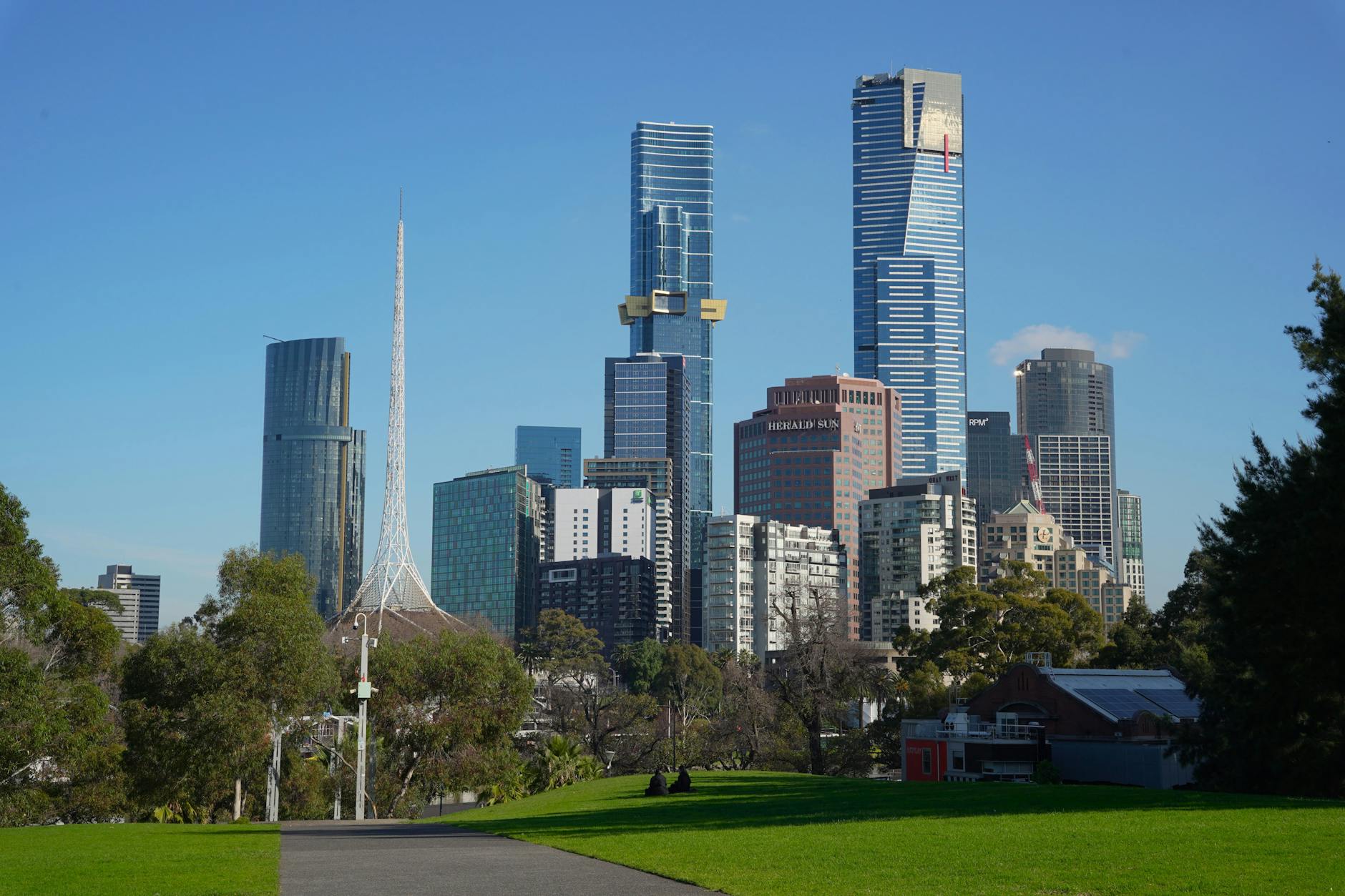
Melbourne is one of the easiest cities in the world to describe badly.
Start Here
People reach for the same shorthand every time: laneways, coffee, trams, sport, weather, food. None of that is false. The problem is that the list turns Melbourne into a style board instead of a city. It makes the place sound as if it runs on branded atmosphere alone, as if one can arrive, order a flat white, glance at some street art, ride a tram through the CBD, and claim to have understood it. The real Melbourne is much more structured than that. It is a city of neighborhoods, institutions, habits, and allegiances. It is serious about eating, serious about sport, serious about public life, and unusually good at making everyday urban routines feel like culture.
That is why a stronger first trip does not begin with famous laneways. It begins with the right mental model. Melbourne is not Sydney's moodier sibling, nor is it simply Australia's self-appointed culture capital. It is a large, distributed city whose best qualities emerge through district changes and daily rhythm: the CBD and its arcades, Carlton and Fitzroy for older urban texture, Southbank for museums and river polish, Richmond for sport and eating, St Kilda for its own separate shoreline culture, and inner-north or inner-east neighborhoods where the city starts feeling lived in rather than marketed.
The weak visit uses the center too heavily. It treats the CBD as if it were the whole city, mistakes Hosier Lane for depth, spends too much time in generic shopping territory, and never lets Melbourne turn into a sequence of distinct districts. The city is too large, too food-literate, and too neighborhood-driven for that kind of lazy compression. A traveler who never leaves the central grid may still enjoy themselves, but they will come away with a version of Melbourne that is flatter, shinier, and much less convincing than the real one.
The stronger visit understands that Melbourne's pleasures are cumulative. One gallery or market does not prove the city. One dinner does not explain it. What matters is the way institutions and neighborhoods keep reinforcing each other. You walk through the center and find a working commercial city, not just a visitor core. You move into the laneways and arcades and realize they are best as connective tissue, not as the whole argument. You cross toward the NGV, the river, or the botanic gardens and feel how much Melbourne values cultural infrastructure. You reach the MCG or nearby sports precinct and see how deeply sport is woven into identity here. You eat in Carlton, Fitzroy, Richmond, or the inner north and realize the city is not showing off when it talks about food; it is simply telling the truth.
This is also a city where climate matters, even when locals turn it into a joke. Melbourne weather is not just conversation filler. It changes how you route the day, when you sit outside, when the river looks worth your time, how much you rely on museums, and whether a neighborhood day feels electric or merely cold and windblown. A good Melbourne trip stays flexible enough to absorb that. It does not collapse because the forecast moved.
The city in one sentence: Melbourne is a neighborhood-driven, tram-laced, weather-shaped city where the best first trip comes from combining central texture, serious cultural institutions, food districts, sport, and flexible urban pacing rather than collecting coffee-and-laneway cliches.
Basic data
| Population | About 5.3 million in the metro area |
|---|---|
| Area | 9,993 km2 in Greater Melbourne; the central city is far smaller |
| Major religions | Christianity, Islam, Hinduism, Buddhism, Judaism, and a large secular population |
| Political system | State capital city inside a federal parliamentary constitutional monarchy |
| Economic system | High-income mixed economy led by finance, technology, education, healthcare, culture, and services |
Quick Verdict
Best for: return travelers to Australia, first-time visitors who like cities more than monuments, food-led trips, sport pilgrims, museum travelers, couples, solo travelers, and anyone who prefers urban texture to postcard spectacle.
Not ideal for: travelers who want one dramatic central landmark district, people who hate cool-weather uncertainty, or anyone expecting the beach to define the city.
Ideal first visit: 4 full days.
Minimum worthwhile stay: 2 full days.
Best overall months: March to May and October to November.
Best winter case: if you want museums, dining, sport, and layered neighborhoods more than warm outdoor lounging.
Biggest planning mistake: staying too center-only and assuming the CBD plus a few lane photos equals Melbourne.
One thing to prioritize: a base near useful tram or train links, not just a cheap room on a map.
One thing to leave flexible: the afternoon. Melbourne rewards people who can change direction with the weather.
The blunt version: Melbourne is one of the best urban trips in Australia if you treat it as a city of districts and habits rather than as a set of branded experiences.
Who Will Love Melbourne?
Melbourne works especially well for travelers who enjoy cities that reveal themselves through repetition rather than shock. This is not a city that depends on one impossible skyline or one overwhelming sight. It wins by depth. The second good street matters almost as much as the first. The second strong meal confirms the first. The second neighborhood changes the meaning of the first. By the time you have spent two or three days here properly, Melbourne often feels bigger in the mind than cities with more obvious spectacle.
That makes it particularly good for people who like to inhabit a place rather than conquer it. If you want a trip shaped by breakfast choices, gallery time, tram decisions, bookstore detours, pub stops, sports atmosphere, and evening restaurant judgment, Melbourne is unusually strong. The city gives you many chances to be rewarded for taste rather than for stamina.
Couples do well here because the city can be intimate without becoming precious. Melbourne supports long lunches, serious dinners, museum afternoons, old bars, rainy-day wandering, and low-key hotel time. The romance here is not scenic in the obvious sense. It is urban. It comes from sharing a city that knows how to eat, watch, read, drink, and linger.
Solo travelers also tend to do well. There is enough public life, enough casual dining, enough walkable density, and enough daytime cultural material that being alone feels natural. Melbourne does not punish independence. It often improves it.
The city is less ideal for travelers who want immediate certainty. Melbourne has opinions, but they are distributed. A first-time visitor who needs the city to explain itself in one glance may find Sydney easier. A visitor willing to let neighborhoods do the explanatory work will often prefer Melbourne by the end.
Melbourne at a Glance
| Question | Practical Answer |
|---|---|
| Main airport | Melbourne Airport (MEL) |
| Simplest airport transfer | SkyBus to Southern Cross, then local tram/train/taxi as needed |
| Best first-time base | CBD, East End CBD, Southbank, or Carlton edge |
| Best area for food and bars | Fitzroy, Carlton, Richmond, CBD laneway core, and inner-north districts |
| Best practical transport rule | Use trams generously, but do not pretend the Free Tram Zone covers the whole useful city |
| Main transport ticket | myki |
| Free transport quirk | Trips entirely within the Free Tram Zone are free |
| Signature museum anchor | NGV and Melbourne Museum |
| Signature market anchor | Queen Victoria Market |
| Signature civic-sport symbol | MCG |
| Best way to understand the city | District by district, not one CBD sweep |
| Car needed? | No |
| Emergency number | 000 |
| Tap water | Safe to drink |
| Currency | Australian dollar |
| Power plugs | Type I |
2026 Visitor Notes
Airport Access Is Still Bus-Based Rather Than Rail-Based
Melbourne Airport's official transport page continues to center ground access around commercial bus services, taxis, rideshare, and other road transport rather than a direct airport train.[1] For most first-time visitors, that means the arrival problem is more straightforward than romantic: use SkyBus or a car, then switch into the city network.
SkyBus To Southern Cross Is The Default Public-Transport Move
SkyBus remains the cleanest public arrival option for most travelers heading into central Melbourne, especially those staying in the CBD, Docklands, or anywhere with a simple onward tram or train connection.[2] It is not the only way in, but it is the least mentally expensive.
The Free Tram Zone Is Useful, But Only In Its Proper Scale
Public Transport Victoria is explicit: if you are only traveling within the city's Free Tram Zone, the trip is free and you do not need a myki.[3][4] This is excellent for short central hops. It becomes misleading the moment visitors think it solves all Melbourne transport. It does not.
myki Rules Matter More Once You Leave The Center
PTV's myki guidance is straightforward: trains require touch on and touch off, buses require both, and trams in Zone 1+2 require touch on, while you do not touch on or off if your trip stays entirely inside the Free Tram Zone.[5] This is a small detail that saves needless confusion once you begin moving properly around the city.
The CBD Laneways Are Real, But They Are Not The Whole Case For Melbourne
Visit Melbourne and the City of Melbourne both continue to present the laneway network as one of the city's defining visitor experiences, emphasizing dining, boutiques, bars, and street art across the central grid.[6][7] That is true, but the better reading is proportional: the laneways are a layer of Melbourne, not the whole city.
The Major Institutions Are Strong Enough To Shape A Whole Day
NGV International and The Ian Potter Centre: NGV Australia both maintain daily public opening at 10am to 5pm with free general entry, while Melbourne Museum remains open daily 9am to 5pm with its own substantial galleries and Melbourne-specific historical material.[9][10][11] These are not rainy-day backups. They are core city assets.
Markets, Gardens, And Sport Are Structural, Not Optional
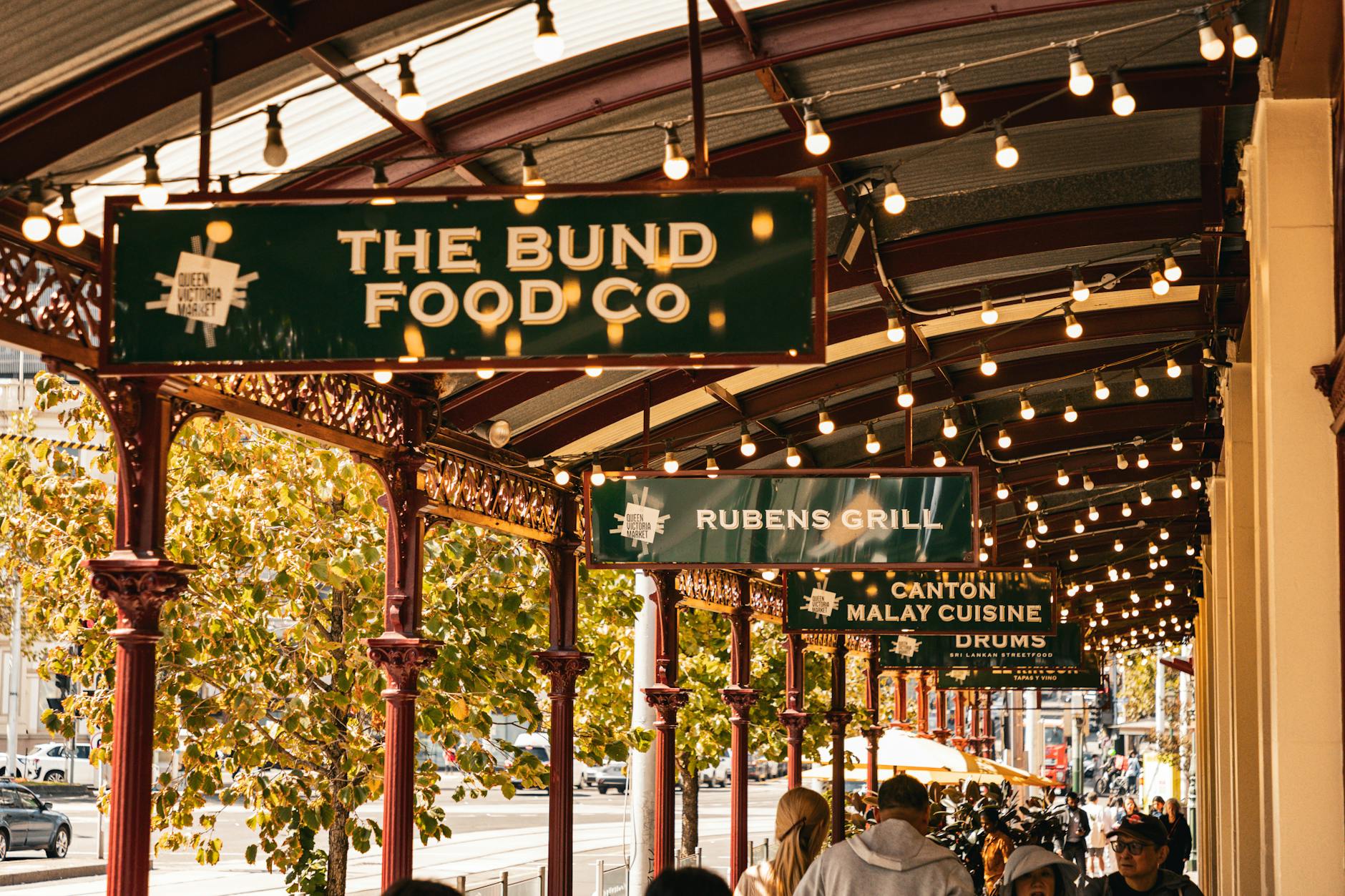
Queen Victoria Market remains one of the city's central public institutions rather than a tourist extra; the Royal Botanic Gardens continue to operate as a major free cultural landscape near the arts precinct; and the MCG's official tours still run regularly from Gate 3 on non-event patterns.[8][12][13] If you want Melbourne to make sense, you need at least one of these three layers and ideally all of them.
How to Understand Melbourne
Melbourne works through five forces.
The first is district texture. The city is not defined by one view so much as by a series of areas that each hold their own identity: the CBD, Carlton, Fitzroy, Collingwood, Richmond, Southbank, St Kilda, and the broader inner-north and inner-east zones.
The second is public-life seriousness. Markets, museums, trams, stadiums, gardens, arcades, and university-adjacent streets all matter here. Melbourne is one of those places where everyday urban infrastructure doubles as identity.
The third is food as ordinary civic strength. The dining culture is not a luxury add-on. It is part of how the city explains itself.
The fourth is weather instability. Locals exaggerate it into folklore, but the underlying point is real: route design should remain flexible enough to handle wind, drizzle, heat, or sudden brightness.
The fifth is sport and culture sharing the same civic weight. In many cities, museums and stadiums feel like separate worlds. In Melbourne, they belong to the same broader urban story.
The Five Melbournes A First-Time Visitor Actually Meets
Central Melbourne: arcades, laneways, stations, trams, offices, shopping, and the city at its most immediately legible.
Cultural Melbourne: NGV, Federation Square, ACMI, the Arts Centre, Melbourne Museum, and the institutions that justify the city's self-image.
Market-and-cafe Melbourne: Queen Victoria Market, Carlton, Brunswick edges, and the broader daily-life version of the city.
Sporting Melbourne: the MCG, park edges, event rhythms, and the sense that sport here is not entertainment alone but civic identity.
Neighborhood Melbourne: Fitzroy, Collingwood, Richmond, St Kilda, and other districts where the city stops performing itself and simply lives.
The Main Mental Shift
Do not ask, "What are the top Melbourne sights?" Ask, "Which Melbourne am I using today?" Once you divide the city into central, cultural, market, sporting, and neighborhood versions, the trip immediately becomes clearer.
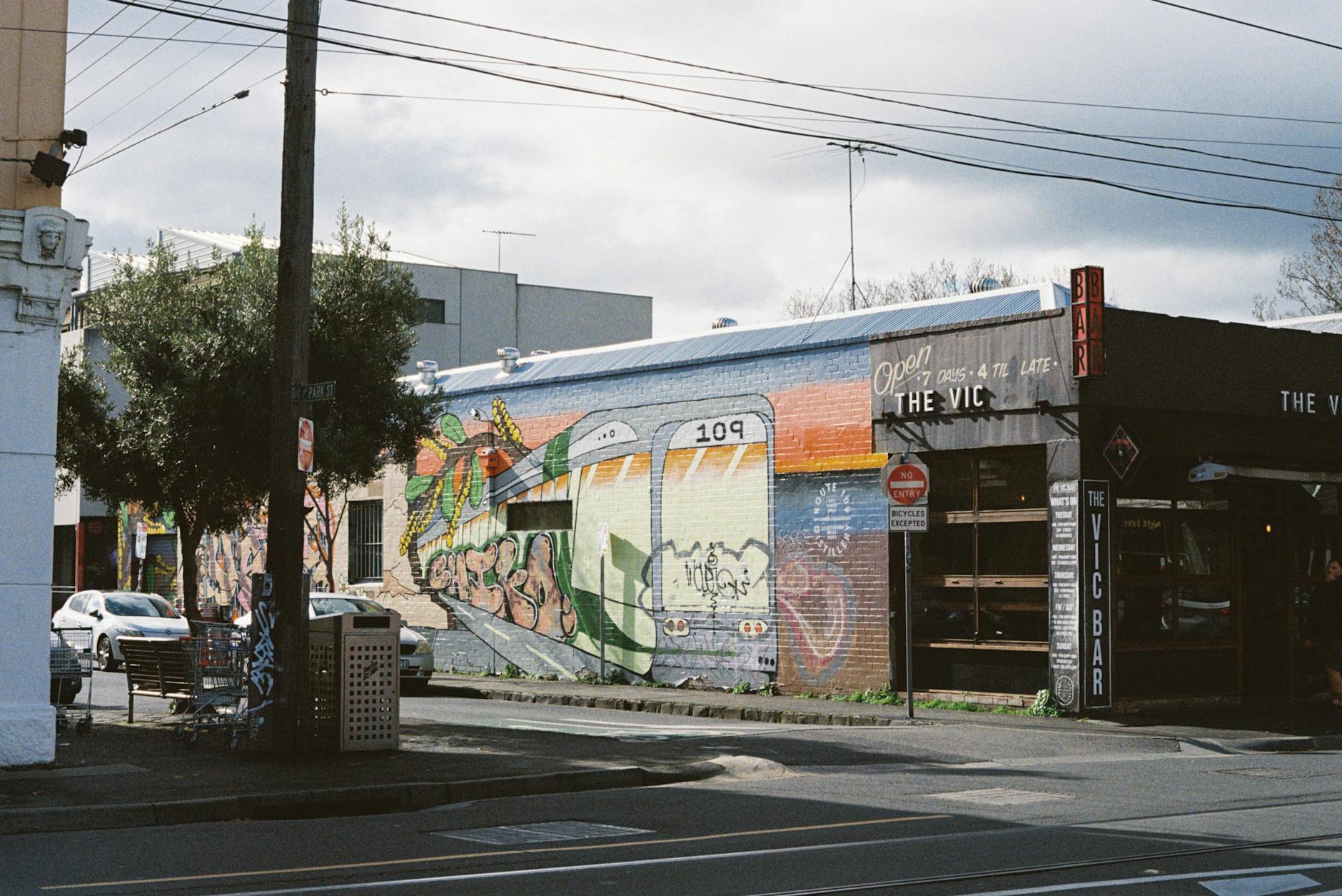
What Melbourne Does Better Than People Think
Melbourne is better than people think at accumulated urban pleasure. A lot of cities are exciting in bursts and tiring in between. Melbourne is unusually good at giving a traveler one solid thing after another without needing dramatic transitions. A museum, then lunch, then a tram ride, then a market detour, then a bookstore, then a pub, then dinner. The day keeps validating itself.
It is also better than people think at serious cultural access. The major institutions are central enough, open enough, and well integrated enough that a traveler can move between them without dedicating an entire trip to culture in the heavy sense. Melbourne makes it easy to be civilized without becoming solemn.
Another underrated strength is sport as atmosphere even when you are not attending an event. The MCG and surrounding precinct are not just for ticket holders. They help explain the city whether or not you care deeply about cricket or Australian rules football.
The city is also excellent at turning food into neighborhood knowledge. Meals here are rarely isolated from place. Where you eat says something about which Melbourne you decided to spend time in.
Finally, Melbourne is better than people think at winter and shoulder-season travel. This is not a city that only works in postcard sunshine. It is often strongest when the traveler leans into interiors, galleries, bars, and cold-weather appetite.
Best Time to Visit Melbourne
Melbourne is useful year-round, but some seasons are more forgiving than others.
Best Overall Months
March through May and October through November are the broadest recommendations. The city remains walkable, the outdoor components are still enjoyable, and the weather is less likely to dominate the whole day.
Summer
Summer can be lively and attractive, but it is not automatically the best first-time season. The city can feel hot, event-heavy, and more administratively busy. It still works, especially if your trip includes sport or festivals, but it rewards planning.
Autumn
Autumn is arguably Melbourne's smartest season. The city feels settled, the food and bar culture thrive, and you can use neighborhoods on foot without as much climate friction.
Winter
Winter is very good for travelers who care more about cities than sunshine. Museums, markets, pubs, trams, restaurants, and bookstores all rise in relative value, and Melbourne often feels more inward and more itself.
Spring
Spring gives the city a cleaner brightness and is especially good if you want gardens, central walks, and a less pressurized version of outdoor Melbourne than peak summer.
Month-by-Month Guidance
January: lively, event-heavy, sometimes hot. February: still summery, strong if your trip is urban rather than beach-led. March: one of the best months. April: excellent for first-timers. May: strong for food, culture, and walking. June: coldish by Australian standards, very good for city travelers. July: wintery, but excellent for museums and dining. August: similar strengths, still very workable. September: transitional and improving. October: one of the easiest all-round months. November: excellent. December: festive, busier, and increasingly warm.
How Many Days You Need
Two Days
Enough for a CBD-and-culture day and one neighborhood day.
Three Days
A strong first pass. This gives you central Melbourne, one museum-heavy or sporting layer, and one serious district circuit.
Four Days
Ideal for most first visits. You can cover the center, market life, the MCG or sports precinct, and at least two outer neighborhoods without flattening the city.
Five Days Or More
Very good if you want to move more slowly, include St Kilda or a wider tram-based sweep, or build in weather flexibility.
Where to Stay in Melbourne
Where you stay matters because a good Melbourne base allows the city to keep unfolding without friction.
Fast Answer
For most first-time visitors, stay in the CBD, East End CBD, Southbank, or Carlton edge. These areas give strong tram access, cultural reach, and practical hotel choice.
Neighborhood Decision Table
| Traveler Type | Best Area |
|---|---|
| First-time visitor | CBD or East End CBD |
| Culture-first trip | Southbank or CBD near Federation Square |
| Food-and-bar trip | Fitzroy/Collingwood edge or CBD with easy tram links |
| Sport-first trip | East Melbourne/CBD edge/Richmond access |
| Couple weekend | East End CBD, Southbank, or Carlton edge |
| Practical longer stay | CBD, Carlton, or a tram-rich inner district |
CBD and East End CBD
Best for: first-timers, short stays, transport ease. Why it works: this gives you stations, trams, arcades, central dining, and easy reach to the cultural core. Tradeoff: parts of the CBD can feel more functional than intimate. Best use: the smartest default base.
Southbank
Best for: museum-heavy trips, polished riverfront stays, and visitors who want a more obviously visitor-friendly setup. Why it works: NGV, Arts Centre, river walks, and central access all line up cleanly here. Tradeoff: it can feel more composed and less textural than the inner north. Best use: couples and culture-first itineraries.
Carlton Edge
Best for: people who want to eat well and feel slightly outside the pure CBD machine. Why it works: you gain better access to markets, Melbourne Museum, and older neighborhood life without losing centrality. Tradeoff: not every property here is equally convenient late at night. Best use: travelers who want a city base with more personality.
Fitzroy / Collingwood As A Base
Best for: repeat visitors or first-timers who already know they want food, bars, and neighborhood life over strict central convenience. Why it works: this is one of the strongest versions of lived-in Melbourne. Tradeoff: not as frictionless for museum and CBD-heavy days. Best use: confident urban travelers.
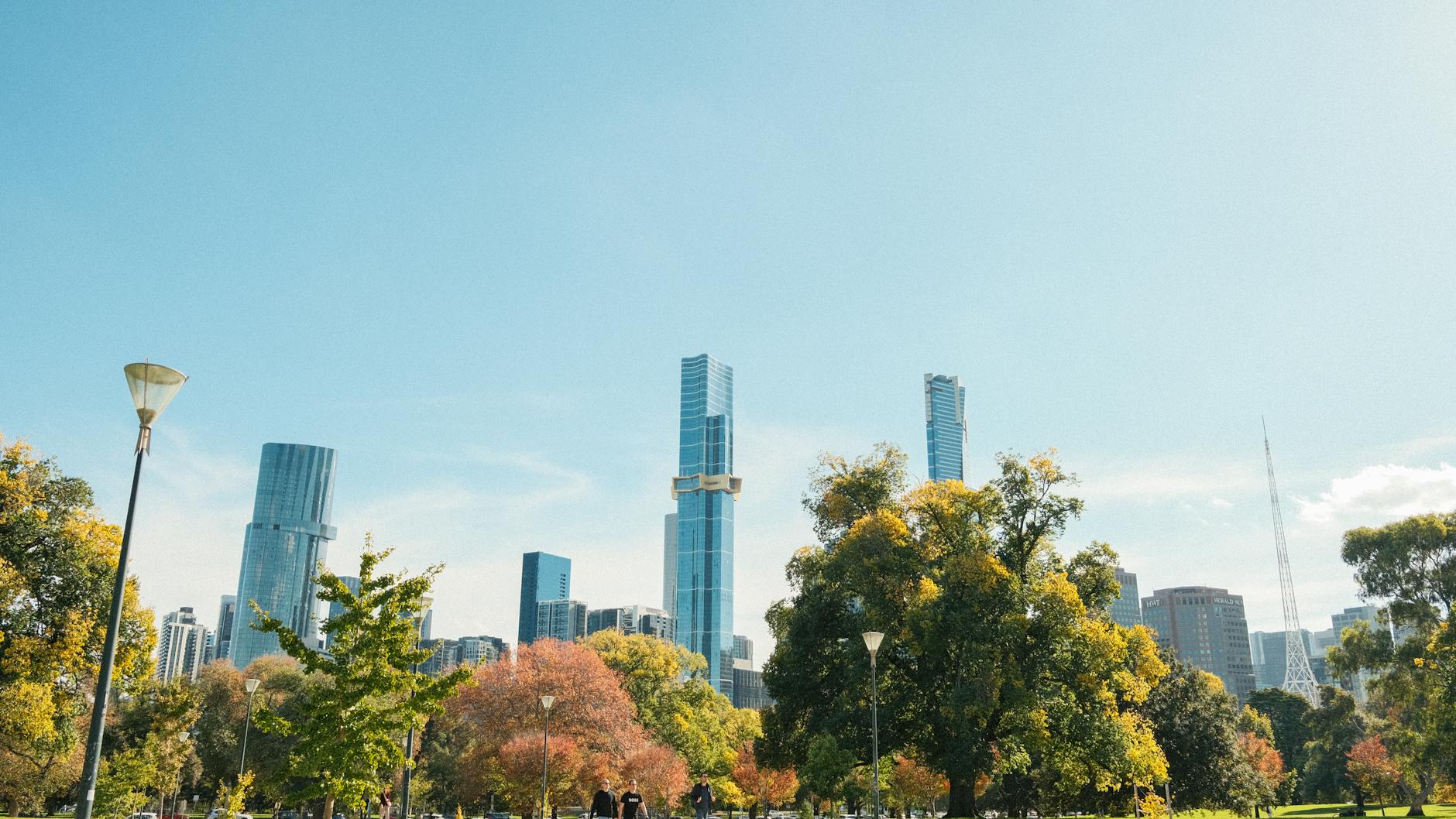
Area Profiles
CBD: best for logistics, arcades, trams, and first orientation. East End: best for an easier handoff between center, culture, and sport. Southbank: best for institutional Melbourne and polished riverfront movement. Carlton: best for market, museum, and food access. Fitzroy/Collingwood: best for neighborhood confidence and contemporary city texture. Richmond: best for sport spillover and very strong eating.
Neighborhood Guide: Where to Explore, Not Just Sleep
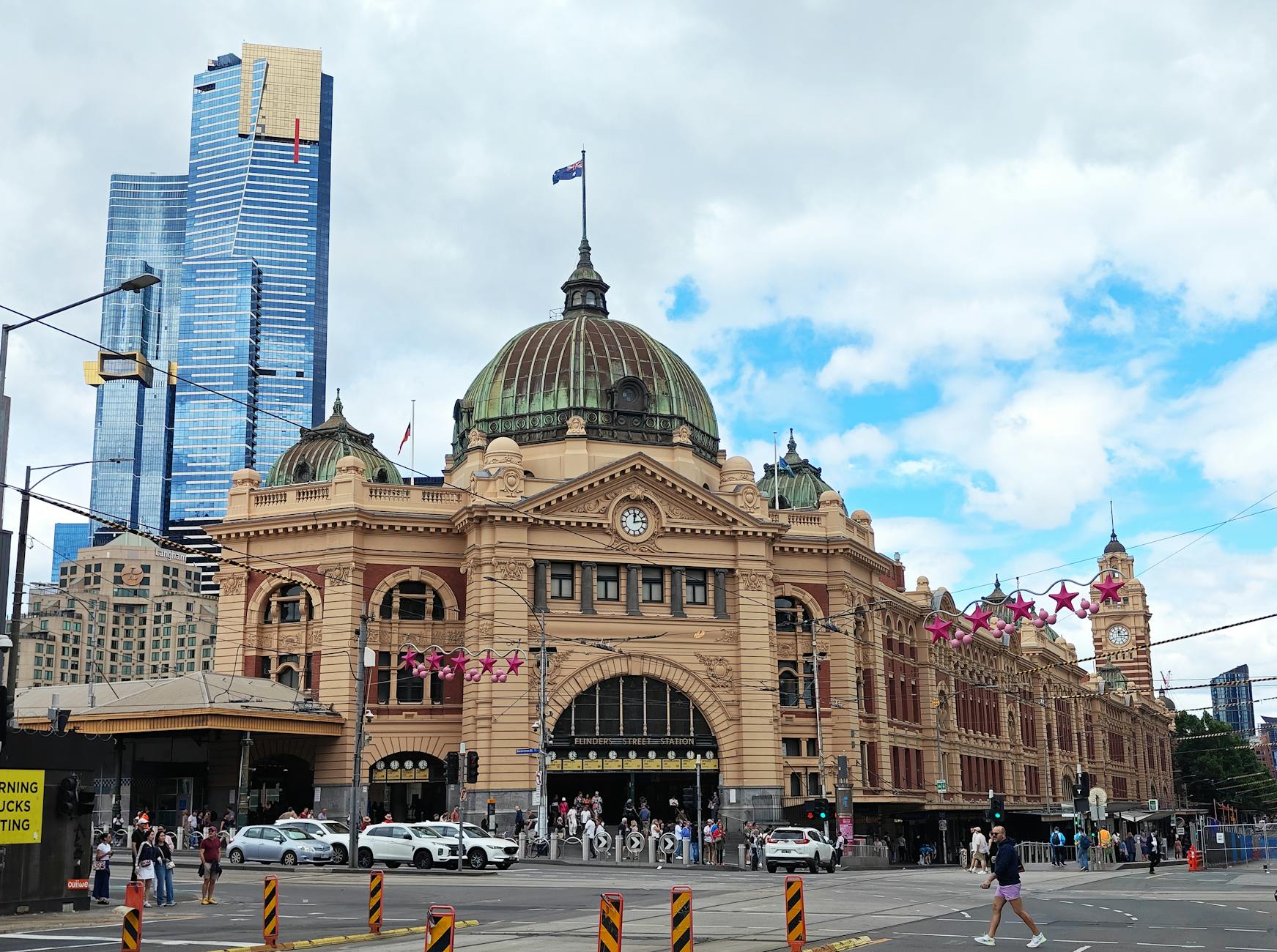
The CBD matters because it establishes Melbourne's grammar: stations, arcades, old commercial buildings, tram logic, and the famous laneway network.[6][7] But it should be read as a base layer, not as a full substitute for the city.
Carlton is where many first-time visitors begin to feel the city's depth. The proximity to Melbourne Museum matters, but so do the dining streets, the older institutional feel, and the general shift away from pure central-business energy.[10][11]
Fitzroy and Collingwood are useful because they expose a more self-possessed Melbourne: less polished than Southbank, less administrative than the CBD, and stronger on the everyday city one actually inhabits.
Richmond is one of the clearest places where food and sport begin to overlap with larger urban identity. The proximity to the MCG and the broader sporting precinct gives it extra charge, but it stands on its own as a dining district too.[13]
St Kilda should be treated carefully. It is a real part of Melbourne's imagination, but it is not the whole point and should not automatically dominate a short first trip unless its shoreline culture genuinely matters to you.
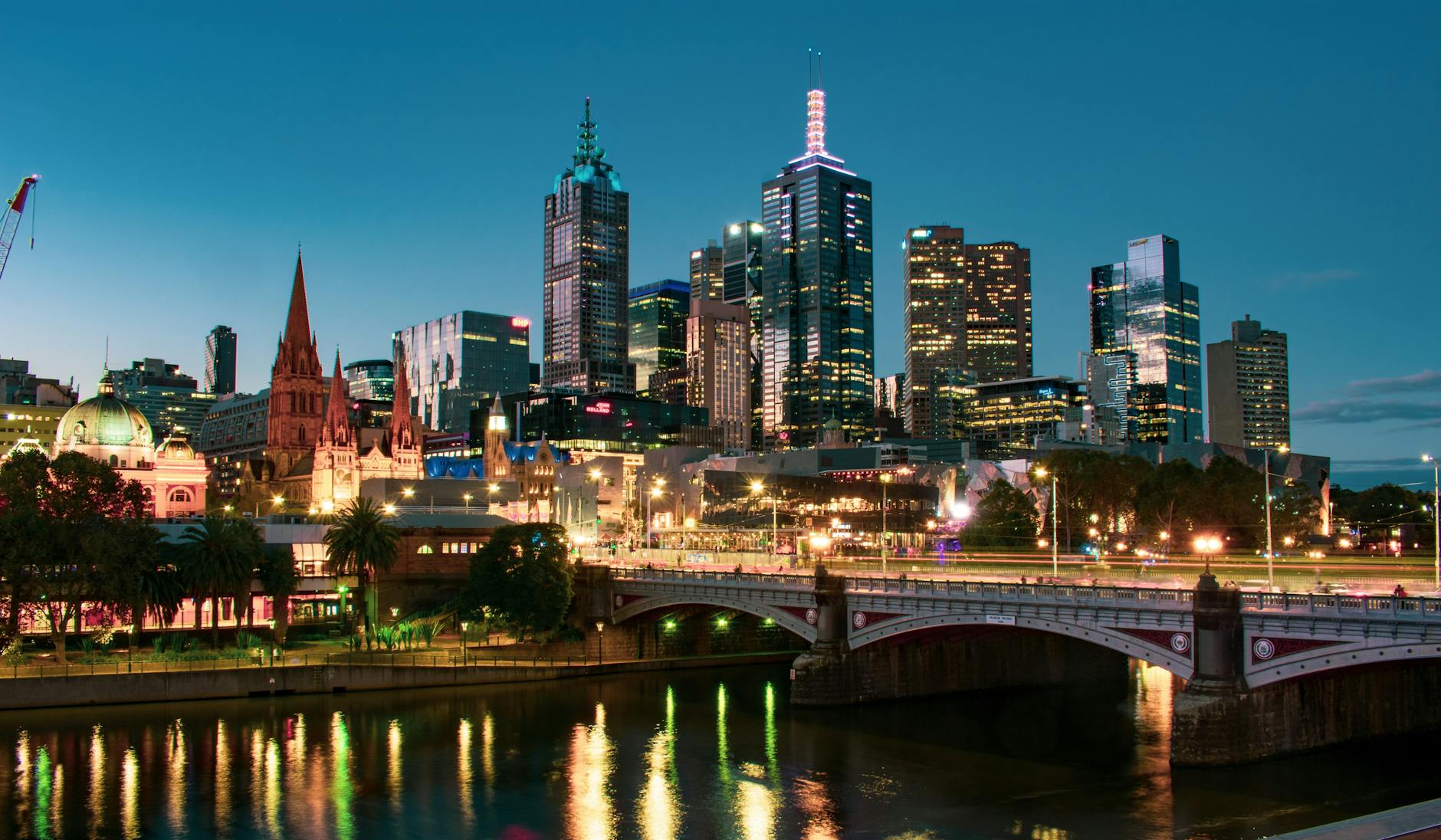
Federation Square and the arts precinct deserve better than drive-by treatment. Visit Melbourne's official description emphasizes Federation Square as a creative and civic gathering place tied directly to the river and major cultural institutions.[14] That is the right way to use it: as a hinge, not just a meeting point.
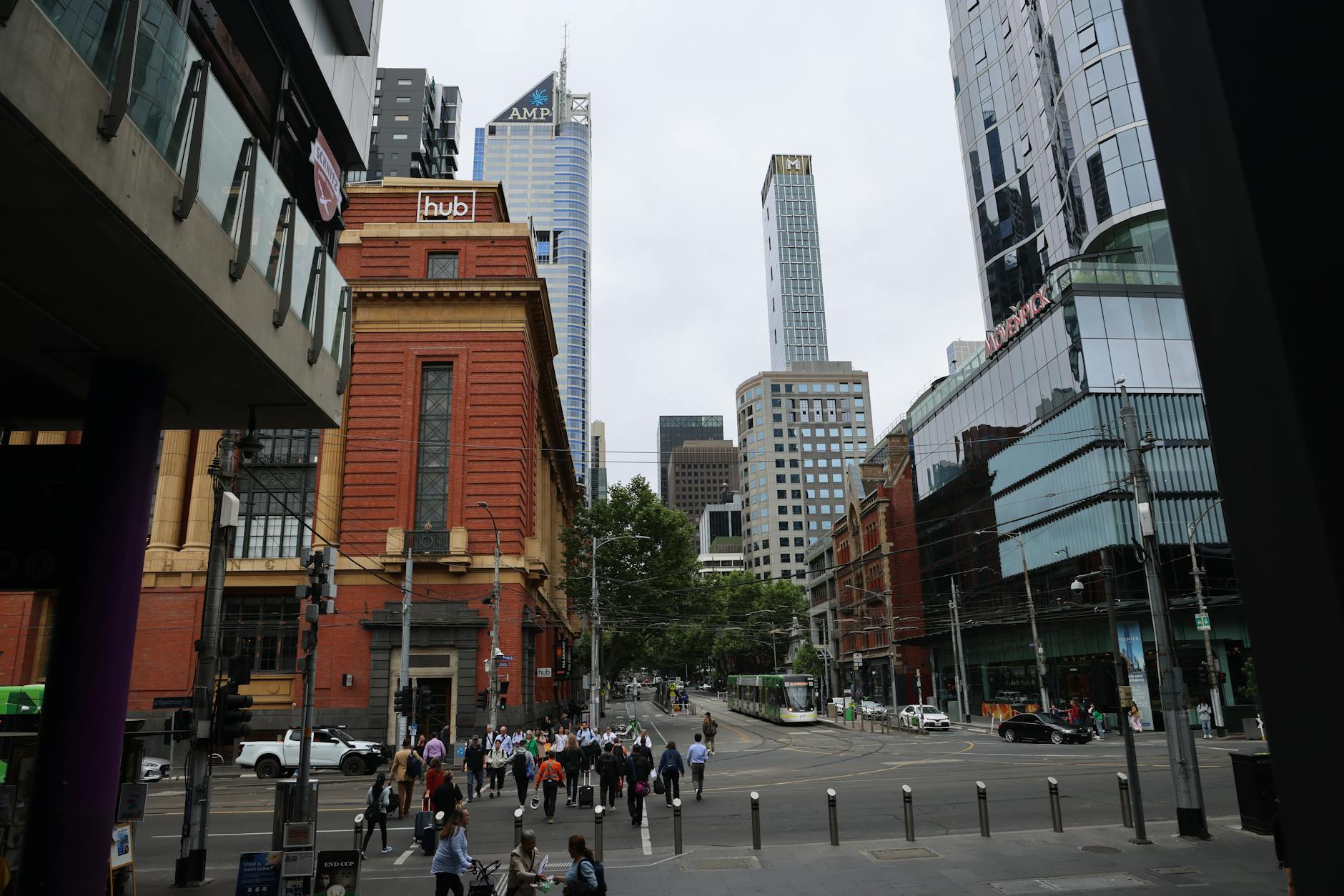
The Best Things to Do in Melbourne
- Walk the central arcades and laneways, but stop before they become the whole trip.[6][7]
- Give NGV real time and, if relevant, pair it with Federation Square and the river.[9][14]
- Use Queen Victoria Market as a city institution, not just a snack stop.[8]
- Visit Melbourne Museum if you want the city explained historically rather than only atmospherically.[10][11]
- Spend time at the Royal Botanic Gardens when the weather allows.[12]
- Take the MCG seriously, especially if sport means anything to you.[13]
- Build at least one full day around neighborhoods outside the CBD.
Itineraries
If You Have Two Days
Use day one for the CBD, laneways, Federation Square, NGV or the arts precinct, and a proper central dinner. Use day two for Queen Victoria Market, Melbourne Museum, and one outer neighborhood such as Carlton or Fitzroy.
If You Have Three Days
Keep the two-day structure, then add a third day for the MCG/sporting precinct plus Richmond, or for a wider neighborhood circuit through Fitzroy, Collingwood, and the inner north.
If You Have Four Days
This is the best first-time pattern. Add the Royal Botanic Gardens, a slower Southbank afternoon, or a St Kilda extension if the weather supports it.
Itineraries By Traveler Type
For Couples
Stay central or in Southbank, emphasize museums and dinner districts, and give yourselves one unstructured afternoon for weather-responsive city wandering.
For Solo Travelers
Use the CBD as a transport and orientation base, then move confidently into one neighborhood per half day. Melbourne is very good alone if you let meals and institutions anchor the route.
For Food-First Travelers
Use the market, Carlton, Richmond, and the inner north as the real trip. The laneways matter, but the city becomes more convincing once you eat outside the obvious center.
For Sport-First Travelers
The MCG is not a novelty item. Build a day around it and the surrounding precinct, then let Richmond or nearby dining districts finish the case for the city.[13]
Food and Drink
Melbourne's food reputation is justified, but only if you understand what kind of reputation it is. This is not just a city of a few famous restaurants. It is a city where eating well is built into ordinary life. Breakfast matters. Coffee matters. Bakeries matter. Late lunches matter. Wine bars matter. Casual immigrant dining matters. And neighborhood context matters almost as much as the dish itself.
The key is to avoid performative Melbourne. One crowded brunch spot, one famous lane, and one random specialty coffee bar do not prove anything. The city becomes impressive when you feel how naturally good food appears across districts. Carlton, Richmond, Fitzroy, Collingwood, and central lanes all do different kinds of work. The point is not to crown one winner. The point is to let the city keep feeding you intelligently.
Getting Around
Melbourne is one of the most usable large cities in Australia without a car. Trams are part of the identity and not just the branding. PTV's official guidance on tickets, zones, and myki rules makes the basic system clear: use the Free Tram Zone only where it genuinely applies, use myki once you move beyond that, and do not overcomplicate the network.[3][4][5]
The larger rule is simple: use trams for urban continuity, not for novelty. They help Melbourne feel connected. That is one reason the city reads so well once you stop thinking in taxi-only terms.
Where Melbourne Fits In An Australia Trip
Melbourne often becomes the decisive city for travelers who discover that what they actually want from Australia is not only scenery. Sydney may be the more obvious first stop because of its harbor drama and instant recognizability, but Melbourne is frequently the city that proves the country also does serious urban life exceptionally well. It belongs in an Australia itinerary not as a secondary cultural add-on, but as one of the strongest city stays in the country.
That role matters because many Australia trips are structurally unbalanced. They lean too hard on coastlines, road routes, reef or outback ambition, and singular scenic icons. Melbourne restores another dimension: museums, sport, neighborhoods, books, weather, coffee, public transport, and food that feels embedded in daily life rather than staged for tourists. If Sydney supplies spectacle and geography, Melbourne often supplies urban depth and repeatability.
The city is particularly valuable in longer Australian routes where travelers need one place to stop collecting scenery and start inhabiting a city again. Melbourne can reset the trip. A few days here can feel mentally different from a sequence of beach, flight, and scenic-drive logistics. That is one reason it often ends up being more important in memory than on the original plan.
Melbourne Versus Sydney, Brisbane, And Adelaide
Compared with Sydney, Melbourne is less visually explosive and more cumulative. Sydney hits hard: harbor, bridge, Opera House, beaches, ferry views. Melbourne does not usually make that kind of first-glance argument. It wins more slowly, but often more thoroughly, because its strengths stack rather than merely sparkle. Travelers who prefer a city to unfold neighborhood by neighborhood often end up preferring Melbourne even if Sydney produced the bigger first photograph.
Compared with Brisbane, Melbourne feels older in urban confidence and broader in institutional depth. Brisbane has grown into a stronger city than many outsiders expect, but Melbourne remains denser in cultural infrastructure, more serious about district variation, and generally more persuasive over several days if your trip is city-led.
Compared with Adelaide, Melbourne is larger, more varied, and less easily summarized. Adelaide can be elegant and highly usable, but Melbourne offers a thicker version of Australian city life: more subcultures, more museums, more sport, more dining range, and more competing versions of what the city thinks it is.
This is why Melbourne is such a good test city. It exposes whether a traveler really likes cities, or only likes famous views.
First-Time Visitors Versus Repeat Visitors
First-time visitors often arrive with a strong list and a weak map. They know the slogans and the individual names: Queen Victoria Market, NGV, Hosier Lane, Federation Square, St Kilda, the MCG. What they often do not yet understand is how these elements should relate. The first useful improvement to any Melbourne trip is to stop thinking in attractions and start thinking in district-led days.
Repeat visitors almost always do better because they stop trying to "cover Melbourne." They know the city does not reward that approach. Instead they begin assigning days to moods or zones: a market-and-Carlton day, an inner-north day, a Southbank-and-NGV day, a sport-and-Richmond day, a weatherproof central day. Once that shift happens, Melbourne gets dramatically stronger.
This is also why the city improves on return. The first visit proves that Melbourne is good. Later visits show how many different good versions of it there are. The city has enough neighborhood personality that repeat travelers can keep changing the emphasis without feeling repetitive.
Why One Proper Melbourne Day Matters
It is surprisingly easy to shortchange Melbourne because the city feels so available. Travelers assume they can "dip into" it between flights, between Great Ocean Road plans, before Tasmania, after Sydney, or around an event. Usually that produces a competent but thin result: a tram ride, a lane, a market, one meal, perhaps the river, and a vague feeling that the city seems pleasant and polished.
A proper Melbourne day changes that. It gives the CBD enough time to stop looking like a business district with visitor branding. It creates room for one institution that actually matters, whether that is NGV, Melbourne Museum, or the MCG if sport is your route in. It allows for one real neighborhood shift, which is how the city starts proving its range. It also gives the weather time to shape the plan instead of merely interfering with it.
One full day is where Melbourne first begins to feel authored rather than sampled. That is the threshold at which many skeptics start understanding why people live here so proudly.
Why The CBD Should Not Own The Whole Trip
The central city is useful, interesting, and in many cases the right base. It is not the whole argument. If you remain there too completely, Melbourne can start to look like a stylish grid of arcades, offices, chain retail, coffee stops, and a few culture anchors. That version is not false. It is simply incomplete.
The rest of Melbourne is what gives the CBD its meaning. Carlton gives the city older institutional and dining texture. Fitzroy and Collingwood expose a more self-directed neighborhood intelligence. Richmond brings sport and food into the same urban sentence. Southbank shows the polished civic-cultural side. Even St Kilda, used selectively, reminds you that Melbourne also carries a shoreline personality distinct from the central city.
This is why many first-time travelers underrate Melbourne until the second or third day. They have not left the center enough to let the city differentiate itself. In Melbourne, district contrast is not optional enrichment. It is the main event.
How Melbourne Changes Over The Course Of A Stay
On arrival, Melbourne can feel competent before it feels distinctive. The transport works, the center is busy, the cafes are everywhere, and the city seems comfortable in its own skin. That first impression is positive but not always decisive. By the second day, once a traveler has moved beyond the CBD and back again, the city usually sharpens. Districts start separating in the mind. Food choices feel less generic. The institutional strength becomes clearer.
By the third and fourth day, Melbourne often gets better because it stops trying to impress in one dimension. Instead it starts proving that it can sustain quality across many hours and many kinds of day. A rainy museum afternoon can be excellent. A tram-led neighborhood day can be excellent. A sports precinct day can be excellent. A market-and-dinner day can be excellent. The city gains force because its competence is so repeatable.
That is the real Melbourne advantage. It is not built around a single peak moment. It is built around continuity. Once you recognize that, the city usually rises very quickly in your estimation.
What To Skip
Skip the idea that one laneway circuit is enough. Skip the habit of saying you "did Melbourne" after only the CBD. Skip overcommitting to St Kilda on a short trip unless it truly matches your priorities. Skip generic central restaurants when a small tram ride would improve the meal dramatically.
Common Mistakes
- Staying in a remote outer hotel to save money and then wasting the gain on time and friction.
- Treating the Free Tram Zone like a full-city solution.
- Reducing Melbourne to coffee, graffiti, and weather jokes.
- Ignoring the museums because the city seems casual.
- Forgetting that the MCG helps explain Melbourne even to non-sports obsessives.
My Blunt Advice
Melbourne is best when used like a city you respect rather than a brand you consume. Stay somewhere connected. Use the trams. Give the institutions real time. Eat in at least two different types of district. Let the weather edit the plan rather than ruin it.
If you do that, Melbourne becomes one of the most convincing urban stays in Australia. Not because it shouts. Because it keeps proving itself.
Source Notes
- 1. Melbourne Airport, official transport overview: [https://www.melbourneairport.com.au/transport](https://www.melbourneairport.com.au/transport)
- 2. SkyBus, Melbourne City Express information: [https://www.skybus.com.au/melbourne-city-express/](https://www.skybus.com.au/melbourne-city-express/)
- 3. Public Transport Victoria, official zones guide: [https://www.ptv.vic.gov.au/tickets/fares/zones/](https://www.ptv.vic.gov.au/tickets/fares/zones/)
- 4. Public Transport Victoria, official tickets overview: [https://www.ptv.vic.gov.au/tickets/](https://www.ptv.vic.gov.au/tickets/)
- 5. Public Transport Victoria, official myki travel guide: [https://www.ptv.vic.gov.au/tickets/myki/travel-with-myki/](https://www.ptv.vic.gov.au/tickets/myki/travel-with-myki/)
- 6. Visit Melbourne, official laneways page: [https://www.visitmelbourne.com/Regions/Melbourne/Destinations/Laneways](https://www.visitmelbourne.com/Regions/Melbourne/Destinations/Laneways)
- 7. City of Melbourne, official iconic laneways and arcades walk: [https://whatson.melbourne.vic.gov.au/things-to-do/walks/arcades-and-lanes](https://whatson.melbourne.vic.gov.au/things-to-do/walks/arcades-and-lanes)
- 8. Visit Melbourne, official Queen Victoria Market page: [https://www.visitmelbourne.com/regions/melbourne/see-and-do/shopping-and-fashion/markets/queen-victoria-market](https://www.visitmelbourne.com/regions/melbourne/see-and-do/shopping-and-fashion/markets/queen-victoria-market)
- 9. NGV, official visit page: [https://www.ngv.vic.gov.au/visit/](https://www.ngv.vic.gov.au/visit/)
- 10. Museums Victoria, official Melbourne Museum plan-your-visit page: [https://museumsvictoria.com.au/melbournemuseum/plan-your-visit/](https://museumsvictoria.com.au/melbournemuseum/plan-your-visit/)
- 11. Museums Victoria, official Melbourne Story page: [https://museumsvictoria.com.au/melbournemuseum/whats-on/the-melbourne-story/](https://museumsvictoria.com.au/melbournemuseum/whats-on/the-melbourne-story/)
- 12. Royal Botanic Gardens Victoria, official Melbourne Gardens page: [https://www.rbg.vic.gov.au/melbourne-gardens/](https://www.rbg.vic.gov.au/melbourne-gardens/)
- 13. MCG, official tours page: [https://www.mcg.org.au/tours](https://www.mcg.org.au/tours)
- 14. Visit Melbourne, official Federation Square page: [https://www.visitmelbourne.com/regions/Melbourne/see-and-do/art-and-culture/Architecture-and-design/Federation-Square.aspx](https://www.visitmelbourne.com/regions/Melbourne/see-and-do/art-and-culture/Architecture-and-design/Federation-Square.aspx)