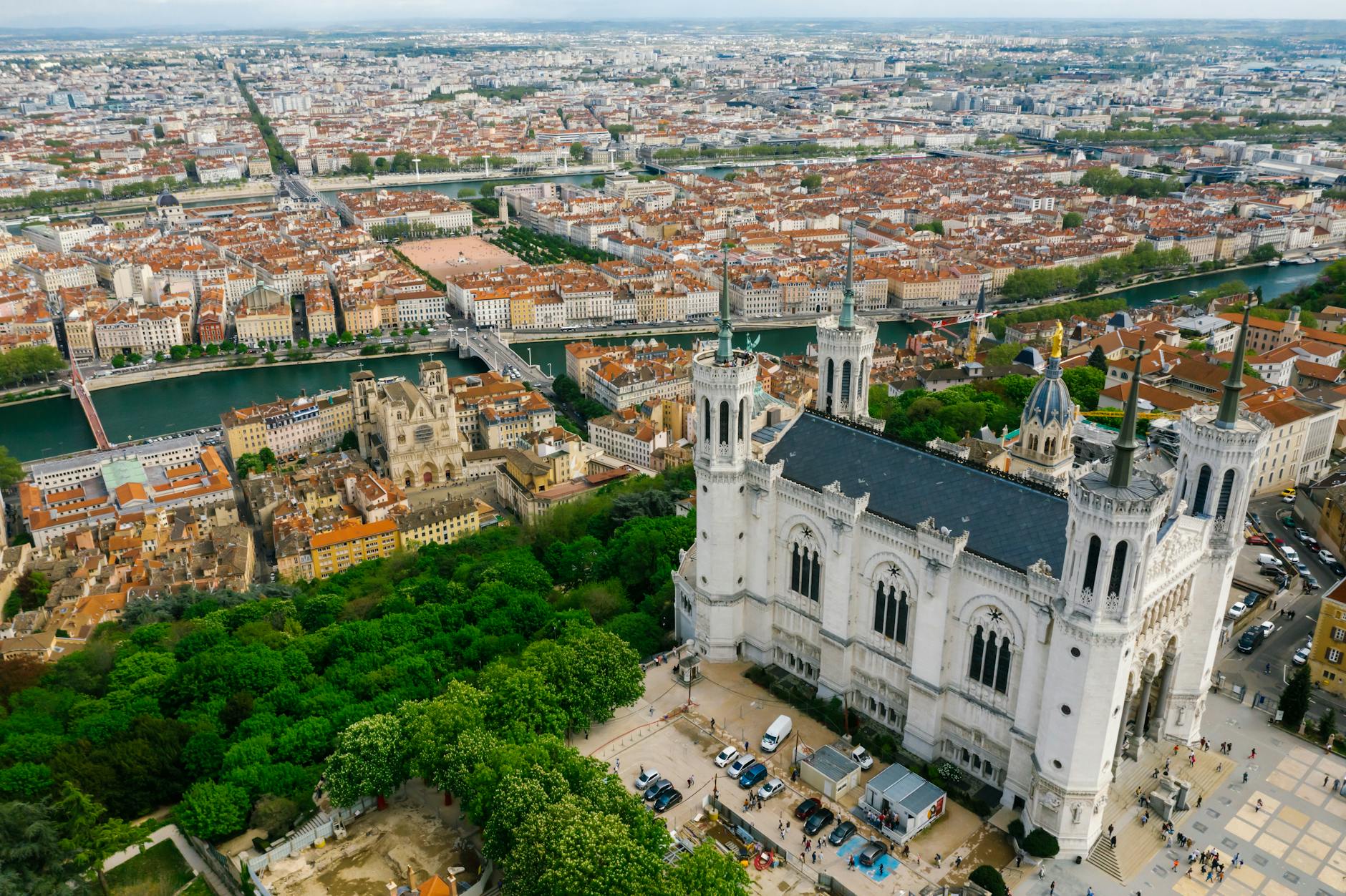
Lyon is one of Europe's most persistently under-imagined great cities. People know it is supposed to be good. They have heard the usual phrases about gastronomy, silk, two rivers, and a more manageable alternative to Paris. But those phrases are too static. They make Lyon sound like a city to respect rather than a city to desire. That is the first error.
Start Here
Lyon is not merely worthy. It is pleasurable, textured, and unusually complete. It has old-city drama without forcing every hour into heritage theater. It has serious food without requiring every meal to become a performance of gastronomic ambition. It has hills, viewpoints, hidden passages, riverbanks, neighborhood life, urban polish, and a rhythm that feels distinctly its own. If you arrive looking for a compressed version of Paris, Lyon will feel a little unfairly measured. If you arrive ready to meet a different kind of French city, one built on commerce, craft, appetite, and geography, it can be excellent.
The first mistake travelers make is flattening Lyon into one generic center. It is not one city in miniature. It is several urban logics working together. Vieux Lyon is not Presqu'île. Presqu'île is not Croix-Rousse. Croix-Rousse is not Fourvière. The Rhône side does not feel like the Saône side. The city becomes much more legible once you stop asking where the center is and start asking which Lyon you want to be using right now.
The second mistake is overloading the trip with culinary obligation. Yes, Lyon is a major food city. Yes, bouchons matter. Yes, markets, pastry, wine, and long lunches belong to the stay. But a first visit can go wrong if every meal becomes an exam in how seriously you are taking Lyon's reputation. The city is better when food is integrated into a broader urban rhythm: one old-city chapter, one hill-and-view chapter, one real neighborhood chapter, one museum or cultural anchor, one evening that belongs to appetite, and enough river walking that the geography starts to make sense emotionally as well as practically.
Lyon is also one of the best examples in Europe of a city that is easier to enjoy once you stop asking it to dazzle continuously. It is handsome rather than theatrical, sensual rather than spectacular, deeply historical without being embalmed, and large enough to feel rich without becoming punishing. The best first trip is not frantic. It is shaped.
That is ultimately what Lyon rewards: coherence. Choose the right base, understand the district differences, do not over-romanticize Vieux Lyon into the whole story, and leave room for the city to move between hill, river, terrace, and table. On those terms, Lyon can be one of France's strongest urban breaks.
The city in one sentence: Lyon is a two-river, multi-district, food-and-history city where the best first trip comes from balancing Vieux Lyon, Presqu'île, Croix-Rousse, Fourvière, and everyday appetite rather than treating the city as a polite Paris substitute.
Quick Verdict
Best for: couples, solo travelers, repeat France visitors, food travelers, museum travelers, walkers, and anyone who likes cities with layered history, strong urban form, and a slower but richer reward cycle.
Not ideal for: travelers who need instant glamour, people who want France only in a grand-capital register, or anyone who will judge Lyon for not behaving like Paris.
Ideal first visit: 2 to 3 full days.
Minimum worthwhile stay: 2 full days, if one is allowed to belong to Lyon outside the obvious old-town chapter.
Best overall months: May, June, September, and early October.
Best winter case: a food-and-museum city break, especially if you enjoy denser urban days and interior pleasures.
Biggest planning mistake: concentrating too much of the trip in Vieux Lyon and then wondering why the city felt smaller than its reputation.
One thing to prioritize: district logic. In Lyon, the base and the order of neighborhoods shape almost everything.
One thing to leave flexible: meal timing and river time. Lyon improves when you let appetite and weather help sequence the day.
The blunt version: Lyon is one of France's best short city breaks for travelers who like depth, appetite, and urban shape, and one of the easiest to undervalue if they keep comparing it to Paris instead of meeting it on its own terms.
Who Will Love Lyon?
Lyon suits travelers who like cities that unfold rather than announce themselves. It is very good for people who enjoy the relationship between topography and urban life: rivers defining movement, hills defining views, and neighborhoods feeling genuinely distinct rather than cosmetically branded.
Couples do especially well here because Lyon supports a refined but not exhausting kind of city trip. One can walk the old city, take a funicular or uphill route, look out from Fourvière, descend into a different part of the city, spend time at a museum or on the riverbank, and finish with a serious dinner or a lower-key neighborhood meal. The city allows for pleasure without demanding strain.
Solo travelers also tend to do well because Lyon is readable and self-contained. You can have a very strong day here without overplanning: coffee on Presqu'île, Vieux Lyon and traboules, hill logic, museum time, a drink in Croix-Rousse, and a late dinner somewhere that feels more local than obvious. It is an unusually forgiving city for independent wandering.
It is also excellent for travelers who care about material culture. Silk, food, passageways, market life, river trade, and the city's long commercial memory all still matter. Lyon does not feel like heritage performed for export. It feels like a city whose history still influences how it moves and eats.
The city is less ideal for someone who wants every hour to provide instant postcard confirmation. Lyon has beautiful moments, but its deeper value lies in proportion, sequence, and atmosphere.
Lyon at a Glance
| Question | Practical Answer |
|---|---|
| Main airport | Lyon-Saint Exupéry Airport |
| Simplest airport public transfer | Rhônexpress |
| Airport-to-centre timing | under 30 minutes to Lyon centre[1] |
| Best first-time base | Presqu'île or nearby central left-bank/right-bank zone with strong walking logic |
| Best atmospheric first-time base | Presqu'île edge or Vieux Lyon-adjacent but not buried inside it |
| Best neighborhood for local feel | Croix-Rousse |
| Public transport backbone | metro, tram, bus, funicular, walking |
| Signature old-city district | Vieux Lyon |
| Signature hill-and-view anchor | Fourvière |
| Best major museum anchor | Musée des Beaux-Arts de Lyon |
| Current practical central-city note | limited traffic zone in parts of Presqu'île[5] |
| Car needed? | No |
| Currency | Euro |
| Emergency number | 112 |
| Tap water | Safe to drink |
| Power plugs | Type C and E |
2026 Visitor Notes
Airport Access Is Fast Enough To Reward A Better Base
Rhônexpress says the link between Lyon city centre and the airport takes less than 30 minutes.[1] That is a very useful arrival pattern. It means a first-time visitor should think less about brute airport convenience and more about where in Lyon the trip will actually feel right.
TCL Ticket Options Are Broad And Simple Enough For Visitors
TCL's official fares page lists 24-hour, 48-hour, and 72-hour passes, among other visitor-friendly products.[2] Lyon is not a place where transport should become a source of friction if you understand your stay length early.
The Lyon City Card Is A Real Product, Not A Decorative Upsell
TCL's own visitor page notes that the Lyon City Card is available in 24h, 48h, 72h, and 96h versions with unlimited access to the TCL network in zones 1 and 2, alongside cultural and tourist benefits.[3] For a first trip with multiple sights, it can make sense.
Fourvière Is Easier To Use Than It Looks
Fourvière's official visitor guidance says the basilica is open daily and explicitly recommends the F2 funicular from Vieux Lyon as the most direct route.[4] This matters because first-timers often overdramatize the hill instead of simply building it into the day.
Presqu'île Has A Current Traffic Restriction Visitors Should Know About
ONLYLYON's January 28, 2026 update explains that the Presqu'île limited-traffic zone, introduced from June 2025, continues to reshape how vehicles use the district.[5] For most visitors this is not a problem. It is just another reason to treat Lyon as a walking-and-transit city.
Vieux Lyon Is Important, But It Is Not A Museum Piece
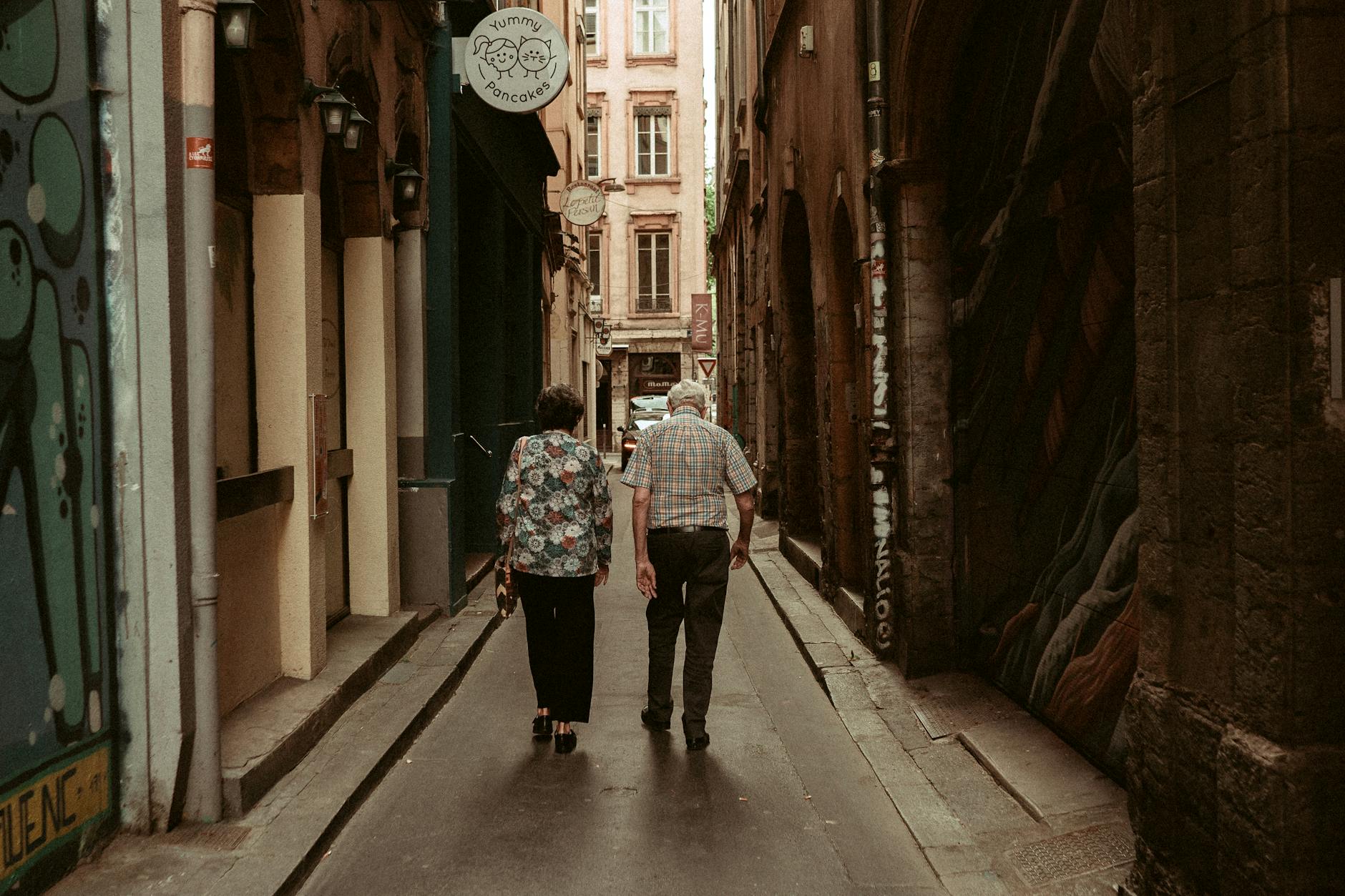
ONLYLYON's historical-Lyon material describes Vieux Lyon as one of Europe's largest Renaissance quarters and highlights the traboules that cut through courtyards and streets.[6] The correct lesson is not to rush through it because it is famous. It is also not to let it consume your whole idea of Lyon.
How to Understand Lyon
Lyon works through five forces.
The first is the meeting of two rivers. The Rhône and the Saône create not just views, but orientation, atmosphere, and differences in how districts feel.
The second is hill logic. Fourvière and Croix-Rousse are not just elevated neighborhoods. They are competing symbolic versions of the city: the hill that prays and the hill that works.
The third is commercial and artisanal memory. Silk, trade, markets, and food are not decorative footnotes here. They are part of how the city became itself.
The fourth is district precision. Lyon is one of those cities where a few streets or one bridge crossing can change the emotional tone of the day.
The fifth is appetite without showmanship. The food culture is serious, but the city tends to wear that seriousness more naturally than theatrically.
The Five Lyons A Visitor Actually Meets
Vieux Lyon: Renaissance lanes, traboules, cathedral gravity, and the most instantly historic version of the city.[6]
Presqu'île Lyon: squares, shopping, urban movement, restaurants, and the city's most balanced all-purpose core.[6]
Croix-Rousse Lyon: canut history, stairs, workshops, village feeling, and a looser social atmosphere.[7]
Fourvière Lyon: basilica, views, religious memory, and the city seen from above.[4]
Museum-and-river Lyon: the city of cultural weight, longer walks, and those stretches where Lyon starts feeling complete rather than simply picturesque.
The Main Mental Shift
Do not ask, "What are Lyon's top attractions?" Ask, "Which Lyon am I using right now?" River Lyon, hill Lyon, old Lyon, silk Lyon, food Lyon. The city gets much better once you replace checklist thinking with that question.
What Lyon Does Better Than People Think
Lyon is better than many first-time visitors expect at urban completeness. Plenty of cities can give you an old quarter or a dining reputation. Fewer give you a real old city, a meaningful central peninsula, a neighborhood with its own labor history, a major hilltop view, strong museums, and a walking scale that ties it all together.
It is also stronger than people think at balancing seriousness and pleasure. Lyon takes food, art, and history seriously without making the visitor feel constantly examined. That is a big part of its charm.
Another underrated strength is how good it is for a 48- to 72-hour trip. The city is rich but not overwhelming. You can get a lot without turning the stay into a marathon.
Lyon is also very good at being beautiful in layers rather than in one sweep. A riverbank, then a stairway, then a courtyard passage, then a square, then a terrace, then a hilltop view. The city accumulates elegantly.
Finally, Lyon does food as urban texture better than most cities. Eating here is not only about destination restaurants. It is about how appetite structures the day.
Best Time to Visit Lyon
Lyon is a year-round city, but not a season-neutral one. Heat changes the hills, riverbanks, and walkability. Winter changes how much the city leans into museums and restaurants.
Best Overall Months
May, June, September, and early October are the strongest first-visit windows. The city is walkable, sociable, and still comfortable enough for hill-and-river days.
Summer
Summer can be wonderful, but Lyon's heat can change the pace. Early starts, longer lunches, riverbank evenings, and a hotel that offers recovery matter more than in milder cities.
Autumn
Early autumn suits Lyon beautifully. The city remains active, food becomes an even more natural organizing principle, and walking regains some ease.
Winter
Winter Lyon is for people who like cities of stone, museums, candlelit dining, and shorter but denser days. It can be excellent if that is the trip you want.
Spring
Spring is one of the best times to understand Lyon quickly. The rivers matter again, the hill walks feel inviting, and the city starts presenting its pleasures at a very balanced volume.
Month-by-Month Guidance
January: interior-led, serious, and good for museum-and-food travel. February: still wintry, sometimes excellent for low-friction city travel. March: transitional and increasingly open. April: attractive but variable. May: one of the best overall choices. June: excellent. July: lively, but sometimes hot enough to demand smarter pacing. August: usable, but more dependent on heat tolerance and daily rhythm. September: one of the smartest months to go. October: often very strong, especially early on. November: quieter and more interior-facing. December: festive and atmospheric, especially if food and old-city evenings matter to you.
How Many Days You Need
One Day
Enough for a strong first impression of Vieux Lyon, Fourvière, and part of Presqu'île. Not enough for the city to feel rounded.
Two Days
The minimum respectable stay. One day should belong to old Lyon and hill logic. The other should belong to Presqu'île, museums, or Croix-Rousse.
Three Days
Ideal for a first visit. This gives enough room for one serious museum, one neighborhood-heavy day, one real food chapter, and time for the rivers to matter.
Four To Five Days
Very good if you want slower meals, more museum time, or a more generous sequence between the districts.
One Week
More than most first-timers need, but excellent for people who really like cities and want Lyon to anchor a broader region.
Where to Stay in Lyon
Where you stay matters because Lyon's districts are not interchangeable. A weak base can make the city feel broken into pieces; a strong one makes it feel beautifully connected.
Fast Answer
For most first-time visitors, stay on or near Presqu'île, or in a central zone with easy access to both Vieux Lyon and the riverbanks. Stay deep inside Vieux Lyon only if you specifically want old-stone atmosphere and accept some tradeoffs. Stay in Part-Dieu only if functional rail logic is genuinely central to the trip.
Neighborhood Decision Table
| Traveler Type | Best Area |
|---|---|
| First-time couple | Presqu'île or elegant central stay near the river |
| Food-led traveler | Presqu'île edge or Vieux Lyon / central mix |
| Old-city romantic | Vieux Lyon-adjacent stay |
| Repeat visitor | Croix-Rousse or another more local-feeling district |
| Rail-dependent traveler | carefully chosen Part-Dieu or central transport-smart base |
| Balanced city-break traveler | central Presqu'île logic |
Presqu'île
Usually the best all-purpose answer. It connects the rivers, central shopping and squares, food, and easy onward movement.
Vieux Lyon
Atmospheric and rewarding, but best chosen knowingly. It can be wonderful for mood and less ideal for an entire trip if you want broader daily flexibility.
Croix-Rousse
Better for repeat visitors or travelers who want a neighborhood with more local character and less obvious first-timer framing.
Part-Dieu
Useful, practical, and sometimes the wrong answer for a leisure trip unless the exact hotel is excellent.
Area Profiles
Vieux Lyon
Essential, historic, and still full of surprise if you give the traboules and courtyard passages real attention.[6]
Presqu'île
The best expression of Lyon as a complete urban center rather than a heritage set piece.[6]
Croix-Rousse
The city of silk workers, stairs, windows, and a more village-like social life on top of an important labor history.[7]
Fourvière
Part pilgrimage site, part panorama, part symbolic key to Lyon's self-understanding.[4]
Terreaux / Museum Lyon
A denser cultural register where the city starts feeling more intellectually serious.
Neighborhood Guide: Where to Explore, Not Just Sleep
Vieux Lyon: Renaissance lanes, traboules, and one of the strongest first walks in France.[6]
Presqu'île: urban ease, shopping, squares, restaurants, and the center that actually works for a short stay.[6]
Croix-Rousse: canut history, high-ceilinged buildings, stair logic, and a more local, independent rhythm.[7]
Terreaux: museums, civic space, and one of the best pivots between sightseeing and actual city life.
Rhône and Saône banks: not exactly neighborhoods, but absolutely part of how Lyon should be used.
The Best Things to Do in Lyon
- Walk Vieux Lyon properly and look for the traboules instead of treating the district as a backdrop.[6]
- Go up to Fourvière and use the hill to understand the city's shape.[4]
- Spend real time on Presqu'île to let Lyon feel like a functioning city rather than only a historic quarter.[6]
- Visit the Musée des Beaux-Arts de Lyon to give the trip cultural weight.[8]
- Give Croix-Rousse a real neighborhood chapter rather than only a glance from below.[7]
- Build at least one proper Lyonnais meal into the trip, but do not let every meal become a performance.[9]
- Walk both river registers if you can; the Rhône and Saône tell different stories.
- Let one evening belong to Lyon at table, not just Lyon on foot.
Itineraries
One Excellent Day
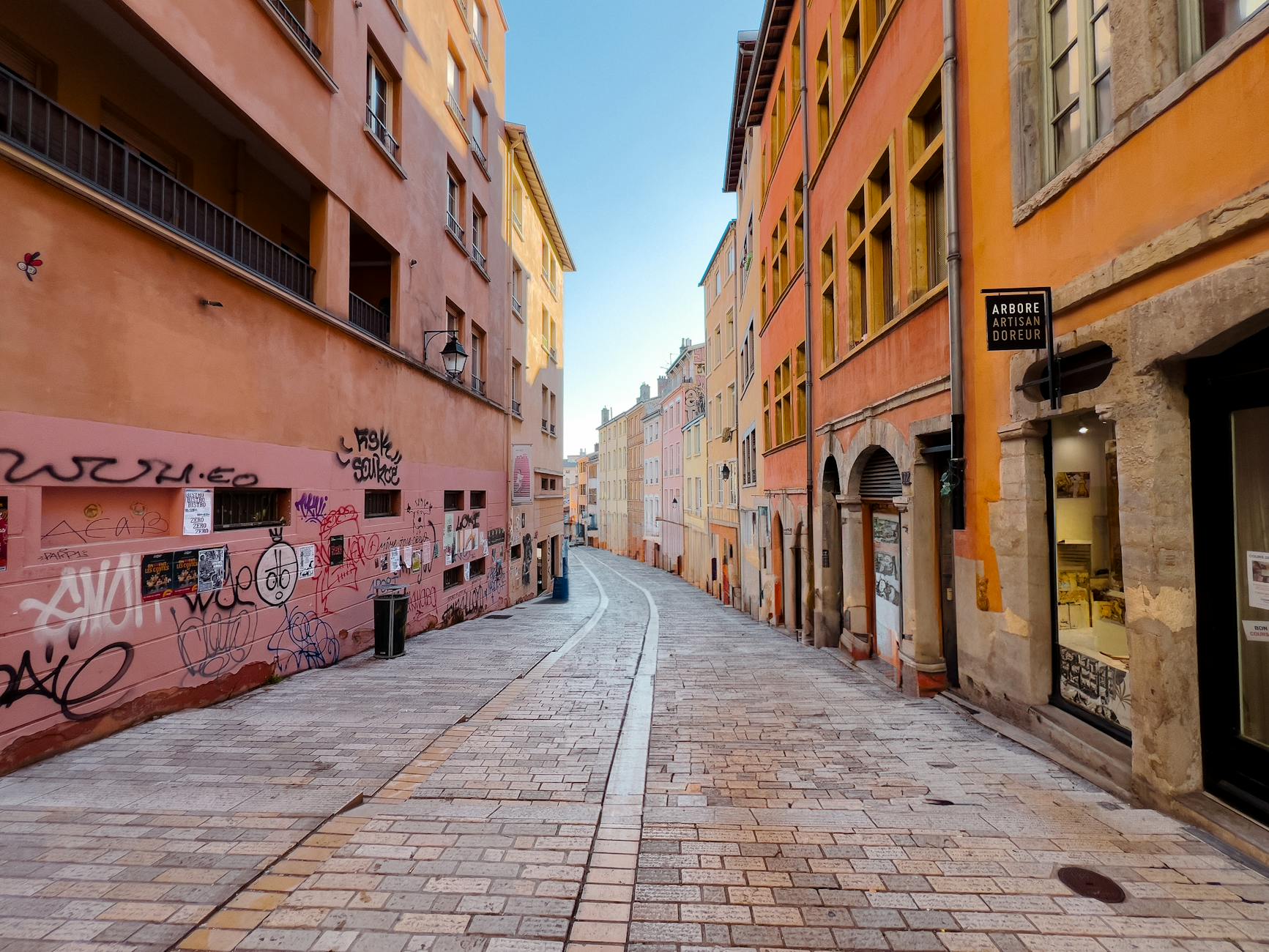
Start in Vieux Lyon, take the F2 funicular or a deliberate uphill route to Fourvière, descend toward Presqu'île, spend the afternoon around Terreaux or the museum district, then finish with a serious dinner and a river or square walk after dark.
Two Days
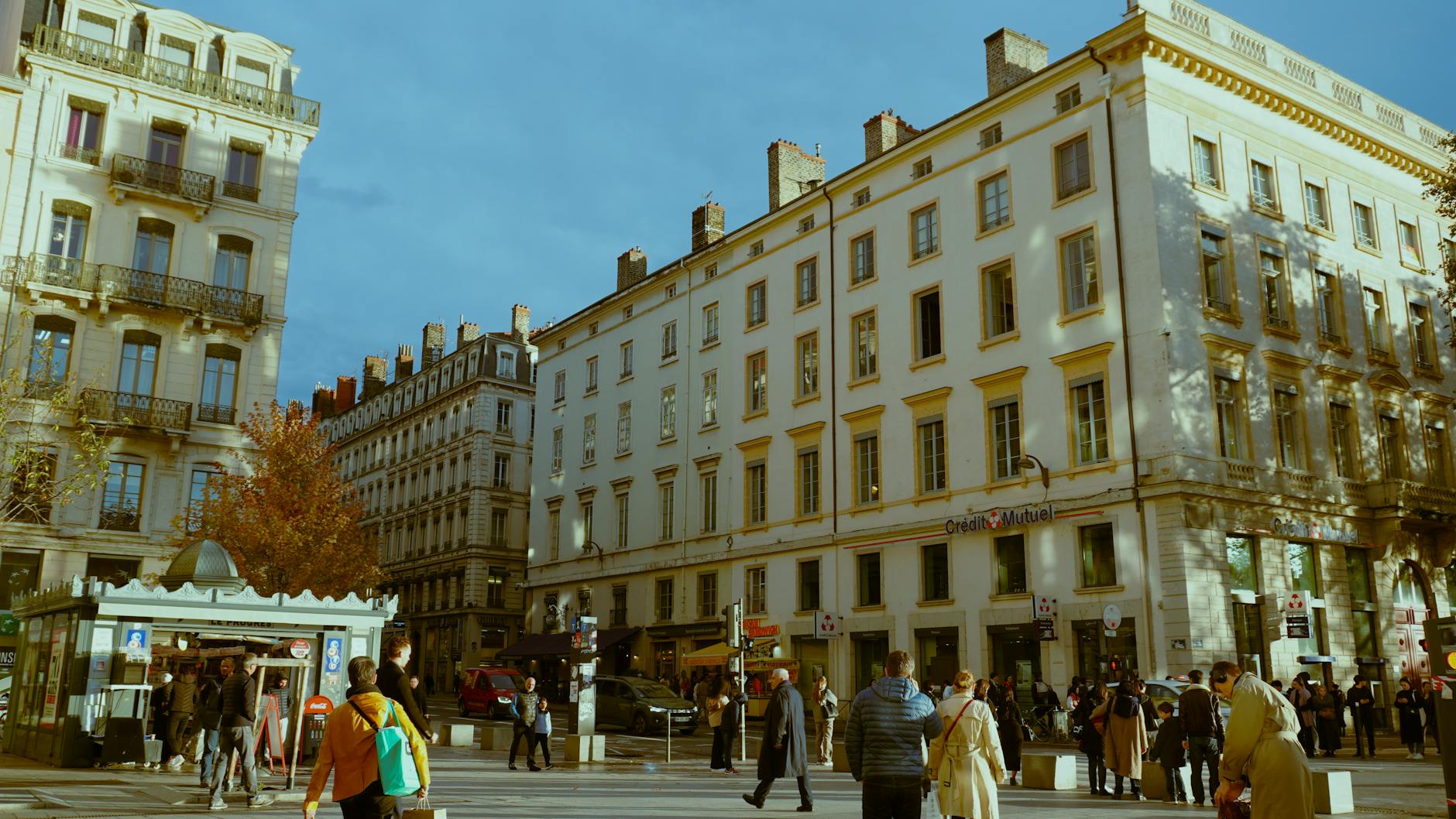
Day one should be old Lyon and hill Lyon: Vieux Lyon, Fourvière, and the first river reading. Day two should be central and neighborhood Lyon: Presqu'île, a museum, and either Croix-Rousse or a slower food-led evening.
Three Days
Use the extra day for Croix-Rousse, another museum or market chapter, and more generous meal spacing. Three days is when Lyon starts feeling complete rather than merely impressive.
Itineraries By Traveler Type
For The Food Traveler
Treat one or two meals seriously, but leave the rest of the city alive around them. Lyon is better when appetite is part of the route, not the whole route.
For The First-Time France Visitor
Use Lyon as proof that French urban pleasure is not confined to Paris. Let the city be slower, warmer, and more topographically varied.
For The Couple Weekend
Prioritize the base, one hilltop chapter, one museum or cultural anchor, and two genuinely good meals.
For The Repeat Europe Traveler
Lean harder into Croix-Rousse, the riverbanks, and the city’s commercial-memory side rather than only replaying the obvious heritage circuit.
Food and Drink
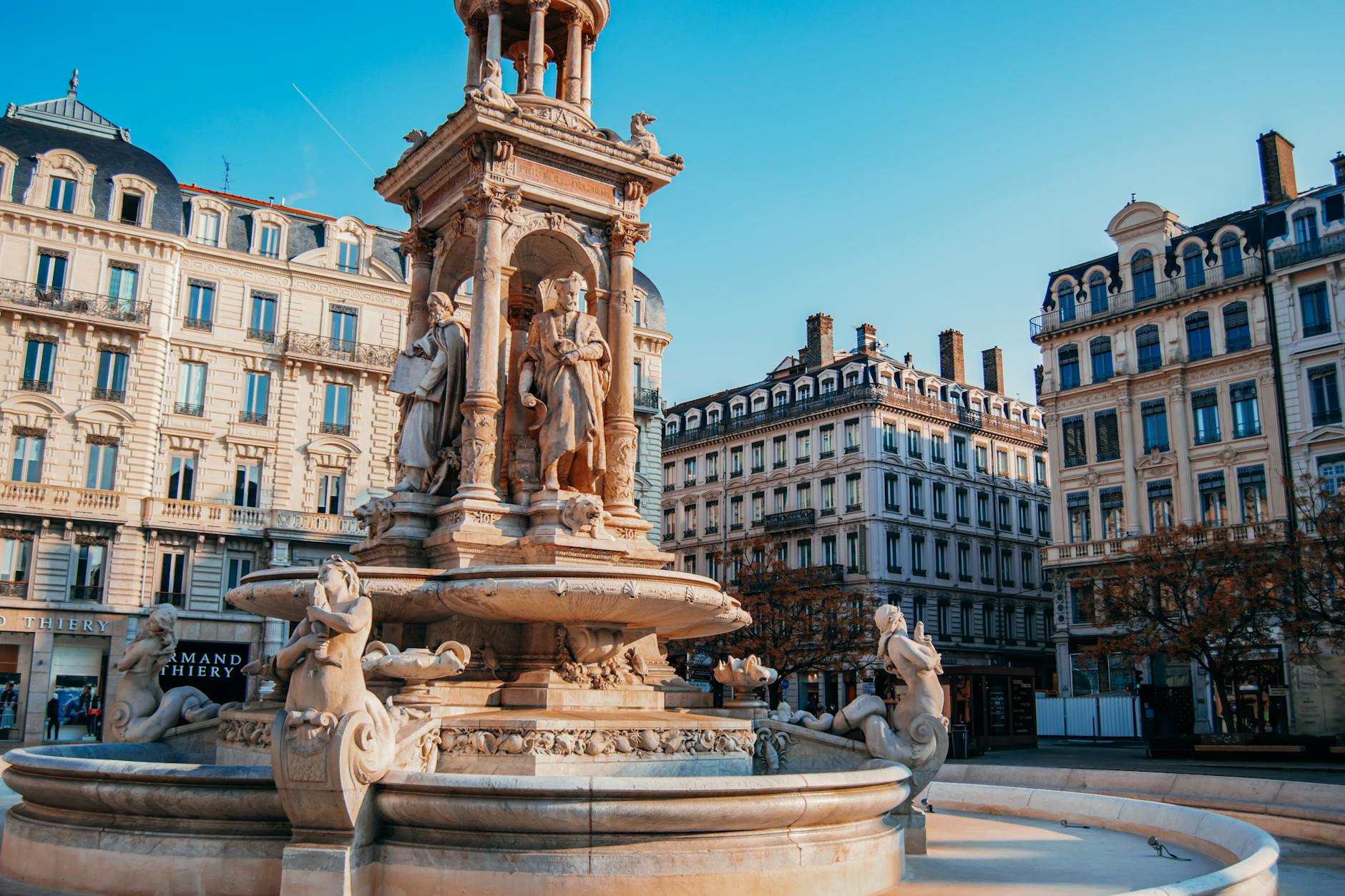
Lyon deserves its food reputation, but travelers often misunderstand how to use it. The point is not to book three solemn meals and emerge with a certificate in seriousness. The point is to understand that eating is built into the city's identity. Bouchons matter because they represent a local social and culinary culture, not because they are museum pieces.[9]
That means a strong Lyon trip usually mixes one or two more traditional meals with lighter urban eating: a pastry stop, wine, a market glance, a slower lunch, something local but not ostentatious. The city is gastronomic, yes, but also pragmatic and lived-in. It is better when you eat with rhythm rather than anxiety.
Getting Around
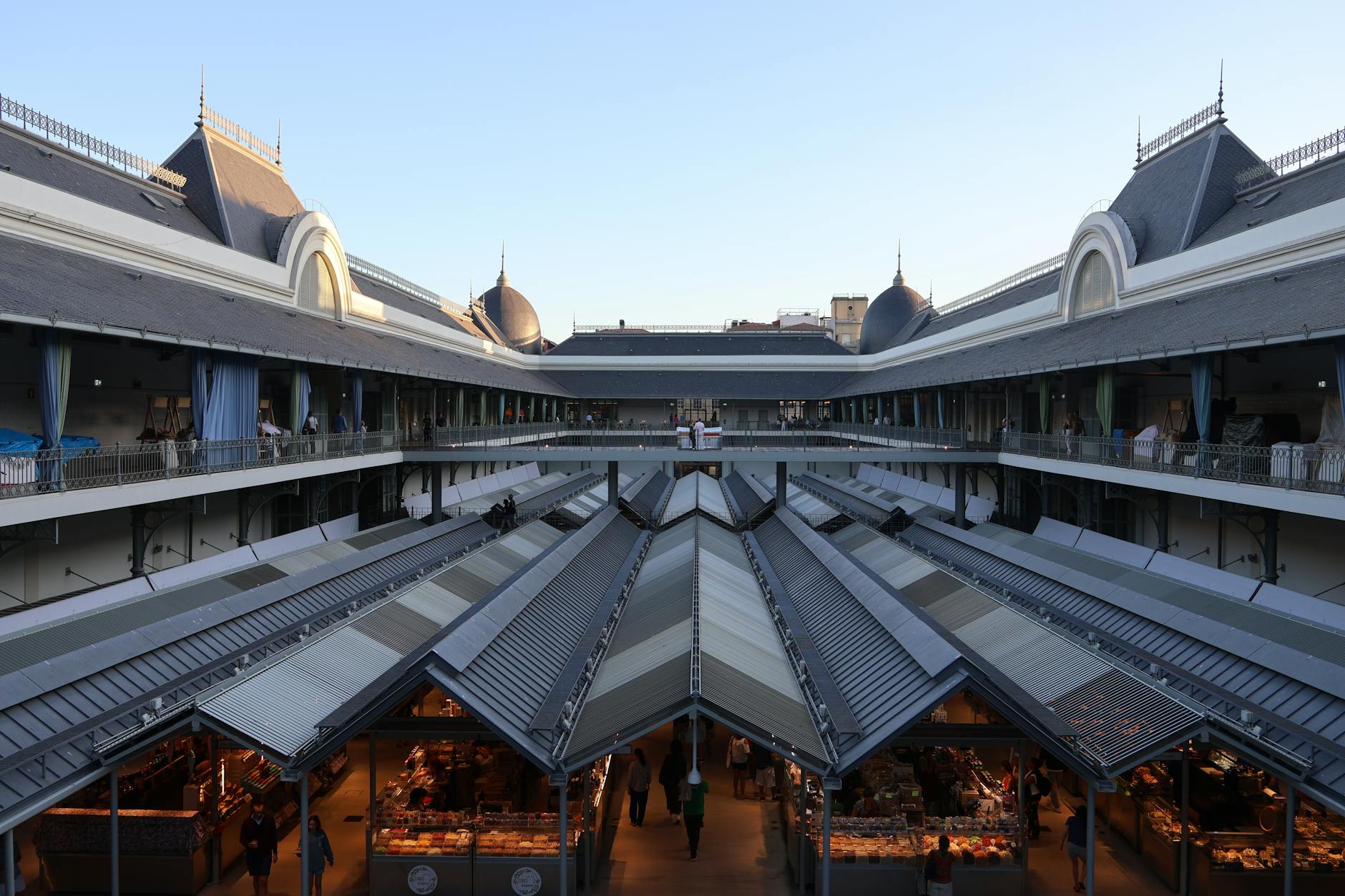
Lyon is easy to use with metro, tram, funicular, and walking. TCL's fare structure gives you simple multi-day pass options,[2] and the Lyon City Card can simplify both movement and cultural entry if you plan to do several sights.[3] The deeper trick is not only buying the right ticket. It is grouping the day by district so you are not constantly climbing, crossing, and backtracking.
Rivers, Hills, Silk, And Why Lyon Is Not Just “France’s Second City”
One of the most boring ways to talk about Lyon is to call it France's second city and stop there. The phrase is numerically tidy and emotionally useless. It says nothing about what it feels like to move from the Saône to the Rhône, nothing about the difference between Fourvière and Croix-Rousse, nothing about why the city became a silk capital, and nothing about why appetite is so deeply woven into its civic self-image.
Lyon is better understood as a city of convergences: rivers converging, hill identities converging, history and appetite converging, trade and beauty converging. This makes it more than merely efficient and more than merely historic. It makes it complete.
That is the real correction for first-timers. Lyon is not just where you go because you already know Paris and want somewhere respectable next. It is a city fully capable of carrying a trip on its own terms.
Common Mistakes
- Treating Lyon like a smaller Paris.
- Spending too much time only in Vieux Lyon.
- Overloading the trip with restaurant pressure.
- Staying somewhere functionally central but emotionally dead.
- Ignoring Croix-Rousse and therefore missing one of the city’s most distinctive layers.
- Underestimating heat or hills.
- Forgetting that the rivers are part of the city experience, not just scenery.
My Blunt Advice
Choose the base carefully. Use Vieux Lyon, but do not get trapped in it. Go to Fourvière early or deliberately. Give Presqu'île real time. If you have a third day, spend a meaningful part of it in Croix-Rousse. Eat well, but stop trying to prove to yourself that you are having a serious gastronomic experience every three hours. Lyon does not need that performance.
What it needs is attention to sequence: river, hill, old stone, neighborhood life, table, repeat. When you give it that, Lyon becomes exactly what its reputation promises and, usually, a little better.
Where Lyon Fits in a France Trip
Lyon occupies a slightly awkward but ultimately rewarding place in the French travel imagination. Almost everyone has heard that it is important. Far fewer people have a vivid sense of why it should be chosen over more obvious names. That uncertainty is exactly why Lyon is still underrated.
For a first France trip, Lyon is rarely the city you choose for symbolic completeness. Paris usually owns that role. Provence and the Riviera often own the southern fantasy. Strasbourg or Bordeaux can own other regional narratives. Lyon's strength lies elsewhere: it is one of the country's best cities for travelers who want France to feel inhabitable rather than only iconic.
That makes Lyon strongest in one of three itinerary roles.
The first is as a counterweight to Paris. After the capital, Lyon often feels more graspable, more tactile, and more structurally pleasurable. The food is serious, the urban form is rich, and the pace is lower without becoming sleepy. It allows French city life to become more usable.
The second is as a stand-alone short city break. This is one of Lyon's best uses. Two or three well-designed days here can feel complete because the city has enough history, enough district contrast, enough museum depth, and enough appetite to sustain a whole stay without needing to sprawl.
The third is as a bridge between northern and southern France. Because Lyon is both substantial and transitional, it can pivot a broader trip elegantly. You can arrive from Paris, spend a few city-rich days here, then continue south with the sense that the trip changed register rather than merely changed hotels.
Lyon is a slightly weaker fit only for travelers who want instant French theatricality. The city does not sell itself as aggressively as Paris, Nice, or Provence. It expects a little more patience. The reward is that once you give it that patience, the city often proves more durable in memory than destinations that announced themselves more loudly.
Lyon Versus Paris, Bordeaux, and Turin
Lyon becomes easier to use once you stop comparing it lazily.
Against Paris, Lyon is not smaller in the trivial sense so much as differently scaled in emotional workload. Paris overwhelms by volume and symbolic density. Lyon persuades by composition. It gives enough of many good things without forcing every day to become a strategic campaign. If Paris is a capital that endlessly restates its own importance, Lyon is a city that makes its case through livability plus depth.
Against Bordeaux, Lyon is usually the stronger answer for travelers who want more topographic contrast, richer district differences, and a broader sense of urban seriousness. Bordeaux can be refined and beautiful, but it often feels smoother and more singular in register. Lyon is more muscular. Its rivers, hills, food culture, and commercial history all pull in slightly different directions, which gives the stay more texture.
Against Turin, Lyon has some interesting similarities: two cities with strong food identities, river logic, urban elegance, and reputations that are slightly flatter than the actual experience. But Turin often reads as more aristocratic, more interior, more café-and-arcade driven. Lyon feels more riverine, more labor-and-trade shaped, and slightly more open in how it distributes its pleasures through neighborhoods and hills.
The point is not to decide which city is superior in a vacuum. The point is to clarify what Lyon is for. It is for travelers who want French urban life at a serious level without capital-city overload. It is for people who enjoy cities that reward attention rather than merely branding.
First-Time Visitors Versus Repeat Visitors
Lyon is good on a first trip and often distinctly better on the second.
First-time visitors usually do the right thing at the broadest level. They start with Vieux Lyon and Fourvière because those are the city's strongest immediate visual arguments. They cross the rivers, use Presqu'île, and if they have enough time they add Croix-Rousse or a major museum. That is a sound skeleton.
What first-timers often miss is how easily the old city can overoccupy the imagination. Vieux Lyon is so photogenic, so legible, and so centrally sold that people start treating it as the city itself. But Lyon becomes fuller when Vieux Lyon stops being the whole proposition and becomes one chapter in a larger urban sequence.
Repeat visitors usually make that shift. They may stay in a different district, use Presqu'île more deeply, spend more time on the riverbanks, or let Croix-Rousse carry an afternoon that a first trip would have given to another heritage corridor. They are also more likely to treat meals with confidence rather than anxiety. That alone improves the city considerably.
For first-timers, the correct question is: what is the cleanest first read of Lyon's main district logic? For return visitors, the better question becomes: which Lyon have I not properly used yet? That might be museum Lyon, river Lyon, market Lyon, or a slower Croix-Rousse-and-table version of the city.
This is why Lyon often leaves travelers feeling pleasantly surprised on the first trip and more deeply convinced on the second. The city is not a single revelation. It is an accumulation of right choices.
Summer Lyon Versus Shoulder-Season Lyon
Lyon is usable year-round, but like many stone-and-river cities, it changes character sharply with heat.
Shoulder-season Lyon is the easiest version for most first-time visitors. In May, June, September, and early October, the city's best elements line up cleanly: old-city walking, riverbanks, hill movement, museum time, and longer meals all fit together without one of them dominating the day too aggressively.
Summer Lyon can still be excellent, but it is more edited. Heat changes how Fourvière and Croix-Rousse feel. River walking becomes more valuable later in the day. Lunch needs to work harder as a genuine pause, not merely as fuel. The right room matters more. The difference between a coherent route and a badly sequenced one becomes more expensive in energy.
This is one of those cities where a hot day can still be very good if the traveler respects the city's structure. One hill in the cooler part of the day, one river or museum chapter, one real meal, and one evening outdoors can produce an elegant result. But if you force two hills, too much old city, and a serious museum into high heat, Lyon starts feeling heavier than it should.
Shoulder season is therefore the better answer for most first-timers, not because summer is wrong, but because the city's balance is easier to perceive when climate is not constantly rewriting the plan.
Why the Base Matters More Than It First Seems
Lyon is not a city where "centrally located" is a sufficient hotel philosophy. The base alters not just convenience, but your whole reading of the place.
Stay too deep inside Vieux Lyon and the city can start to feel more historical than lived, especially at the wrong hours. Stay in an overly functional businesslike zone and Lyon's texture thins out. Stay too far from the rivers or from the district you most want to use, and the city begins to feel less integrated than it really is.
That is why Presqu'île is such a strong default. It gives the city its best general-use shape. You are connected to both rivers, close to multiple district directions, and able to start the day in something more neutral than a heritage corridor. Vieux Lyon-adjacent stays can be lovely, but they work best when the romance is balanced by actual route efficiency. Croix-Rousse is more often a repeat-visitor move than a first-visit default because it asks you to choose a neighborhood identity over maximum all-purpose flexibility.
The right hotel in Lyon should make it easy to move between urban registers rather than trapping you inside only one of them. That is the real test: when you step outside, are you entering a version of Lyon that helps the day widen rather than narrow?
Why One Proper Lyon Day Matters
Lyon is one of those cities that can be underestimated if experienced only in fragments. Arrive late, walk Vieux Lyon, eat well, see Fourvière the next morning, and leave, and you may think you "did Lyon." What you actually did was meet two strong pieces of it without letting the city become whole.
One proper Lyon day changes that. By "proper," I mean a day where Lyon itself is the point from morning through evening, not just a backdrop to one meal and one view. You begin in one district with enough time for it to register. You cross to another part of the city on purpose. You let one museum or river chapter clarify the center. You allow one meal to belong to appetite rather than obligation. And you end in a neighborhood or riverside sequence that makes the city feel lived instead of merely visited.
That continuity is what reveals Lyon's real strength. It is not only a food city, not only an old city, not only a hill city. It is the relationship between those things that makes it special. Fragmented hours can show you the ingredients. A proper day shows you the composition.
If you only have one full day, make it broad enough to include at least two distinct Lyons. If you have two or three days, make sure one of them is not just Vieux Lyon extended under different light.
Day Lyon Versus Evening Lyon
Lyon changes tone noticeably between day and evening, and a good first trip should use both versions.
Day Lyon is explanatory. This is when the city makes its structural case: rivers, bridges, hill lines, central peninsula movement, museum chapters, and the contrast between Vieux Lyon and the flatter, more flexible parts of town. Daytime lets you understand why the city works.
Evening Lyon is persuasive. The pressure of navigation softens, appetite becomes the right organizing principle, the riverbanks become more atmospheric, and Presqu'île or the older quarters can feel less like sightseeing environments and more like actual places. Lyon is not a city that transforms into pure spectacle at night. It simply becomes warmer, easier, and more convincing.
This is important because some first-time visitors spend all their energy on topography, heritage, and museums, then treat dinner as recovery rather than as part of the trip's logic. But Lyon is one of France's better evening cities precisely because table, terrace, and slow movement matter here. A badly depleted evening weakens the whole impression.
A strong first stay should therefore protect at least one real evening with appetite still intact. Let the city argue through pleasure as well as through structure.
Why Vieux Lyon Should Not Own the Whole Trip
Vieux Lyon is one of the city's great strengths. It is also one of the easiest places to overuse conceptually.
Because it is the most obviously historic and photogenic district, many visitors start treating it as if it were the whole emotional point of Lyon. They eat there, walk there, linger there, return there, and then wonder why the city felt smaller than promised. What they really did was spend too much time inside the most narratively obvious quarter.
The problem is not that Vieux Lyon is overvalued in itself. It deserves serious time. The problem is that Lyon's richness depends on contrast. Presqu'île shows urban breadth and usability. Croix-Rousse shows labor history and neighborhood grain. The riverbanks show space and movement. Fourvière changes scale. Without those counterweights, Vieux Lyon can start to feel like the entire proposition when it should only be one of the strongest chapters.
The best use of Vieux Lyon is to let it set the historical tone and then allow the rest of the city to complicate it.
Why Lyon Often Improves on the Second Visit
Lyon often lands well the first time and lands more deeply the second because the first trip usually has a subtle defensive quality. Travelers arrive knowing the city is supposed to be good, but not always knowing how to measure that goodness. They keep half-looking for Paris, half-looking for a food capital, half-looking for a charming old quarter, and so the city is judged through borrowed expectations.
On the second visit, those expectations loosen. You already know Lyon does not need to be Paris. You already know the food seriousness is real. You understand that the city is less about spectacle than about completeness. That frees you to use it with more intelligence: perhaps a better hotel, fewer "must-eat" pressures, more river time, more Croix-Rousse, a more accurate sense of how much hill you actually want, and a calmer museum strategy.
That is often when the city becomes genuinely loved rather than merely admired. It stops needing to justify itself and starts being used on its own terms.
How Lyon Changes Over the Course of a Stay
On arrival, Lyon often feels competent before it feels magnetic. The station or airport access works, the center is readable, the rivers orient you, and the city seems pleasant and solid. That first impression is accurate, but incomplete.
By the second day, the city usually starts differentiating more clearly. You realize Vieux Lyon is not the same thing as Presqu'île. Fourvière is not merely a viewpoint. Croix-Rousse is not just a hill with stairs. The rivers begin to feel like different emotional spaces rather than one continuous waterfront idea.
By the third day, if the stay is going well, Lyon starts feeling like a city with internal logic rather than a cluster of good impressions. You know where to eat without anxiety. You know when to climb and when to stay low. You know which districts you actually want to repeat. The city becomes less about confirming reputation and more about inhabiting rhythm.
That is why Lyon often needs at least two full days to feel respectable and three to feel complete. The first day gives the outline. The second gives the structure. The third, if you have it, gives the city.
Source Notes
- 1. Rhônexpress, "Lyon centre <> aéroport et gare St Exupéry en moins de 30mn" / timetable page. https://www.rhonexpress.fr/fr_FR/ and https://www.rhonexpress.fr/fr_FR/horaires
- 2. TCL, "Fares." https://www.tcl.fr/en/tickets-fares/fares
- 3. TCL, "Visit Lyon." https://www.tcl.fr/en/discover/visit-lyon
- 4. Notre-Dame de Fourvière, "Visit." https://www.fourviere.org/en/visit/
- 5. ONLYLYON Tourism, "The Limited Traffic Zone in Lyon’s Presqu’île district." https://traveltrade.lyon-france.com/en/toolbox/the-limited-traffic-zone-in-lyon-s-presqu-ile-district
- 6. ONLYLYON Tourism, "Historical Lyon." https://events.lyon-france.com/en/choose-lyon/the-assets-of-lyon/historical-lyon
- 7. ONLYLYON Tourism, "La Croix-Rousse." https://traveltrade2.lyon-france.com/visiter-lyon/decouvrir/les-quartiers-de-lyon/la-croix-rousse
- 8. Musée des Beaux-Arts de Lyon, "Welcome to the museum!" / practical info. https://www.mba-lyon.fr/en and https://www.mba-lyon.fr/fr/article/informations-pratiques
- 9. ONLYLYON / Gourmet Lyon, "Les Bouchons Lyonnais quality label." https://events.lyon-france.com/en/choose-lyon/the-assets-of-lyon/gourmet-lyon