Chiang Mai is one of those places that gets praised for being easy and then mishandled because of it.
Start Here
People arrive expecting a softer Bangkok, a gentler Thailand, or a northern city where everything somehow sorts itself out if they just keep moving. That is the wrong approach. Chiang Mai does feel easier than Bangkok, but not because every district offers the same version of the city. It feels easier when the traveler chooses a lane and protects it. Old City Chiang Mai, Nimman Chiang Mai, resort Chiang Mai, and market-and-food Chiang Mai are not interchangeable. The city’s strength is not in doing everything at once. It is in how proportionate the right version of it can feel.
That proportion is what makes Chiang Mai so satisfying. Temple mornings actually suit the place. Café afternoons do not feel like wasted time. Hotel quality matters here in a useful way because the city often invites midday retreat instead of punishing it. Food is not just a list of famous things to chase but a rhythm that starts early and remains local long after visitors think the headline stops are the whole story. And the mountains remain psychologically close enough that the city never entirely loses its northern edge, even when you stay in contemporary, design-heavy neighborhoods.
The right first trip to Chiang Mai is therefore not maximal. It is selective. Use the Old City and nearby historic core for one register of the stay. Use Nimman and the more contemporary west side for another. Treat Doi Suthep and the mountain side as a framing device, not a conquest. Respect seasonality, especially heat and haze. And let the city’s main promise remain intact: Chiang Mai should actually feel more breathable than the rest of your Thailand route.
The city in one sentence: Chiang Mai is a proportionate northern city whose best first stay balances temples, neighborhood identity, food rhythm, and climate honesty instead of trying to be a lower-energy Bangkok.
Quick Verdict
Best for: repeat Thailand travelers, couples, solo travelers, café-and-food travelers, winter sun seekers, and anyone who likes cities that support a slower daily rhythm.
Not ideal for: travelers who need big-city intensity, people who hate heat or haze, or anyone who expects every part of Chiang Mai to be equally walkable and atmospheric.
Ideal first stay: 3 nights.
Still strong: 2 nights if you stay disciplined.
Minimum worthwhile stay: 1 night.
Best overall months: November to February.
Biggest planning mistake: trying to do every version of Chiang Mai in one stay.
One thing to prioritize: the district and hotel combination.
One thing to keep flexible: how much of the trip should be Old City versus more contemporary Chiang Mai after arrival.
The blunt version: Chiang Mai is better when you edit it.
Who Will Love Chiang Mai?
Chiang Mai works especially well for travelers who want Thailand to feel calmer without feeling empty. If you enjoy cities where temple compounds, coffee culture, northern food, boutique hotels, and shorter urban days can all coexist without forcing you into constant overexertion, Chiang Mai is strong.
It is also very good for travelers who like to stay in one area long enough to let it set the tone. Chiang Mai improves when your hotel, breakfast habits, and evening neighborhood all reinforce one another.
Chiang Mai at a Glance
| Question | Practical Answer |
|---|---|
| Main gateway | Chiang Mai International Airport |
| Simplest airport transfer on a budget | AOT airport shuttle bus |
| Best first-time base | Old City edge or Nimman, depending trip style |
| Main mountain-frame excursion | Doi Suthep side |
| Main local-market anchor | Warorot / Kad Luang |
| Main planning issue | seasonality, haze, and overpacked geography |
| Car needed? | No |
| Best trip length | 2 to 4 days |
2026 Visitor Notes
The Airport Shuttle Is Useful for the First-Time Visitor
Chiang Mai Airport’s official transport page lists the airport shuttle bus as a practical city-center transfer with current route details and fares: `A1` to Nimman / Huay Kaew / City Moat for `40 baht`, `A2` to Night Bazaar / Chang Klan for `40 baht`, and `A3` toward the `700th Anniversary Stadium` for `60 baht`.[1]
Doi Suthep Still Frames the City
Tourism Authority of Thailand material continues to treat Wat Phra That Doi Suthep as one of Chiang Mai’s central mountain-side religious landmarks, while Doi Suthep-Pui National Park remains the larger environmental frame around it.[2][3] This matters because the mountain should shape the trip’s imagination even if it only takes one half-day.
Old Chiang Mai Still Means Temples and Administrative Memory
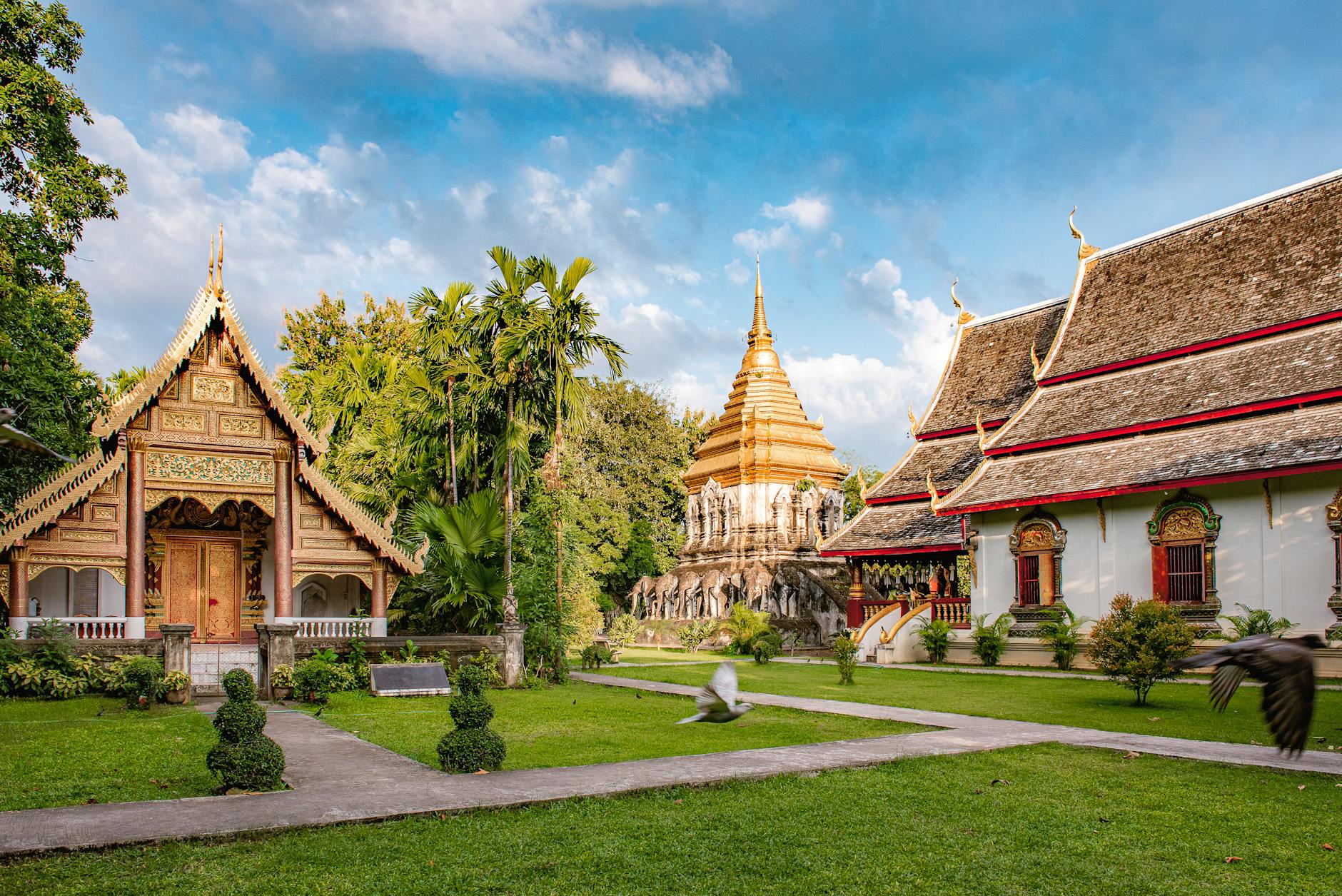
The Thailand Tourism Directory’s listing for Wat Chedi Luang places it in the heart of Chiang Mai and notes that the temple once sat at the center of Lanna political life.[4] That is a useful clue for understanding the Old City properly.
Warorot Still Grounds the City Better Than Many Polished Markets
The official tourism-directory listing for Warorot describes it as a large market for northern local foods like sai ua, nam prik num, and preserved products, open from morning into evening, with the flower market behind it by the Ping River.[5]
Season Still Changes the City’s Emotional Register
TourismThailand’s current Chiang Mai material keeps pointing to cooler-season use and to Doi Suthep as a key near-city outing.[6][2] That lines up with practical experience: Chiang Mai is not the same city in cool, clear weather and in hot, hazy weeks.
How to Understand Chiang Mai
Chiang Mai works through four main forces.
The first is district identity. Old City, Nimman, riverside-market Chiang Mai, and resort-edge Chiang Mai each create different trips.
The second is northern proportion. This city rewards tighter, more selective days than Bangkok does.
The third is seasonality. Heat and haze are structural facts, not optional notes.
The fourth is ritual and routine. Temples, markets, breakfast habits, coffee breaks, and massage all belong to the city’s normal use.
The Main Mental Shift
Do not ask, “How much of Chiang Mai can I fit in?” Ask, “Which Chiang Mai do I want to inhabit?” The answer should decide the hotel, the radius, and the pace.
What Chiang Mai Does Better Than People Think
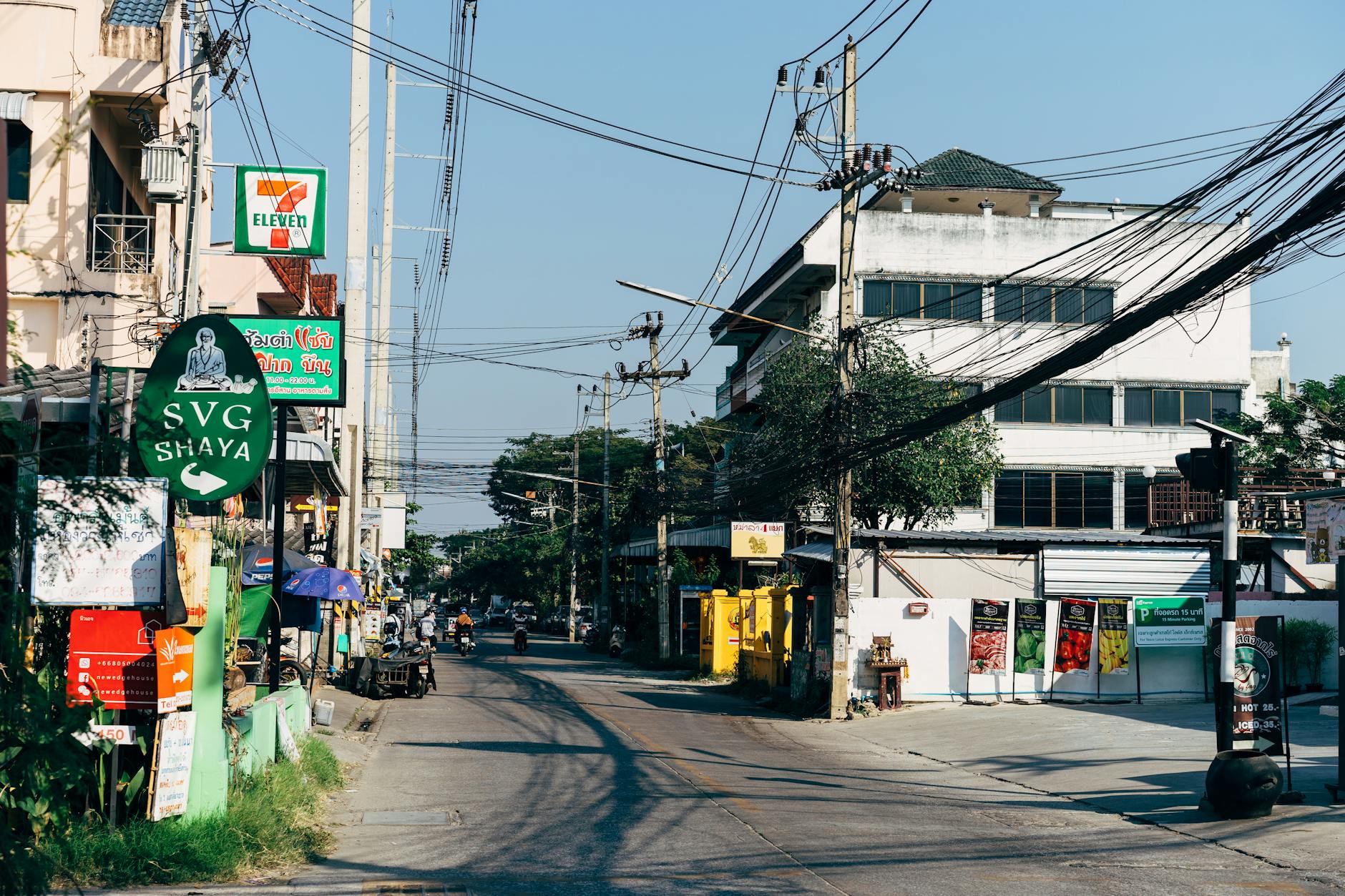
Chiang Mai is better than people think at sustaining a full city break without constant movement. It is also better than people think at contemporary urban life. Too many first-time visitors arrive expecting a heritage-heavy northern town and then seem surprised that café culture, boutique stays, and contemporary social life are part of the city’s identity too.
At the same time, it is better than people think at preserving slower pleasure. Breakfast matters here. Market detours matter. Repeating a favorite street matters. Chiang Mai often feels richest in the accumulated small decisions.
Where Chiang Mai Fits in a Thailand Trip
Chiang Mai often appears in itineraries as the “calmer Thailand” chapter. That is a useful instinct, but it can still produce shallow planning if it remains too vague. The city works best when you know what kind of calm you actually want.
As a contrast to Bangkok, Chiang Mai is excellent because the whole urban metabolism changes. Scale shrinks. The day becomes more editable. Temple compounds, breakfast, coffee, and neighborhood choice matter more than major monumental ambition. As a northern anchor inside a longer Thailand route, it also works well because it can absorb both rest and curiosity without feeling like dead time. As a digital-nomad or longer-stay city, it may be one of Southeast Asia’s clearest examples of a place where hospitality, cafés, and manageable urban routines reinforce each other.
What works less well is using Chiang Mai as a generic cultural catch-all. If you want beaches, it is not that. If you want relentless nightlife, it is not that. If you want one giant city that can keep escalating all day and all night, it is not that either. Chiang Mai is strongest when the trip accepts that proportion is the product.
This matters because many weak Chiang Mai itineraries begin with the city being chosen for the right reason and then misused as if it were a lower-pressure version of everywhere else.
Chiang Mai Versus Island Thailand
This comparison matters because a lot of travelers place Chiang Mai into itineraries that also include beaches or islands, and then unconsciously expect the city to supply the same kind of relaxation.
It does not. Chiang Mai is restful in a different register. Its relief comes from proportion, not from pure leisure scenery. A pool helps, but the city is not fundamentally a pool destination. A café afternoon can be restorative, but not in the same way as a coastal day. The pleasure here comes from a balanced urban rhythm: temples in the morning, a slower retreat in heat, one well-chosen market or café cluster, a strong dinner, and an evening that does not insist on escalation.
If you expect Chiang Mai to behave like inland beach Thailand, the city can seem oddly incomplete. If you let it be a northern urban counterweight to the coast, it often becomes one of the most intelligent parts of the trip.
First-Time Visitors Versus Repeat Visitors
First-time visitors often try to sample too many Chiang Mais at once. They want the old-city temples, Nimman cafés, mountain temple, market foods, riverside side notes, massage, night markets, and boutique-hotel calm all inside one or two short days. The result is usually a city that feels more diffuse than it really is.
Repeat visitors usually do much better because they stop asking Chiang Mai to summarize itself so fast. They know which district they want to wake up in. They understand that one good temple morning can matter more than six temple visits. They realize that one market done properly is stronger than a stack of “must eat” points scattered across the map. They begin to use the city as a place with preferred routines instead of as a low-stakes checklist.
This is one reason Chiang Mai often improves on a second or third visit. Once the pressure to “do Chiang Mai properly” fades, the city becomes more precise, more comfortable, and oddly more memorable.
Best Time to Visit
November through February is the cleanest overall answer. Cooler air, more comfortable walking, and generally more breathable days help the city’s temple and café logic work properly.
Hot season can still be enjoyable, but it increases the importance of a better hotel and a narrower radius. Haze season shifts the city even more toward interiors, food, spas, and slower urban routines. If you pretend season does not matter, Chiang Mai becomes a worse version of itself very quickly.
Winter Chiang Mai Versus Haze-Season Chiang Mai
This distinction matters more than many first-time visitors expect.
Cool-season Chiang Mai is the version most people are hoping for, even when they do not say it out loud. Mornings are easier, Doi Suthep feels cleaner and more convincing, walking in and around the Old City is more pleasurable, and cafés or terraces make emotional sense instead of just thermal sense. This is the Chiang Mai that supports a broad, balanced first trip.
Haze-season Chiang Mai is not automatically a bad idea, but it is a different city. The mountain frame weakens, outdoor ambition shrinks, and the trip depends much more on hotels, interiors, food, and a tolerance for visual disappointment in the landscape. Visitors who ignore this difference often blame the city for conditions that were predictable.
The right lesson is not “only go in the cool season.” It is “choose the version of Chiang Mai you are actually booking.”
How Many Days You Need
One Night
Enough to get a hint of the city, but not enough to understand it well.
Two Nights
A workable first stay if you choose one main urban identity and stick to it.
Three Nights
The strongest first answer. One day can belong to Old City and temple texture, one to Nimman or adjacent contemporary Chiang Mai, and one to Doi Suthep or a more food-and-market-led version of the city.
Four Nights or More
Very reasonable if your trip genuinely leans cafés, classes, food, slower hotel life, or if seasonality means some days should stay deliberately lighter.
The Real Question
Do not ask how much Chiang Mai can fit into the stay. Ask how many nights allow one district to matter more than a sequence of transfers. For most first visits, that answer is three.
Arrival Strategy
Arrive and narrow the trip immediately.
If you land knowing you want old walls, temples, and walkable mornings, stay near the Old City and do not sabotage that with a trendy west-side hotel. If you want design-conscious cafés, easier modern lodging, and cleaner contemporary comfort, Nimman may make more sense. What matters is that the base and the imagined trip agree.
The airport shuttle routes help reinforce that early choice by pointing directly toward two of the most common first-time zones: the city-moat side and the Chang Klan / Night Bazaar side.[1]
Why Sleeping in the Right District Matters So Much
Chiang Mai is one of those cities where the hotel does not merely hold the trip together. It defines the trip’s emotional register.
If you stay near the Old City, the city wakes you into temples, walls, older streets, and a more heritage-facing morning. If you stay near Nimman, the city wakes you into cafés, more polished hotel life, and contemporary urban comfort. Both can be correct. What causes trouble is when the traveler imagines one version of Chiang Mai and books the other.
This is why district fit matters more here than in many first-time Thailand destinations. The city is not so large that location becomes meaningless, and not so tiny that every district feels the same. The right base makes Chiang Mai feel composed. The wrong base can make it feel oddly scattered.
Why One Proper City Day Is Not a Backup Plan
Some visitors talk about a “city day” in Chiang Mai as if it were what remains when they are not on a mountain, in a class, on a scooter, or on some day-trip circuit. That is the wrong hierarchy.
One proper day that belongs mainly to Chiang Mai itself is often what makes the whole trip feel like more than a collection of activities. It is the day when the Old City, the market, the cafés, and the hotel district all get to count as the destination instead of as dead time between other plans. Without this, Chiang Mai can become strangely thin, no matter how much was technically done.
The right city day is not a fallback. It is the thing that allows the rest of the trip to feel edited instead of merely busy.
Where to Stay
For most first-time visitors, the real decision is Old City edge versus Nimman.
Old City / Old City Edge
Best for: temple mornings, heritage-facing walking, denser classic Chiang Mai atmosphere, and first-time visitors who want the city’s old identity closest at hand. Tradeoff: some properties are more atmospheric than comfortable, and some streets can feel busy or overfamiliar.
Nimman / West-Side Contemporary Chiang Mai
Best for: cafés, design-conscious stays, more polished modern comfort, and travelers who want a contemporary urban Chiang Mai. Tradeoff: easier to lose the old-city texture if you never intentionally return to it.
Riverside / Market-Adjacent Stays
Best for: travelers who want a more local-feeling city logic tied to markets and the Ping side. Tradeoff: less obviously “first-time Chiang Mai” unless you know why you want it.
The Chiang Mais That Matter Most
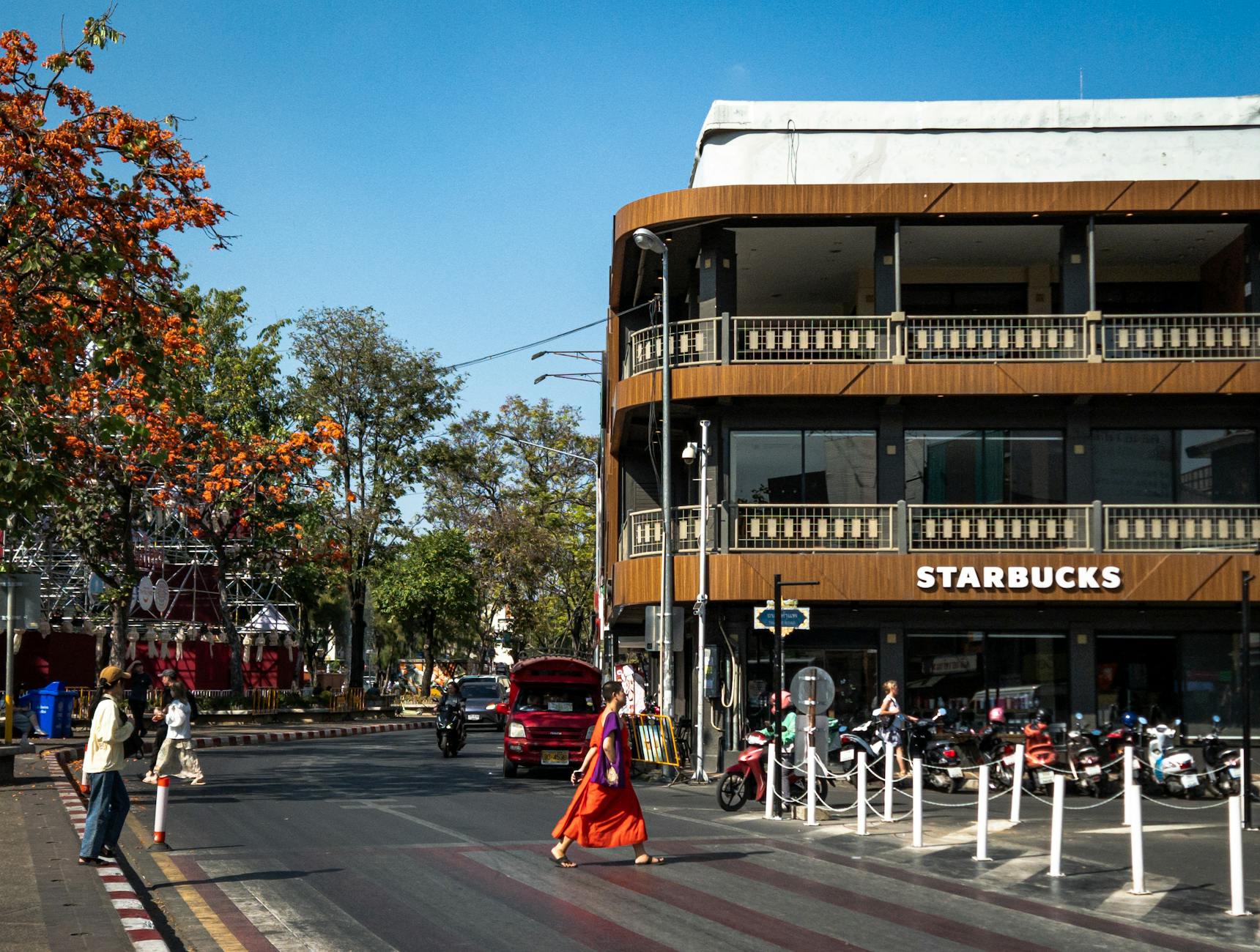
Old City Chiang Mai: temples, gates, walls, morning light, and the city’s older urban memory.[4]
Nimman Chiang Mai: cafés, contemporary social life, cleaner hotel logic, and a more designed version of the city.
Market Chiang Mai: Warorot and the market-river side, where northern daily life feels more grounded and less curated.[5]
Mountain Chiang Mai: Doi Suthep and the near-mountain frame that reminds you the city belongs to the north, not just to generic Thai tourism.[2][3]
Old City and the Temple-Facing Stay
For many first-time visitors, this is the Chiang Mai they most need to see first.
The Thailand Tourism Directory’s note that Wat Chedi Luang sits at the center of the old political heart of the Lanna kingdom is more than historical trivia.[4] It explains why the old core still feels symbolically loaded. The streets, gates, and temple compounds are not random sightseeing pieces. They still organize the visitor’s sense of the city.
The mistake is to over-harvest the Old City. Do not try to convert every temple into one more item conquered. Use the district for atmosphere, morning pacing, and selected attention.
Nimman and Contemporary Chiang Mai
Nimman matters because it proves that Chiang Mai is not only a heritage city.
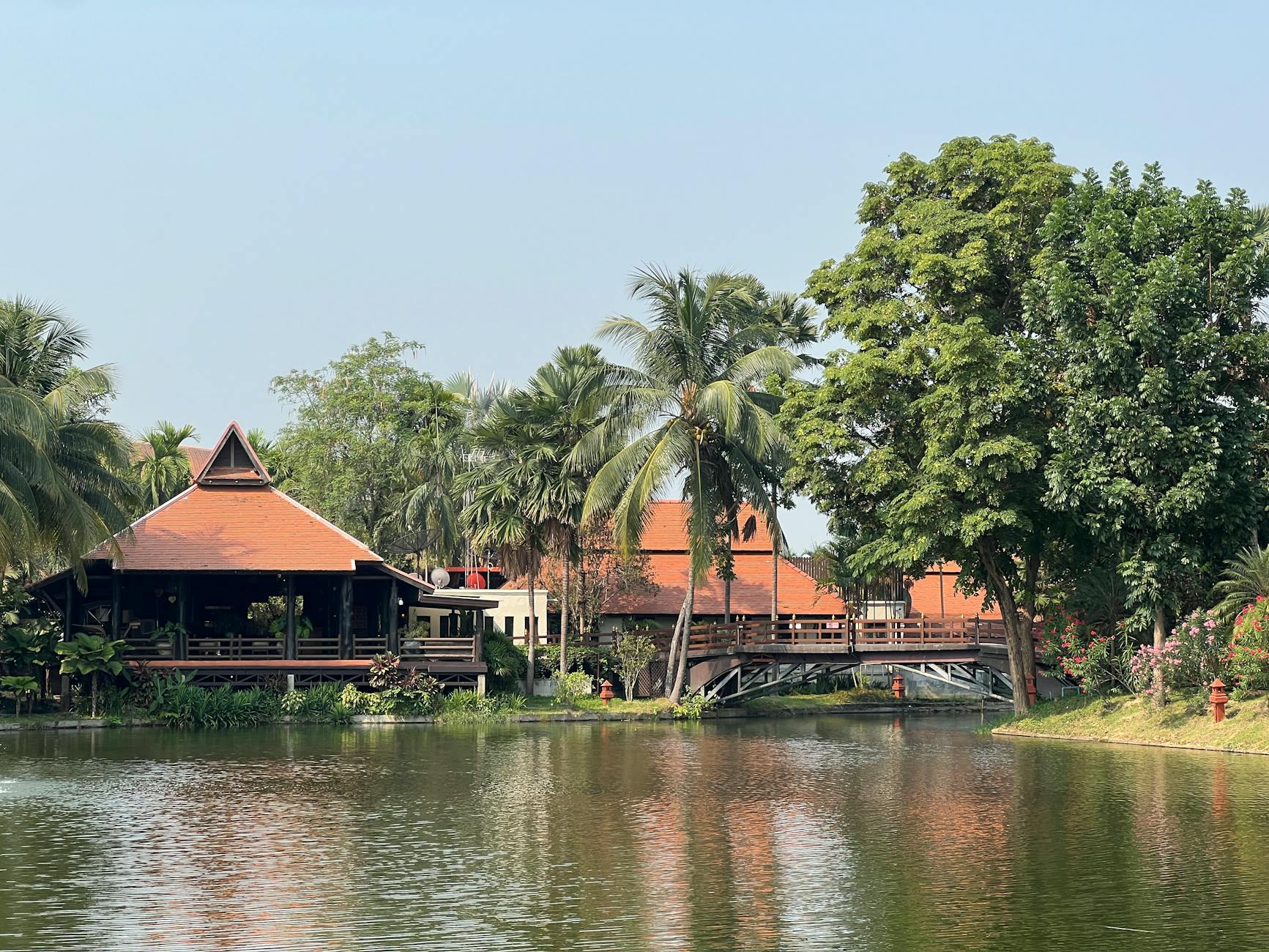
This is the area for travelers who want cafés, more design-conscious daily rhythm, and a more contemporary social atmosphere. It is also where some visitors feel most relaxed because the hotel stock often better supports heat management and longer stays.
But Nimman should not become an excuse to avoid the city’s older registers. It works best as one pole of a trip, not as a total replacement for Chiang Mai’s older identity.
Warorot, Markets, and the Everyday City
Warorot matters because it brings Chiang Mai back to earth.
The official tourism-directory listing describes it through northern products, local foods, all-day use, and its close relationship to the flower market near the Ping River.[5] This is the kind of place that makes a city feel lived rather than packaged.
If your Chiang Mai trip has become too smooth, too boutique, or too café-perfect, a market-centered morning usually corrects it.
Why the Market Side Matters More Than Visitors Expect
Many first-time visitors build Chiang Mai around temples and contemporary west-side districts, then treat the market side as optional. That often produces a city that feels too polished and too tourist-ready.
Warorot and the surrounding commercial texture matter because they remind you that Chiang Mai is not only a wellness-and-boutique city. It is also a working northern city with trade habits, food circulation, and ordinary daily intensity. Even one good morning here can rebalance the whole stay.
This is not because the market is “more authentic” in some simplistic way. It is because every city needs one district that resists your preferred image of it. Warorot does that for Chiang Mai.
Doi Suthep and the Need for Perspective
Doi Suthep is one of the few near-city excursions that actually deserves its prominence.
The official Tourism Authority of Thailand page still treats Wat Phra That Doi Suthep as a core attraction, and the tourism-product page for Doi Suthep-Pui National Park keeps the mountain route and associated attractions clearly framed.[2][3] The point is not just that you can “go to a viewpoint.” The point is that Chiang Mai makes more sense once the mountain edge becomes real.
Do it as a selective, half-day reset. Do not stack it into a day that is already overfull.
Why Doi Suthep Works Best as a Frame
The reason Doi Suthep matters is not simply that it gives you another temple. Chiang Mai has enough temples already. The mountain matters because it changes the emotional scale of the city. Once you have gone up, looked back, and felt the higher edge of the landscape, the urban stay below becomes more legible. The city is no longer just café districts and old walls. It belongs to a broader northern geography.
That is why Doi Suthep usually works best when treated as a framing experience rather than a maximum-effort mountain day. It should clarify Chiang Mai, not replace it.
Food, Cafés, and Timing
Chiang Mai’s food culture is strongest when you stop treating it like a scoreboard.
Breakfast matters. Northern snacks matter. Coffee culture matters. Markets matter. Small evening meals matter. The city is often better at sustaining appetite across a day than at delivering one single triumphant dining blow.
This is also why Chiang Mai benefits from repetition. Returning to a favorite breakfast place or a good coffee stop is part of using the city properly, not a failure of exploration.
Morning Chiang Mai Versus Evening Chiang Mai
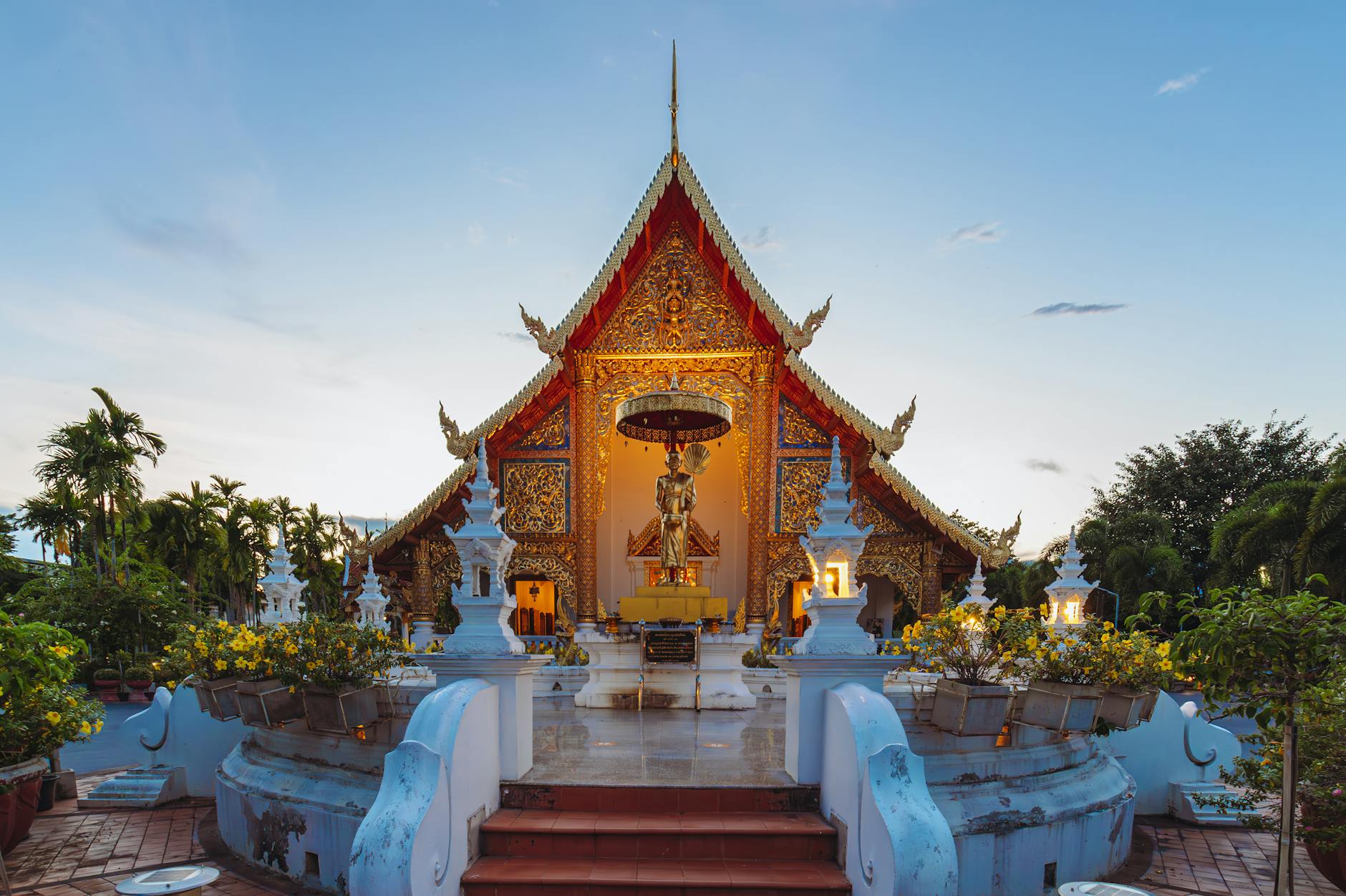
Morning is often when Chiang Mai feels most coherent. Temples make sense, breakfast is strong, the Old City still has some softness, and the day has not yet been flattened by heat. This is the best time to use the city’s older identity and to make any walk-heavy neighborhood decisions.
Evening Chiang Mai is where the city becomes more social and more forgiving. Markets, dinners, bars, and easier air all help. This is one reason the city feels so proportional: it can give you two different useful registers in a single day without needing to become two different destinations.
A good first trip usually uses both. It understands the city through morning and enjoys it through evening.
Getting Around
Chiang Mai is a district-first, transfer-second city.
The airport shuttle routes are useful at the beginning and end of a trip, especially for Nimman, the moat, and Chang Klan directions.[1] Beyond that, the main discipline is not over-spreading yourself. Chiang Mai’s calm is damaged quickly by poor geographic ambition.
Why One Good District Is Better Than Three Partial Ones
This is one of the most important Chiang Mai rules.
Visitors often assume that because the city is easier than Bangkok, it should also be easier to sample comprehensively. Old City morning, Nimman lunch, Warorot market, Doi Suthep before sunset, and then something else at night. On paper it can sound rich. In practice it often drains the city of its proportion.
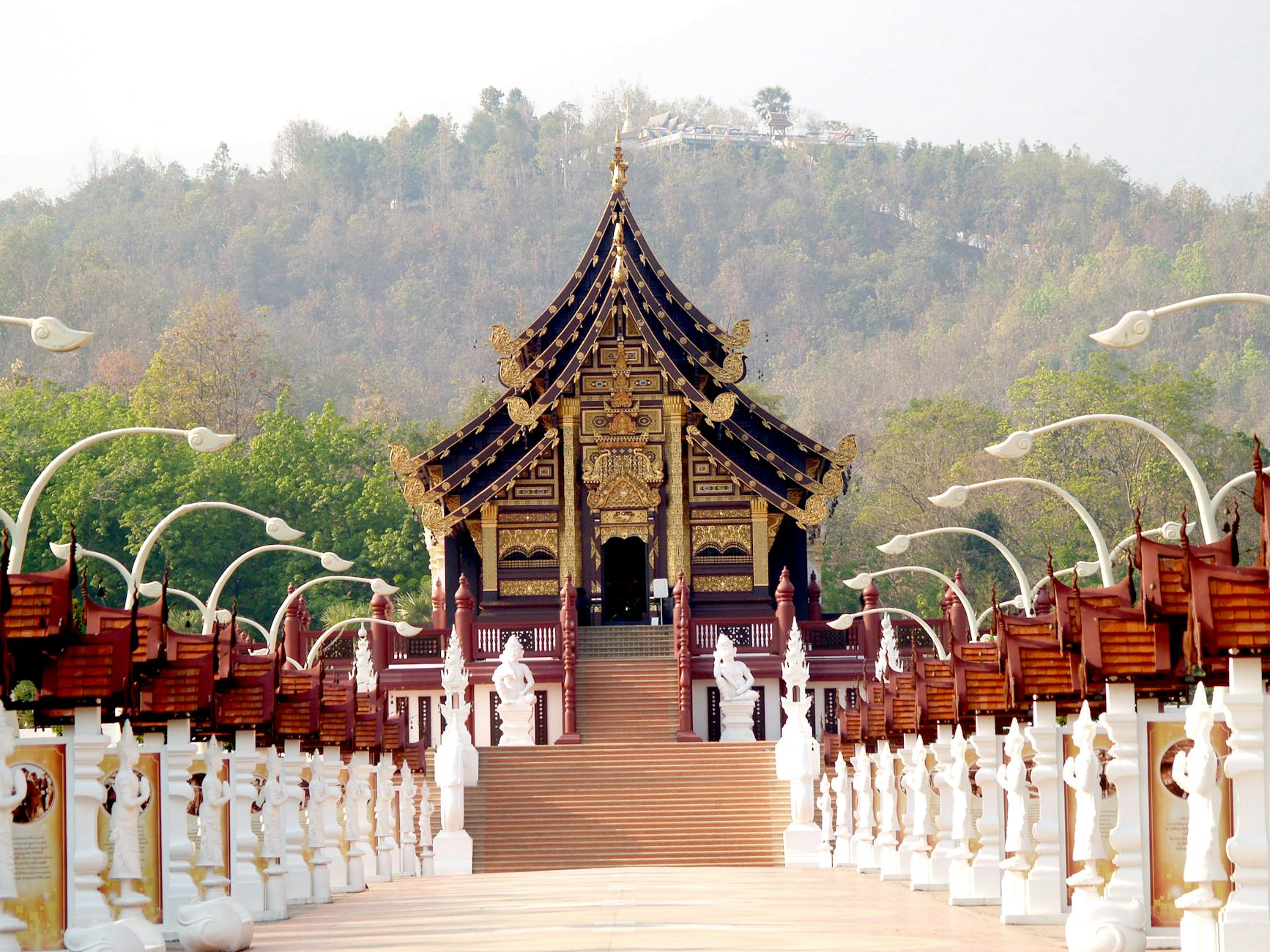
Chiang Mai rewards concentration. One Old City day that is actually allowed to belong to the old city usually gives more than a dozen fragmented crossings. One Nimman-and-west-side day can do the same. Even a market-led day works better when it is allowed to hold its own atmosphere.
The calmer the city’s reputation, the more easily people forget that overreaching still ruins it.
Who Chiang Mai Handles Especially Well
Chiang Mai is especially strong for travelers who do not need their days to look visually productive in order to feel worthwhile.
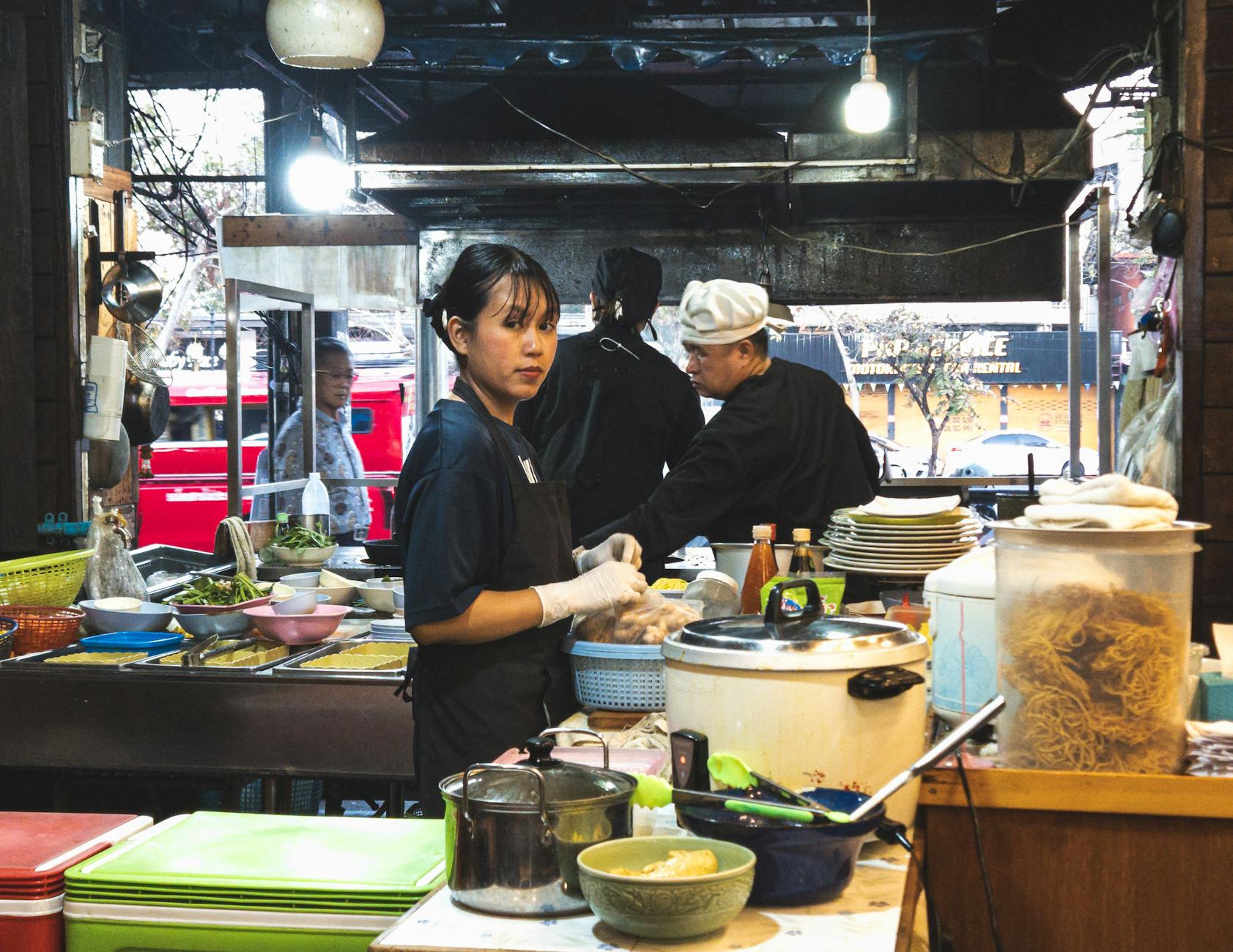
Solo travelers do well because the city supports repeated routines, café time, massage, smaller meals, and neighborhood loyalty without awkwardness. Couples do well because the city naturally alternates between activity and retreat. Longer-stay travelers do well because district choice and hotel quality compound into real comfort. Even families can do well if the trip is built around honesty rather than ambition: shorter mornings, a better hotel, fewer transfers, and less insistence that every famous thing must be touched.
Where Chiang Mai becomes harder is for travelers who want all of Thailand’s major pleasures at once: temples, nightlife, shopping, landscapes, and total flexibility every hour. The city is good, but it is not infinitely elastic. Its strength lies in saying yes to the right things and letting the rest go.
Why Chiang Mai Can Feel Better Than It Sounds
The problem with describing Chiang Mai is that many of its strengths sound small when spoken aloud. Good breakfasts. Temple mornings. Cafés. Markets. A mountain frame. Better hotels than you expected. A calmer day. None of that sounds spectacular in the abstract. But in practice, those pieces often add up to a more satisfying stay than louder destinations provide.
That is why Chiang Mai can outperform its own summary. It is not a city of one overwhelming pitch. It is a city of many correctly weighted parts. When those parts line up, the trip feels unusually humane.
This is also why people often leave Chiang Mai sounding quieter but more convinced than they expected. The city rarely needs to argue for itself loudly.
Common Mistakes
Treating Chiang Mai as Soft Bangkok
This strips the city of its proportion and its real strengths.
Ignoring Seasonality
Heat and haze are not minor variables here.
Picking the Wrong District for the Trip You Actually Want
This is the main Chiang Mai planning failure.
Overdoing Temples or Food
The city weakens when turned into a competition.
Expecting Every Area to Feel Equally Walkable and Pleasant
Some zones are for wandering. Some are for lodging. Some are for targeted visits.
Letting the Mountain Side Become a Compulsory Box
Doi Suthep matters, but forcing it into the wrong weather or the wrong day weakens the trip more than skipping it would.
Why Chiang Mai Often Lingers in Memory
Chiang Mai is not usually the city people describe most dramatically after Thailand. Very often it is the city they miss later.
That is because the place is built out of repeatable pleasures rather than singular shocks. A breakfast place. A temple gate. A street in evening light. One good hotel return. A coffee stop that becomes part of the routine. A market smell you did not expect to care about and then did. These things accumulate quietly and then stay in memory longer than louder urban experiences.
This is one reason Chiang Mai gets stronger once you stop demanding that it prove itself through spectacle. The city’s aftereffect is often one of its best qualities.
Why Chiang Mai Often Improves on a Second Visit
Many destinations are easiest the first time and weaker the second. Chiang Mai is often the reverse.
On a first trip, visitors understandably spend energy on basic orientation. Old City or Nimman? Which temple matters? Is Doi Suthep compulsory? Where does the market side fit? What kind of city is this, exactly? Even a good first visit can carry a faint layer of uncertainty because so much attention is still going into classification.
On a second visit, that pressure drops. You already know which district suits you. You are less likely to overbook the day. You understand that a slow breakfast, one good walk, a market stop, and a better evening may already be enough. The city can finally be used at the scale it prefers.
This is when Chiang Mai’s smaller strengths begin to compound. You notice street texture instead of just route efficiency. You return to places because they fit, not because they were ranked. You stop wondering whether a calmer day means you are “missing” Thailand and start recognizing that this calmer day is part of why the city works.
The second visit also sharpens district contrast. Old City feels more deliberate. Nimman feels more specifically contemporary rather than just easier. Warorot feels less like an optional detour and more like part of the city’s equilibrium. Even Doi Suthep changes: it becomes something you either truly want or correctly leave alone.
Chiang Mai does not need to become mysterious to improve. It simply becomes more exact.
How Chiang Mai Changes Over the Course of a Stay
On arrival, Chiang Mai can seem almost too easy. The streets are manageable, the city looks approachable, and the mood seems less punishing than larger Thai cities. That first impression is often accurate but incomplete.
By the second day, if the trip is built well, the districts start separating clearly. Old City and Nimman no longer feel like interchangeable hotel zones. Warorot starts to matter as a corrective. Doi Suthep becomes either a useful mountain frame or something you correctly decided not to force. The city begins to feel more intentional.
By the third day, Chiang Mai often becomes more persuasive precisely because it no longer needs to perform. It is just the city you are in now: morning, temple, coffee, food, evening, repeat. That is usually when it becomes strongest.
Why Repetition Is Part of Using Chiang Mai Properly
Some cities reward conquest. Chiang Mai rewards return.
This applies at a small scale and at a trip-design scale. At a small scale, it means going back to the same breakfast place because it genuinely suits the morning. It means taking another Old City walk instead of searching for novelty simply to justify the day. It means allowing one café, one massage place, one evening area, or one market rhythm to become part of the stay.
At a trip-design scale, repetition means understanding that Chiang Mai does not need to supply a completely different self every day. A good stay often includes recurring forms: morning out, afternoon retreat, evening re-entry. The city handles this pattern unusually well because its comforts are not separate from its identity. Hotel quality, café time, temple quiet, and market texture are not filler around the “real” trip. They are the trip.
Visitors sometimes resist this because repetition can look unambitious on paper. But that is usually a vanity problem, not a travel problem. If the city keeps rewarding the same pattern, use the pattern again.
This is also why Chiang Mai can disappoint travelers who want every day to justify itself with a new headline. The city is better at deepening than escalating. Once you understand that, the whole place becomes easier to use well.
My Blunt Advice
Choose your Chiang Mai early.
If you want old and slower, stay near the Old City. If you want polished and contemporary, stay near Nimman.
Use Warorot to ground the trip.
Use Doi Suthep once, properly.
Leave room for repeat pleasures.
And do not confuse a relaxed city with a city that can be planned carelessly.
Source Notes
- 1. Airports of Thailand, Chiang Mai International Airport. "Airport Shuttle Bus." Official airport page listing the current A1, A2, and A3 shuttle routes and fares from Chiang Mai Airport into the city. https://chiangmai.airportthai.co.th/service/transportation/detail/145
- 2. Tourism Authority of Thailand. "Wat Phra That Doi Suthep." Official attraction page for Chiang Mai’s best-known mountain temple. https://www.tourismthailand.org/Attraction/wat-phra-that-doi-suthep/
- 3. Tourism Product / Tourism Authority of Thailand. "Doi Suthep-Pui National Park." Official tourism product page describing the national park area, access distances, opening hours, and related attractions around Doi Suthep. https://tourismproduct.tourismthailand.org/en/2025/02/24/%E0%B8%AD%E0%B8%B8%E0%B8%97%E0%B8%A2%E0%B8%B2%E0%B8%99%E0%B9%81%E0%B8%AB%E0%B9%88%E0%B8%87%E0%B8%8A%E0%B8%B2%E0%B8%95%E0%B8%B4%E0%B8%94%E0%B8%AD%E0%B8%A2%E0%B8%AA%E0%B8%B8%E0%B9%80%E0%B8%97%E0%B8%9E-%E0%B8%9B%E0%B8%B8%E0%B8%A2/
- 4. Thailand Tourism Directory. "Wat Chedi Luang." Official attraction listing noting its location in the middle of Chiang Mai and its role in the historic Lanna center. https://www.thailandtourismdirectory.go.th/en/attraction/4370
- 5. Thailand Tourism Directory. "Warorot Market." Official attraction listing describing the market’s northern foods, all-day operation, and adjacency to the flower market by the Ping River. https://thailandtourismdirectory.go.th/en/attraction/4884
- 6. Tourism Authority of Thailand. "Chiang Mai-Lamphun: Hotspots for Digital Nomads." Official article describing Chiang Mai’s accommodations, dining options, and nearby attraction logic, including Doi Suthep. https://www.tourismthailand.org/Articles/chiang-mai-lamphun-2