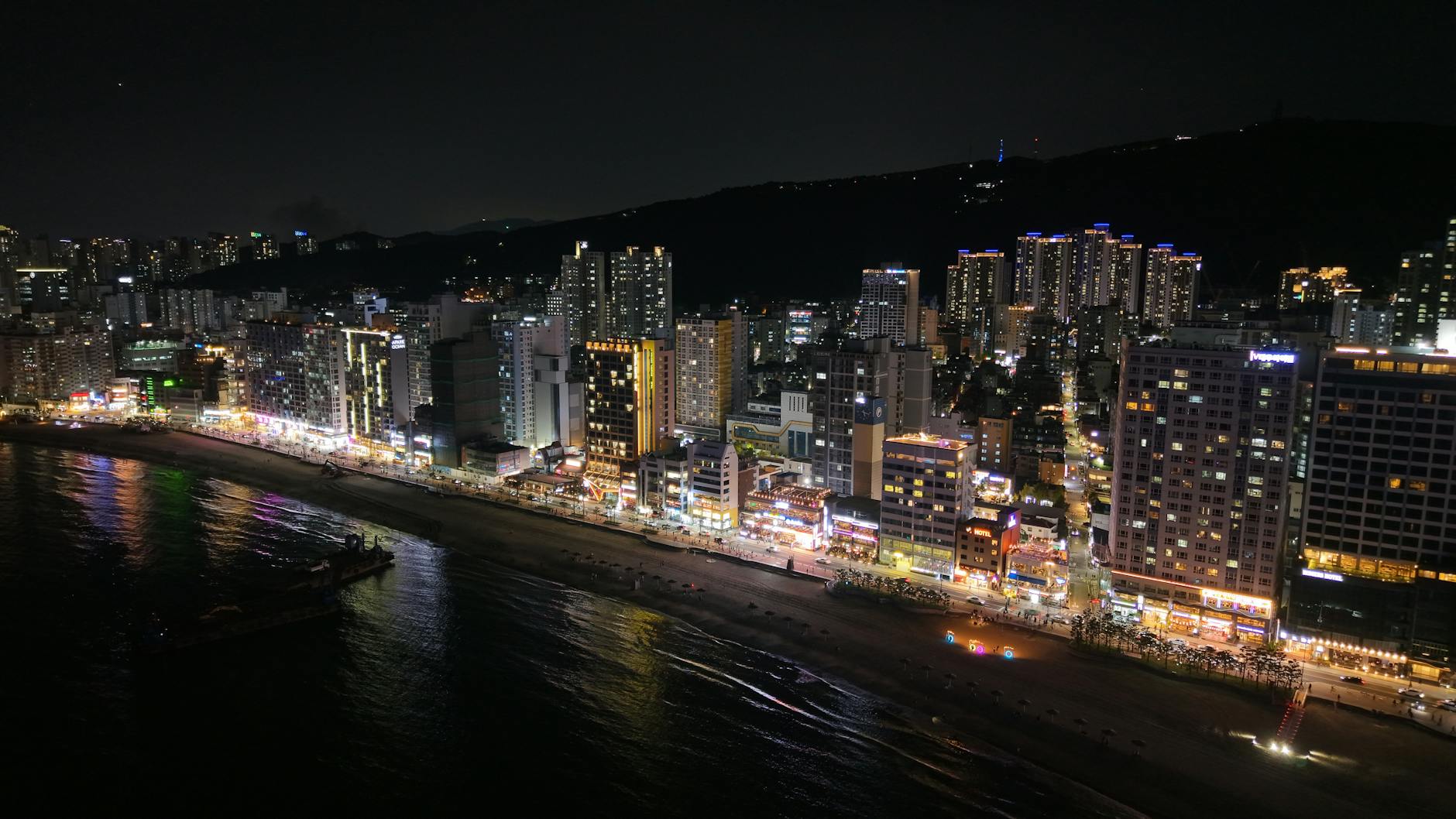
Busan is one of the easiest great Asian cities to use badly.
Start Here
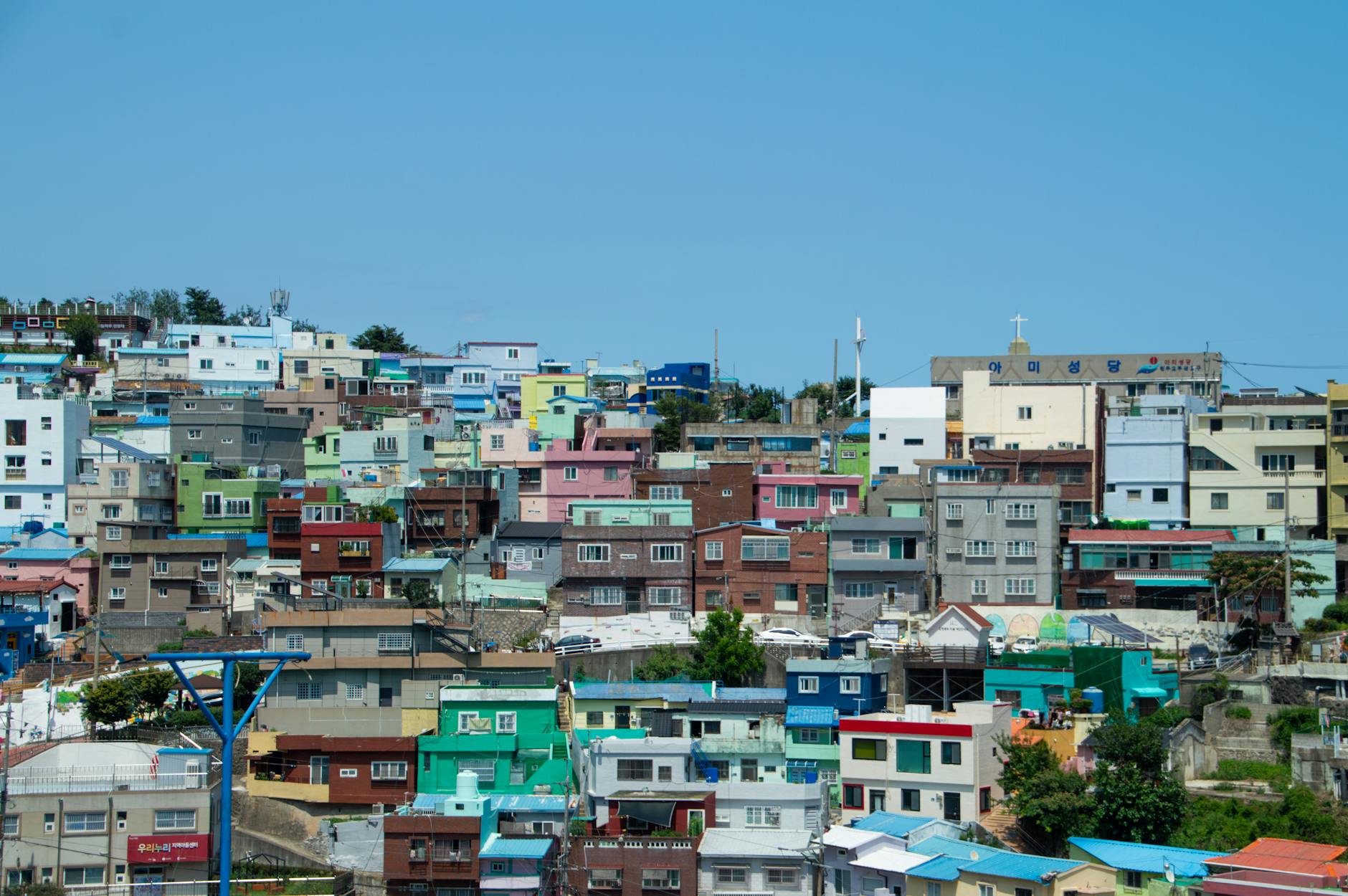
People arrive with the wrong mental model already installed. They know Seoul is the capital, so Busan becomes "the coastal one." They know Korea is efficient, so they assume Busan will unfold with the same central-city logic as Seoul, just with beaches added. They know the postcard images: Haeundae towers, Gwangandaegyo Bridge at night, bright fish markets, a colorful hillside village, maybe a temple above the sea. All of those things are real. The problem is that Busan is not one city with one center and a few optional detours. It is a stretched, multi-part port metropolis where the trip succeeds only when the visitor accepts distance, district differences, and mood changes from one side of the city to another.
That is what makes Busan good in the first place. It is not merely Seoul's relief valve. It is a city of coastline, working harbor memory, seafood confidence, broad beaches, steep neighborhood edges, island-like urban fragments, and a more relaxed but also more spatially complicated rhythm than the capital. Seoul often feels vertically compressed and system-driven. Busan feels elongated, open to weather, and divided into zones that each need to be used on their own terms.
The weak first visit usually tries to conquer Busan rather than edit it. One day gets overloaded with Haeundae, Gamcheon, Jagalchi, a temple, a market lunch, a skywalk, a photo stop, and a beach sunset, all while ignoring the fact that these places do not belong to one walkable urban unit. By late afternoon the traveler is not absorbing the city anymore. They are administering it. Busan punishes that mistake more than many cities because so much of its charm depends on staying in the right district long enough for the place to settle into view.
The stronger Busan trip does the opposite. It understands that the city has at least four distinct first-timer versions: east-coast Busan of beaches, high-rises, and polished sea-facing leisure; central practical Busan around Seomyeon, where the city becomes navigable; old-port Busan of Nampo, Jagalchi, Yeongdo-facing views, and older commercial weight; and hillside-west Busan of Gamcheon and the broader layered city built under pressure. Add one deliberate outer move, such as Haedong Yonggungsa, and you already have enough for a serious first visit.
This is also why Busan feels so rewarding when used properly. Very few cities offer this combination of beach life, market life, skyline views, temple drama, hillside urbanism, and genuinely good food without collapsing into resort emptiness or pure business-city monotony. Busan still feels like a place that works for itself. The sea is not a decorative edge. The port is not just background texture. Seafood is not just a tourist set piece. District differences still matter. So does weather. So does timing. So does whether you sleep in the right part of town.
The city in one sentence: Busan is a long, sea-facing, district-driven port metropolis where the best first trip comes from treating beaches, markets, hillside neighborhoods, and transport corridors as separate pieces of one city instead of one giant sightseeing list.
Basic data
| Population | About 3.3 million |
|---|---|
| Area | 770 km2 |
| Major religions | Largely secular, with Christian and Buddhist communities |
| Political system | Metropolitan city government inside a unitary presidential republic |
| Economic system | Advanced port-city economy led by logistics, shipping, manufacturing, services, and tourism |
Quick Verdict
Best for: return travelers to East Asia, first-time Korea visitors with at least a few days, seafood lovers, beach-and-city travelers, photographers, couples, solo travelers, and anyone who likes cities where port infrastructure and leisure culture share the same coastline.
Not ideal for: travelers who want one dense historic center, people who dislike long cross-city transit moves, or anyone who treats every attraction pin as equally urgent.
Ideal first visit: 3 full days.
Minimum worthwhile stay: 2 full days, though that still requires editing.
Best overall months: late April to June, and late September to early November.
Best summer case: if you actually want beach energy and accept heat, humidity, and heavier crowds.
Biggest planning mistake: trying to cover east Busan and old-port/west Busan in the same day.
One thing to prioritize: your base. Busan changes dramatically depending on where you sleep.
One thing to leave flexible: waterfront time. Light, wind, and visibility matter here more than in most inland cities.
The blunt version: Busan is one of East Asia's strongest secondary-city trips, but only for travelers willing to cluster by district and let the city stay stretched rather than forcing it into a tidy central-core narrative.
Who Will Love Busan?
Busan works especially well for travelers who like cities with competing identities rather than one polished thesis. It is a beach city, but not a resort city. It is a port city, but not merely a gritty one. It is modern, but not in the smooth capital-city way Seoul often is. It is scenic, but much of the scenery comes from infrastructure, bridges, hills, ferries, breakwaters, apartment slabs, seafood markets, and coastline rather than from one preserved old quarter.
That makes it very good for travelers who are happiest when urban life and geography are visibly entangled. In Busan, the sea is always reorganizing the day. It changes hotel choices, skyline views, walking pleasure, food cravings, evening plans, and transport decisions. A city like this rewards people who understand that atmosphere is logistical as well as visual.
Couples tend to do well here because Busan supports a highly satisfying rhythm: a coast-facing morning, one serious urban district, seafood or Korean dining at night, then bridge views, beach walks, or skyline light. The trip can be romantic without becoming fragile or overdesigned. Busan has enough structure underneath the scenery to keep the days from drifting.
Solo travelers also do well. The city is large but legible once you accept the district model. Public transport is strong, the big neighborhoods all have clear identities, and there is enough café, market, waterfront, and casual restaurant life that being alone does not feel awkward. Busan is a city where you can spend a whole day moving between sea, rail, market, and hillside and still feel that your own company fits naturally.
It is less ideal for visitors who need everything to unfold on foot from one historic center. Busan can absolutely be walked within districts, but it is not a one-walk city. The tourist who wants to "stumble onto everything" is usually happier somewhere else.
Busan at a Glance
| Question | Practical Answer |
|---|---|
| Main airport | Gimhae International Airport (PUS) |
| Simplest first transfer | Light rail / metro combination, or taxi if staying on the east side with luggage |
| Best first-time base | Seomyeon for balance, Haeundae for sea-first trips, or Nampo for old-port character |
| Best beach-first base | Haeundae or Gwangalli area |
| Best practical transport base | Seomyeon |
| Best old Busan base | Nampo / Jung-gu edge |
| Public transport backbone | Metro plus selective taxis and buses |
| Main visitor pass | VISIT BUSAN PASS |
| Signature east-side attraction | Haeundae coast and associated beach districts |
| Signature west-side attraction | Gamcheon Culture Village |
| Signature old-port attraction | Jagalchi Market / Nampo area |
| Signature outer excursion | Haedong Yonggungsa |
| Car needed? | No |
| Emergency number | 112 |
| Tap water | Safe to drink |
| Currency | South Korean won |
| Power plugs | Type C and F |
2026 Visitor Notes
Airport Transfer Logic Is Clear, But Your Hotel District Changes The Best Choice
Gimhae International Airport's official transport guidance makes clear that public transportation from the airport is structured around buses, taxis, and subway/light-rail transfer logic, with Busan Subway Line 2 reachable by transferring from the Busan-Gimhae Light Rail Transit at Sasang Station and Line 3 reachable via Daejeo Station.[1][2] That is efficient enough, but it does not make every arrival equal. A traveler headed to Seomyeon has a different arrival problem from one headed to Haeundae with luggage.
Taxi Time And Cost Depend Heavily On Which Busan You Are Visiting
The airport's own taxi guide publishes destination-based time and fare estimates, including roughly 45 minutes to Seomyeon and around 70 minutes to Haeundae or Gwangalli under its standard examples.[3] That is useful because it reminds first-timers that "Busan" is not one compact center from the airport's point of view.
The Metro Is Cheap Enough To Matter, But The Coverage Logic Still Needs Respect
Busan Transportation Corporation's fare guide lists adult transit-card urban-rail fares at 1,600 won for section 1 and 1,800 won for section 2, with separate QR-ticket pricing and mobile-ticket options.[4] That keeps daily movement affordable, but the more important point is structural: metro travel is cheap, so use taxis selectively for efficiency rather than out of fear of cost.
Busan's Own Rail Passes Are Useful, But Limited
The same official fare guide lists 1-day and 3-day metro season tickets and explicitly notes that these do not apply to buses, the Donghae Line, or the Busan-Gimhae Light Rail Transit.[4] That is exactly the kind of detail that prevents a smooth day from turning messy.
The VISIT BUSAN PASS Can Make Sense For Attraction-Heavy Trips
Visit Busan's official visitor-prep page states that the VISIT BUSAN PASS covers free use of more than 40 paid tourist facilities, discounts at many other businesses, and prepaid subway use on the physical-card model.[6] That means the pass is worth evaluating if your trip includes paid viewpoints, museums, or multiple packaged attractions, but not if your Busan is mostly beaches, markets, and district walking.
Busan's Famous Sites Are Spread Out Because The City Really Is Spread Out
VISITKOREA and Visit Busan's attraction pages reinforce the essential first-time pattern: Haeundae is a major beach district, Jagalchi is the city's seafood-market and old-port emblem, Gamcheon is a separate hillside village with its own history, and Haedong Yonggungsa sits far out on the northeastern coast rather than inside the central city fabric.[7][8][9][10] The best planning insight in Busan is usually the simplest one: do not pretend these places belong to the same afternoon.
How to Understand Busan
Busan works through five forces.
The first is elongation. This is not a city gathered around one old core. It is a city stretched across coastline, hills, commercial centers, and older harbor districts. Distance is part of its identity, not an inconvenience layered on top of it.
The second is the sea as daily structure. Busan is not merely a city beside water. The water determines mood, leisure, skyline composition, dining, views, and neighborhood value. A city like this has multiple emotional centers because the coast keeps producing them.
The third is port logic. Even the glossy parts of Busan sit downstream from a working port-city identity. Jagalchi, Nampo, Yeongdo views, fish culture, cargo memory, and the city's outward-facing commercial instinct all come from that deeper structure.
The fourth is district separation. Haeundae is not Nampo. Nampo is not Seomyeon. Seomyeon is not Gamcheon. Gwangalli is not Haeundae, even if outsiders blur them together as beach Busan. The trip improves the moment those differences stop feeling like minor variations.
The fifth is topographic interruption. Hills, slopes, bridges, tunnels, coast roads, and mountain-backed neighborhoods all shape the experience. Busan is urban, but it is not flatly urban.
The Five Busans A First-Time Visitor Actually Meets
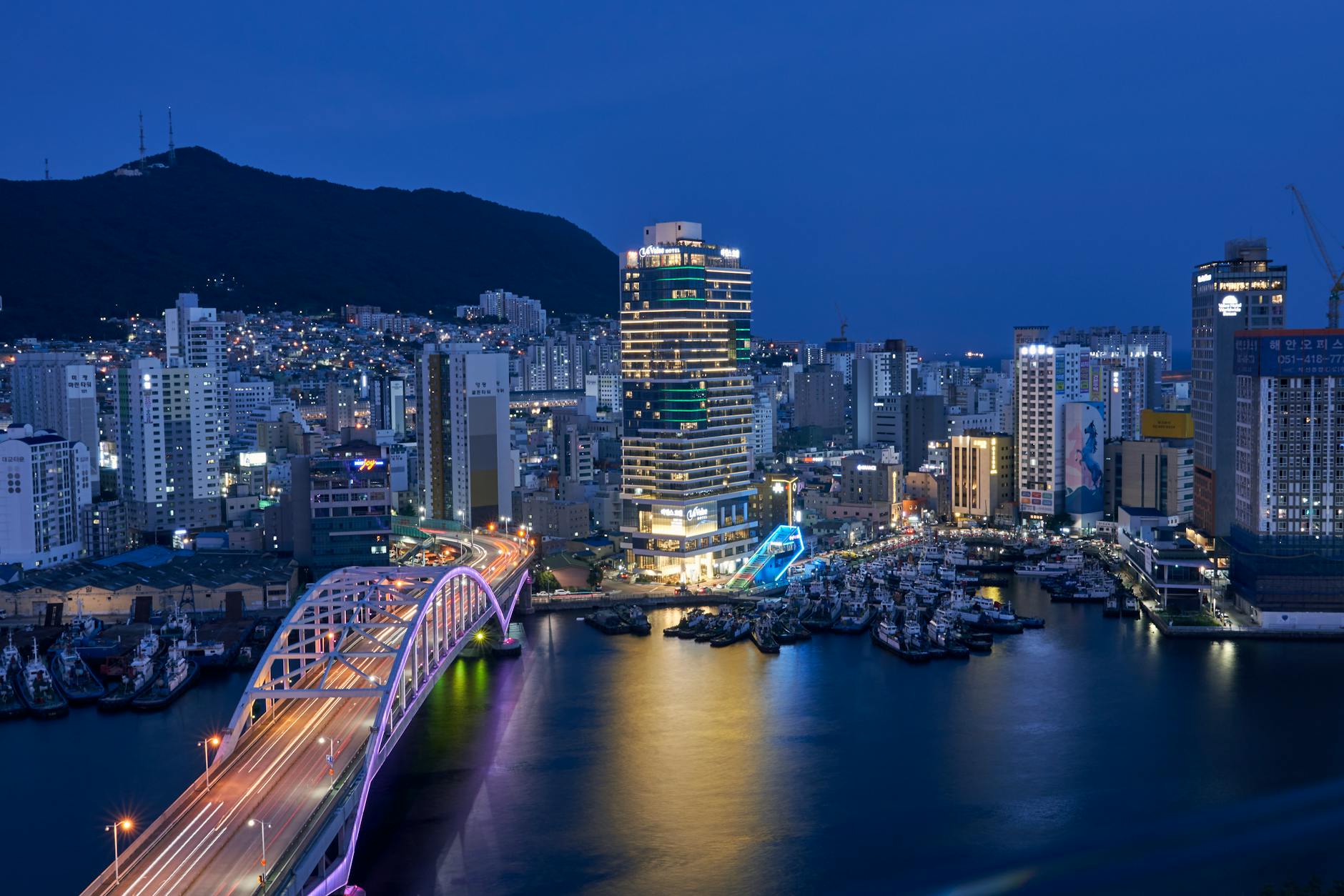
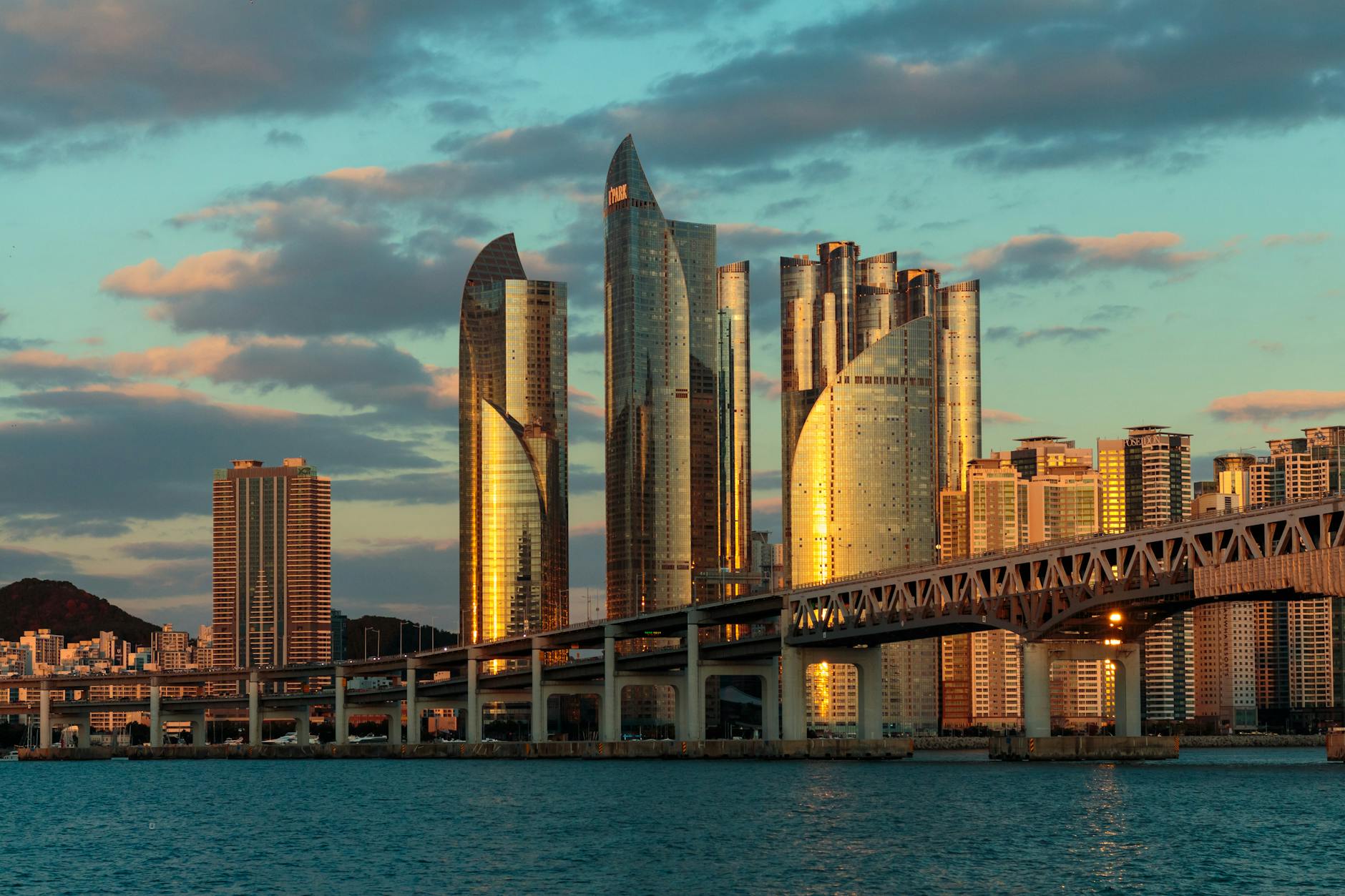
East-coast Busan: Haeundae, marine leisure, polished towers, beach rhythm, and the city at its most visibly aspirational.
Bridge-view Busan: Gwangalli and nearby stretches where the sea feels more social, more local, and more evening-facing.
Practical-central Busan: Seomyeon and its transport-centered usefulness, where the city becomes manageable.
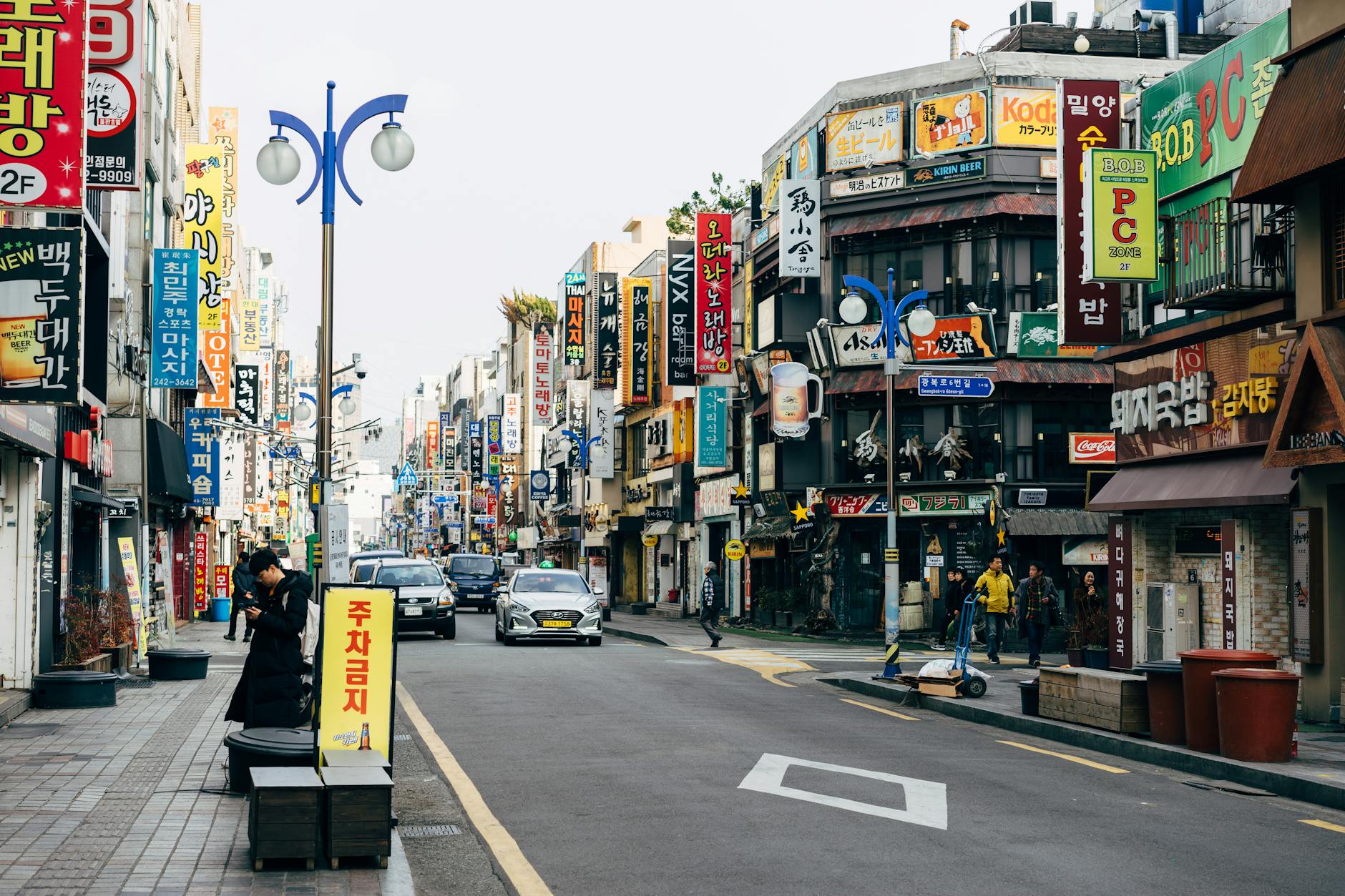
Old-port Busan: Nampo, Jagalchi, Yongdusan, ferry-facing energy, older shopping streets, and the commercial memory that still explains the city.
Hillside Busan: Gamcheon and related elevated districts, where the city shows its density, refugee-era inheritance, and improvised spatial drama.
The Main Mental Shift
Do not ask, "What are Busan's top sights?" Ask, "Which Busan am I in today?" Once you group the city by east coast, bridge coast, central hub, old port, and hillside west, the trip becomes much calmer and much better.
What Busan Does Better Than People Think
Busan is better than people think at urban variety with genuine coherence. The city can give you a market morning, a skyline-and-beach afternoon, a hillside art district, and a seafood dinner without feeling like it is faking range. The pieces belong to the same metropolis, but they belong to different versions of it.
It is also much better than people think at waterfront urban life that is not resort-coded. Haeundae can look glossy from the outside, but Busan overall still feels like a city first. The sea here supports civic life, commuting, eating, photographing, and strolling. It has not erased the ordinary city behind it.
Another underrated strength is food clarity. Busan knows what it is good at. Seafood, market eating, Korean comfort food, grilled fish, soups, casual drinking, beach-adjacent café life, and district-specific dining all feel native to the place. The city does not need external culinary prestige to feed people well.
The city is also better than people think at showing Korea from a different angle. Seoul often dominates the foreign imagination of the country, but Busan reveals the maritime, regional, hillside, and port-commercial side of modern Korea in a way the capital cannot.
Finally, Busan is excellent at late-day payoff. Bridge lights, sea air, market alleys, beachfront promenades, night views, and port-facing darkness all give the evenings unusual strength. Many cities peak around lunchtime sightseeing. Busan often gets better after 5 p.m.
Best Time to Visit Busan
Busan is usable year-round, but it is not season-neutral. Weather and light alter the city decisively because so much of its appeal depends on coastlines, views, and open-air movement.
Best Overall Months
Late April through June and late September through early November are the easiest windows for a first visit. The city stays outdoor-friendly, the beaches are scenic without needing to function as full summer beach infrastructure, and the air is usually clearer for views.
Summer
Summer is Busan's most obvious season and not automatically its best. If you want beach energy, crowded waterfronts, and the city at its most socially outdoors, summer absolutely works. If you want thoughtful district-hopping with minimal friction, the humidity and crowd load can make the city heavier.
Autumn
Autumn is arguably Busan's smartest season. The coast still matters, but the city becomes easier to physically manage. Visibility often improves, evening walking is more pleasant, and the city feels less overcommitted to the beach identity alone.
Winter
Winter can work better than outsiders expect because Busan is milder than many inland Korean destinations. The sea still gives the city shape, seafood and market life remain strong, and the beach districts can feel cleaner and more architectural without summer crowds. It is not warm, but it can be sharp and rewarding.
Spring
Spring gives Busan one of its best balances of lightness and practicality. The city starts to open outward again, and the first-time visitor can use coast, markets, and transit without the more punishing humidity of midsummer.
Month-by-Month Guidance
January: crisp, quieter, still worthwhile for market-and-city travelers. February: similar to January, sometimes windy but manageable. March: transitional and improving. April: one of the better first-visit months. May: excellent. June: strong, especially before peak summer heaviness. July: beach-first and humid. August: lively but hottest and most crowded. September: improving again, often a smart choice. October: one of the best months to go. November: often excellent for city use and views. December: cool, lower-pressure, and quite good for a city break.
How Many Days You Need
Two Days
Enough for one east-side day and one old-port/west-side day, but only if you stay disciplined.
Three Days
Ideal for most first-time visits. One day for Haeundae/Gwangalli-side Busan, one day for Nampo/Jagalchi/Gamcheon-side Busan, and one day for Seomyeon, an outer temple move, or a slower coast-focused plan.
Four Days
Very good if you want to include Haedong Yonggungsa properly, take the city more slowly, or give yourself one low-pressure food-and-view day.
One Day
Possible, but only if you deliberately choose one version of Busan rather than treating the city like a checklist.
Where to Stay in Busan
Where you stay matters more here than in many cities because the base changes the emotional logic of the entire trip.
Fast Answer
For most first-time visitors, stay in Seomyeon if you want the most balanced and least fragile trip. Stay in Haeundae if you want the coast to define the visit. Stay in Nampo if you care most about old-port atmosphere and markets.
Neighborhood Decision Table
| Traveler Type | Best Area |
|---|---|
| First-time balanced trip | Seomyeon |
| Beach-first couple trip | Haeundae |
| Night views and waterside evenings | Gwangalli |
| Old Busan / market-focused trip | Nampo |
| Short stay with east-side priorities | Haeundae or Gwangalli |
| Transport-efficiency first | Seomyeon |
Seomyeon
Best for: first-timers, short stays, people who want the whole city to remain usable. Why it works: this is the most practical compromise between east and west, with strong metro usefulness, dining, shopping, and ordinary city energy. Tradeoff: it is not the most scenic part of Busan. Best use: the smartest default base.
Haeundae
Best for: beach lovers, higher-end hotel stays, coast-facing evenings, and visitors who want Busan's polished marine side. Why it works: Haeundae gives immediate access to one of the city's signature landscapes and can make the trip feel expansive from the first night. Tradeoff: it is far from old-port and west-side Busan, and repeated crossings become tiring. Best use: trips that truly prioritize the coast.
Gwangalli
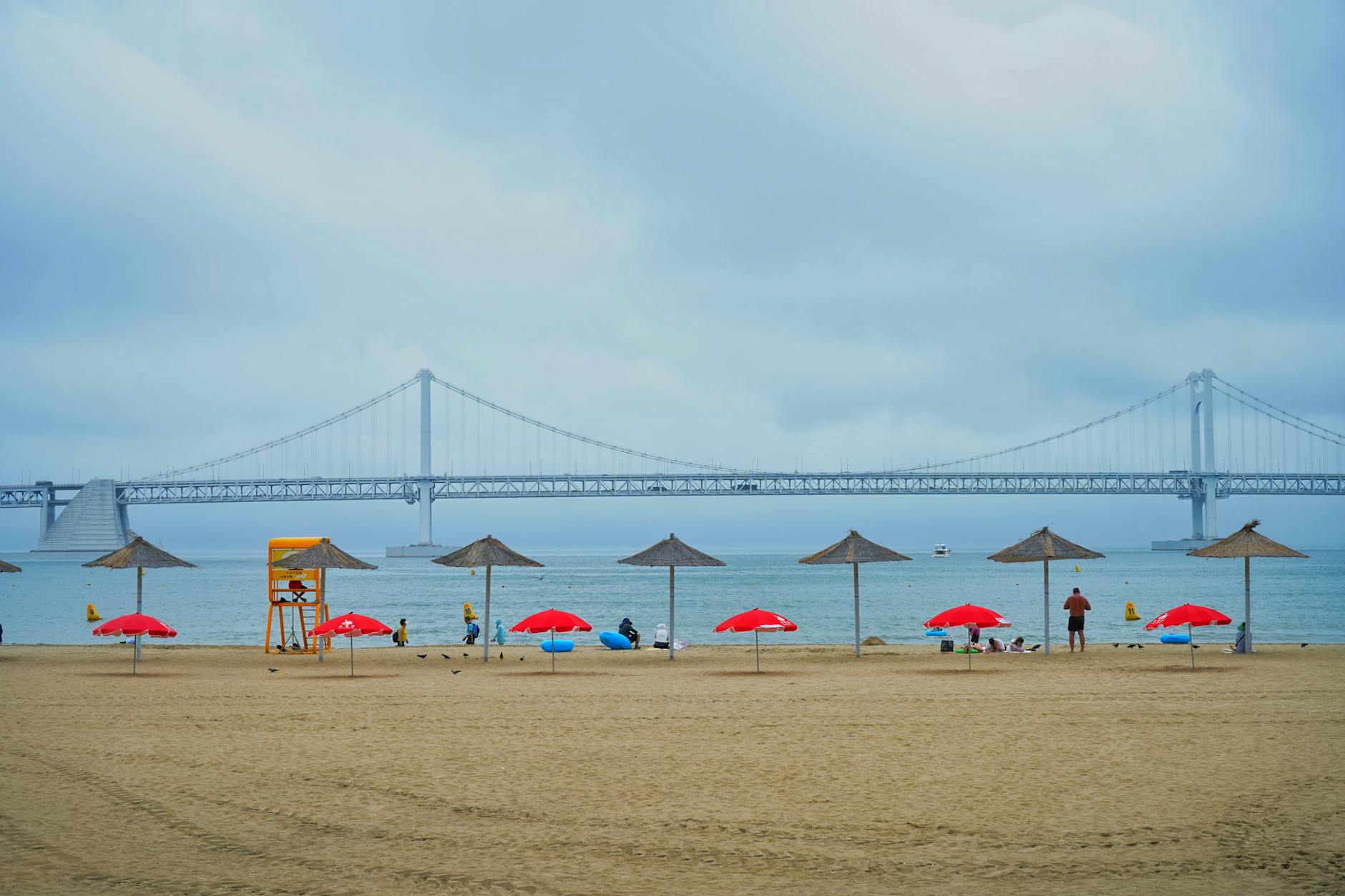
Best for: travelers who want sea views and a slightly more relaxed nightly rhythm than Haeundae. Why it works: the bridge views are excellent, the evening atmosphere is strong, and the district often feels more socially comfortable than overtly resort-like. Tradeoff: it is not as all-purpose as Seomyeon. Best use: couples and repeat Korea visitors.
Nampo
Best for: market life, older commercial Busan, ferry-and-port atmosphere, and travelers who want the city to feel more historical and working. Why it works: Jagalchi, BIFF-area energy, older shopping streets, and old-port Busan all make more sense when you sleep here. Tradeoff: east-side beach districts become longer dedicated moves. Best use: Busan travelers more interested in the city's older layers than its resort-facing coast.
Area Profiles
Haeundae corridor: polished, sea-first, high-rise, and image-heavy, but genuinely good when you lean into it instead of apologizing for it.
Gwangalli corridor: more bridge-facing and social, less monumental than Haeundae, often easier to love at night.
Seomyeon core: practical, central, transit-rich, and the best place to make Busan feel manageable.
Nampo/Jagalchi core: older, denser, more commercial, and more revealing of Busan's port-city personality.
Gamcheon side: best used as a dedicated west-side excursion, not as an add-on after too many other stops.
Neighborhood Guide: Where to Explore, Not Just Sleep
The Haeundae side of Busan is where many first-timers begin because it gives such immediate visual reward. The beach, towers, promenades, and east-coast confidence all make the city look easy to love. But Haeundae is not the whole argument. Use it for what it is: an excellent coastal district, not the total explanation of Busan.[7]
Gwangalli should be treated separately, even though outsiders often package it with Haeundae as one generic beach zone. Gwangalli tends to feel more evening-social and more bridge-defined. It is less about scale and more about atmosphere, especially after dark.
Seomyeon is the district many visitors underestimate and then quietly depend on. It may not be the image that made you book Busan, but it is the part of the city that solves the trip. Restaurants, transport, shopping, and the feeling of being inside a real metropolitan center all make sense here.
Nampo and Jagalchi are where Busan starts feeling older, denser, and more historically legible. Markets, port-facing streets, older commercial energy, and the city's seafood identity come together here more convincingly than on the east side.[8] If you only do one district that feels unmistakably tied to Busan's working past, make it this one.
Gamcheon Culture Village needs its own time and its own expectations. Visit Busan's own description makes clear that the village's beauty exists alongside refugee history, mountain-side settlement, and later art-led transformation.[9] That means it is stronger when approached as a real neighborhood with difficult history, not just a photo device.
Haedong Yonggungsa is not central Busan. It is an outer coastal temple excursion whose drama comes partly from that remove. VISITKOREA's official page emphasizes the site's rare seashore setting and its eastern coastal location.[10] Treat it as a deliberate half-day move, not as a casual detour squeezed between other districts.
The Best Things to Do in Busan
- Use one full day to understand east-side coastal Busan rather than grazing it.
- Walk and eat through Nampo and Jagalchi until Busan's port identity starts to feel obvious.[8]
- Give Gamcheon its own energy and do not stack it onto an overloaded city day.[9]
- Choose between Haeundae and Gwangalli for your strongest night view rather than trying to "sample" both too quickly.
- Take Busan seafood seriously at least once, whether in market form or in a more structured restaurant.
- Use Seomyeon as a practical anchor even if you do not sleep there.
- Visit Haedong Yonggungsa only if you can give the route and timing the respect they require.[10]
Itineraries
If You Have Two Days
Use day one for Haeundae and the east side, ideally with one beach district plus a second nearby coastal element rather than a frantic sweep. Use day two for Nampo, Jagalchi, and Gamcheon if you have the stamina. This is the minimum coherent Busan.
If You Have Three Days
Make day one the east coast, day two the old port and hillside west, and day three either Seomyeon plus a slower city rhythm or Haedong Yonggungsa plus a lighter evening elsewhere. This is the strongest first-time structure.
If You Have Four Days
Keep the three-day structure and add one low-pressure day for bridge views, lingering meals, shopping, spa time, or a more careful split between Haeundae and Gwangalli.
Itineraries By Traveler Type
For Couples
Sleep by the coast if atmosphere matters more than total efficiency. Build the trip around one excellent seafood meal, one long sea-facing evening, and one old-port day so the city does not become visually repetitive.
For Solo Travelers
Seomyeon is the safest base choice because it keeps the city open in all directions. Cluster aggressively by district and let market meals, café stops, and metro movement do the rest.
For Korea First-Timers
Do not compare every hour to Seoul. Busan is looser, longer, more sea-led, and less centrally scripted. That difference is the point.
For Food-First Travelers
Nampo/Jagalchi and the broader old-port side matter most, but the trip should still include one coast-facing evening because Busan's food identity and marine identity belong together.
Food and Drink
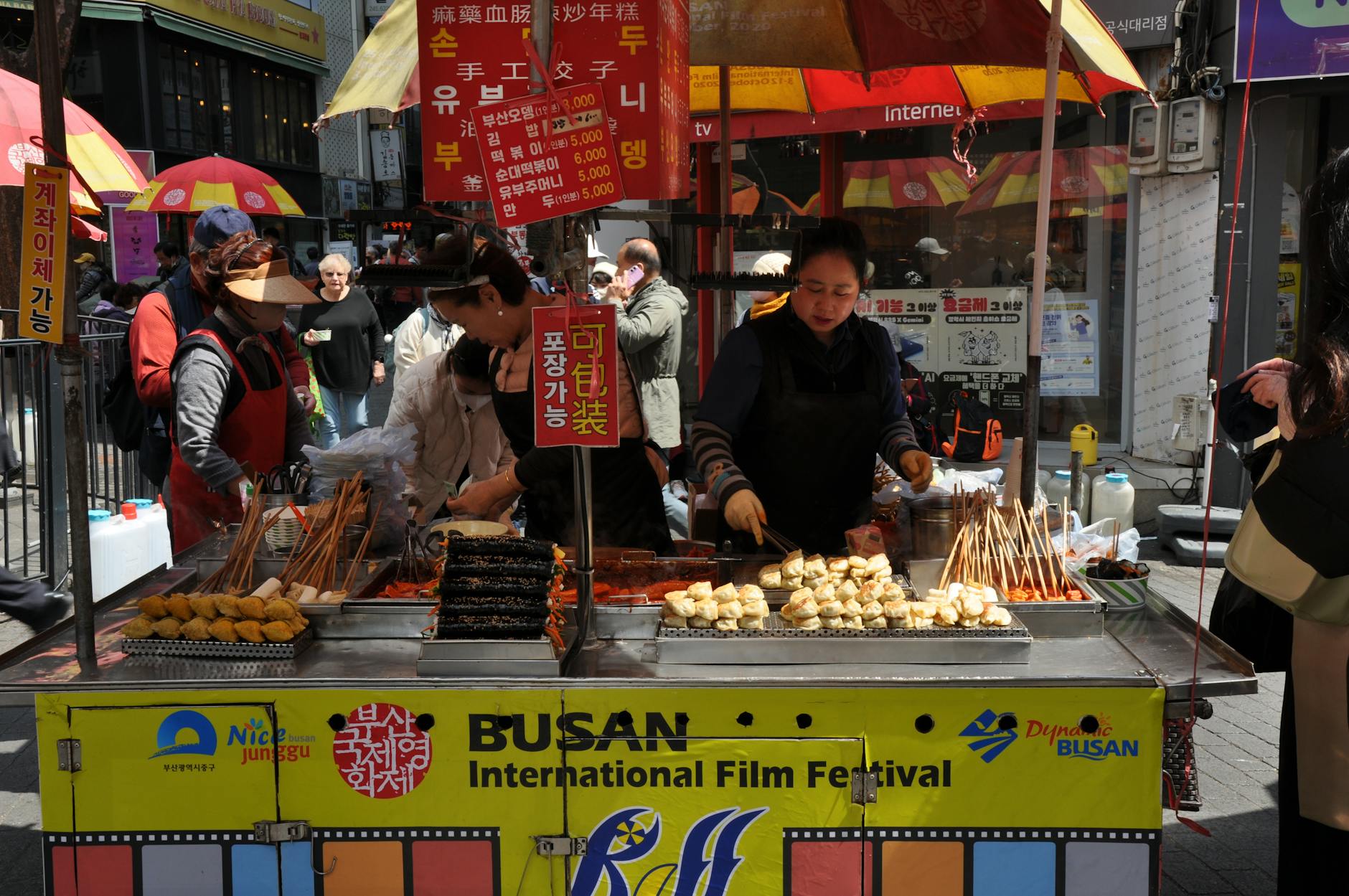
Busan should be treated as one of Korea's most satisfying eating cities, but not just because it has seafood. Seafood is the obvious entry point and absolutely worth pursuing, especially around Jagalchi and the wider port-facing districts. Still, the larger pleasure is how naturally food fits the city's geography. Market eating makes sense here. So do grilled fish, soups, sashimi-style meals, casual bars, beach-adjacent cafés, and late dinners after long transit-heavy days.
The city rewards one good seafood-centered meal more than five scattered snacks chosen only because they are famous online. Busan food is strongest when you let district and appetite line up. East-side Busan invites cafés, ocean-view breaks, and cleaner modern dining. Old-port Busan invites markets, seafood seriousness, and denser eating patterns. Seomyeon gives you metropolitan range. Trying to flatten those differences is one of the easiest ways to miss the city.
Getting Around
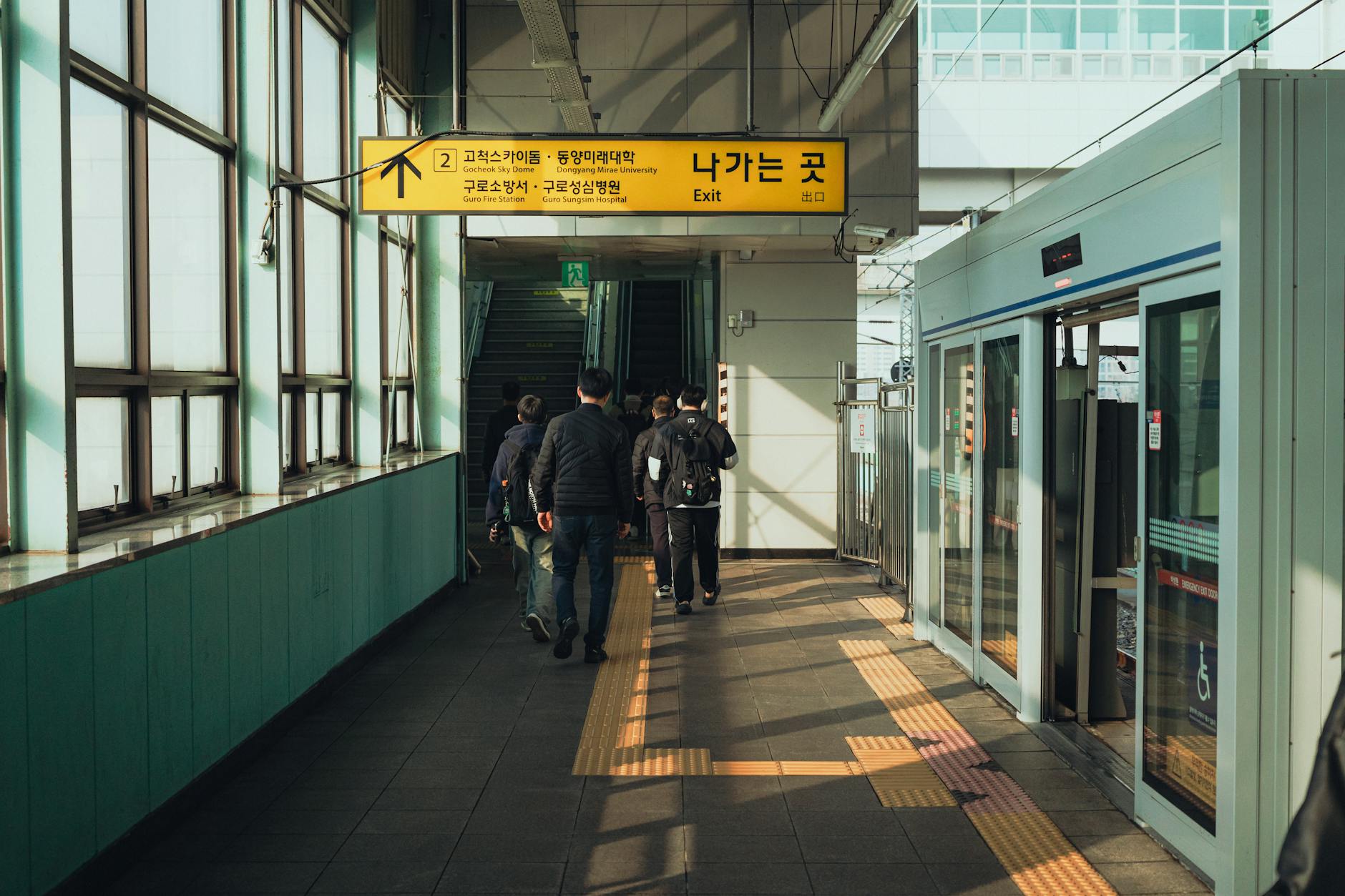
Busan is a transit city, but not a purely metro city. The metro matters because it keeps long district moves affordable and legible.[4][5] Taxis matter because certain transfers, hotel arrivals, and late-night returns are simply more rational that way. Buses matter more than some first-timers expect, especially for specific hills or coastal edges. Walking matters inside districts, not across the whole city.
The practical rule is simple: use the metro to change versions of Busan, then walk within the version you chose. Do not spend energy trying to prove that every move can be done in the purest possible way. A reasonable taxi at the right moment often preserves the whole day.
Where Busan Fits In A Korea Trip
Busan is one of the most important balancing cities in South Korea because it prevents the country from being read only through Seoul. Seoul is the capital, the central machine, the city of scale, density, and national concentration. Busan matters because it shows Korea from the sea: more stretched, more regionally specific, more coastal, and more openly shaped by topography and port logic. If a Korea trip includes both cities, the country usually becomes much more legible.
That role matters especially for first-time visitors who are tempted to make the whole trip a Seoul-plus-day-trips exercise. Without Busan, Korea can look like a highly efficient, highly centralized urban nation with mountains attached. Busan adds something different: beaches without resort emptiness, markets without heritage-fantasy packaging, working port identity, and a second city that is not trying to imitate the capital.
It is also one of East Asia's strongest secondary-city anchors because it lets a trip change tempo without going soft. The traveler can still have real urban days, strong food, transport clarity, and evening energy, but the visual and spatial logic are completely different. That is a major reason to come.
Busan Versus Seoul, Fukuoka, And Yokohama
Compared with Seoul, Busan is looser, longer, and more dependent on district choice. Seoul can absorb a sloppy day and still keep paying out because the density is so high. Busan is less forgiving. If you choose the wrong district combination, the day can dissolve into transfers. But when you edit well, Busan can feel more breathable and more physically memorable than the capital.
Compared with Fukuoka, Busan is rougher-edged, more dramatic in terrain, and more visibly organized by its port and coastline. Fukuoka is famously easy. Busan is easy only after you accept its stretched shape. The reward is greater variety and a stronger sense of a city that grew under geographic pressure rather than being neatly planned into place.
Compared with Yokohama, Busan feels less polished and more regionally forceful. Yokohama offers a highly composed harbor-city experience beside Tokyo. Busan is messier, more sprawling in its logic, more topographic, and often more exciting because the different parts of the city still pull in visibly different directions.
This is why Busan is so rewarding. It offers the pleasures of a harbor metropolis without smoothing away the friction that made it one.
First-Time Visitors Versus Repeat Visitors
First-time visitors usually arrive with too many pins and too little trust in district concentration. They want to prove they have seen Busan by touching east, west, coast, market, hill, and temple in one sweep. That instinct is understandable and usually destructive. The first visit works much better when it is clustered into coherent zones, even if that means "missing" some famous places.
Repeat visitors often start doing Busan properly because they no longer need the city to summarize itself. They choose a coast-heavy stay, or an old-port-heavy stay, or a Seomyeon-centered urban stay with one beach evening. They understand that returning to the same district at a better hour is often smarter than adding another district badly.
This is one reason Busan improves on return. It is not a city whose best qualities are exhausted by first-sight glamour. In fact, first-sight glamour can be part of the problem. The city gets stronger when you begin using it instead of merely sampling it.
Why One Proper Busan Day Matters
A weak Busan trip often consists of fragments. A beach here, a market there, one bridge view, one temple stop, one hurried hillside photo, then back on the metro. By the end, the traveler has seen a great deal and understood very little. One proper Busan day corrects that.
That full day allows one version of the city to become whole. If it is an east-side day, it can include real beach time, one second coastal element, a decent meal, and a proper evening atmosphere instead of just transit between coastlines. If it is an old-port day, it can include Jagalchi, Nampo, hillside texture, and market rhythm without panic. A proper day allows the district to reveal its own internal logic.
Most importantly, one full day lets the city stop feeling like an archipelago of attractions and start feeling like a metropolis with its own order. That shift is essential. Busan only becomes convincing once its stretched geography begins to make sense rather than merely taking time.
Why Haeundae Should Not Own The Whole Trip
Haeundae is one of Busan's easiest visual sells, and for good reason. The beach curve, towers, promenade, and broader east-coast polish give immediate payoff. The problem is not Haeundae itself. The problem is letting it stand in for Busan as a whole.
If you stay inside the Haeundae reading too completely, Busan can start to resemble a successful Asian beach-city district with excellent infrastructure. That is only one layer. The old-port west, Nampo and Jagalchi, Gamcheon's hillside history, Seomyeon's everyday metropolitan usefulness, and the bridge-facing evenings of Gwangalli all deepen the trip in different ways. Without some of that counterweight, Busan becomes too smooth and too narrow.
Haeundae should be part of a first trip, often an important part. It just should not monopolize the city's identity. Busan is more interesting precisely because it can move from polished coast to older commercial density so quickly.
How Busan Changes Over The Course Of A Stay
On arrival, Busan often feels larger and less coherent than expected. The coastline stretches farther than the map emotionally prepared you for, and the districts can seem unrelated. By the second day, once you have committed to one side of the city properly, Busan usually starts making more sense. The metro becomes less intimidating, taxi use becomes more strategic, and the district differences become a strength instead of a burden.
By the third day, many travelers stop trying to conquer the whole city and begin trusting the sequence. They know which side of town deserves morning, which deserves night, and which transfers are worth paying for. That is usually when Busan becomes most persuasive.
This is one of the city's deepest strengths. It often leaves a better final impression than first impression because the apparent fragmentation slowly turns into character.
What To Skip
Skip the temptation to do Haeundae, Gwangalli, Nampo, Gamcheon, and Haedong Yonggungsa as equal slices of one two-day trip. Skip reducing Busan to beaches if you came all the way here for a city. Skip reducing Busan to markets if you never give the coast time. Skip choosing a remote hotel because the view looked good in isolation. Skip the habit of calling every east-side district "Haeundae" and every west-side attraction "old Busan." The city is more precise than that.
Common Mistakes
- Staying in Haeundae while planning a heavily west-side trip.
- Treating Seomyeon as boring and then discovering too late that it would have solved the visit.
- Using Gamcheon as a quick photo errand rather than a separate historical and spatial experience.
- Underestimating how much taxi convenience can improve one badly connected transfer.
- Assuming Busan is a slower Seoul instead of a different type of city altogether.
My Blunt Advice
Busan is one of the few cities in the region where you can combine beach atmosphere, real port-city identity, hillside history, and strong food without the place losing its local logic. Respect that logic. Sleep somewhere that supports the version of Busan you actually want. Use one district at a time. Let the city stretch.
If you do that, Busan becomes memorable very quickly. Not because every sight is perfect, but because the whole place starts to feel physically and culturally specific: the bridge lights, the market smell, the sea air, the wide beach curves, the apartment walls climbing upward, the different tones of east and west, and the sense that this city grew out toward the water in a way Korea's capital never could.
That is the right first Busan. Not a conquest. A sequence.
Source Notes
- 1. Gimhae International Airport, official transport overview: [https://www.airport.co.kr/gimhaeeng/cms/frCon/index.do?MENU_ID=100](https://www.airport.co.kr/gimhaeeng/cms/frCon/index.do?MENU_ID=100)
- 2. Gimhae International Airport, official public-transport page with subway/light-rail transfer guidance: [https://www.airport.co.kr/gimhaeeng/cms/frCon/index.do?CONTENTS_NO=3&MENU_ID=110](https://www.airport.co.kr/gimhaeeng/cms/frCon/index.do?CONTENTS_NO=3&MENU_ID=110)
- 3. Gimhae International Airport, official taxi guide and fare examples: [https://www.airport.co.kr/gimhaeeng/cms/frCon/index.do?CONTENTS_NO=4&MENU_ID=110](https://www.airport.co.kr/gimhaeeng/cms/frCon/index.do?CONTENTS_NO=4&MENU_ID=110)
- 4. Busan Transportation Corporation, official English fare guide: [https://www2.humetro.busan.kr/homepage/english/page/subLocation.do?menu_no=100601040101](https://www2.humetro.busan.kr/homepage/english/page/subLocation.do?menu_no=100601040101)
- 5. Busan Transportation Corporation, official English urban-rail user guide: [https://www2.humetro.busan.kr/homepage/english/page/subLocation.do?menu_no=1006010501](https://www2.humetro.busan.kr/homepage/english/page/subLocation.do?menu_no=1006010501)
- 6. Visit Busan, official VISIT BUSAN PASS page under Preparing for a Trip: [https://www.visitbusan.net/en/index.do?menuCd=DOM_000000303012007000](https://www.visitbusan.net/en/index.do?menuCd=DOM_000000303012007000)
- 7. VISITKOREA, official Haeundae Beach page: [https://english.visitkorea.or.kr/svc/whereToGo/locIntrdn/rgnContentsView.do?menuSn=351&vcontsId=111053](https://english.visitkorea.or.kr/svc/whereToGo/locIntrdn/rgnContentsView.do?menuSn=351&vcontsId=111053)
- 8. Visit Busan, official Jagalchi Market page: [https://visitbusan.net/en/index.do?lang_cd=en&menuCd=DOM_000000301003001000&uc_seq=412](https://visitbusan.net/en/index.do?lang_cd=en&menuCd=DOM_000000301003001000&uc_seq=412)
- 9. Visit Busan, official Gamcheon Culture Village page: [https://www.visitbusan.net/index.do?lang_cd=en+&menuCd=DOM_000000301001001000&uc_seq=365](https://www.visitbusan.net/index.do?lang_cd=en+&menuCd=DOM_000000301001001000&uc_seq=365)
- 10. VISITKOREA, official Haedong Yonggungsa Temple page: [https://english.visitkorea.or.kr/svc/contents/contentsView.do?vcontsId=108618](https://english.visitkorea.or.kr/svc/contents/contentsView.do?vcontsId=108618)