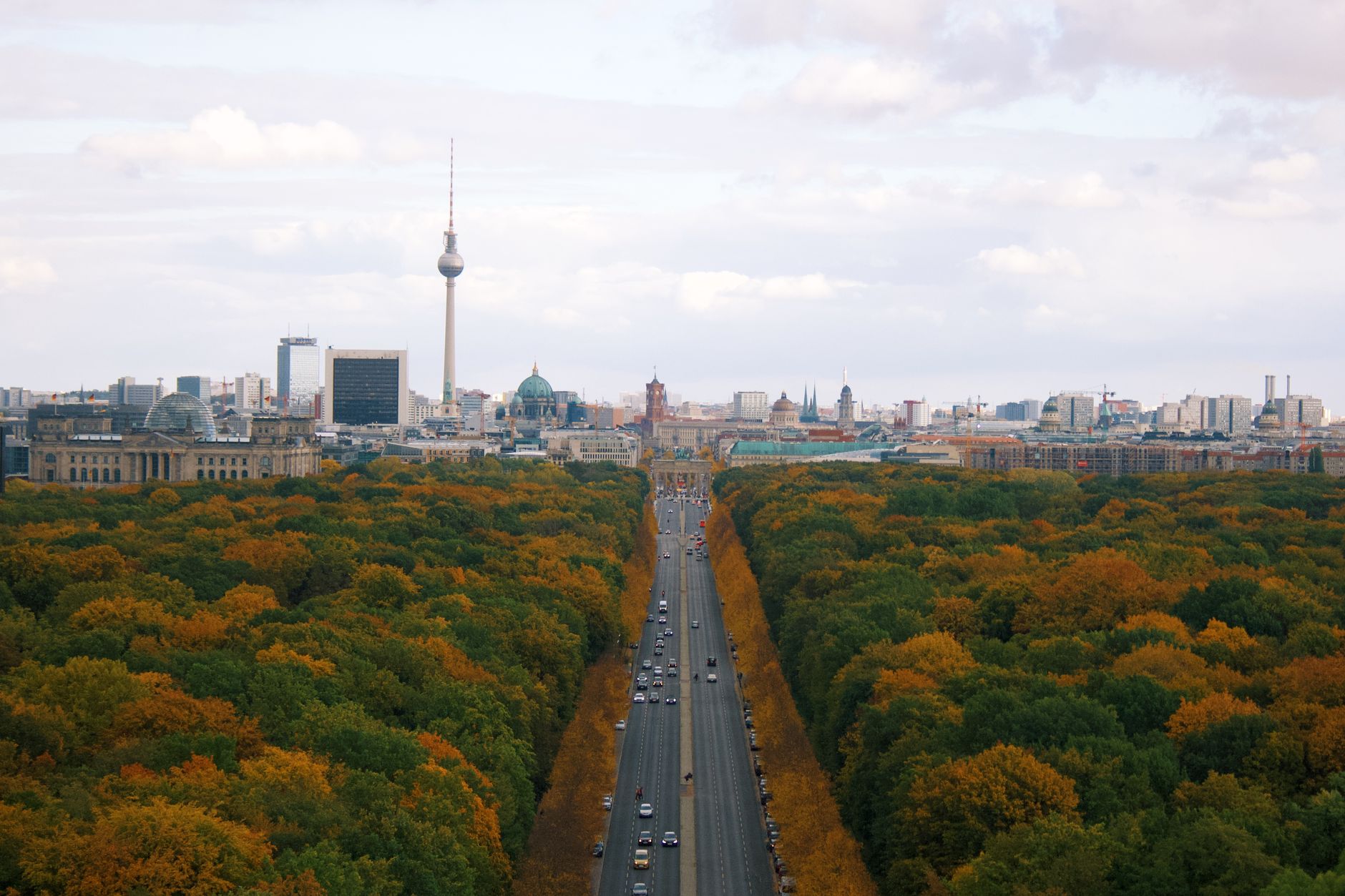
Berlin is not beautiful in the way visitors sometimes expect European capitals to be beautiful. It is not Paris with better beer or Vienna with graffiti. Berlin is wider, rougher, flatter, stranger, and more emotionally complicated. Its great sights are not just monuments; they are arguments with the twentieth century. Its neighborhoods are not decorative quarters; they are living social worlds with their own politics, rhythms, immigrant histories, nightlife codes, and local loyalties.
Start Here
That is why Berlin disappoints some visitors at first. They arrive with a three-day checklist — Brandenburg Gate, Reichstag, Museum Island, Berlin Wall, currywurst, maybe a club — and spend too much time crossing the city for isolated icons. Berlin rewards a different strategy. You need a historical spine, yes. But you also need neighborhood time: a morning in Mitte, a long walk along Bernauer Straße, a Kreuzberg market lunch, a Prenzlauer Berg café, a Tiergarten pause, a late drink in Neukölln, a day trip to Potsdam, or a slow afternoon in a lake, park, or canal-side beer garden.
Berlin is a city of visible ruptures: empire, Weimar modernity, Nazism, war destruction, division, socialism, Cold War capitalism, reunification, techno, migration, squats, start-ups, housing pressure, and memory culture. Yet the everyday city is also surprisingly relaxed. It has lakes, bike lanes, old apartment courtyards, Vietnamese restaurants, Turkish bakeries, excellent museums, smoky old bars, experimental galleries, flea markets, bookshops, techno temples, sprawling parks, and a public-transport system that makes the city workable despite its size.
This guide is designed for travelers who want more than “things to do in Berlin.” It explains where to stay, how the neighborhoods differ, how to group sights without wasting days on transit, what to book ahead, how to handle the museum landscape while the Pergamonmuseum is closed, how to approach nightlife without treating it like a theme park, what to skip, and how to see Berlin as a living city rather than a museum of trauma or a backdrop for nightlife mythology.
Berlin in one sentence: Berlin is a sprawling, historically loaded, culturally restless capital where memory, nightlife, museums, parks, immigrant food, and neighborhood life reward travelers who slow down, choose their base carefully, and resist turning the city into a checklist.
Quick Verdict
| Question | Answer |
|---|---|
| Best for | History, museums, Cold War sites, nightlife, contemporary art, architecture, parks, alternative culture, food markets, design, LGBTQ+ travel, solo travel, budget-conscious city breaks, and travelers who like cities with edges. |
| Not ideal for | Travelers who want a compact, polished old town; visitors who hate public transport; anyone expecting every famous sight to be visually romantic; travelers who dislike graffiti, nightlife noise, blunt service, big-city politics, or long walks between neighborhoods. |
| Ideal first visit | 4 full days. Three days gives you the essentials; 5 days lets you add Potsdam or more neighborhood time; a week is excellent if you want museums, nightlife, parks, food, and day trips without rushing. |
| Best months | May, June, September, and early October for weather and outdoor life. December is strong for Christmas markets. July and August are lively but busier. Winter is cold and gray, but good for museums, clubs, restaurants, and lower hotel prices. |
| Best first-timer base | Mitte for sightseeing convenience; Hackescher Markt/Museum Island for museums and central walks; Prenzlauer Berg for calm cafés and families; Kreuzberg/Neukölln for food and nightlife; Charlottenburg for comfort, shopping, and a more traditional western base. |
| Biggest planning mistake | Treating Berlin as compact. The map looks manageable, but Berlin is huge. Cluster your days by area: Mitte/Unter den Linden, Museum Island, Bernauer Straße, Kreuzberg/Neukölln, Charlottenburg, Potsdam, and lake/park time. |
| One thing to book ahead | Reichstag dome registration, popular restaurants, major temporary exhibitions, TV Tower timed tickets if you care about it, Philharmonie performances, and any guided tour with limited capacity. |
| One thing to leave unscheduled | A long neighborhood wander, canal-side drinks, a flea market morning, a Tiergarten pause, a Späti-and-park moment, or a late night that follows the city’s mood rather than a plan. |
| Best free pleasure | Brandenburg Gate at night, the Berlin Wall Memorial, East Side Gallery, Tempelhofer Feld, Tiergarten, canal walks in Kreuzberg, flea-market browsing, and watching neighborhood life from a café terrace. |
| Most important warning | Berlin is candid, spread out, and weather-sensitive. Wear real shoes, use transit, verify closures, and do not plan nightlife as though admission to famous clubs is guaranteed. |
The Move
Build your first Berlin trip around one memory-history day, one museum/monument day, one neighborhood-food day, and one open-air day. Berlin works best when each day has a theme and a geography. Do not bounce from Charlottenburg Palace to the East Side Gallery to the Reichstag to Neukölln dinner unless you enjoy losing time to trains.
Who Will Love Berlin?
You will probably love Berlin if you want:
- A city where history is not hidden behind pretty facades.
- Major museums, memorials, archives, and walking tours that genuinely deepen a trip.
- Neighborhoods with strong identities rather than one polished tourist center.
- Nightlife that ranges from old pubs and cocktail bars to techno, queer parties, experimental music, and late-late weekends.
- Parks, lakes, canals, cycling, beer gardens, and a surprising amount of outdoor life.
- Food shaped by German, Turkish, Vietnamese, Syrian, Israeli, Polish, Italian, Austrian, and global influences.
- A city that is comparatively informal, self-expressive, and tolerant of difference.
- A trip that can be budget-friendly by Western European capital standards if you choose lodging carefully.
You may struggle with Berlin if you want:
- A compact historic center like Prague, Florence, or Bruges.
- Polished service and seamless hospitality everywhere.
- Warm weather outside late spring and summer.
- A simple “top 10 attractions” trip with all sights within walking distance.
- A city that turns every historical trauma into an easy tourist narrative.
- A nightlife trip where famous-club entry is predictable.
Berlin is worth visiting because few cities help travelers feel the relationship between past and present so directly. It is educational without being only solemn, creative without being only trendy, and casual without being empty. The city asks more of visitors than many capitals. That is part of its value.
Berlin at a Glance
| Practical | Detail |
|---|---|
| Country | Germany |
| State | Berlin is both a city and one of Germany’s 16 federal states. |
| Language | German. English is widely used in hotels, museums, restaurants, start-up circles, nightlife, and tourist-facing businesses, but basic German greetings help. |
| Currency | Euro, written as € or EUR |
| Cards vs cash | Cards are much more accepted than they used to be, but Berlin still has cash-first pockets: older pubs, small bakeries, markets, Spätis, kiosks, clubs, and some casual restaurants. Carry cash. |
| Main airport | Berlin Brandenburg Airport, usually abbreviated BER. |
| Main train station | Berlin Hauptbahnhof, the central station. Other useful stations include Ostbahnhof, Südkreuz, Gesundbrunnen, Zoologischer Garten, Alexanderplatz, Friedrichstraße, and Ostkreuz. |
| Best airport default | The Airport Express FEX is usually the easiest public-transport default for central Berlin. DB states that FEX trains run from Berlin Hbf, Potsdamer Platz, and Südkreuz to BER, with the trip from Berlin Hbf taking up to 23 minutes on the fastest route.[4] |
| Airport ticket zone | BER is in fare zone C. Trips between BER and central Berlin require an ABC ticket, and paper tickets must be validated before travel.[3] |
| Public transit | U-Bahn, S-Bahn, trams, buses, regional trains, ferries, night buses, taxis, rideshare/taxi apps, bikes, and shared mobility. |
| Transit fares | BVG currently lists single tickets from €4.00, 24-hour tickets from €11.20, and tourist tickets such as the Berlin WelcomeCard from €28.50, with prices depending on zones and duration.[5] |
| Transit zones | A covers the inner city up to the S-Bahn Ring, B extends to the city boundary, and C covers surrounding areas such as Potsdam and BER Airport.[6][3] |
| Tourist transit card | The Berlin WelcomeCard includes unlimited public transport for AB or ABC plus discounts at many attractions; the ABC version covers BER Airport and Potsdam.[7] |
| Tap water | Safe to drink. Sparkling water is common in restaurants, but you can ask for tap water; responses vary by venue. |
| Electricity | Germany uses European plug types C and F, 230V. |
| Tipping | Round up or add roughly 5–10% for good service in restaurants and taxis. Hand the total amount to the server rather than leaving coins silently on the table. |
| Emergency number | 112 for emergencies. 110 for police. |
| Entry rules | Germany is in the Schengen Area. Non-EU travelers should check visa rules for their nationality. The EU’s Entry/Exit System is fully operational across Schengen countries as of 10 April 2026, and ETIAS for visa-exempt travelers is scheduled for the last quarter of 2026.[12][13] |
| Best planning app mix | Google Maps or Apple Maps for walking, BVG or VBB apps for public transport, DB Navigator for trains, Jelbi for shared mobility, Komoot for cycling/walks, and official attraction sites for tickets. |
2026 Visitor Notes
The biggest museum-specific issue for first-timers is the Pergamonmuseum closure. The Staatliche Museen zu Berlin says the Pergamonmuseum has been completely closed since 2023 and that a large part is scheduled to reopen on June 4, 2027.[8] Do not build a first Berlin trip around seeing the Pergamon Altar in the main museum. Museum Island is still very much worth visiting, especially for the Neues Museum, Altes Museum, Alte Nationalgalerie, Bode Museum, James-Simon-Galerie, Berlin Cathedral exterior/interior, and the riverfront, but expectations need updating.
The Reichstag dome is one of Berlin’s best free experiences, but it requires advance registration with the Bundestag.[10] Treat it like a timed attraction, not a casual walk-up.
The TV Tower is iconic but expensive compared with many Berlin experiences; Berlin.de lists adult admission from €28.50 and notes that the tower is not barrier-free for people with limited mobility.[11] Go if you want the classic above-the-city view, but do not make it your only Berlin panorama.
First-Timer Mistake
Staying “central” without understanding what central means. In Berlin, Mitte is central for monuments and museums, but it may not feel like the Berlin you imagined if you came for nightlife, cafés, galleries, or neighborhood life. For many travelers, the best trip is not staying next to the Brandenburg Gate. It is staying near the U-Bahn/S-Bahn in a neighborhood that matches your evenings.
How to Understand Berlin
Berlin is a capital, a former imperial city, a city of defeat and reconstruction, a divided Cold War symbol, a reunified national stage, and a neighborhood federation. Its shape is not intuitive for visitors, because the city does not have one tidy old center that contains everything.
To understand Berlin, hold five ideas at once:
- The city is huge. Berlin sprawls. It is easy to spend 30–45 minutes moving between neighborhoods that both feel “central.”
- The S-Bahn Ring matters. The Ringbahn encircles the inner city. Many locals use “inside the Ring” as a rough mental boundary for urban Berlin.
- East and West still matter, but not simplistically. Former East Berlin includes Mitte, Prenzlauer Berg, Friedrichshain, Lichtenberg, and beyond; former West Berlin includes Charlottenburg, Schöneberg, Kreuzberg, Wedding, Neukölln, and more. Reunification changed everything, but built form, transit, architecture, memory, and local identity still carry traces.
- Kieze matter more than landmarks. A Kiez is a local neighborhood pocket — the streets where people shop, drink coffee, walk dogs, and know their baker. Berliners can be deeply attached to their Kiez.
- Memory is part of daily life. Berlin does not confine difficult history to one museum. Memorials, plaques, Stolpersteine, wall traces, architecture, and empty spaces are everywhere.
Berlin’s Basic Layout
For visitors, Berlin is best understood as clusters:
| Zone | What it means for visitors |
|---|---|
| Mitte / Unter den Linden | Brandenburg Gate, Reichstag, Holocaust Memorial, Unter den Linden, Gendarmenmarkt, Museum Island access, government district, major monuments, and high sightseeing convenience. |
| Museum Island / Hackescher Markt | Museums, Berlin Cathedral, courtyards, shopping, restaurants, nightlife-lite, and one of the best central bases for first-timers who want culture and walking access. |
| Alexanderplatz / Nikolaiviertel | TV Tower, transit hub, GDR-era scale, shopping, and practical connections. Useful, not always charming. |
| Prenzlauer Berg | Cafés, parks, restored old apartment blocks, families, brunch, boutiques, Kollwitzkiez, Helmholtzkiez, and calmer nights than Kreuzberg or Neukölln. |
| Friedrichshain | East Side Gallery, RAW-Gelände, clubs, bars, Boxhagener Platz, younger energy, and fast connections to the east and center. |
| Kreuzberg | Canals, Turkish markets, street food, bars, politics, nightlife, Görlitzer Park, Bergmannkiez, and some of Berlin’s best neighborhood wandering. |
| Neukölln | Weserstraße nightlife, cafés, immigrant food, Tempelhofer Feld access, Körnerpark, edge, value, and a more local/late-night version of Berlin. |
| Charlottenburg / City West | Kurfürstendamm, KaDeWe nearby, Savignyplatz, Charlottenburg Palace, old western elegance, good hotels, restaurants, shopping, and quieter comfort. |
| Schöneberg | LGBTQ+ history, bars, Winterfeldtmarkt, residential streets, strong transit, David Bowie/Iggy Pop associations, and a mature local feel. |
| Tiergarten / Potsdamer Platz | Parkland, embassies, Philharmonie, Kulturforum, modern redevelopment, family-friendly hotels, and good access to Mitte and City West. |
| Wedding / Moabit | Better value, multicultural food, less polished streets, good transit pockets, and strong options for repeat visitors or longer stays. |
| Treptow / Köpenick | River walks, parks, Soviet War Memorial, lakes, old-town Köpenick, and outdoor Berlin. Best after you have covered the core. |
| Potsdam | Not Berlin, but essential if you have a day for palaces, parks, Prussian history, and a different rhythm. |
The City’s Rhythm
Berlin is not an early-polished city. Mornings can feel slow outside business areas. Cafés and bakeries matter, but the city comes into itself through the day: museums and monuments by late morning, lunches that stretch, parks in the afternoon, canal beers in warm weather, dinners later than in much of Germany, bars late, clubs very late.
A good Berlin day often looks like this:
- Morning: Major historical sights, a museum, a walking tour, or a market.
- Lunch: Casual neighborhood meal, market hall, Turkish, Vietnamese, bakery, currywurst, or a sit-down German meal.
- Afternoon: Park, canal, second museum, architecture walk, shopping, gallery, or hotel break.
- Evening: Neighborhood dinner, bar crawl, theater, concert, beer garden, Späti drink, or club attempt.
- Late: If you are clubbing, do not treat midnight as late. Berlin’s nightlife calendar often runs deep into the morning or weekend.
Sunday is special. Many shops are closed, but flea markets, parks, brunches, museums, cafés, and lake trips can be excellent. Plan shopping for other days.
Berlin’s Central Contrasts
Berlin is compelling because contradictions sit in public:
- Official memory vs everyday life: Memorials and government buildings sit beside tourists, commuters, offices, school groups, and cyclists.
- Reunified capital vs local Kieze: National institutions are in Mitte, but local identity lives in neighborhood pockets.
- Grit vs gentrification: Formerly cheap, experimental neighborhoods now face rising rents, luxury redevelopment, and cultural displacement.
- Freedom vs rules: Berlin can look anarchic, but Germany still has rules: ticket validation, bike lanes, quiet hours, waste sorting, bureaucracy, and punctuality in some contexts.
- Nightlife myth vs real club culture: The famous club scene is not a zoo for tourists. It is selective, community-based, music-driven, and often strict about photography and behavior.
- Flat terrain vs long distances: Berlin is easy on the knees but hard on the clock.
Local Logic
Berlin is not a city to “finish.” It is a city to choose. Pick the version of Berlin you came for — memory, museums, nightlife, design, food, architecture, parks, Cold War history, queer culture, or neighborhoods — and plan around that. A trip that tries to do everything will feel strangely thin.
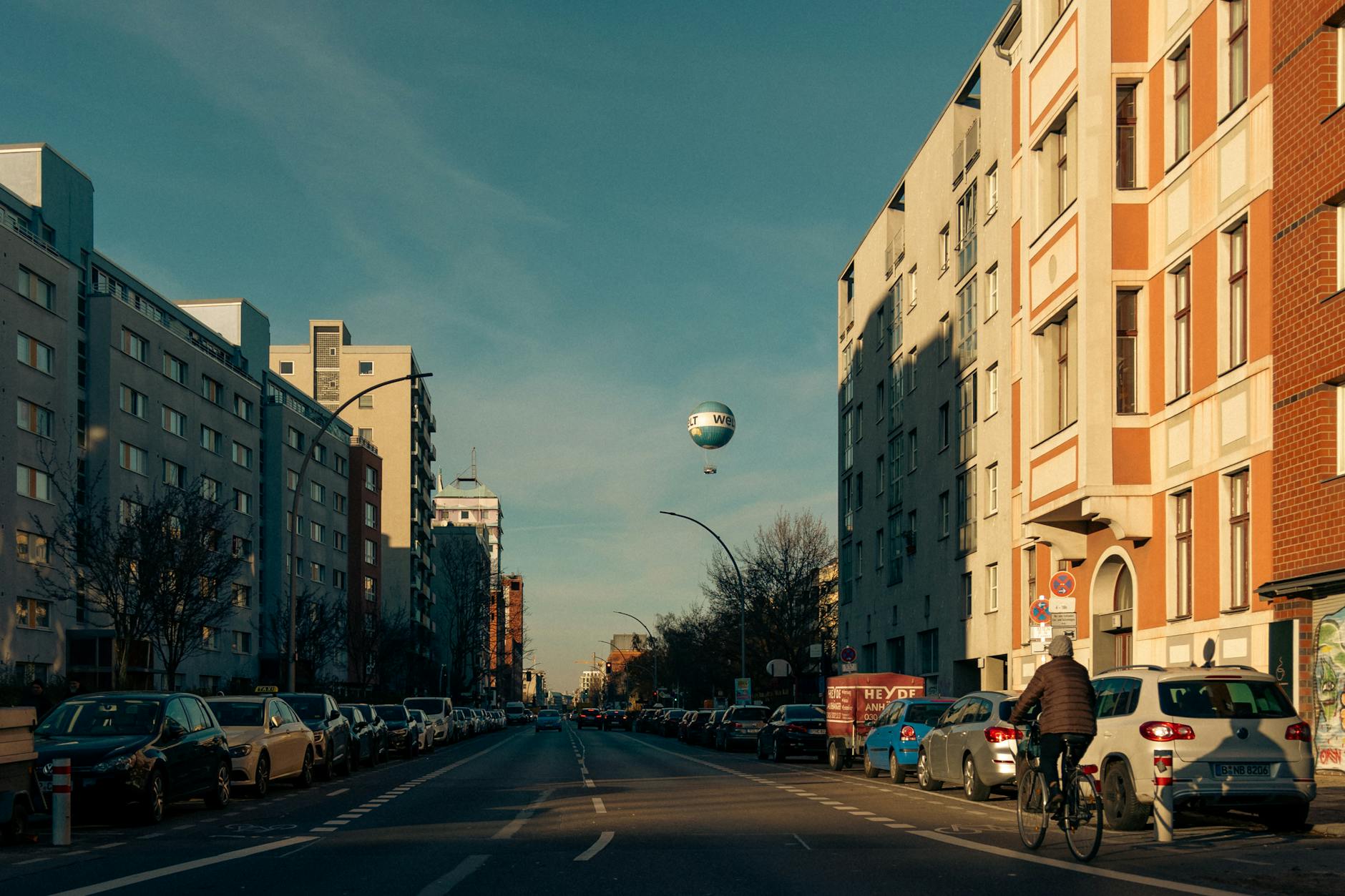
Best Time to Visit Berlin
Berlin is a four-season city, but weather changes the trip dramatically. The same city that feels gray and severe in February can feel loose, green, and generous in June.
The Short Answer
| Traveler type | Best time |
|---|---|
| Best overall first visit | May, June, September, early October |
| Best for parks, lakes, canals, beer gardens | Late May through September |
| Best for museums and nightlife | Year-round; especially useful in winter when outdoor sightseeing is less appealing |
| Best value | January, February, early March, November, and some non-market December dates |
| Best for Christmas markets | Late November through December |
| Best for long daylight | June and July |
| Best for crowd-sensitive travelers | April, early May, September weekdays, October, and winter outside holidays |
| Worst for weather-sensitive travelers | January, February, and much of March: cold, dark, wet, and often gray |
Spring: March to May
Spring is uneven but exciting. March can still feel wintry. April swings between rain, sun, and cold wind. May is often the first truly great Berlin month: parks fill, café terraces reopen, and the city begins to feel social again.
Best for: first-timers, museum-plus-neighborhood trips, cycling, parks, street photography, and travelers who want the city awake but not yet in full summer mode.
Watch out for: changeable weather, public holidays, and the temptation to pack too lightly.
Summer: June to August
Summer is Berlin’s outdoor season. The city sprawls into parks, lakes, canals, courtyards, open-air cinemas, beer gardens, rooftops, and festivals. Long daylight gives you room for slow afternoons and late evenings.
Best for: parks, lakes, cycling, nightlife, outdoor bars, families, street food, festivals, and travelers who like informal urban life.
Watch out for: higher hotel prices, busy weekends, occasional heat, non-air-conditioned older hotels/apartments, and lake crowds.
Fall: September to November
September may be Berlin’s best month. The weather is often pleasant, outdoor life continues, and the city feels less chaotic than high summer. October can be beautiful, especially in parks and cemeteries. November is low, gray, and useful mostly for indoor culture and value.
Best for: first-timers, food, museums, galleries, photography, parks, and travelers who want a city trip without peak summer demand.
Watch out for: shorter days after October, chilly evenings, and damp weather in November.
Winter: December to February
Berlin winter is not glamorous, but it has strengths: Christmas markets, museums, performances, restaurants, clubs, lower hotel prices, and a moody atmosphere that suits certain history-focused trips. January and February can be cold and gray enough to test your enthusiasm.
Best for: museums, history, nightlife, budget hotels, Christmas markets, classical music, theater, and travelers who do not need sunny photos.
Watch out for: icy wind, early darkness, limited outdoor comfort, and the emotional weight of doing heavy history sites in bleak weather.
Month-by-Month Snapshot
| Month | What to expect | Verdict |
|---|---|---|
| January | Cold, dark, low-season hotels, strong museums and nightlife. | Good value if you accept winter. |
| February | Still cold and gray, but culture-heavy and less crowded. | Best for indoor Berlin. |
| March | Transitional, windy, slowly waking up. | Fine for value; not pretty every day. |
| April | Blossoms, rain, sudden sun, improving outdoor life. | Good shoulder month with layers. |
| May | One of the best months: parks, cafés, mild weather. | Excellent. |
| June | Long days, outdoor bars, festivals, warm evenings. | Excellent but busier. |
| July | Peak outdoor city, school-holiday energy, lake days. | Great if you like summer crowds. |
| August | Warm, lively, international, sometimes muggy. | Good, but book lodging carefully. |
| September | Often ideal: warm-ish, less crowded, active. | One of the best months. |
| October | Autumn color, museums, crisp walks. | Very good. |
| November | Gray, cheaper, indoor-focused. | Good only with the right expectations. |
| December | Christmas markets, lights, cold, holiday travel. | Strong for seasonal atmosphere. |
The Move
If you visit in summer, build at least one day around water or green space: Tiergarten, Tempelhofer Feld, Landwehr Canal, Treptower Park, Müggelsee, Wannsee, or a beer garden. Berlin without its outdoor life is only half the city.
How Many Days You Need
Berlin can be sampled in a weekend, but it cannot be understood in a weekend. The city’s size and historical complexity make pacing essential.
| Time | What you can realistically do |
|---|---|
| 1 day | Brandenburg Gate, Reichstag exterior, Holocaust Memorial, Unter den Linden, Museum Island exterior or one museum, and one evening neighborhood. A taste, not Berlin. |
| 2 days | One classic Mitte day plus one Wall/Kreuzberg/Friedrichshain or museum-heavy day. Good for a stopover, not enough for depth. |
| 3 days | Best minimum first visit: major historical spine, Museum Island or a major museum, Berlin Wall Memorial, Kreuzberg/Neukölln or Prenzlauer Berg, and one evening out. |
| 4 days | Ideal first visit for many travelers: enough time for sights, museums, neighborhoods, food, nightlife, and a park/canal pause. |
| 5 days | Adds Potsdam or a deeper special-interest day without sacrificing Berlin itself. |
| 1 week | Excellent for travelers who want layered Berlin: museums, clubs, parks, day trips, galleries, local neighborhoods, and slower mornings. |
| Longer | Best for language study, remote work, research, architecture, music, art, nightlife, or deep neighborhood exploration. |
Best First-Visit Length
Four full days is the clean answer. It lets you do:
- Classic Mitte and government district.
- Museum Island plus Unter den Linden or Jewish Museum.
- Berlin Wall, Cold War, Kreuzberg/Friedrichshain.
- Charlottenburg/Prenzlauer Berg/Tempelhofer Feld or a flexible neighborhood day.
Add a fifth day for Potsdam.
When to Add Extra Days
Add time if you care about:
- Museum Island and major museums.
- World War II and Cold War history.
- Nightlife, because late nights break next-day sightseeing.
- Architecture and urban planning.
- Day trips to Potsdam, Sachsenhausen, Spreewald, Leipzig, or Dresden.
- Parks, lakes, cycling, and summer outdoor life.
- Food beyond the central tourist areas.
When Not to Overstay
If you want a classic old-town European trip, Berlin may feel too spread out after two or three days. Pair it with Prague, Dresden, Hamburg, Munich, Copenhagen, or Vienna if you want contrast.
Where to Stay in Berlin
Berlin hotel choice is less about “closest to the center” and more about which center. The city has several visitor centers: government/Mitte, Museum Island/Hackescher Markt, Alexanderplatz, City West/Charlottenburg, Kreuzberg/Neukölln nightlife, Prenzlauer Berg café life, and Potsdamer Platz/Kulturforum.
The Short Answer
For a first visit, stay in Mitte or around Hackescher Markt/Museum Island if sightseeing and museums are the priority. Stay in Prenzlauer Berg if you want calmer neighborhood charm. Stay in Kreuzberg or Neukölln if food, bars, and nightlife matter more than being beside monuments. Stay in Charlottenburg/City West if you want comfort, shopping, restaurants, and a more polished western base.
Neighborhood Decision Tree
| Traveler priority | Best area |
|---|---|
| Walk to Brandenburg Gate, Reichstag, Unter den Linden | Mitte / Brandenburger Tor / Friedrichstraße |
| Museums and central sightseeing | Hackescher Markt / Museum Island / Rosenthaler Platz |
| First visit with easy transit | Mitte, Alexanderplatz, Potsdamer Platz, Hackescher Markt |
| Food and nightlife | Kreuzberg, Friedrichshain, Neukölln |
| Calm cafés and families | Prenzlauer Berg |
| Luxury hotels | Mitte near Brandenburg Gate, Potsdamer Platz, Charlottenburg/Kurfürstendamm |
| Shopping | Charlottenburg / Kurfürstendamm / City West |
| LGBTQ+ nightlife and history | Schöneberg, Kreuzberg, Neukölln depending on scene |
| Budget lodging | Wedding, Moabit, Neukölln, Friedrichshain, outer Kreuzberg, parts of Charlottenburg |
| Club-focused trip | Friedrichshain, Kreuzberg, Neukölln, or near good night transit |
| Best for older travelers | Charlottenburg, Mitte, Potsdamer Platz, Prenzlauer Berg near transit |
| Best with kids | Prenzlauer Berg, Tiergarten/Potsdamer Platz, Charlottenburg, quieter Mitte |
| Best for repeat visitors | Kreuzberg, Neukölln, Wedding, Moabit, Schöneberg, Prenzlauer Berg |
Area Profiles
Mitte / Brandenburg Gate / Friedrichstraße
Best for: first-time sightseeing, government district, classic monuments, luxury hotels, business travelers, short stays.
Vibe: formal, central, monument-heavy, less neighborhood-y at night depending on the exact block.
Why stay here: You can walk to Brandenburg Gate, Reichstag, Holocaust Memorial, Unter den Linden, Museum Island, Gendarmenmarkt, and parts of the government district. For a two- or three-day trip, this convenience matters.
Why not: It can feel sterile or touristy, and evenings may be less interesting than Kreuzberg, Neukölln, Prenzlauer Berg, or Charlottenburg.
Perfect for: first-timers who want the least logistical friction.
Avoid if: you came mainly for nightlife, local cafés, or alternative Berlin.
Hackescher Markt / Museum Island / Rosenthaler Platz
Best for: museums, restaurants, cafés, shopping, central walks, first-timers who still want energy.
Vibe: central but livelier than the government district; polished in places, touristy in places, useful overall.
Why stay here: Strong transit, easy Museum Island access, good restaurants, courtyards, galleries, boutiques, and walkability to Mitte sights.
Why not: Hotel prices can be high, nightlife is more polished than raw, and some streets are heavily touristed.
Perfect for: travelers who want a central base that does not go dead after dinner.
Alexanderplatz
Best for: transit convenience, budget-to-midrange hotels, first visits where mobility matters.
Vibe: busy, commercial, GDR-scale, practical, not conventionally charming.
Why stay here: Excellent transit hub. Easy connections to the airport, Museum Island, Prenzlauer Berg, Friedrichshain, and much of the city.
Why not: Alexanderplatz itself can feel bleak, windy, and generic. Stay here for logistics, not atmosphere.
Perfect for: travelers who prioritize transit over romance.
Prenzlauer Berg
Best for: families, couples, brunch, cafés, relaxed evenings, pretty streets, longer stays.
Vibe: restored old buildings, leafy streets, playgrounds, boutiques, restaurants, and a gentler version of Berlin.
Why stay here: It feels local and pleasant while still connected by tram, U-Bahn, and S-Bahn. Kollwitzplatz and Helmholtzplatz are easy to love.
Why not: It can feel too polished for travelers chasing Berlin’s rougher edges, and it is not walking distance to the main monuments.
Perfect for: travelers who want neighborhood comfort after daytime sightseeing.
Friedrichshain
Best for: bars, clubs, younger travelers, East Side Gallery, budget-ish hotels, nightlife.
Vibe: energetic, loud in pockets, casual, late-night, and still marked by former East Berlin architecture and post-reunification culture.
Why stay here: Good for nightlife and access to both Kreuzberg and Mitte. Boxhagener Platz, Simon-Dach-Straße, RAW-Gelände, and the East Side area are major draws.
Why not: Noise, party crowds, and some rough edges. Not ideal for light sleepers unless hotel location is carefully chosen.
Perfect for: nightlife travelers who still want transit access.
Kreuzberg
Best for: food, bars, canals, political history, street culture, markets, nightlife, repeat visitors.
Vibe: diverse, lively, creative, gentrifying, sometimes gritty, often excellent.
Why stay here: Kreuzberg gives many visitors the Berlin they came for: canal walks, Turkish food, bars, independent shops, street life, and easy access to Neukölln and Friedrichshain.
Why not: Some blocks are noisy, some feel scruffy, and it is not the easiest sightseeing base for monuments.
Perfect for: confident city travelers who want evenings close to home.
Neukölln
Best for: bars, cafés, immigrant food, budget lodging, repeat visitors, nightlife, longer stays.
Vibe: mixed, late-night, creative, diverse, uneven block by block.
Why stay here: Great food, bars, coffee, Tempelhofer Feld access, and a less polished feel than Prenzlauer Berg or Mitte.
Why not: Not every street feels comfortable for every traveler, and sightseeing commutes are longer. Choose near good U-Bahn access.
Perfect for: travelers who already like big, messy cities.
Charlottenburg / Kurfürstendamm / City West
Best for: comfort, shopping, classic hotels, older travelers, restaurants, western Berlin history, Charlottenburg Palace.
Vibe: elegant, established, less trendy, more traditional, with pockets of excellent dining and shopping.
Why stay here: Good hotels, broad sidewalks, shopping around Kurfürstendamm, KaDeWe access in nearby Schöneberg, Savignyplatz restaurants, and calmer nights.
Why not: Farther from eastern nightlife and some of Berlin’s most famous Cold War/alternative neighborhoods.
Perfect for: travelers who want Berlin with more comfort and less edge.
Schöneberg
Best for: LGBTQ+ travelers, markets, residential calm, good transit, nightlife without the full Neukölln/Kreuzberg intensity.
Vibe: mature, diverse, queer-historic, residential, practical.
Why stay here: Excellent base for repeat visitors. Winterfeldtmarkt, Nollendorfplatz, Akazienkiez, and good U-Bahn links make it quietly strong.
Why not: Not an obvious first-timer sightseeing base.
Perfect for: travelers who want local Berlin with strong transit and good evenings.
Potsdamer Platz / Tiergarten
Best for: families, business travelers, Philharmonie/Kulturforum, central comfort, green space.
Vibe: modern, planned, corporate in parts, convenient, close to Tiergarten.
Why stay here: Good hotels, easy access to both Mitte and City West, near Kulturforum and parks.
Why not: Potsdamer Platz can feel commercial and less intimate than Kiez-based neighborhoods.
Perfect for: travelers who want predictable logistics and easy transport.
Common Booking Mistakes
- Booking far outside the Ring to save money, then losing time and energy every day.
- Assuming “Mitte” always means charming. Some parts are excellent; others are bland.
- Staying in a party area with kids or jet lag.
- Ignoring transit lines. Being near the right U-Bahn/S-Bahn is more important than being a few blocks closer on a map.
- Booking an apartment in an old building without elevator details.
- Skipping air conditioning questions in July/August.
- Choosing Alexanderplatz for atmosphere rather than transit.
- Planning to taxi everywhere. Distances and traffic make transit smarter.
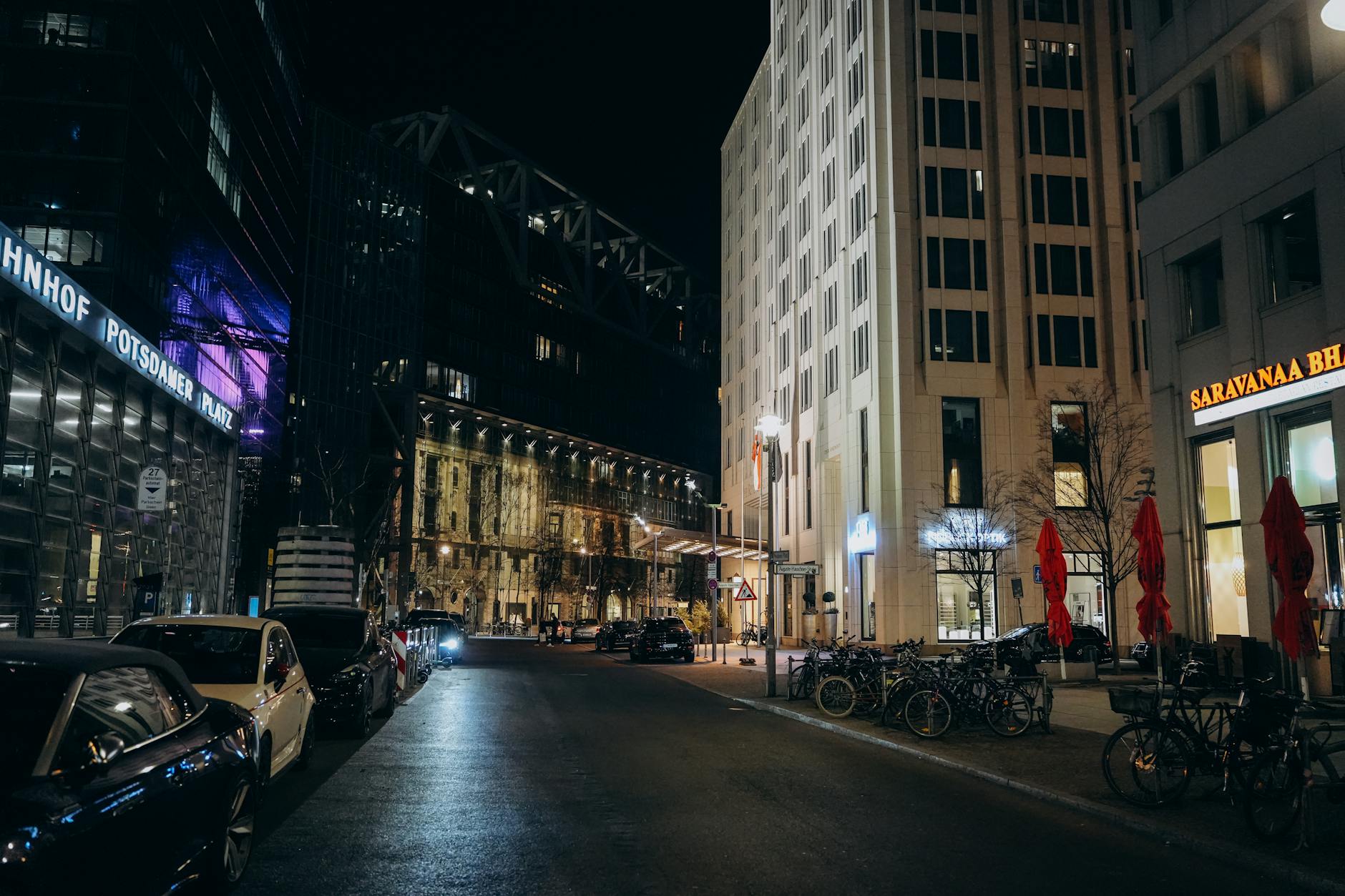
Neighborhood Guide
Berlin’s neighborhoods are not side content. They are the trip. Below are the areas most visitors should understand, with practical ways to use them.
Mitte: Monuments, Museums, and the National Stage
One-sentence identity: Mitte is Berlin’s formal center: monuments, museums, government buildings, boulevards, memorials, and the city’s most obvious first-timer route.
Best for: first-day orientation, Reichstag, Brandenburg Gate, Museum Island, Unter den Linden, Holocaust Memorial, Gendarmenmarkt, and history walks.
Best time: morning for major sights; evening for Brandenburg Gate and Unter den Linden lights.
How long: half day to two full days depending on museums.
Pair it with: Tiergarten, Potsdamer Platz, Hackescher Markt, or a Spree boat ride.
Skip if: you have already done the classic sights and want neighborhood life.
One Perfect Walk: Classic Mitte
Start at Reichstag after pre-booked dome access or exterior viewing. Walk to Brandenburg Gate, then south to the Memorial to the Murdered Jews of Europe. Continue toward Potsdamer Platz or loop east along Unter den Linden toward Bebelplatz, Humboldt Forum, Berlin Cathedral, and Museum Island. End at Hackescher Markt for food, drinks, or transit.
Museum Island and Hackescher Markt: Culture With a Social Edge
One-sentence identity: Museum Island is Berlin’s cultural core, while Hackescher Markt gives it restaurants, courtyards, shops, and evening life.
Best for: museums, architecture, central cafés, shopping, courtyards, photography.
Best time: museum opening for serious visits; late afternoon for wandering; evening for Hackescher Markt.
How long: half day for one museum and a walk; full day for multiple museums.
Pair it with: Unter den Linden, Nikolaiviertel, Alexanderplatz, Prenzlauer Berg.
Local logic: Do not attempt every museum in one day unless you enjoy museum fatigue. Pick one anchor museum and build a lighter day around it.
One Perfect Walk: Island to Courtyards
Start at Berlin Cathedral and the Lustgarten. Visit one Museum Island museum, then cross toward James-Simon-Galerie and walk to Hackesche Höfe. Browse courtyards, continue toward Auguststraße for galleries, and end around Rosenthaler Platz or Torstraße for dinner.
Prenzlauer Berg: Cafés, Parks, and Restored Berlin
One-sentence identity: Prenzlauer Berg is the pretty, calmer, family-friendly Berlin of cafés, playgrounds, old apartment blocks, brunch, boutiques, and leafy squares.
Best for: families, couples, coffee, brunch, Sunday markets, pleasant walks, slower mornings.
Best time: late morning to late afternoon; Sunday around Mauerpark if you like crowds and flea-market energy.
How long: half day.
Pair it with: Berlin Wall Memorial, Mitte, Alexanderplatz, or Friedrichshain.
Worth it? Yes if you want to feel a residential Kiez. Less essential if your trip is only two days and history is the priority.
One Perfect Walk: Kollwitzplatz to Mauerpark
Start with coffee near Kollwitzplatz, wander side streets toward Wasserturm, continue through Helmholtzkiez, and finish at Mauerpark or Kulturbrauerei. On Sunday, expect crowds and a more performative scene.
Kreuzberg: Canals, Food, Bars, and Politics
One-sentence identity: Kreuzberg is one of Berlin’s great urban neighborhoods: multicultural, political, food-rich, nightlife-heavy, canal-lined, and constantly changing.
Best for: Turkish food, canal walks, bars, casual restaurants, markets, street life, nightlife, and repeat visitors.
Best time: afternoon through late evening.
How long: half day to full day.
Pair it with: Friedrichshain via Oberbaumbrücke, Jewish Museum, Tempelhofer Feld, Neukölln.
Safety note: Normal big-city awareness is enough in most visitor areas, but watch bikes, late-night intoxication, and your belongings in crowded nightlife pockets.
One Perfect Walk: Canal and Market Kreuzberg
Start at Kottbusser Tor or Görlitzer Bahnhof depending on comfort level. Walk to the Landwehr Canal, continue along the water toward Admiralbrücke, browse food options around Graefekiez, and if it is a market day, work in the Turkish market on Maybachufer. End with dinner or bars around Oranienstraße, Graefestraße, or across the canal in Neukölln.
Friedrichshain: Wall, Clubs, and East-Side Energy
One-sentence identity: Friedrichshain is a former East Berlin district known to visitors for the East Side Gallery, bars, clubs, casual restaurants, and a younger late-night energy.
Best for: East Side Gallery, nightlife, bars, Boxhagener Platz, RAW-Gelände, street photography.
Best time: late afternoon into night; Sunday flea market at Boxhagener Platz.
How long: half day.
Pair it with: Kreuzberg via Oberbaumbrücke, Karl-Marx-Allee, Treptower Park.
First-timer mistake: Seeing only the East Side Gallery and leaving. Walk deeper into the neighborhood if you want its actual rhythm.
One Perfect Walk: East Side to Boxi
Start at the East Side Gallery, cross or admire Oberbaumbrücke, then return into Friedrichshain and head toward RAW-Gelände. Continue to Boxhagener Platz for cafés, dinner, or bars.
Neukölln: Late-Night Local Berlin
One-sentence identity: Neukölln is a diverse, uneven, energetic district of bars, cafés, immigrant food, creative spaces, and strong local texture.
Best for: nightlife, cafés, Middle Eastern/Turkish food, budget eating, Tempelhofer Feld, repeat visitors.
Best time: late afternoon to late night; daytime for Tempelhofer Feld or Körnerpark.
How long: half day, or an evening.
Pair it with: Kreuzberg, Tempelhofer Feld, Schöneberg.
Who should avoid it: first-timers who want polished, quiet, low-friction evenings.
One Perfect Walk: Tempelhof to Weserstraße
Start with a walk or bike ride on Tempelhofer Feld, exit toward Schillerkiez, have coffee or dinner, then drift toward Weserstraße for bars. Keep plans loose and choose blocks based on your comfort and energy.
Charlottenburg and City West: Elegant, Comfortable, Underrated
One-sentence identity: Charlottenburg is the old western Berlin of boulevards, shopping, restaurants, theaters, galleries, and palace culture.
Best for: comfortable hotels, shopping, older travelers, restaurants, Charlottenburg Palace, Savignyplatz, photography, architecture.
Best time: afternoon and evening; palace visits earlier.
How long: half day to full day.
Pair it with: Kaiser Wilhelm Memorial Church, KaDeWe, Tiergarten, Schöneberg.
Worth it? Yes, especially for travelers who want to understand that Berlin is not only Mitte and Kreuzberg.
One Perfect Walk: Palace to Savignyplatz
Visit Charlottenburg Palace and gardens, then transit or walk east toward Savignyplatz. Browse bookshops, galleries, and side streets, then dinner around Savignyplatz or Kantstraße.
Schöneberg: Queer History, Markets, and Residential Ease
One-sentence identity: Schöneberg is a mature, diverse, LGBTQ+-historic district with good markets, bars, restaurants, and transit.
Best for: queer travelers, markets, restaurants, local life, repeat visitors, quieter lodging.
Best time: Saturday for Winterfeldtmarkt; evenings around Nollendorfplatz/Akazienkiez.
How long: half day or evening.
Pair it with: Charlottenburg, Tiergarten, Potsdamer Platz, Kreuzberg.
One Perfect Walk: Market to Akazienkiez
Start at Winterfeldtmarkt if market day, explore around Nollendorfplatz, then walk toward Akazienstraße for cafés, shops, and dinner.
Tiergarten and Kulturforum: Green Space and High Culture
One-sentence identity: Tiergarten gives Berlin breathing room; Kulturforum adds some of the city’s most important art and music venues.
Best for: park walks, Philharmonie, Gemäldegalerie, Neue Nationalgalerie, families, central decompression.
Best time: sunny afternoons, pre-concert evenings, museum days.
How long: two hours to a half day.
Pair it with: Brandenburg Gate, Potsdamer Platz, Charlottenburg.
One Perfect Walk: Gate to Garden
Start at Brandenburg Gate, enter Tiergarten, walk toward the Soviet War Memorial and Victory Column, then loop south toward Kulturforum or Café am Neuen See if you want a beer-garden pause.
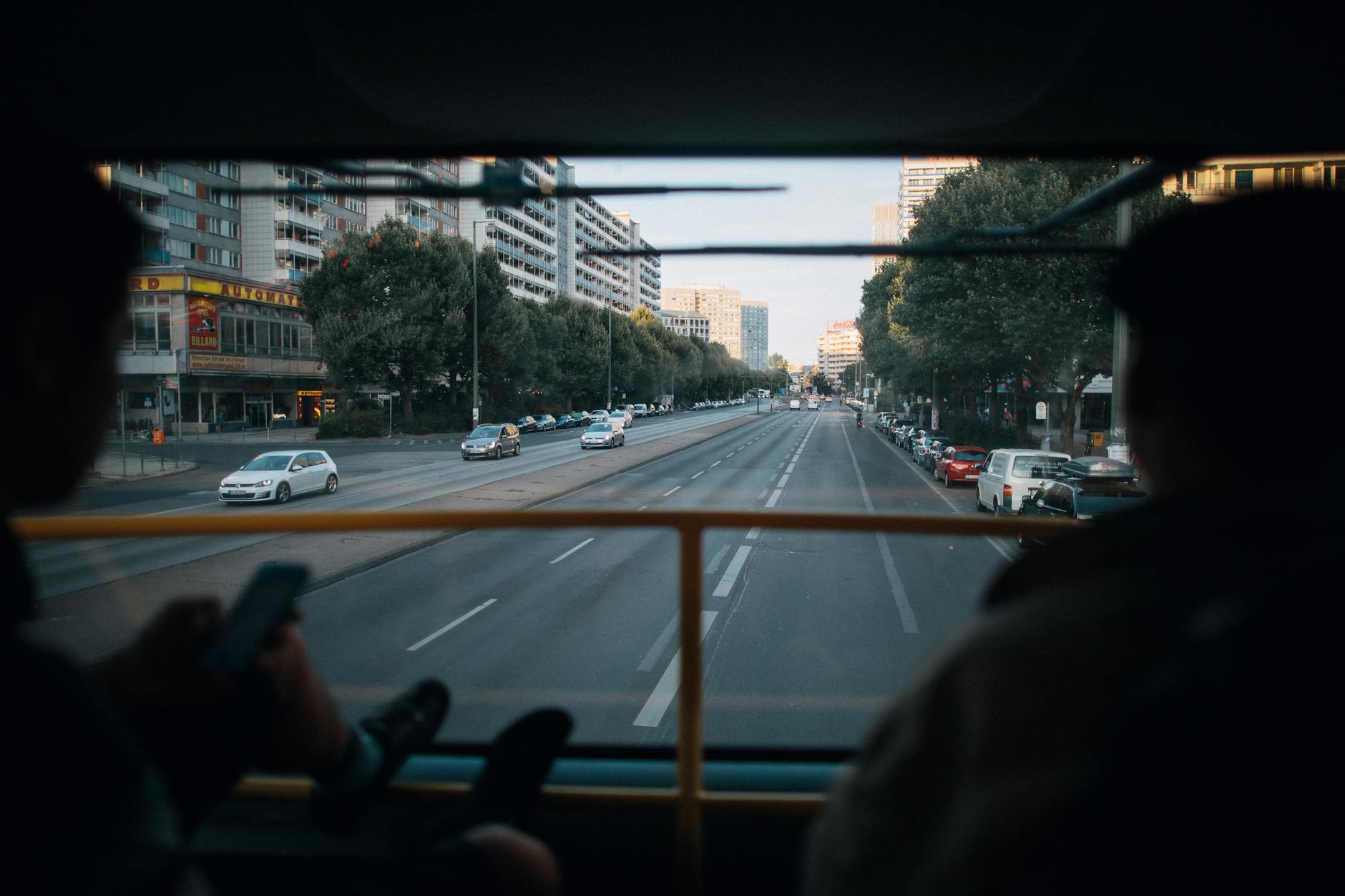
Best Things to Do
Berlin’s “best things” need order. Some are essential because they are powerful. Some are essential because they are fun. Some are famous but not essential. The trick is to balance memory, museums, neighborhoods, and open space.
Top Essentials for a First Visit
- Brandenburg Gate and Pariser Platz
- Reichstag dome or exterior
- Memorial to the Murdered Jews of Europe
- Unter den Linden and Bebelplatz
- Museum Island
- Berlin Wall Memorial at Bernauer Straße
- East Side Gallery and Oberbaumbrücke
- Topography of Terror
- Jewish Museum Berlin
- Tiergarten
- Kreuzberg canal walk and food
- Tempelhofer Feld
- Charlottenburg Palace or City West
- A neighborhood evening in Kreuzberg, Neukölln, Friedrichshain, Prenzlauer Berg, or Schöneberg
- Potsdam as a day trip if you have five days or more
Activity Cards
Brandenburg Gate
What it is: Berlin’s most famous neoclassical monument and a symbol that has moved through Prussian grandeur, Nazi staging, Cold War division, and reunified Germany.
Why it matters: It is the visual shorthand for Berlin, but its power comes from its changing political meaning.
Time needed: 20–45 minutes, longer if paired with Reichstag, Tiergarten, or the Holocaust Memorial.
Best time: Early morning for space; evening for atmosphere.
Worth it? Yes. It is famous for a reason and easy to integrate.
Common mistake: Treating it as a photo stop only. Stand there long enough to understand its geography: Reichstag, Unter den Linden, the former Wall zone, embassies, Tiergarten, and memorials all sit nearby.
Reichstag Dome
What it is: The glass dome atop the German parliament building, designed as a symbol of democratic transparency.
Why it matters: It combines architecture, politics, views, and history better than almost any other free attraction in Berlin.
Time needed: 60–90 minutes after entry.
Book ahead? Yes. Prior registration is required for visiting the Bundestag/dome.[10]
Best time: Early morning, late afternoon, or evening.
Worth it? Absolutely, especially for first-timers.
Common mistake: Waiting until arrival to register during a busy period.
Memorial to the Murdered Jews of Europe
What it is: A field of concrete stelae near Brandenburg Gate, with an underground information center.
Why it matters: It is one of Berlin’s central acts of public memory.
Time needed: 30–90 minutes depending on whether you visit the information center.
Best time: Early or late for quiet; any time if you approach respectfully.
Etiquette: Do not climb, pose theatrically, run across the blocks, or treat it as an aesthetic playground.
Worth it? Essential.
Museum Island
What it is: A UNESCO-listed museum ensemble in the Spree, home to several of Berlin’s major cultural institutions.
Why it matters: It is one of Europe’s great museum landscapes and a key part of Berlin’s imperial, archaeological, artistic, and architectural story.
Time needed: half day for one museum; full day for two; multiple days for serious museum travelers.
Book ahead? Recommended for major exhibitions and timed entries. Staatliche Museen zu Berlin says tickets can be bought online and may be purchased up to four weeks in advance.[9]
Current note: The Pergamonmuseum is closed until a planned partial reopening in 2027, so verify exactly what is open before promising readers “the Pergamon.”[8]
Worth it? Yes, but pick strategically.
Berlin Wall Memorial, Bernauer Straße
What it is: The best place in Berlin to understand the Wall as a border system, not just a painted remnant.
Why it matters: Preserved sections, documentation, chapel, viewing platform, and outdoor exhibits make the division of Berlin legible.
Time needed: 90 minutes to 2.5 hours.
Best time: Morning or late afternoon.
Worth it? More important than Checkpoint Charlie for serious visitors.
Common mistake: Only visiting East Side Gallery and thinking you have “done the Wall.”
East Side Gallery
What it is: A long painted section of the Berlin Wall along the Spree in Friedrichshain.
Why it matters: It is visually iconic and symbolically powerful, especially for reunification-era memory.
Time needed: 45–90 minutes.
Best time: Early morning for fewer crowds; late afternoon for pairing with Friedrichshain/Kreuzberg.
Worth it? Yes, but it is not the best educational Wall site. Pair it with Bernauer Straße for depth.
Topography of Terror
What it is: A documentation center on the site of major Nazi terror institutions.
Why it matters: It is one of Berlin’s most direct, sober sites for understanding the machinery of Nazi power.
Time needed: 90 minutes to 2 hours.
Best for: history-focused travelers, older teens, adults.
Worth it? Essential if you want twentieth-century context.
Pacing note: Do not stack too many heavy memory sites in one day without breaks.
Jewish Museum Berlin
What it is: A major museum exploring Jewish history and culture in Germany, with Daniel Libeskind’s architecture as part of the experience.
Why it matters: It moves beyond Holocaust-only framing and gives deeper cultural and historical context.
Time needed: 2–3 hours.
Pair it with: Kreuzberg food, Landwehr Canal, or Topography of Terror if you can handle a serious day.
Worth it? Very much, especially for museum and history travelers.
Tempelhofer Feld
What it is: A former airport turned enormous public park.
Why it matters: It captures Berlin’s gift for reusing history as civic space. Runways become cycling paths, picnic grounds, kite fields, gardens, and social territory.
Time needed: 1–3 hours.
Best time: Sunny afternoon or golden hour.
Worth it? Yes, especially in good weather or with kids.
Common mistake: Visiting in bad weather and wondering why people love it.
Tiergarten
What it is: Berlin’s great central park.
Why it matters: It gives the city oxygen and provides a needed pause between monument-heavy sights.
Time needed: 1–3 hours.
Pair it with: Brandenburg Gate, Reichstag, Victory Column, Kulturforum, or City West.
Worth it? Yes, especially if the weather is good.
Charlottenburg Palace
What it is: Berlin’s major palace complex and garden, tied to Prussian royal history.
Why it matters: It gives a different version of Berlin: baroque, aristocratic, western, and spacious.
Time needed: half day.
Best for: palace lovers, garden walkers, photographers, travelers with 4+ days.
Skip if: you are short on time and will visit Potsdam/Sanssouci.
TV Tower / Fernsehturm
What it is: The East Berlin-era television tower at Alexanderplatz and one of Berlin’s most recognizable landmarks.
Why it matters: It is an icon of the city’s skyline and offers a high panoramic view.
Time needed: 60–90 minutes, more with waits/restaurant.
Cost note: Berlin.de lists adult admission from €28.50.[11]
Accessibility note: Berlin.de states the TV Tower is not barrier-free and that people with limited mobility do not have access for safety reasons.[11]
Worth it? Worth it for view-seekers and architecture fans; skippable if budget is tight.
Best Free Things to Do
- Brandenburg Gate and Pariser Platz.
- Reichstag exterior; dome with advance registration.
- Memorial to the Murdered Jews of Europe.
- Berlin Wall Memorial outdoor exhibition.
- East Side Gallery.
- Tempelhofer Feld.
- Tiergarten.
- Landwehr Canal walks.
- Mauerpark and flea-market browsing.
- Soviet War Memorial in Treptower Park.
- Street art walks in Kreuzberg/Friedrichshain.
- Window-shopping on Kurfürstendamm or in Hackesche Höfe.
- Spree river walks.
- Stolpersteine awareness walks.
Best Rainy-Day Activities
- Neues Museum, Altes Museum, Bode Museum, Alte Nationalgalerie.
- Jewish Museum Berlin.
- Topography of Terror.
- DDR Museum, if you want interactive and crowded.
- Berlinische Galerie.
- Neue Nationalgalerie.
- Gemäldegalerie.
- Museum für Naturkunde with kids.
- KaDeWe food hall.
- Coffee, bakeries, bookshops, cinemas, and galleries.
Best “Only in Berlin” Experiences
- Walk the Berlin Wall Memorial at Bernauer Straße.
- Spend a sunset on Tempelhofer Feld.
- See the Reichstag dome after understanding the building’s history.
- Follow a Cold War route from Checkpoint Charlie to Bernauer Straße, but do not stop at the tourist version.
- Eat Turkish, Vietnamese, Syrian, German, and experimental food in the same trip.
- Experience a serious music night, whether techno, classical, jazz, punk, or experimental.
- Go from Museum Island to a Kreuzberg canal evening in one day and feel the city’s range.
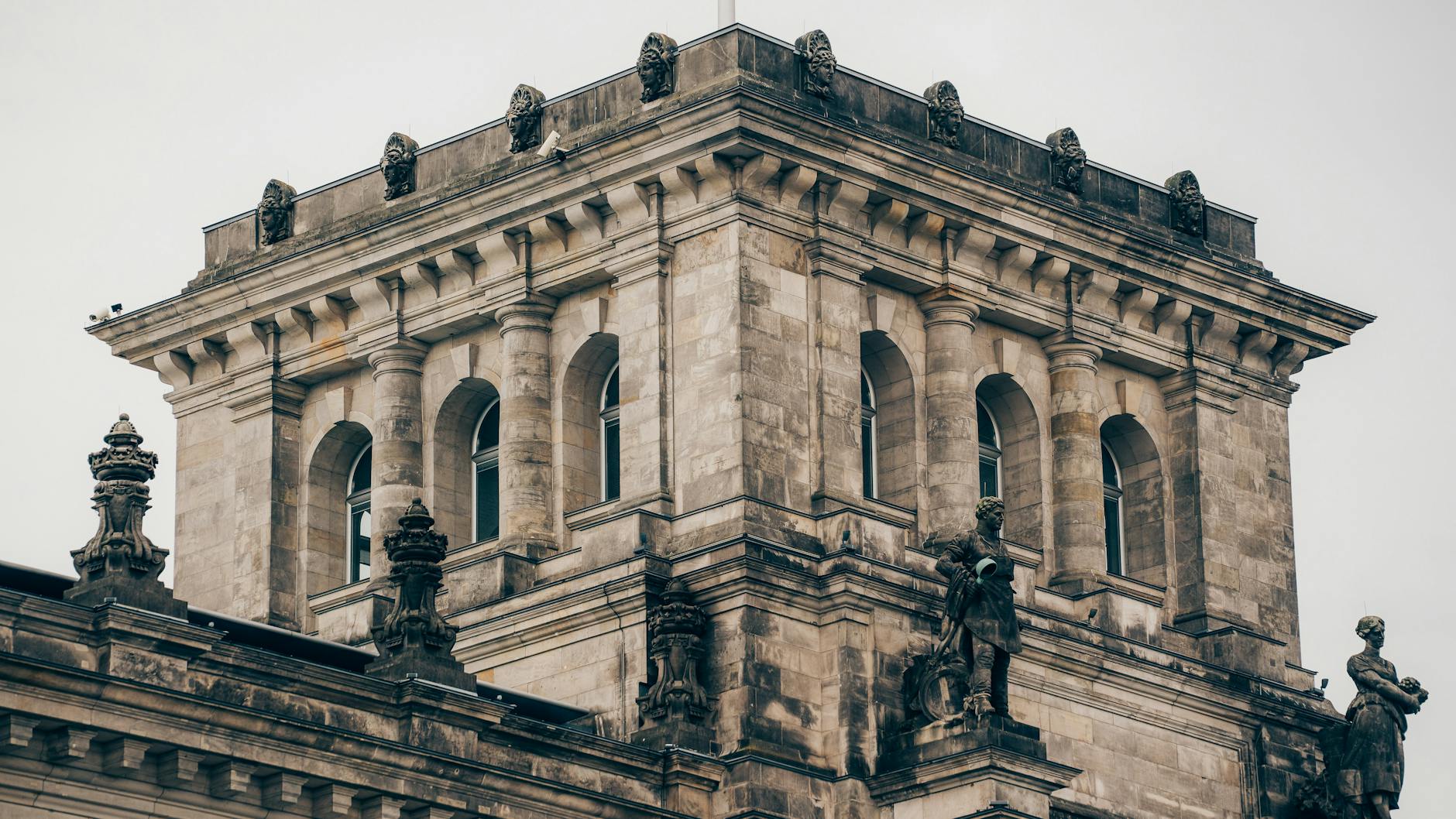
Berlin Itineraries
Berlin itineraries should be realistic. The city punishes zigzagging. Each day below is built around clusters.
One Perfect Day in Berlin
Morning: Classic Mitte
Start at the Reichstag exterior or pre-booked dome visit. Continue to Brandenburg Gate, the Holocaust Memorial, and Unter den Linden. Pause at Bebelplatz and walk toward Museum Island.
Lunch: Hackescher Markt or Museum Island area
Keep it simple: café, bakery, casual lunch, or market-style meal.
Afternoon: One major museum or Wall history
Choose one:
- Museum Island museum if culture is your priority.
- Berlin Wall Memorial at Bernauer Straße if history is your priority.
- Topography of Terror if Nazi-era documentation is your priority.
Evening: Kreuzberg or Prenzlauer Berg
Go to Kreuzberg for food and bars, or Prenzlauer Berg for a softer first-night neighborhood dinner.
What to cut if tired: The museum. Take a Tiergarten walk instead.
Two Days in Berlin
Day 1: Monuments, Government, Museum Island
- Reichstag dome or exterior.
- Brandenburg Gate.
- Holocaust Memorial.
- Unter den Linden.
- Bebelplatz.
- Museum Island: one museum.
- Hackescher Markt dinner.
Day 2: Wall, Kreuzberg, Friedrichshain
- Berlin Wall Memorial at Bernauer Straße.
- Lunch in Prenzlauer Berg or Mitte.
- East Side Gallery.
- Walk across Oberbaumbrücke.
- Kreuzberg canal, dinner, and bars.
The move: Use this as a history-to-neighborhood day. Do not add Charlottenburg or Potsdam.
Three Days in Berlin
Day 1: Classic Berlin
Government district, Brandenburg Gate, Holocaust Memorial, Unter den Linden, Museum Island exterior, one museum or Reichstag dome.
Day 2: Division and Memory
Berlin Wall Memorial, Topography of Terror, Checkpoint Charlie only briefly if desired, Jewish Museum or Kreuzberg evening.
Day 3: Neighborhood Berlin
Prenzlauer Berg morning, Mauerpark/Kollwitzplatz depending on day, Friedrichshain East Side Gallery, Kreuzberg/Neukölln evening. In summer, swap part of this for Tempelhofer Feld.
Four Days in Berlin
Day 1: Mitte and Reichstag
Classic orientation and a not-too-heavy first day.
Day 2: Museum Island and Historic Core
One or two museums, Berlin Cathedral, Hackescher Markt, Auguststraße galleries, and a central dinner.
Day 3: Wall, Cold War, and Kreuzberg
Bernauer Straße, Topography of Terror, East Side Gallery, Oberbaumbrücke, Kreuzberg dinner.
Day 4: Choose Your Berlin
Pick one:
- Charlottenburg and City West for palace, shopping, Savignyplatz.
- Tempelhofer Feld and Neukölln for outdoor/local Berlin.
- Tiergarten and Kulturforum for art and music.
- Prenzlauer Berg and Mauerpark for café/residential Berlin.
- Potsdam if you do not have a fifth day.
Five Days in Berlin
Use the four-day itinerary and add Potsdam as a full day. Visit Sanssouci Park, the palaces you care about most, the Dutch Quarter, and a relaxed dinner back in Berlin or Potsdam.
One Week in Berlin
A week lets you stop treating Berlin like homework.
| Day | Theme |
|---|---|
| 1 | Classic Mitte: Reichstag, Brandenburg Gate, Holocaust Memorial, Unter den Linden. |
| 2 | Museum Island and Hackescher Markt. |
| 3 | Wall history: Bernauer Straße, Topography of Terror, East Side Gallery. |
| 4 | Kreuzberg and Neukölln: canal, markets, food, Tempelhofer Feld, bars. |
| 5 | Potsdam day trip. |
| 6 | Charlottenburg, City West, Schöneberg, shopping, palace or galleries. |
| 7 | Slow Berlin: lake, park, flea market, bike ride, performance, or neighborhood return. |
Itinerary by Traveler Type
History-Heavy Berlin
- Reichstag dome.
- Brandenburg Gate and Unter den Linden.
- Holocaust Memorial and information center.
- Topography of Terror.
- Berlin Wall Memorial.
- East Side Gallery.
- Jewish Museum.
- Soviet War Memorial, Treptower Park.
- Sachsenhausen day trip if emotionally prepared.
Pacing advice: Do not do Holocaust Memorial, Topography of Terror, Jewish Museum, and Sachsenhausen in one emotional sprint. You will absorb less, not more.
Museum Berlin
- Neues Museum.
- Alte Nationalgalerie.
- Bode Museum or Altes Museum.
- Neue Nationalgalerie.
- Gemäldegalerie.
- Berlinische Galerie.
- Hamburger Bahnhof if contemporary art is a priority.
- Museum für Naturkunde with kids.
Current note: Plan around the Pergamonmuseum closure and verify temporary exhibitions.
Food and Neighborhood Berlin
- Turkish breakfast or bakery in Kreuzberg/Neukölln.
- Markthalle Neun or Maybachufer market.
- Vietnamese lunch.
- Currywurst or döner as street-food history.
- Coffee in Prenzlauer Berg or Kreuzberg.
- German dinner in Charlottenburg, Mitte, or a neighborhood tavern.
- Cocktail or beer night in Kreuzberg/Neukölln/Friedrichshain/Schöneberg.
Family Berlin
- Museum für Naturkunde.
- Tiergarten.
- Zoo or Aquarium Berlin.
- Tempelhofer Feld bikes/kites.
- Berlin Wall Memorial with older kids.
- DDR Museum for interactive history if crowds are tolerable.
- Parks and playgrounds in Prenzlauer Berg.
- Potsdam gardens.
Nightlife Berlin
- Do not plan only around one famous club.
- Research the night’s actual lineup and door policy.
- Have backup venues.
- Do not show up as a loud, drunk tourist group.
- Respect no-photo rules.
- Stay near good night transit or budget for taxi/rides.
Build-Your-Own Berlin Day Blocks
| Block | Use it for |
|---|---|
| Classic Mitte morning | Reichstag, Brandenburg Gate, Holocaust Memorial, Unter den Linden. |
| Museum Island anchor | One serious museum plus Berlin Cathedral exterior and Hackescher Markt. |
| Wall history block | Bernauer Straße plus East Side Gallery or Topography of Terror. |
| Kreuzberg food block | Canal walk, market, Turkish/Vietnamese/Syrian food, bars. |
| Charlottenburg comfort block | Palace, Savignyplatz, Kurfürstendamm, dinner. |
| Outdoor Berlin block | Tempelhofer Feld, Tiergarten, Treptower Park, lake, canal, beer garden. |
| Rain plan block | Jewish Museum, Neue Nationalgalerie, KaDeWe food hall, cinema, café. |
| Sunday block | Flea market, brunch, park, museum, no major shopping. |
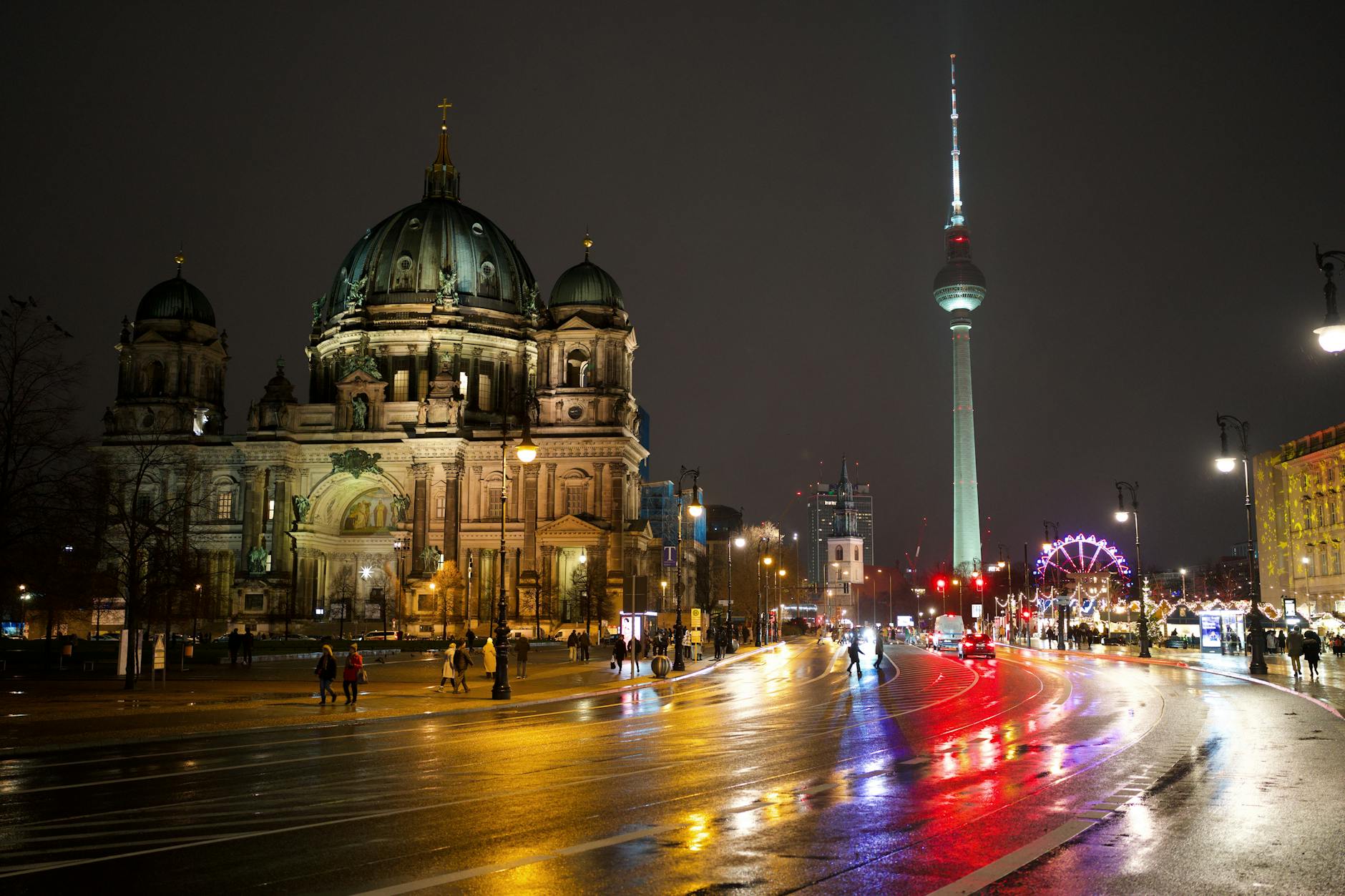
Food and Drink
Berlin is not a single-dish city. It is a migration city, a working city, a nightlife city, and a budget-eating city that has become a serious restaurant city. Do not come expecting only sausages and beer. Those exist. But the real food story includes Turkish bakeries, döner, Vietnamese restaurants, Syrian sweets, Israeli brunch, Polish and Eastern European influences, third-wave coffee, natural wine, vegan food, market halls, old-school German taverns, and high-end tasting menus.
What Berlin Tastes Like
Berlin’s food identity is built from:
- Street food: currywurst, döner kebab, falafel, shawarma, market food.
- Old-school German food: schnitzel, Eisbein, Königsberger Klopse, boulette, potato salad, pickles, seasonal asparagus, hearty soups.
- Turkish Berlin: bakeries, grills, breakfast spreads, markets, kebabs, lahmacun, gözleme.
- Vietnamese Berlin: casual pho, bun, rice dishes, vegan options, and newer modern Vietnamese restaurants.
- Modern Berlin: seasonal restaurants, fermentation, sourdough, natural wine, coffee, vegan/vegetarian cooking.
- Bakery culture: rolls, rye breads, cakes, pastries, and strong breakfast options.
- Drinking culture: beer gardens, corner bars, cocktail bars, späti beers, clubs, natural wine, and alcohol-free options.
What to Eat
| Food/drink | What it is | How to use it |
|---|---|---|
| Currywurst | Sausage with curry-ketchup sauce, associated strongly with Berlin street food. | Try once as a snack, not as your only “Berlin food” experience. |
| Döner kebab | Turkish-German street-food staple with deep Berlin associations. | Excellent casual meal; lines vary wildly by famous stall. |
| Boulette | Berlin-style meatball/patty. | Good in old pubs or casual German places. |
| Eisbein | Pork knuckle, traditionally hearty. | Best for old-school German meal lovers; heavy. |
| Schnitzel | Breaded cutlet, Austrian/German classic. | More Central European than specifically Berlin, but widely available. |
| Königsberger Klopse | Meatballs in a caper cream sauce, East Prussian/German classic. | Good if you want something traditional and less obvious. |
| Berliner Pfannkuchen | Jam-filled doughnut known elsewhere as a Berliner. | Bakery snack; seasonal versions around New Year/Carnival. |
| Turkish breakfast | Breads, cheeses, eggs, olives, spreads, tea. | Excellent brunch alternative. |
| Vietnamese dishes | Pho, bun, rice bowls, modern vegan versions. | Great for casual lunches. |
| Club-Mate | Caffeinated mate soft drink associated with Berlin club/start-up culture. | Try if curious; not everyone loves it. |
| Berliner Weisse | Sour wheat beer traditionally served with syrup. | Historic, touristy in some contexts, but worth understanding. |
| German beer | Pils, helles, wheat beer, craft beer. | Beer gardens and old bars are part of the trip. |
Where to Eat by Situation
Re-check hours, reservations, closures, and quality before publishing.
| Situation | Good areas / examples to research |
|---|---|
| First casual Berlin meal | Kreuzberg, Mitte/Hackescher Markt, Prenzlauer Berg, or Charlottenburg depending on base. |
| Currywurst | Curry 36, Konnopke’s Imbiss, or a local Imbiss near your route. |
| Döner | Mustafa’s Gemüse Kebap is famous and often has long lines; consider quality alternatives in Kreuzberg/Neukölln rather than making a line your meal plan. |
| Market eating | Markthalle Neun, Maybachufer Turkish Market, Arminiusmarkthalle, Winterfeldtmarkt. |
| Old-school German | Charlottenburg, Mitte, Prenzlauer Berg, and long-running taverns; verify current quality. |
| Cafés and brunch | Prenzlauer Berg, Kreuzberg, Neukölln, Mitte, Schöneberg. |
| Natural wine / modern bistro | Neukölln, Kreuzberg, Mitte, Prenzlauer Berg. |
| Vegetarian / vegan | Berlin is one of Europe’s easier major cities for vegan and vegetarian travelers. Kreuzberg, Neukölln, Prenzlauer Berg, and Friedrichshain are especially strong. |
| Solo dining | Ramen, Vietnamese, market halls, bars with food, casual German taverns, counter-service spots. |
| Family-friendly | Prenzlauer Berg, Tiergarten beer gardens, casual Italian/Vietnamese, market halls, museum cafés. |
Food Practicalities
- Many restaurants take cards, but not all. Carry cash.
- Reservations are important for popular restaurants, especially Thursday–Saturday.
- Dinner can be earlier than in Spain or Italy, but Berlin also supports late eating in nightlife areas.
- Sunday and Monday closures are common enough to check.
- Tipping is usually done by telling the server the total you want to pay.
- Service can be direct. Do not mistake every blunt interaction for hostility.
- Tap water is safe, but restaurants may push bottled water.
- Vegetarian and vegan options are generally easy to find.
- Food markets have specific days/hours; do not show up randomly and expect the full scene.
Drinks and Nightlife
Berlin nightlife is not one thing. It includes:
- Old smoky-feeling corner bars.
- Beer gardens.
- Natural wine bars.
- Cocktail bars.
- Queer bars and parties.
- Techno clubs.
- Live music and experimental venues.
- Classical music, opera, and theater.
- Späti beers by the canal or park.
Clubbing Without Being Ridiculous
Berlin’s club scene is famous, but fame has made visitors approach it badly. Good rules:
- Go for the music, not the bragging rights.
- Research the lineup and party.
- Dress for the venue, not for a generic nightclub.
- Do not arrive wasted.
- Do not show up as a loud bachelor/bachelorette group.
- Respect no-photo policies.
- Bring cash and ID.
- Have backup plans.
- Accept that rejection at the door can happen.
The Move
For a first Berlin food day, do market or bakery in the morning, a neighborhood lunch, one serious coffee or cake pause, and a relaxed dinner near your evening plan. Berlin is too spread out to chase viral food from one end of the city to the other.
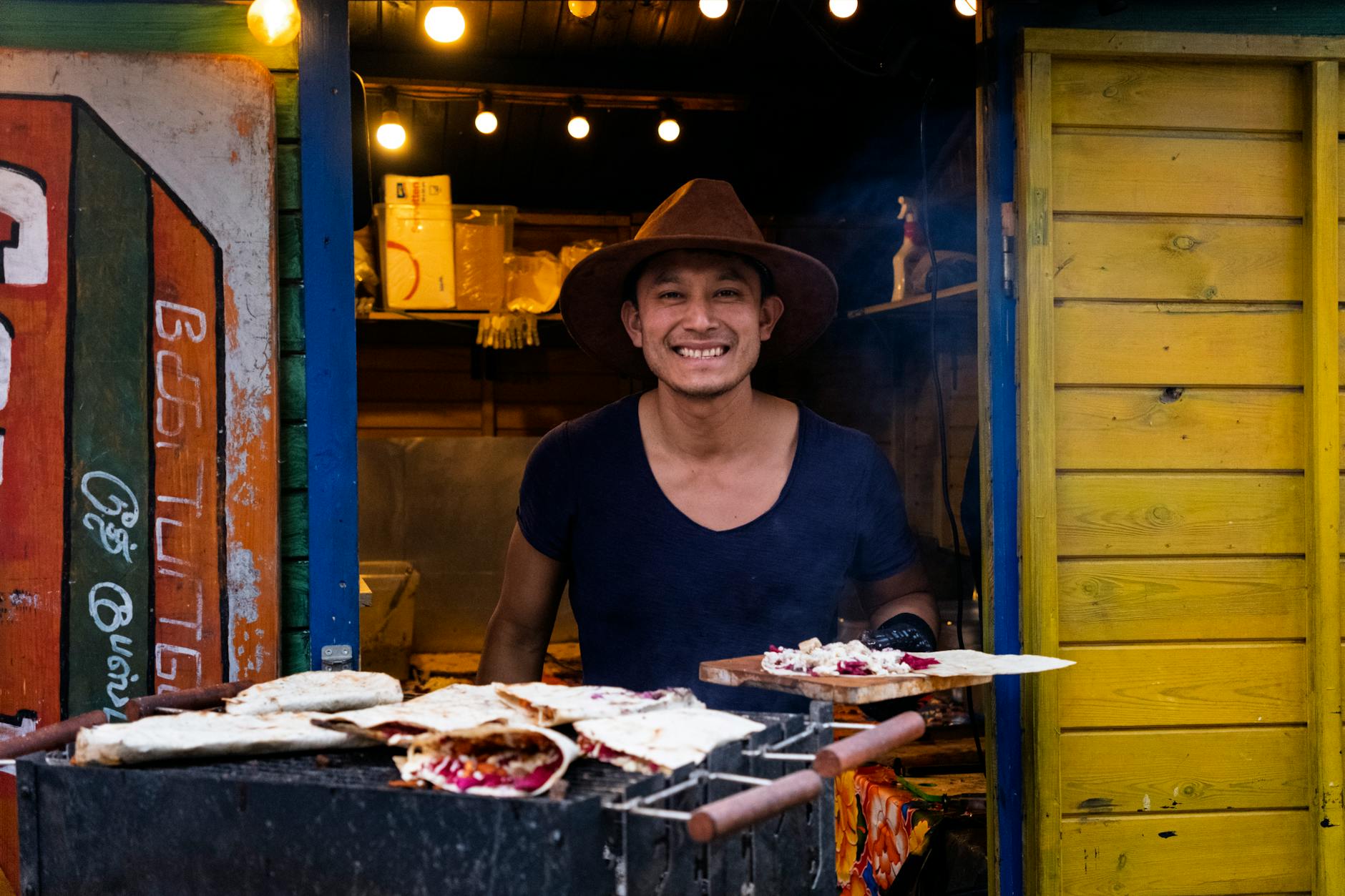
Getting Around
Berlin is a public-transport city. Visitors who learn the U-Bahn/S-Bahn basics quickly save time, money, and frustration.
Airport Arrival: BER to Berlin
BER Airport is southeast of the city and sits in fare zone C. For central Berlin, you need an ABC ticket. The official airport site notes that BER is in zone C, that trips to central Berlin require ABC tickets, that tickets are available from vending machines or VBB/BVG/S-Bahn apps, and that paper tickets bought from machines must be validated before travel.[3]
Best options:
| Option | Best for | Notes |
|---|---|---|
| FEX Airport Express | Most central travelers | DB says FEX connects BER with Berlin Hbf, Potsdamer Platz, and Südkreuz, with Berlin Hbf to BER taking up to 23 minutes on the fastest route.[4] |
| S-Bahn | Travelers staying along S-Bahn routes | Slower but useful for many neighborhoods. S9 is especially relevant for east-west routes. |
| Regional trains | Some routes and connections | Check DB/BVG/VBB apps for your exact station. |
| Taxi / ride app | Late arrivals, luggage, families, door-to-door comfort | More expensive and can be slower depending on traffic and destination. |
| Bus | Specific destinations | Useful for certain routes, but trains are usually easier for first-timers. |
Understanding Transit Modes
| Mode | Best use |
|---|---|
| U-Bahn | Underground/metro-style urban travel. Best for many inner-city trips. |
| S-Bahn | Urban rail and longer cross-city routes. Key for the Ring, airport links, and regional-feeling trips. |
| Trams | Especially useful in former East Berlin: Mitte, Prenzlauer Berg, Friedrichshain, Pankow. |
| Buses | Fill gaps and can be scenic. Bus 100/200 routes are useful for visitors. |
| Regional trains | Airport, Potsdam, Sachsenhausen/Oranienburg, and wider Brandenburg. |
| Ferries | Niche but fun in outer districts and lakes. |
Tickets and Validation
Berlin’s ticket system is not hard, but enforcement is real. Inspectors can appear without uniforms at first. Do not ride without a valid ticket.
Basics:
- Choose the right zone: AB for most city trips; ABC for BER and Potsdam.
- A single ticket is time-limited and permits transfers, but not unlimited back-and-forth sightseeing.
- Paper tickets generally need validation before travel.
- App tickets must be purchased before boarding and may have activation timing rules.
- Day tickets can make sense if you will ride multiple times.
- The Berlin WelcomeCard may work if you want bundled transit and discounts.[7]
Walking
Berlin is walkable by neighborhood, not always between neighborhoods. A great Berlin day may include 20,000 steps, but not because everything is close. It is because the city rewards long linear walks.
Best walking areas:
- Unter den Linden to Museum Island.
- Brandenburg Gate to Tiergarten.
- Bernauer Straße Wall Memorial.
- Landwehr Canal in Kreuzberg.
- Prenzlauer Berg side streets.
- Charlottenburg around Savignyplatz.
- East Side Gallery to Oberbaumbrücke.
- Tempelhofer Feld.
Biking
Berlin can be excellent by bike for confident urban cyclists. The flat terrain helps, but street conditions vary. Watch tram tracks, cobblestones, turning cars, delivery bikes, scooters, and pedestrians in bike lanes.
Best bike uses:
- Tempelhofer Feld.
- Tiergarten.
- Canal rides.
- Berlin Wall route segments.
- Longer warm-weather exploration.
Taxis and Ride Apps
Use taxis/rides when:
- Arriving late with luggage.
- Traveling after a late night.
- Moving between awkward neighborhoods.
- Accessibility or fatigue matters.
- You are a group and transit savings shrink.
Do not rely on taxis for every cross-city trip. Transit is often faster and cheaper.
Do You Need a Car?
No. A car is a burden in Berlin: parking, traffic, restrictions, and stress. Use trains for Potsdam and many day trips. Rent a car only for specific rural Brandenburg itineraries.
Local Logic
Berlin is not about one transit line. It is about network thinking. The fastest route may involve U-Bahn, S-Bahn, tram, regional rail, or walking. Check the app, but sanity-check the result: sometimes a 12-minute walk is better than two transfers.
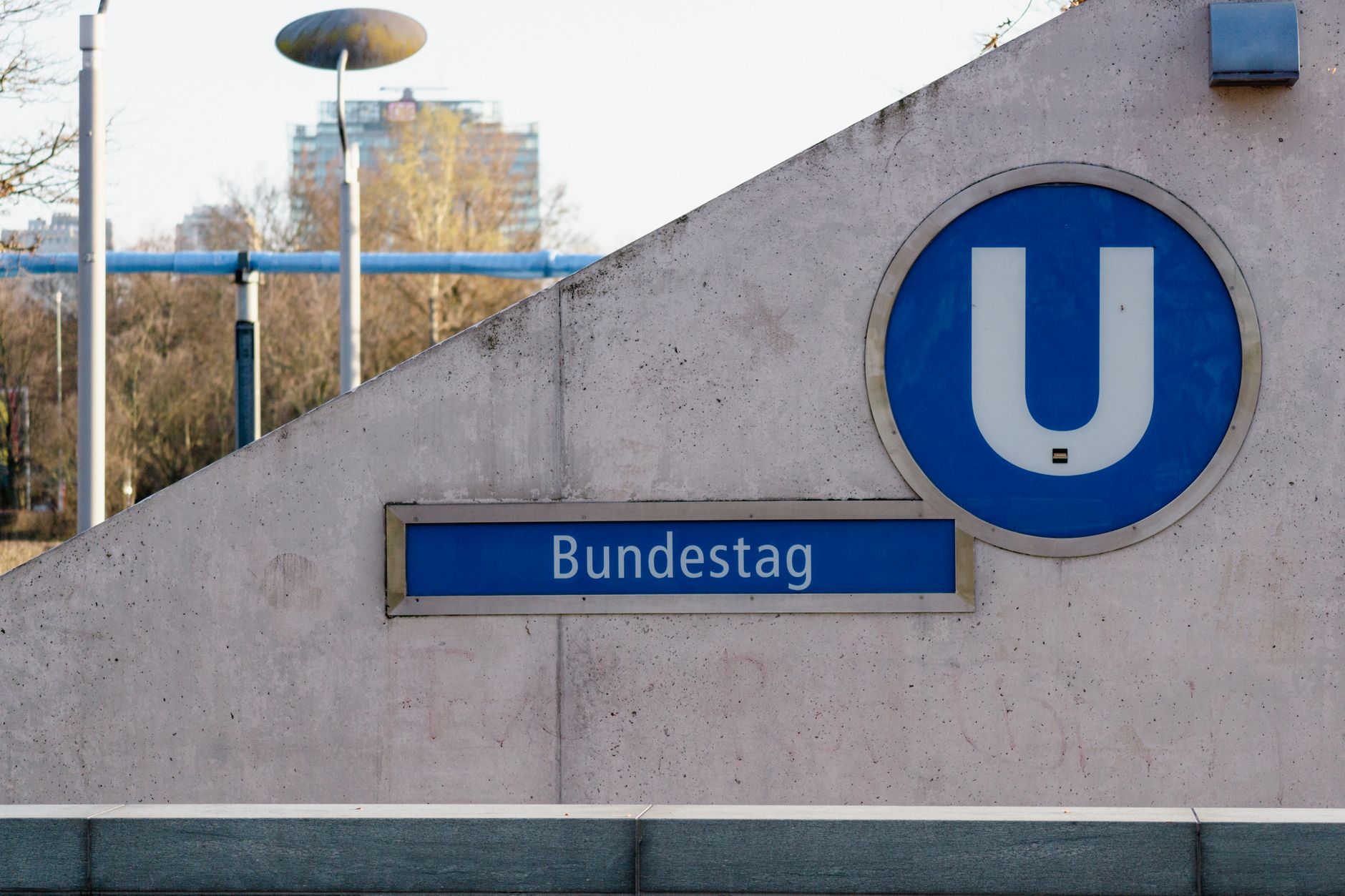
Budget and Costs
Berlin is no longer the cheap capital of old travel lore, but it can still be better value than London, Paris, Amsterdam, Copenhagen, or Zurich if you manage hotels and food carefully.
Daily Budget Snapshot
These are rough planning bands, not guaranteed prices.
| Traveler style | Daily estimate excluding long-haul transport |
|---|---|
| Shoestring | Hostel bed, groceries, street food, free sights, public transit: €60–€100 |
| Budget | Simple hotel/hostel private room, casual meals, transit, a few paid sights: €100–€170 |
| Mid-range | Good hotel, restaurants, museums, bars, day ticket: €170–€300 |
| Comfortable | Strong hotel, taxis sometimes, good restaurants, performances/tours: €300–€500 |
| Luxury | Five-star hotel, fine dining, private guides, premium seats, taxis: €500+ |
Typical Cost Categories
| Category | Notes |
|---|---|
| Hotels | Highest in summer, major events, trade fairs, holidays, and popular weekends. |
| Transit | Good value if you use day tickets or a suitable pass. BVG lists current ticket types and fares online.[5] |
| Museums | Add up quickly if you do several. Museum passes/tickets may help if your itinerary is museum-heavy. |
| Food | Street food and casual immigrant restaurants can be good value; trendy restaurants can be expensive. |
| Nightlife | Club entries, drinks, taxis, and late-night food can raise budgets fast. |
| Day trips | Potsdam is inexpensive by transit; private tours and distant trips cost more. |
Best Value Moves
- Stay near strong transit instead of beside Brandenburg Gate.
- Eat casual lunches and save dinner splurges for specific nights.
- Use free memory sites: Wall Memorial, Holocaust Memorial, East Side Gallery, Topography of Terror.
- Choose one major museum per day instead of paying for several you cannot absorb.
- Use day tickets only when your ride count justifies them.
- Go to parks, canals, lakes, and flea markets.
- Book hotels early for summer, major events, and December weekends.
- Carry cash to avoid awkward minimum-card situations.
Worth the Splurge
- A well-located hotel near your evening priorities.
- A high-quality history walking tour.
- Reichstag dome time planning, even though the visit itself is free.
- Philharmonie, opera, theater, or a serious concert.
- A special restaurant that reflects modern Berlin.
- Potsdam palace tickets if you care about history/architecture.
Usually Not Worth It
- Paying a premium to stay at Alexanderplatz for atmosphere.
- Overpriced tourist restaurants around major sights.
- A TV Tower ticket if you only want “a view” and are on a tight budget.
- Hop-on/hop-off buses as your main transit plan.
- Club tourism built around one famous door.
- Long-distance day trips that leave no time for Berlin itself.
Safety, Health, and Scams
Berlin is generally safe for visitors, but it is still a large city with nightlife, transit crowds, protests, pickpockets, drug activity in some pockets, bike-lane hazards, and late-night situations that require judgment.
General Safety
- Use normal big-city awareness in stations, nightlife areas, crowded attractions, and markets.
- Watch belongings at Alexanderplatz, major transit hubs, East Side Gallery, busy U-Bahn/S-Bahn platforms, and tourist-heavy areas.
- Be alert around bikes and scooters. Bike lanes are not extra sidewalk.
- Late-night transit is useful but use judgment if a carriage or platform feels uncomfortable.
- Berlin has demonstrations and political events. Avoid getting trapped in crowds if you do not understand the situation.
- Some parks and nightlife-adjacent areas can feel rough late at night.
Common Scams and Annoyances
| Issue | What it looks like | What to do |
|---|---|---|
| Pickpocketing | Crowded trains, tourist sights, markets, distraction tactics. | Keep valuables zipped and close. |
| Fake petitions / distraction | Someone asks you to sign or donate while another person watches your bag. | Decline and move on. |
| Ticket confusion | Riding without validating or wrong zone. | Buy the right ticket and validate before travel. |
| Overpriced tourist food | Big menus near landmarks, aggressive hosts, low-quality “German classics.” | Walk a few blocks or choose researched places. |
| Club door misunderstanding | Visitors assume ticket or fame guarantees entry. | Research, behave respectfully, have backup plans. |
| ATM fees | Standalone ATMs with high fees or poor conversion. | Use bank ATMs and decline dynamic currency conversion. |
| Bike-lane conflict | Standing in bike lanes or crossing without looking. | Treat bike lanes like traffic lanes. |
Health Practicalities
- Tap water is safe.
- Pharmacies are marked Apotheke; late-night pharmacies rotate emergency duty.
- Summer heat can matter in non-air-conditioned accommodation.
- Winter cold and damp can make outdoor sightseeing harder than expected.
- Travel insurance is smart, especially for non-EU visitors.
- Public toilets may cost money or require café/restaurant access.
Nightlife Safety
- Keep control of your drink.
- Do not accept unknown substances.
- Travel home with a plan.
- Respect consent and personal space.
- Bring cash and ID.
- Know that no-photo rules are serious in many venues.
- If a scene feels wrong, leave. Berlin has plenty of alternatives.
Accessibility and Mobility
Berlin is more accessible than many older European cities in some ways: it is relatively flat, has broad streets in many areas, and has modern transit infrastructure in parts. But it is not universally easy. Elevator outages, old U-Bahn stations, cobblestones, construction, winter weather, crowded platforms, and nightlife venues can create barriers.
Accessibility Strengths
- Flat terrain compared with cities like Lisbon, Rome, or Athens.
- Many major museums and public institutions have accessibility information.
- Buses are often easier than old rail stations.
- Newer hotels around Potsdamer Platz, Mitte, and City West may offer better accessible rooms.
- Parks such as Tiergarten and Tempelhofer Feld can be good with planning.
Accessibility Challenges
- Not every U-Bahn/S-Bahn station has working elevators.
- Construction can change routes.
- Older buildings may lack elevators.
- Cobblestones and uneven pavements exist in historic areas.
- Some clubs, bars, and old restaurants have stairs or tight interiors.
- The TV Tower is not barrier-free for people with limited mobility according to Berlin.de.[11]
Better Areas for Mobility
- Potsdamer Platz / Tiergarten.
- Modern Mitte hotels near good transit.
- Charlottenburg near Kurfürstendamm/Zoo.
- Alexanderplatz if transit convenience outweighs atmosphere.
- Prenzlauer Berg only if hotel/street access is verified.
Areas Requiring More Care
- Kreuzberg and Neukölln side streets depending on venue.
- Old apartment buildings without elevators.
- Crowded nightlife areas.
- Parks in wet winter weather.
- Any itinerary relying on “short” transfer walks without checking station accessibility.
Accessible Itinerary Idea
Base near Potsdamer Platz or central Mitte. Do Reichstag/Brandenburg Gate/Holocaust Memorial with planned routes, use buses and accessible stations where possible, choose one accessible museum per day, and use taxis strategically for evening transfers.
The Move
Do not trust generic “near transit” language for accessibility. Check the specific station, elevator status, hotel entrance, bathroom setup, and route surfaces.
Families, Solo Travelers, and Special Considerations
Berlin With Kids
Berlin can be excellent with children if you do not overload the history. Mix serious sites with parks, animals, interactive museums, and outdoor space.
Best family options:
- Museum für Naturkunde.
- Tiergarten.
- Zoo Berlin or Tierpark Berlin.
- Aquarium Berlin.
- Tempelhofer Feld for bikes, scooters, kites, and open space.
- DDR Museum for interactive exhibits, if crowds are acceptable.
- German Museum of Technology.
- Parks and playgrounds in Prenzlauer Berg.
- Boat ride on the Spree.
- Potsdam gardens.
Family lodging:
- Prenzlauer Berg for calm streets and playgrounds.
- Tiergarten/Potsdamer Platz for central comfort.
- Charlottenburg for hotels, zoo, shopping, and restaurants.
- Mitte if sightseeing convenience matters most.
Watch out for:
- Heavy history fatigue.
- Late restaurant timings in some trendy places.
- Stairs at older stations or hotels.
- Bikes and scooters.
- Winter weather.
Solo Travelers
Berlin is one of Europe’s stronger solo travel cities. It has cafés, museums, cinemas, walking tours, concerts, casual food, and nightlife where solo presence is normal.
Good solo bases:
- Mitte/Hackescher Markt for first-timer convenience.
- Prenzlauer Berg for calm evenings.
- Kreuzberg/Neukölln/Friedrichshain for nightlife and food.
- Schöneberg for LGBTQ+ travelers and a mature local base.
Solo safety:
- Use normal late-night judgment.
- Know your route home.
- Do not overdo alcohol/substances.
- Keep belongings secure in clubs and bars.
LGBTQ+ Travelers
Berlin is one of Europe’s major LGBTQ+ cities, with deep queer history and a broad scene spanning Schöneberg, Kreuzberg, Neukölln, Friedrichshain, and beyond. Schöneberg is historically important, especially around Nollendorfplatz, while Kreuzberg/Neukölln host many contemporary queer parties and bars.
Good planning notes:
- Research the specific night rather than assuming one district has everything.
- Respect door policies and community spaces.
- Check event calendars close to travel.
- Pride/CSD season brings major crowds and events.
Older Travelers
Berlin can work very well for older travelers if lodging and pacing are smart.
Best bases:
- Charlottenburg/City West.
- Potsdamer Platz/Tiergarten.
- Central Mitte.
- Prenzlauer Berg near transit if stairs are not an issue.
Plan:
- One major site or museum per half day.
- Taxi/rideshare when transfers are awkward.
- Avoid late-night noisy lodging areas.
- Use buses for scenic routes.
Travelers of Color and Religious Travelers
Berlin is diverse, but experiences vary. Many neighborhoods are multicultural, especially Kreuzberg, Neukölln, Wedding, Moabit, and parts of Schöneberg. Halal food is widely available in Turkish and Middle Eastern areas. Jewish Berlin has important institutions and security-aware spaces; visitors should check current access and security requirements for synagogues or community sites.
As with any large city, discrimination can occur. Choose lodging and nightlife spaces intentionally, and check community-specific resources for current advice.
Remote Workers and Long-Stay Visitors
Berlin is attractive for longer stays, but housing is difficult and short-term rentals are regulated. Good long-stay areas include Prenzlauer Berg, Schöneberg, Moabit, Wedding, Neukölln, and parts of Charlottenburg, depending on budget and personality.
Look for:
- Real desk and chair.
- Good Wi-Fi.
- Heating in winter.
- Air conditioning or airflow in summer.
- Transit within a few minutes.
- Grocery stores and laundromats nearby.
Shopping and Souvenirs
Berlin shopping is strongest when it reflects the city’s design, books, records, markets, vintage culture, and local makers rather than generic souvenirs.
Best Shopping Areas
| Area | Best for |
|---|---|
| Kurfürstendamm / City West | Luxury, department stores, established brands, KaDeWe nearby. |
| Mitte / Hackescher Markt | Boutiques, design, galleries, courtyards, fashion. |
| Prenzlauer Berg | Independent shops, kids’ stores, stationery, cafés, gifts. |
| Kreuzberg / Neukölln | Vintage, records, design, small labels, bookstores, markets. |
| Schöneberg | Markets, specialty shops, local streets. |
| Flea markets | Mauerpark, Boxhagener Platz, RAW, Straße des 17. Juni, depending on day/season. |
What to Buy
- Local design objects.
- Books, art books, zines, and maps.
- Records.
- Vintage clothing.
- German kitchenware or stationery.
- Chocolate, mustard, pickles, jams, or specialty foods.
- Museum shop prints and books.
- Small-batch ceramics or jewelry.
- Christmas ornaments in season.
What Not to Buy
- Fake “Berlin Wall” fragments from tourist shops.
- Generic checkpoint/military kitsch that turns history into costume.
- Low-quality souvenir T-shirts you could buy anywhere.
- Club-branded knockoffs.
The Move
Use museum shops and neighborhood boutiques for souvenirs. Berlin’s best gifts are often books, prints, records, design objects, or food items — not plastic bears.
Arts, Culture, History, and Context
A world-class Berlin guide needs context. Berlin is not just a set of sights; it is an urban document.
Very Short History for Travelers
Berlin grew from medieval trading settlements into the capital of Brandenburg-Prussia, then the German Empire after 1871. Imperial Berlin built grand boulevards, museums, railway infrastructure, and working-class districts. The Weimar Republic made Berlin a center of modern art, cinema, cabaret, sexuality, architecture, and politics, but also of instability.
The Nazi period turned Berlin into the command center of dictatorship, terror, war, and genocide. World War II devastated the city. After 1945, Berlin was divided into occupation sectors, then into East and West Berlin, with the Berlin Wall becoming the most visible symbol of the Cold War after 1961. The Wall fell in 1989, Germany reunified in 1990, and Berlin became the capital again.
Reunified Berlin became a city of vacant spaces, clubs, squats, artists, immigrants, cheap rents, experimental culture, and later rapid development. Today’s Berlin is still creative and open, but it is also expensive, politically tense, and shaped by housing pressure, tourism, memory politics, migration, climate concerns, and the question of who gets to belong.
History Sites by Theme
| Theme | Sites |
|---|---|
| Imperial / Prussian Berlin | Unter den Linden, Museum Island, Charlottenburg Palace, Gendarmenmarkt, Berlin Cathedral, Potsdam. |
| Weimar / modern Berlin | Bauhaus-related sites, cinema/cabaret history, Schöneberg, architecture walks. |
| Nazi Berlin | Topography of Terror, Holocaust Memorial, memorial plaques, Sachsenhausen day trip, Jewish Museum context. |
| World War II | Soviet War Memorials, ruined/rebuilt churches, bunker/exhibition sites, city architecture scars. |
| Cold War / Wall | Berlin Wall Memorial, East Side Gallery, Checkpoint Charlie area, Tränenpalast, Karl-Marx-Allee, Stasi Museum. |
| Reunification / alternative culture | Kreuzberg, Friedrichshain, clubs, squats, RAW-Gelände, former industrial areas. |
Museums by Interest
| Interest | Museums / institutions |
|---|---|
| Ancient history / archaeology | Altes Museum, Neues Museum, Pergamon-related exhibitions where available. |
| European painting | Gemäldegalerie, Alte Nationalgalerie. |
| Modern art | Neue Nationalgalerie, Berlinische Galerie, Hamburger Bahnhof. |
| Jewish history and culture | Jewish Museum Berlin. |
| Nazi history | Topography of Terror. |
| Cold War / GDR | Berlin Wall Memorial, Tränenpalast, DDR Museum, Stasi Museum. |
| Natural history | Museum für Naturkunde. |
| Technology | German Museum of Technology. |
| Design / architecture | Bauhaus Archive, Neue Nationalgalerie, architecture walks; verify renovation status. |
Books, Films, and Music to Prepare
Books and history:
- Berlin: The Downfall 1945 by Antony Beevor.
- The Berlin Wall by Frederick Taylor.
- Stasiland by Anna Funder.
- Berlin Alexanderplatz by Alfred Döblin.
- Goodbye to Berlin by Christopher Isherwood.
- Alone in Berlin by Hans Fallada.
Films and TV:
- The Lives of Others.
- Good Bye, Lenin!.
- Wings of Desire.
- Run Lola Run.
- Cabaret.
- Babylon Berlin.
- Victoria.
Music context:
- David Bowie’s Berlin period.
- Iggy Pop’s Berlin recordings.
- Kraftwerk and German electronic context.
- Techno and post-Wall club culture.
- Classical music through the Berlin Philharmonic and opera houses.
Etiquette and Cultural Norms
- Say Guten Tag, Hallo, Danke, and Tschüss.
- Do not stand in bike lanes.
- Validate paper transit tickets.
- Respect memorials: no climbing, joking photo shoots, or loud behavior.
- Follow museum photography rules.
- Many Sundays are quiet for shopping.
- Recycling and deposits matter. Bottles often have a deposit (Pfand).
- Service can be direct; politeness still matters.
- No-photo rules in clubs are serious.
- Berlin values personal freedom, but not tourist entitlement.
Seasonal and Month-by-Month Guide
Spring
Weather: variable, often beautiful by May.
Crowds: increasing, especially around holidays and late spring weekends.
Best activities: parks, museums, walking tours, neighborhood cafés, early beer gardens.
Packing: layers, rain jacket, comfortable shoes.
Who should visit: first-timers who want good conditions without summer peak.
Summer
Weather: warm, long days, occasional heat.
Crowds: busy but spread out because Berlin has space.
Best activities: lakes, parks, outdoor cinemas, beer gardens, canal walks, cycling, festivals, nightlife.
Packing: light clothes, sunscreen, refillable bottle, rain layer, comfortable shoes.
Who should visit: outdoor travelers, nightlife travelers, families, and people who want Berlin at its most social.
Fall
Weather: September can be excellent; October crisp; November gray.
Crowds: easier than summer except events.
Best activities: museums, galleries, parks, restaurants, architecture walks, photography.
Packing: layers, jacket, umbrella, warmer evening clothes.
Who should visit: first-timers, culture travelers, food travelers.
Winter
Weather: cold, dark, gray, occasionally snowy/icy.
Crowds: lower outside Christmas market periods.
Best activities: museums, concerts, clubs, Christmas markets, cafés, restaurants, theaters.
Packing: warm coat, hat, gloves, waterproof shoes, layers.
Who should visit: budget travelers, museum lovers, nightlife travelers, Christmas market fans.
Key Seasonal Planning Notes
- Christmas markets: usually late November through December; check exact dates.
- Berlinale: major film festival period can affect hotels and culture calendars.
- May Day: Kreuzberg and other areas can be lively/political; check current conditions.
- CSD/Pride: huge summer events; book lodging early if attending.
- Marathon / major events: can alter transit and hotel demand.
- Trade fairs: Berlin hotel prices can spike during big events.
Day Trips from Berlin
Berlin has excellent day trips, but not all are appropriate for every trip. If you have only three days, stay in Berlin. If you have five days, add Potsdam. If you have a week, choose based on interest.
Day Trip Ranking
| Day trip | Best for | Travel logic |
|---|---|---|
| Potsdam | Palaces, gardens, Prussian history, easy logistics | Best overall first day trip. |
| Sachsenhausen Memorial | Serious WWII/Nazi history | Important but emotionally heavy; go respectfully. |
| Wannsee / Pfaueninsel | Water, villas, summer, lighter day | Best warm-weather escape. |
| Spreewald | Canals, nature, pickles, paddling | Better in warm months; more logistics. |
| Leipzig | Music, art, architecture, young city energy | Strong long day by train. |
| Dresden | Baroque architecture, museums | Possible but long; often better overnight. |
| Hamburg | Port city, architecture, food | Possible by fast train but too big for a casual day. Better overnight. |
Potsdam
What it is: A historic city southwest of Berlin, famous for Sanssouci Palace and Park, Prussian royal sites, Dutch Quarter, lakes, and elegant streets.
Why go: It gives you palace-and-garden Germany in contrast to Berlin’s rougher modernity.
Time needed: full day.
Transport: Regional/S-Bahn routes; usually ABC fare coverage for many transit tickets, but verify for your exact ticket/pass.
Best for: first-timers with 5+ days, palace lovers, garden walkers, photographers.
Common mistake: Trying to see every palace. Choose Sanssouci Park and one or two interiors.
Sachsenhausen Memorial
What it is: A former Nazi concentration camp site near Oranienburg, now a memorial and museum.
Why go: It is historically important and sobering.
Time needed: most of a day when travel and emotional pacing are included.
Best for: serious history travelers, mature teens/adults, guided visits.
Not ideal for: casual sightseeing, young children, or travelers already overloaded with heavy history.
Responsible approach: Treat it as a memorial, not a “dark tourism” trophy.
Wannsee and Pfaueninsel
What it is: Lake district southwest of Berlin with swimming, villas, forest, and a softer summer mood.
Why go: Berliners love water, and visitors often miss that side of the city.
Time needed: half day to full day.
Best for: summer, families, relaxed travelers, repeat visitors.
Common mistake: Expecting Mediterranean beach perfection. This is local lake culture.
Spreewald
What it is: A canal-and-forest region southeast of Berlin, known for boat trips, paddling, villages, and pickles.
Why go: It is a distinctive Brandenburg landscape.
Time needed: full day, better with an early start.
Best for: nature, warm weather, active travelers.
Not ideal for: tight itineraries or bad weather.
Leipzig
What it is: A lively Saxon city with music history, art, student energy, and a strong alternative/cultural scene.
Why go: It pairs well with Berlin if you like urban culture but want a different scale.
Time needed: long day or overnight.
Best for: music, art, history, cafés, architecture.
Dresden
What it is: A baroque city on the Elbe with major museums and rebuilt historic architecture.
Why go: Strong contrast with Berlin’s modern rupture.
Time needed: long day, better overnight.
Best for: architecture and museum lovers.
Common mistake: Underestimating travel time and trying to do Dresden as a rushed add-on.
What to Skip
A trustworthy city guide tells readers what not to prioritize.
Skip or Deprioritize
Checkpoint Charlie as a Major Stop
Go briefly if you are nearby, but do not make it your main Cold War site. It is crowded, commercialized, and less educational than the Berlin Wall Memorial at Bernauer Straße or the Tränenpalast.
Better alternative: Berlin Wall Memorial, Bernauer Straße.
Trying to See Every Museum Island Museum in One Day
Museum fatigue is real. Pick one or two.
Better alternative: One anchor museum, then a walk through Hackescher Markt or along the Spree.
TV Tower if You Are on a Tight Budget
The view is good, but tickets are not cheap. Berlin has many lower-cost pleasures.
Better alternative: Reichstag dome, Victory Column, rooftop bars, or free city viewpoints where available.
A Berlin Trip Built Around Berghain Entry
The club may be culturally important, but planning your trip around getting in is silly. Door policies are selective and the night’s music matters more than the name.
Better alternative: Research actual parties and have multiple venue options.
Tourist Restaurants Next to Major Sights
Especially around Checkpoint Charlie, Alexanderplatz, and some Unter den Linden areas.
Better alternative: Eat by neighborhood, not landmark.
Overlong Day Trips on a Short Stay
Dresden, Hamburg, and Leipzig can be great, but not if they eat half of a three-day Berlin trip.
Better alternative: Potsdam or more Berlin.
Treating Memorials as Photo Sets
This should not need saying, but it does. Berlin’s memory sites require respect.
Better alternative: Put the phone away sometimes.
Common Mistakes
- Treating Berlin as compact.
- Staying in the wrong neighborhood for your evenings.
- Booking only famous sights and missing local Kieze.
- Seeing East Side Gallery but skipping Bernauer Straße.
- Not registering for the Reichstag dome.
- Assuming the Pergamonmuseum is open.
- Riding transit with the wrong ticket or without validation.
- Standing in bike lanes.
- Overloading one day with heavy history sites.
- Planning nightlife like a guaranteed-ticket attraction.
- Forgetting cash.
- Visiting on Sunday expecting normal shopping.
- Not checking museum closure days and special exhibitions.
- Wearing poor shoes because the city is flat.
- Booking far outside the Ring without understanding late-night transit.
- Expecting warm, charming Europe in February.
- Ignoring air conditioning in summer lodging.
First-Timer Mistake
Doing Brandenburg Gate, Reichstag, Holocaust Memorial, Topography of Terror, Checkpoint Charlie, East Side Gallery, and Jewish Museum in one day. That is not depth. That is emotional whiplash plus transit fatigue.
Responsible Travel
Berlin is fun, but it is not a playground built for visitors. A better trip respects the fact that people live inside the scenes tourists consume.
Visit Well
- Treat memorials and historical sites with seriousness.
- Do not photograph people in clubs, bars, protests, or queer spaces without consent.
- Use public transport, walking, and cycling when practical.
- Support independent restaurants, cafés, bookshops, and venues.
- Be mindful of noise in residential courtyards and late-night streets.
- Do not romanticize poverty, squats, graffiti, or addiction as “edgy Berlin.”
- Learn some basic German phrases.
- Respect local debates around housing, tourism, and gentrification.
- Pay for culture: museums, performances, tours, venues, artists.
- Tip fairly when service is good.
- Use bottle deposit systems and recycle properly.
Memorial Etiquette
At Holocaust, Nazi-era, Wall, and war memorials:
- Keep your voice down.
- Avoid silly poses.
- Do not climb or sit where inappropriate.
- Read the context.
- Do not reduce the site to a photo.
- Give others space.
Nightlife Etiquette
- Go for the event, not the Instagram.
- Respect door staff.
- Respect no-photo rules.
- Respect queer and subcultural spaces.
- Do not harass people in lines.
- Know your limits.
Packing List
Year-Round Essentials
- Comfortable walking shoes.
- Transit app and offline map.
- Compact umbrella or rain shell.
- Layers.
- Crossbody or secure day bag.
- Refillable water bottle.
- Power adapter: types C/F.
- Portable charger.
- Cash in euros.
- Government ID/passport copy.
- Museum/nightlife outfit flexibility.
Spring
- Layers.
- Light jacket.
- Rain shell.
- Sunglasses.
- Shoes that handle wet pavement.
Summer
- Light clothes.
- Sunscreen.
- Hat.
- Refillable bottle.
- Swimwear for lakes/pools.
- Light layer for evenings.
- Eye mask if your accommodation has thin curtains and long daylight.
- Check air conditioning before booking if heat bothers you.
Fall
- Warm layers.
- Jacket.
- Umbrella.
- Comfortable shoes.
- Scarf by late fall.
Winter
- Warm coat.
- Hat and gloves.
- Waterproof or water-resistant shoes.
- Thermal layers if you run cold.
- Scarf.
- Lip balm and moisturizer.
What Not to Pack
- Only dress shoes.
- A nightlife wardrobe that assumes every club is a glossy nightclub.
- Huge luggage if staying in an old building without elevator confirmation.
- A rigid itinerary that collapses in rain.
- A car-based city plan.
FAQ
Is Berlin worth visiting?
Yes, if you want history, museums, nightlife, neighborhoods, parks, food, and a city with visible complexity. Berlin is less conventionally pretty than many European capitals, but it is deeper than most.
How many days do I need in Berlin?
Three full days is the minimum for a satisfying first visit. Four full days is better. Five days lets you add Potsdam without rushing Berlin.
What is the best area to stay in Berlin for a first visit?
Mitte or Hackescher Markt/Museum Island is best for classic sightseeing. Prenzlauer Berg is best for calm neighborhood charm. Kreuzberg or Neukölln is best for food and nightlife. Charlottenburg is best for comfort and shopping.
Is Berlin safe?
Generally yes, with normal big-city caution. Watch for pickpockets in crowded areas and transit hubs, use judgment late at night, and be aware of bikes, scooters, and nightlife-related risks.
Do I need a car in Berlin?
No. Public transport is the right default. Rent a car only for specific rural trips beyond the city.
Is Berlin expensive?
Berlin is more expensive than it used to be, especially for hotels and trendy restaurants, but it can still be better value than many major Western/Northern European capitals. Transport, casual food, free sights, and parks help budgets.
What should I book ahead?
Register for the Reichstag dome, book popular restaurants, reserve major temporary exhibitions, buy timed TV Tower tickets if you care about the view, and book performances or tours with limited capacity.
Is the Berlin WelcomeCard worth it?
Sometimes. It is most useful if you will use enough transit and discounts to justify the price. The ABC version is useful if you need BER Airport or Potsdam coverage. Compare it against your real itinerary.
Is the Pergamonmuseum open?
No, not for normal visits as of this update. The official museum page says the building has been completely closed since 2023 and that a large part is scheduled to reopen on June 4, 2027.[8]
Is Checkpoint Charlie worth visiting?
Only briefly if you are nearby. It is historically famous but touristy and commercialized. The Berlin Wall Memorial at Bernauer Straße is far better for understanding the Wall.
Is Berlin good with kids?
Yes. Focus on parks, the Natural History Museum, Zoo/Aquarium, Tempelhofer Feld, boat rides, and selective history. Avoid overloading children with heavy memorial sites.
Is Berlin accessible?
Berlin is relatively flat and has many accessible institutions, but it is not fully barrier-free. Check station elevators, hotel entrances, museum access, and attraction-specific rules. The TV Tower is not barrier-free for people with limited mobility according to Berlin.de.[11]
What food is Berlin known for?
Currywurst, döner kebab, old-school German dishes, Turkish food, Vietnamese food, bakeries, market halls, vegan food, beer gardens, and an increasingly strong modern restaurant scene.
What should I skip in Berlin?
Skip overprioritizing Checkpoint Charlie, trying every Museum Island museum in a day, treating nightlife as guaranteed, tourist restaurants beside landmarks, and day trips that steal time from a short Berlin visit.
Source Notes
The following sources were checked while drafting this guide. Re-check all prices, schedules, closures, event dates, entry rules, transit changes, accessibility details, and restaurant information close to publication.
- 1. visitBerlin, official tourism website: https://www.visitberlin.de/en
- 2. Berlin.de, “Attractions & Sights in Berlin”: https://www.berlin.de/en/attractions-and-sights/
- 3. Berlin Brandenburg Airport, “Arrival and departure by public transport”: https://ber.berlin-airport.de/en/orientation/getting-here/public-transport.html
- 4. DB Regio, “Airport Express Berlin (FEX)”: https://www.dbregio-berlin-brandenburg.de/db-regio-no/Fahren/flughafenexpress/flughafenexpress-en
- 5. BVG, “All BVG tickets”: https://www.bvg.de/en/subscriptions-and-tickets/all-tickets
- 6. BVG, “Tariff information and tariff zones”: https://www.bvg.de/en/subscriptions-and-tickets/tariff-zones-and-information
- 7. Berlin.de, “Berlin WelcomeCard: Official Berlin Tourist Ticket”: https://www.berlin.de/en/public-transportation/1895467-2913840-berlin-welcomecard.en.html
- 8. Staatliche Museen zu Berlin, “Information on Visiting the Pergamonmuseum”: https://www.smb.museum/en/museums-institutions/pergamonmuseum/plan-your-visit/
- 9. Staatliche Museen zu Berlin, “Tickets & Admission”: https://www.smb.museum/en/plan-your-visit/prices-tickets/
- 10. German Bundestag, “Registering to visit the dome of the Reichstag Building”: https://www.bundestag.de/en/visittheBundestag/dome/registration-245686
- 11. Berlin.de, “Berlin TV Tower”: https://www.berlin.de/en/attractions-and-sights/3560707-3104052-berlin-tv-tower.en.html
- 12. European Commission, “Main differences between EES and ETIAS: What travellers need to know”: https://home-affairs.ec.europa.eu/news/main-differences-between-ees-and-etias-what-travellers-need-know-2026-04-28_en
- 13. European Commission, “Smart Borders”: https://home-affairs.ec.europa.eu/policies/schengen/smart-borders_en