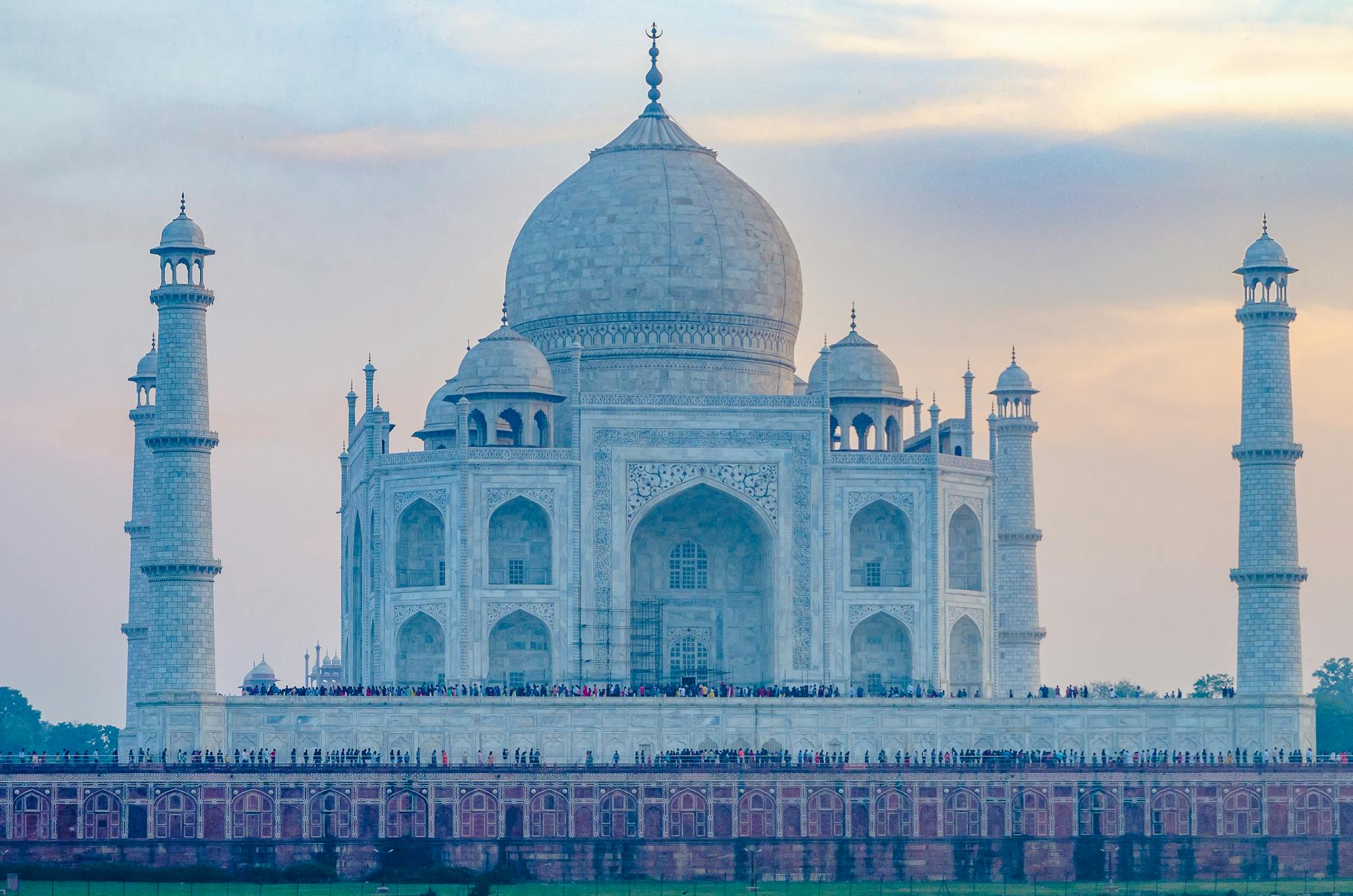
Agra is one of the easiest cities in the world to trivialize.
Start Here
That sounds absurd because it holds one of the world’s most recognizable buildings. But that is exactly the problem. Too many travelers arrive with one mental image, one time slot, one forced photo ambition, and one vague idea that the city is simply the unavoidable inconvenience wrapped around the Taj Mahal. Then they rush through it, leave tired, and assume the place had nothing more to offer than crowd management and traffic.
That is not quite fair. Agra is not a broad, all-purpose city break in the way that Delhi, Mumbai, or Jaipur can be. But it also is not merely a monument stop if handled properly. It is a city of imperial afterimages, of river-facing geometry, of one great mausoleum sharpened by the presence of a great fort, of marble intimacy paired with red-sandstone power, and of mornings that matter more than afternoons. The visitor who gets Agra right usually does so by becoming narrower, not broader.
That means protecting the Taj Mahal from the rest of the trip rather than stuffing it inside one. It means understanding that Agra Fort is not secondary decoration but part of the same Mughal conversation. It means realizing that the Yamuna-facing counterviews matter because the Taj is not only a close-up object. It means being honest about whether you want a disciplined day trip, a worthwhile overnight, or a Golden Triangle stop that still preserves some dignity.
The city in one sentence: Agra is a timing-sensitive monument city whose best first visit is built around one protected Taj session, one strong supporting frame, and enough restraint to let the place feel imperial rather than merely crowded.
Quick Verdict
Best for: first-time India travelers, architecture-focused travelers, Golden Triangle routes, and anyone willing to organize one day with unusual discipline.
Less ideal for: travelers who want organic wandering, broad neighborhood life, or a city whose pleasures reveal themselves casually.
Ideal first stay: 1 night.
Still workable: a well-managed day trip from Delhi.
Worth two nights? Sometimes, but usually only if you want a slower Taj visit plus Fatehpur Sikri or a more deliberate Agra rhythm.
Main planning mistake: assuming the Taj Mahal is enough to make a bad schedule feel profound.
One thing to prioritize: the timing of your Taj visit.
One thing to edit hard: everything else.
Who Will Love Agra?
Agra works best for travelers who understand that not every strong destination has to be broad. If you can appreciate a place built around a few exceptionally high-value experiences, Agra can be memorable. It also suits travelers who like architecture not just as checklist material but as a way of understanding power, grief, ceremony, and imperial aesthetics.
Agra is especially good for people willing to use hotels strategically. This is not a city where the right property is a luxury extra. It changes the trip. A calm, competent hotel turns Agra into a composed experience; a weak hotel can make the whole city feel like a holding pen around one monument.
Agra at a Glance
| Question | Practical Answer |
|---|---|
| Main reason to come | Taj Mahal, then Agra Fort |
| Best trip shape for most travelers | 1 night or tightly managed day trip |
| Essential supporting sight | Agra Fort |
| Best counterpoint to the Taj | A river-facing or west-bank view, especially near Mehtab Bagh |
| Best major add-on if staying longer | Fatehpur Sikri |
| Main planning variable | timing, not attraction count |
| Best first-time strategy | do less, better |
2026 Visitor Notes
Taj Mahal Timing Still Demands Structure
The official Taj Mahal visitor page states that the monument opens `30 minutes before sunrise` and closes `30 minutes before sunset`, and it remains closed on Fridays for general viewing.[1] That alone should dictate more of the trip than many visitors allow.
The Main Mausoleum Still Requires a Separate Decision
The same official page continues to note that access to the main mausoleum requires an additional `Rs. 200` ticket on top of the base entry fee.[1] That matters because many travelers do not realize that the emotional center of the experience and the ticket structure are not quite the same thing.
Agra Fort Remains the Key Supporting Monument
The official Agra Fort page still lists entry through the `Amar Singh Gate` only and notes sunrise-to-sunset visiting hours.[2] Agra Fort is not optional filler. It is the monument that prevents Agra from collapsing into one building and one crowd.
Fatehpur Sikri Still Belongs on a Separate Clock
The official Fatehpur Sikri page describes the site as `37 kilometers` from Agra and open `from sunrise to sunset`.[3] That distance is near enough to tempt overloading and far enough to punish it.
Agra Beyond the Taj Is an Official Idea, Not Just a Romantic One
The Taj Mahal government tourism site continues to maintain a `Heritage Walk Beyond the Taj` section and official “Agra Beyond Taj” material.[4] That is a useful corrective to the lazy idea that Agra deserves only one angle of attention.
How to Understand Agra
Agra works through four forces.
The first is timing. The city is disproportionately sensitive to hour-of-day decisions.
The second is monument hierarchy. Not everything deserves equal weight.
The third is river logic. The Taj is part of a larger Yamuna-facing urban imagination, not an isolated marble object.
The fourth is hotel and transfer quality. Agra is far easier to dislike when your arrivals, exits, and downtime are mishandled.
The Main Mental Shift
Do not ask, “How much of Agra can I fit in?” Ask, “What arrangement gives the Taj Mahal the right frame?” Once that question becomes central, the trip usually improves immediately.
What Makes Agra Distinct
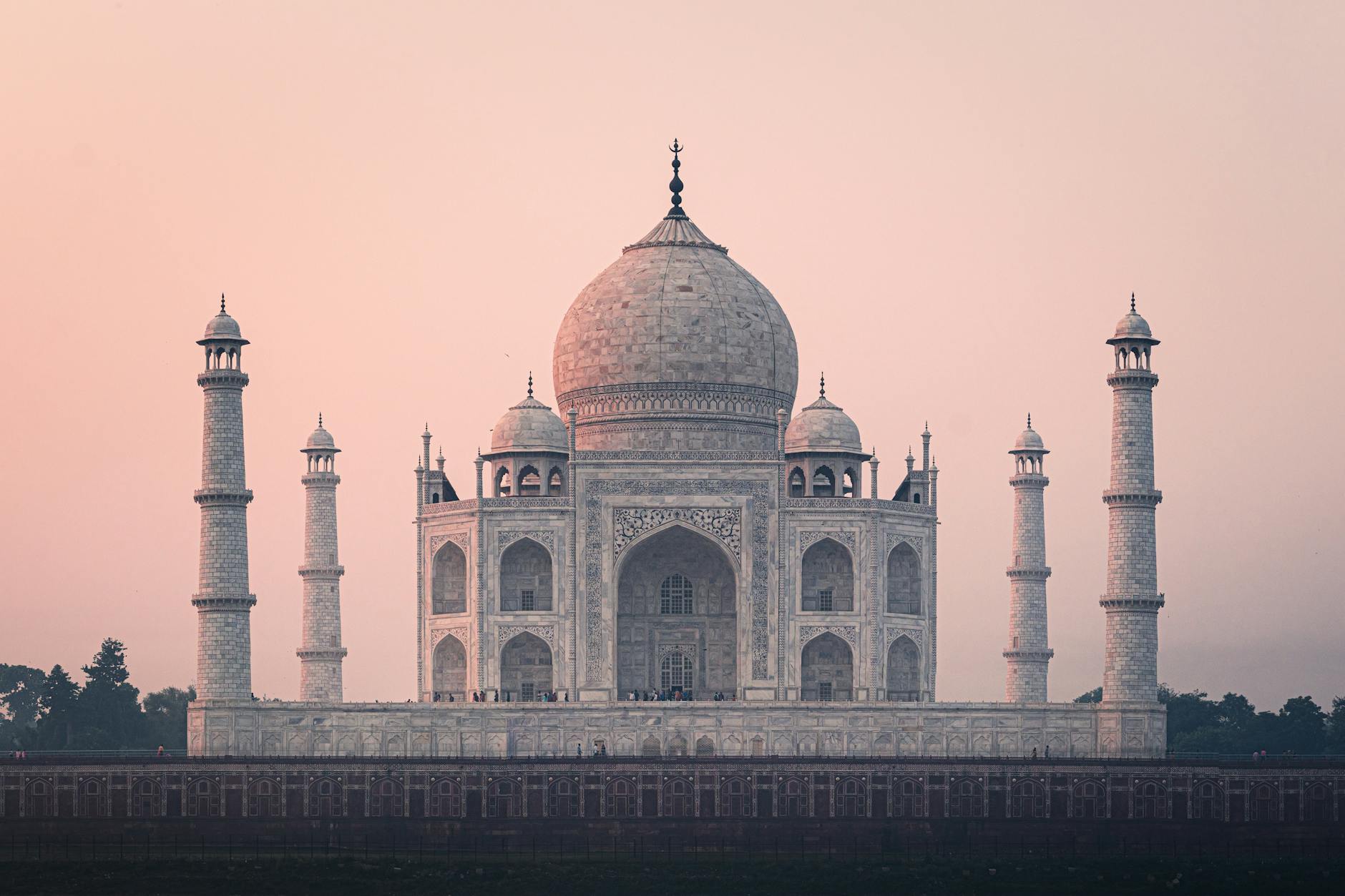
Agra’s distinctiveness lies in contrast. White marble tenderness and red sandstone authority sit in the same city. The Taj Mahal represents intimacy, grief, balance, and visual perfection. Agra Fort represents command, enclosure, and dynastic scale. The river gives both of them distance and orientation. That is why the city feels stronger when you read it compositionally rather than treat it like a list.
Agra is also distinctive because it rewards reduction. This is not a city that gets better when you add indiscriminately. It gets better when you protect one major session, let one supporting monument earn its place, and choose one or two secondary gestures that sharpen the whole.
Where Agra Fits in an India Trip
Agra fits best in India itineraries that understand not every powerful place must be broad.
For many first-time visitors, especially those doing a Golden Triangle route, Agra is the most obviously famous stop and the least well understood one. Delhi is mentally filed as capital complexity. Jaipur is filed as color, forts, and planned-city beauty. Agra gets filed as “the Taj stop.” That description is not wrong, but it is too narrow to produce a good trip. It leads travelers to treat Agra as a duty rather than a designed experience.
The city works best in one of three roles.
The first is as a disciplined overnight between larger India stops. This is the strongest answer for most first-time visitors because it preserves the right Taj timing and allows the rest of the city to support that visit without trying to outgrow its purpose.
The second is as a highly organized day trip for travelers who are truly limited on time and willing to accept that the day will be infrastructural as much as emotional. This can work, but only if the trip is built around clarity rather than around proving maximum efficiency.
The third is as a second-pass Mughal stop inside a more architecture-focused India itinerary. In this version, travelers already understand the Taj’s symbolic role and are more interested in relationships between monument, fort, river, funerary architecture, and imperial planning.
Agra is weaker when used casually. If you give it leftover time, it behaves like leftover time. If you give it a strict frame and a little dignity, it becomes far more persuasive than rushed travelers expect.
Agra Versus Jaipur
This comparison matters because many first-time India itineraries place the two cities near each other, and travelers often assume both should be approached with the same urban appetite.
They should not.
Jaipur can absorb broader curiosity. It supports shopping, urban wandering, fort sequences, planned-city reading, palace and observatory visits, and longer hotel life without collapsing. It is still improved by editing, but it tolerates wider forms of sightseeing.
Agra is narrower and less forgiving. It is not weaker in absolute value; it is simply more concentrated. The city is built around a smaller set of very high-stakes experiences. If Jaipur can feel like a city where you range, Agra feels more like a city where you arrange. One asks for pacing across variety. The other asks for discipline around focus.
That is why travelers often come away from Jaipur feeling that they “did” a city, while good Agra visits feel more like they held a structure together. The emotional registers are different. Jaipur is expansive. Agra is compressive.
This difference should shape expectations. If you ask Agra to produce the same variety that Jaipur can produce, the city will seem insufficient. If you let Agra do what it actually does well, it can feel sharper and more memorable.
First-Time Visitors Versus Repeat Visitors
First-time visitors usually arrive needing the Taj to justify everything.
That is understandable. The monument is world-famous, visually overwhelming, and often the main reason the India trip exists in the first place. But it creates a planning trap: first-time visitors often think the best Agra trip is the one that stays most tightly glued to the Taj. In practice, that can make the experience thinner. Without Agra Fort, a counterview, or at least a little room to understand the city’s narrower imperial logic, the Taj can start floating free from context.
Repeat visitors do not have the same anxiety. They are more likely to let the fort matter, to use a better hotel, to build around light rather than anxiety, and to accept that a quieter, more edited Agra can be stronger than a busier first one. Some repeat visitors will even care more about the relationships between sites than about the Taj itself, which is a sign that the city has begun to work properly.
This is one reason Agra often improves after the first trip. The first visit is frequently about validation. The second is about use.
Best Time to Visit
Cooler months are the cleanest answer, especially when visibility is better and long outdoor stretches remain physically reasonable. Heat does not merely make Agra uncomfortable; it can flatten the Taj experience into glare and fatigue. Haze matters too, because this is a city where atmosphere genuinely changes the meaning of the main monument.
More important than month, though, is timing within the day. The official Taj page’s sunrise-to-sunset structure exists for a reason.[1] Agra is at its strongest when you use the first or last meaningful light well rather than let the visit sink into noon-hour default behavior.
Winter Agra Versus Hot-Season Agra
Winter makes Agra feel more generous. Distances remain more manageable, monument time is easier to extend, and the city’s reliance on outdoor sequencing stops feeling punitive. The traveler is more likely to make good decisions simply because the body is less under pressure. That matters more here than in cities where downtime can rescue a difficult afternoon.
Hot-season Agra is not impossible, but it is much harsher. The issue is not only discomfort. Heat pushes every decision toward impatience. You are less likely to linger correctly, less likely to accept a second view, less likely to care about supporting sites, and more likely to reduce the Taj to a single mission. In other words, hot weather does not merely change comfort. It changes interpretation.
This is why seasonal honesty matters in Agra. If conditions are poor, the right answer is often to make the trip smaller and cleaner rather than to compensate by adding more.
How Many Days You Need
Day Trip
Workable if you are highly organized and your Delhi transfer is clean. It suits travelers who mainly care about the Taj Mahal and Agra Fort and do not mind a long day.
One Night
The strongest answer for most first-time visitors. It lets you preserve one premium Taj session, give Agra Fort its proper place, and avoid turning the day into transport punishment.
Two Nights
Useful only if you want to absorb Agra more slowly, add Fatehpur Sikri properly, or protect yourself from very early or late transfers. Two nights can be excellent, but only if the extra time is used intentionally.
The Real Question
The real question is not whether Agra “deserves” more time in the abstract. The real question is how much time your main monument needs in order not to be damaged by the rest of the trip. Once you frame it that way, the overnight often makes obvious sense.
Arriving in Agra
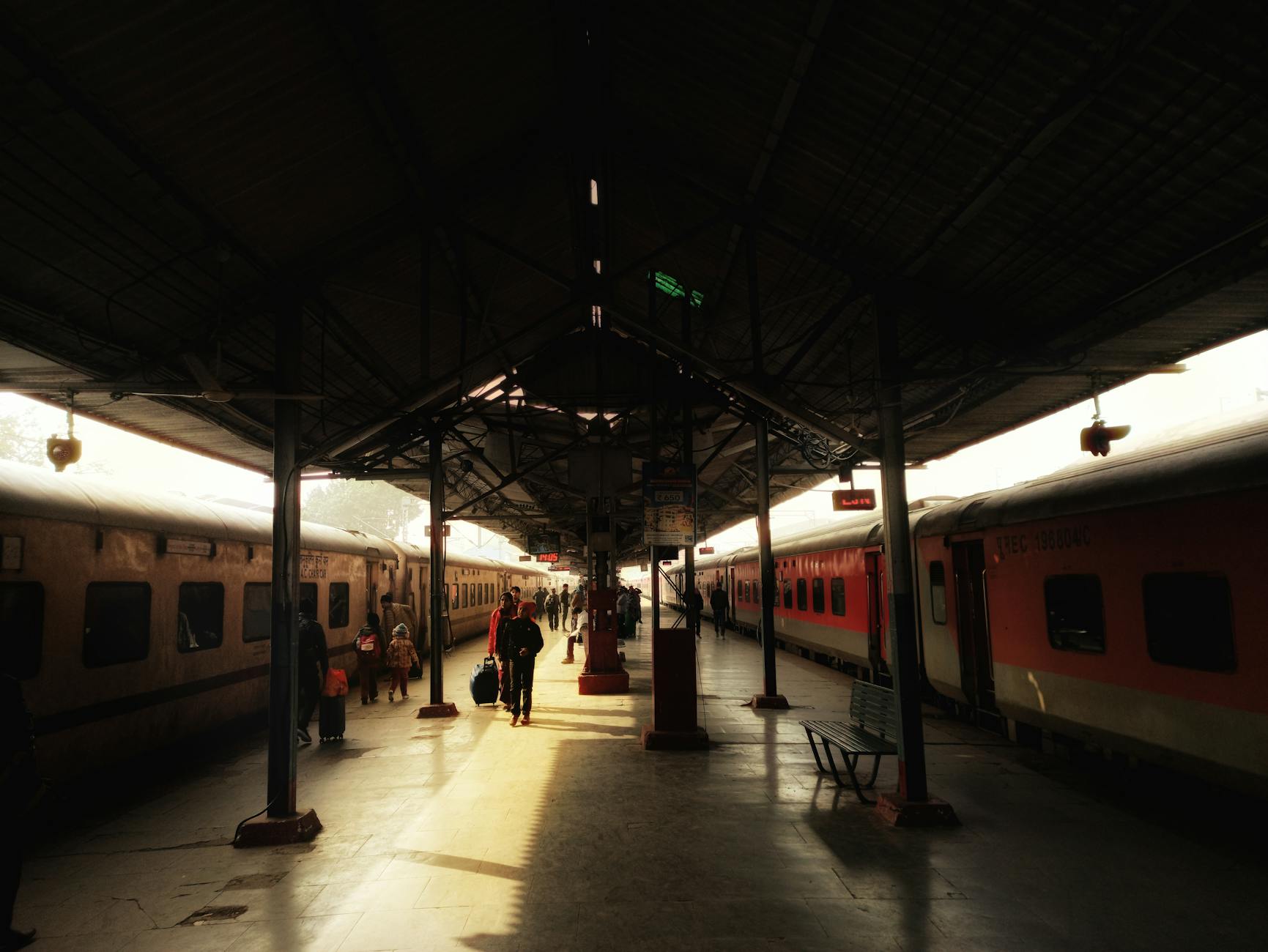
Most visitors arrive with too much transition already in their bodies. That is why arrival strategy matters so much here.
If coming from Delhi or Jaipur, the point is not to maximize movement but to arrive composed enough that your Taj visit is not already compromised. Build the schedule around the monument that matters most, not the road or rail segment you happened to book first. If you are overnighting, let arrival be the softer half of the day and preserve the best Taj window for when you are least rushed.
Agra should feel controlled from the moment you enter it. If it already feels messy, the rest of the day often follows.
Why The Overnight Usually Beats The Day Trip
The day trip remains attractive because it appears efficient. In theory, you leave Delhi, see the Taj Mahal, add Agra Fort, maybe squeeze in something else, and come back with the task complete. For some travelers, especially those on very tight schedules, that is still the correct answer.
But the overnight usually wins because it reduces punishment.
Agra’s main problem is not a shortage of attractions. It is that the emotional peak and the logistical peak often collide. A day trip intensifies that collision. Transport matters more. Delays matter more. Heat matters more. Fatigue matters more. Every imperfect transfer begins stealing from the Taj session before you even arrive.
The overnight softens the entire structure. You can arrive, recover, sleep, and approach the main monument with at least some composure. Or you can see the Taj first, then retreat without having to immediately turn the day into an exit operation. The city becomes less extractive.
This is why one night is often the best luxury you can buy in Agra, even if the hotel itself is not extravagant. It buys margin. Margin is what makes the city feel considered instead of consumed.
Where to Stay
The right Agra hotel should reduce friction, not merely provide a bed.
Near the Taj / East-Gate-Oriented Hotel Logic
Best for travelers who want the cleanest possible route into a premium Taj session. This usually works best for a one-night stay.
Larger Full-Service Hotels
Best for travelers who want recovery, dependable meals, strong security, and a calmer frame around a monument-heavy stop. Agra often benefits from this more than visitors expect.
What to Avoid
Do not choose a weaker property just because the city is “only for one night.” That is backwards. Agra’s narrower purpose makes hotel quality matter more, not less.
Why Hotel Quality Matters More Here Than In Broader Cities
In larger Indian cities, a weak hotel can sometimes be redeemed by the city around it. You spend enough time out, moving through different districts and rhythms, that the property remains only one part of the experience. Agra is different.
Because the city is so concentrated, the hotel becomes part of the monument logic itself. It determines whether you reset correctly between sites, whether early starts feel manageable, whether late returns feel punishing, whether meals support the visit instead of derailing it, and whether you leave the city composed enough to keep the experience intact.
This is also why a full-service hotel often overperforms in Agra. It is not about luxury for its own sake. It is about reducing the city’s friction at exactly the points where Agra is most vulnerable to becoming merely tiring.
The Agra That Matters Most
Taj Agra: the white-marble ideal, the emotional reason most people came, and the part of the trip that must be protected.[1]
Fort Agra: the imperial counterweight, where the city’s power reads in sandstone and enclosure rather than in perfection and symmetry.[2][5]
River Agra: the part that explains why the Taj is not only about facades but about placement, axis, and distance.[7][6]
Extended Agra: Itimad-ud-Daulah, Mehtab Bagh, the heritage-walk idea, and selected supporting experiences that keep the city from shrinking to one image.[6][4]
Why One Protected Taj Session Matters More Than Two Weak Ones
Travelers are often tempted by the idea of seeing the Taj more than once in order to “get their money’s worth” out of Agra. Sometimes that can be excellent. More often, especially on a first trip, it produces two diluted sessions instead of one authoritative one.
The city usually improves when one Taj visit is fully protected. That means it gets the best light you can realistically manage, the cleanest approach, the least compromised energy level, and the least competition from surrounding logistics. If a second session emerges naturally from a longer stay, fine. But it should not come at the cost of the first one’s integrity.
Agra is not a city where repetition is automatically enrichment. Here, quality of attention matters more than frequency.
The Taj Mahal and the Discipline It Requires
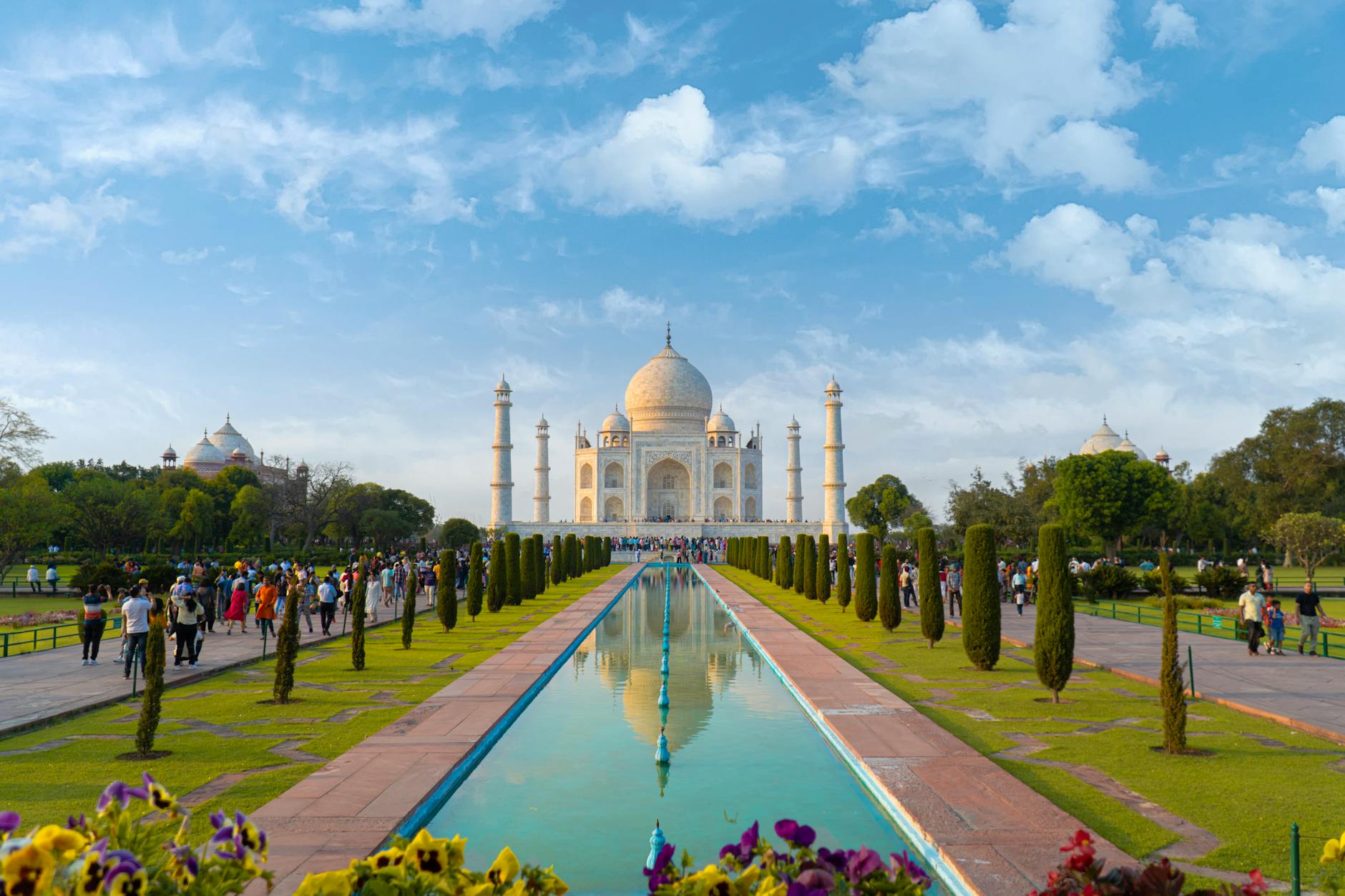
The official visitor page gives you the practical outline: the Taj opens shortly before sunrise, closes shortly before sunset, and is shut on Fridays for general viewing.[1] The more important truth is editorial, not logistical. The Taj requires discipline.
Do not bury it in the middle of a transfer day if you can avoid it. Do not promise the Taj to the most exhausted hour of your trip. Do not add too many “while we’re there” errands before or after it. And do not assume the point is simply to arrive, take the canonical photo, and depart having technically completed the task.
The Taj is strongest when the approach still has some calm in it. It is strongest when light, scale, and symmetry are allowed to work on you rather than get bulldozed by hurry.
Why The Main Mausoleum Decision Actually Matters
Many visitors treat the additional mausoleum ticket as a technical detail. It is more than that.
In a city where the monument’s emotional center and the visitor’s symbolic goal are so tightly aligned, the decision to enter the main mausoleum changes the rhythm of the visit. For some travelers, it will be essential. For others, particularly those more interested in exterior composition and garden geometry, it may be less decisive. But it should still be decided consciously.
What matters is not whether every traveler makes the same choice. What matters is that the choice be made before the visit starts dictating itself. Agra goes wrong when too many decisions are deferred to the moment of crowd pressure.
Agra Fort and the Mughal Relationship
Agra Fort is where the city becomes more intelligent.
The official fort page notes the single public entry through Amar Singh Gate and points visitors toward the pavilions, audience halls, and river views that make the visit worthwhile.[2] UNESCO’s description reinforces the larger point: this is not merely a defensive shell but an imperial city in red sandstone, holding palaces, halls, and a different register of Mughal authority.[5]
If the Taj is refinement, Agra Fort is governance. If the Taj is perfect balance, the fort is lived power. You need both if you want Agra to feel like history rather than like a single masterpiece marooned in tourism.
Why Agra Fort Is The Essential Correction
Agra Fort does not merely provide “something else to see.” It changes the whole argument of the trip.
Without the fort, the city can feel over-identified with memorial beauty. With the fort, you see the administrative, military, and dynastic scale that made such beauty possible. The Mughal world stops being a romance and becomes a state. That shift is essential. It moves Agra from the register of image to the register of civilization.
This is also why the fort is the correct supporting monument for most first trips. It is not just nearby. It is structurally relevant.
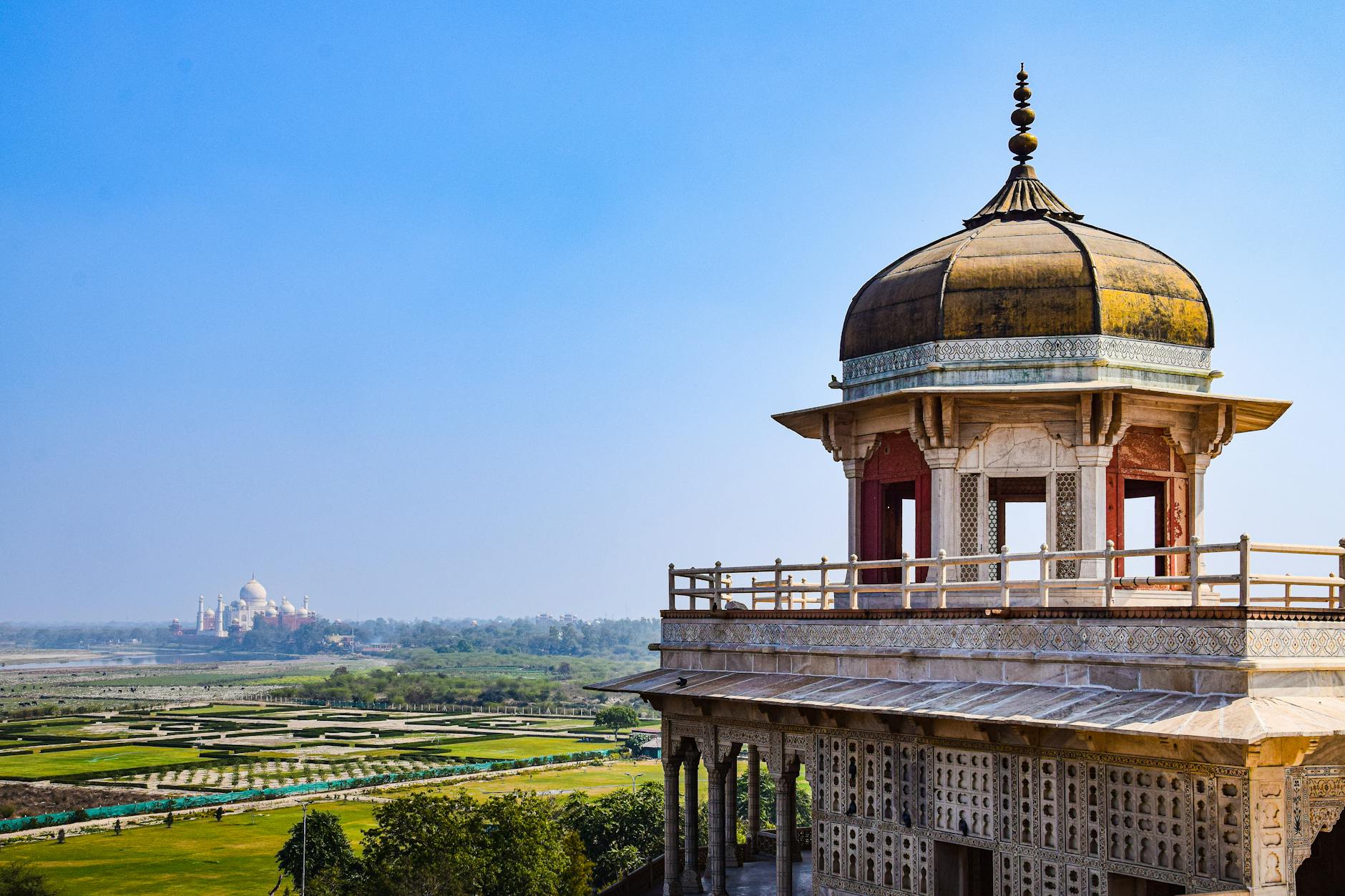
Mehtab Bagh and the River Counterview
One of Agra’s main corrections is distance.
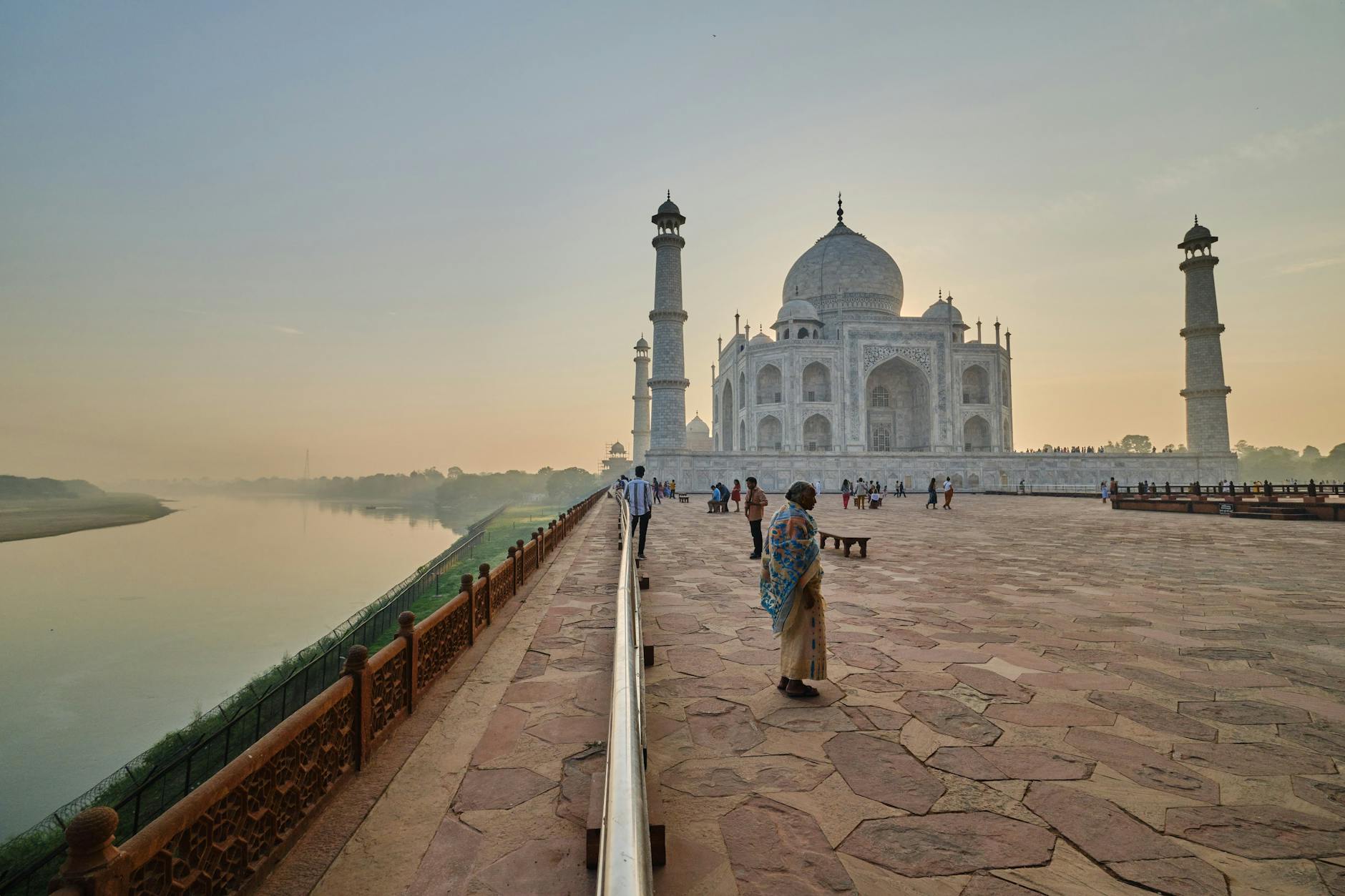
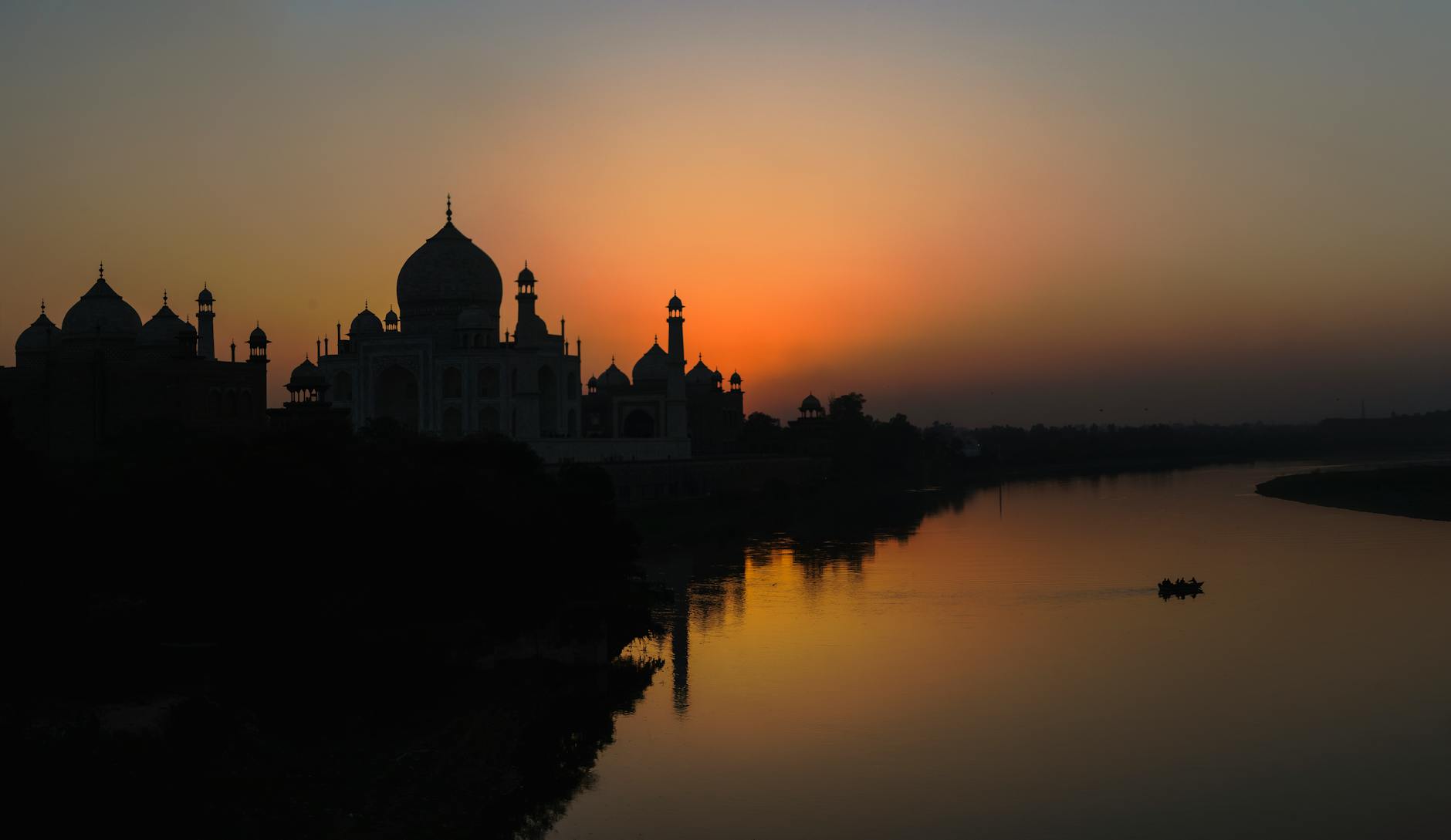
The official Agra material describes Mehtab Bagh on the left bank of the Yamuna opposite the Taj and calls it one of the best places to view the mausoleum.[6] The official Taj View Point near Mehtab Bagh makes the same broader case even more directly: the west-bank perspective exists to give you a panoramic Taj rather than an immersive close-up.[7]
This matters because the Taj is too often over-consumed from one side. A counterview brings back proportion. It reintroduces river, horizon, and placement. It lets the monument become architecture again.
Why The Counterview Changes Everything
The first Taj experience is often immersive: gates, gardens, alignment, marble, people, scale. All of that is necessary. But it can also be too total. The monument risks becoming only a close-up triumph.
The counterview restores thought. Whether from Mehtab Bagh or another west-bank framing point, it allows the Taj to re-enter its landscape. You see the Yamuna. You feel the distance. You understand that the monument was designed not merely as an object but as a placed event in space.
This is especially important for travelers who leave first visits saying the Taj was beautiful but exhausting. The counterview can convert exhaustion into comprehension. It gives the monument back some calm.
Beyond the Big Two
Agra should not be padded into false depth, but it also should not be flattened.
The official Agra overview still presents Itimad-ud-Daulah as a white-marble precursor to the Taj Mahal.[6] That is useful both historically and practically. It gives the trip a smaller, quieter ornamental register. Likewise, the government site’s continued emphasis on “Agra Beyond Taj” and heritage-walk framing is a reminder that the city has secondary textures worth acknowledging.[4]
The right support stop is therefore not “whatever else is nearby.” It is the place that complements the shape of the main day.
Why Agra Gets Worse When You Ask Too Much Of It
Agra deteriorates quickly under excess ambition.
This can surprise travelers because the city appears narrow enough to “finish.” A few major sights, some local food, one or two viewpoints, perhaps Fatehpur Sikri, perhaps a heritage walk, and perhaps a shopping stop: on paper, it can all look manageable. In practice, the city rarely rewards that attitude.
The reason is simple. Agra’s value is concentrated rather than distributed. Once the core experiences are weakened, the secondary ones cannot save the day. They only make the failure busier. This is why adding more in Agra often produces less.
The right ambition level is therefore lower than many first-time visitors expect. That is not a concession. It is the city’s grammar.
Fatehpur Sikri: When It Belongs
Fatehpur Sikri is not an Agra afterthought. It is a separate commitment.
The official site describes it as a major imperial complex `37 kilometers` from Agra and open from sunrise to sunset.[3] If you have only one tightly managed Agra day, adding Fatehpur Sikri often weakens the whole. If you have a second day, or a strong overnight structure, it can become the right expansion because it broadens the Mughal story without stealing the Taj’s central position.
Use it when you have room. Skip it when you do not. Forced completion is not sophistication.
The Difference Between A Strong Agra Day And A Tired One
A strong Agra day has hierarchy. It knows what the day is for. It protects the highest-value session. It accepts that one major monument plus one major support can already be enough. It leaves room for a meal, a pause, and one corrective counterview if energy holds.
A tired Agra day looks almost the same on paper but feels entirely different in the body. Transfers bleed into monument time. Lunch becomes a delay rather than a reset. One additional stop gets added because it seems close. The traveler starts thinking in completions rather than in quality. By late afternoon, the Taj is no longer an experience but a thing that happened earlier in a day that will not end.
The difference between these two days is rarely attraction count alone. It is editorial discipline.
Food and What Agra Is Actually Good At
Agra is better used as a city of selected meals than as a city of aggressive culinary conquest.
The official Agra overview still points to `petha`, `dalmoth`, bedhai-and-jalebi breakfasts, Mughlai food, and street snacks as local anchors.[6] That does not mean you should turn the trip into a food crawl. It means you should give the city a little local flavor rather than eating as if you were only in transit.
Agra works well with one proper local sweet purchase, one grounded breakfast, and one deliberate dinner. Beyond that, the food should support the monument day, not compete with it.
Morning Agra Versus Afternoon Agra
Morning Agra is usually the better version of the city. The light is kinder, the monument logic is clearer, and the body has not yet been worn down by traffic, heat, or over-management. This is when Agra can still feel ceremonial.
Afternoon Agra is more difficult. Heat rises, patience drops, and the city can begin to feel like a logistical test rather than an imperial landscape. That does not mean afternoons are useless. Agra Fort can still work well, hotel time can reset the whole trip, and a carefully chosen evening can recover some atmosphere. But the city’s planning bias is unmistakable: if something truly matters, try not to make it an afternoon default.
Getting Around
Agra is not a city to improvise lazily on foot across broad distances. It is a city to segment.
Keep transfers clear. Cluster the day. Avoid bouncing repeatedly across town. Use one primary monument, one secondary monument, and maybe one river-facing counterview rather than constructing a marathon. The trip deteriorates fast when local movement starts dictating the experience.
This is one reason the overnight can beat the day trip: not because Agra itself suddenly becomes bigger, but because the schedule becomes less punitive.
Who Agra Handles Especially Well
Agra is especially good for travelers who can accept that a narrow destination may still be a major one.
Architecture lovers do well here because the city’s core argument is spatial and formal. First-time India visitors do well if they understand that Agra is not trying to be Delhi or Jaipur. Couples often do well because the trip can be built around one or two highly protected experiences rather than around endless movement. Luxury-minded travelers also often do better than they expect because a strong hotel can significantly improve the emotional texture of the stop.
The city is harder for travelers who need constant novelty, neighborhood life, or spontaneous wandering to feel that a place is real. Agra has reality, but it does not offer it casually.
Common Mistakes
Treating the Taj Mahal as a Flexible Appointment
It is the opposite. It should organize the day.
Assuming Agra Is Worth More Only If You Add More Sights
Agra’s quality usually comes from good editing.
Booking a Weak Hotel Because the Stay Is Short
Short stays make quality more important, not less.
Forcing Fatehpur Sikri Into a Full Agra Day
This often turns two good experiences into one tired blur.
Leaving Without a Counterview
The Taj deserves at least one more distant reading, not just the standard frontal consumption.
Why Agra Often Improves On The Second Visit
On a first visit, many travelers are too anxious about the Taj to notice how the rest of Agra should behave around it. They worry about timing, ticketing, light, crowds, the canonical view, and whether the whole trip will live up to the image they carried in. That anxiety is understandable, but it can make the city feel procedural.
The second visit is often calmer. The monument no longer needs to prove itself. The traveler is more likely to notice the river, to use Agra Fort more intelligently, to choose a better hotel, or to let one session be enough. In other words, the city gets better once the main encounter stops feeling like an exam.
How Agra Changes Over The Course Of A Stay
On arrival, Agra can feel thinner than expected. The city’s world-historic importance and its immediate urban texture do not always align neatly. Some travelers misread this as disappointment.
By the time the Taj and Agra Fort have both been seen properly, the city often begins to cohere. The river starts to matter. The distance between marble beauty and red-sandstone authority begins to read as a system rather than as two unrelated stops. If the hotel is good and the timing has been kind, Agra can suddenly feel much more complete than it first did.
By the end of a strong overnight, the city often reveals its real scale: not broad, not leisurely in the way some heritage cities are, but precise, imperial, and unexpectedly severe in its own way.
My Blunt Advice
If you can overnight in Agra comfortably, do it once and do it properly.
Protect the Taj.
Give Agra Fort real time.
Use Mehtab Bagh or another river-facing counterpoint if the schedule allows.
Add Fatehpur Sikri only if you truly have the room.
And do not judge Agra by whether it behaves like a broad urban holiday. It is narrower than that, stranger than that, and better than a rushed visit usually lets it seem.
Source Notes
- 1. Taj Mahal official visitor information, Department of Tourism, Government of Uttar Pradesh. The official page lists current Taj Mahal hours, Friday closure, ticket structure, online ticketing, and the additional mausoleum ticket. https://www.tajmahal.gov.in/visiting-hours.aspx/architecture.aspx
- 2. Agra Fort official page, Department of Tourism, Government of Uttar Pradesh. The page notes entry through Amar Singh Gate, sunrise-to-sunset hours, and current fort ticket information. https://tajmahal.gov.in/agrafort.aspx
- 3. Fatehpur Sikri official page, Department of Tourism, Government of Uttar Pradesh. The page states that Fatehpur Sikri is about 37 kilometers from Agra, open from sunrise to sunset, and remains a separate major excursion rather than a casual add-on. https://www.tajmahal.gov.in/fatehpur-sikri.aspx
- 4. Heritage Walk Beyond the Taj, Department of Tourism, Government of Uttar Pradesh. This official page reflects the state tourism framing that Agra deserves attention beyond the Taj alone. https://www.tajmahal.gov.in/heritage-walk-beyond-the-taj.aspx
- 5. UNESCO World Heritage Centre. Agra Fort is described as a major Mughal imperial city of red sandstone enclosing palaces, audience halls, and mosques, which helps explain why it should be treated as more than a supporting stop. https://whc.unesco.org/en/list/251/
- 6. About Agra, Department of Tourism, Government of Uttar Pradesh. This official overview is useful for the city’s river logic, the relation between Taj Mahal and Agra Fort, Itimad-ud-Daulah as a precursor, Mehtab Bagh’s position opposite the Taj, and core food traditions. https://tajmahal.gov.in/about-agra.aspx
- 7. Taj View Point A.D.A. near Mehtab Bagh, Department of Tourism, Government of Uttar Pradesh. The official page confirms the west-bank panoramic Taj viewpoint near Mehtab Bagh and its practical viewing logic. https://www.tajmahal.gov.in/taj-view-point-mehtab-bagh.aspx