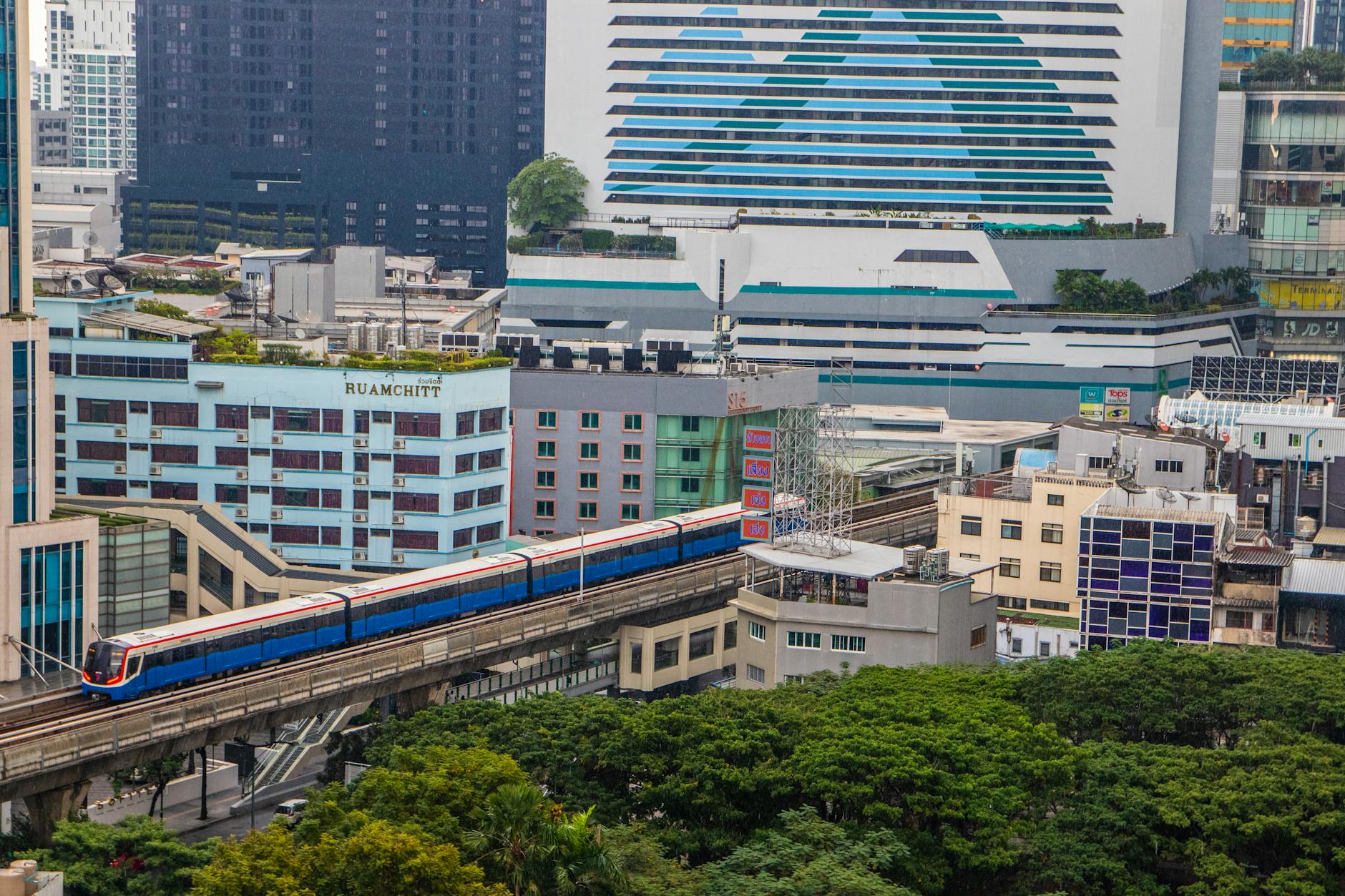
A practical analysis for visitors, foreign residents, and local users
Audience: Independent travelers, families, business travelers, longer-stay visitors, foreign residents, and locals comparing practical mobility options.
Contents
- [Executive summary](#executive-summary)
- [Part I — National-scale transportation in Thailand](#part-i--national-scale-transportation-in-thailand)
- [1. The basic structure of Thai transportation](#1-the-basic-structure-of-thai-transportation)
- [2. How to choose the right mode](#2-how-to-choose-the-right-mode)
- [3. Domestic flights and airports](#3-domestic-flights-and-airports)
- [4. Intercity rail](#4-intercity-rail)
- [5. Intercity buses, coaches, and minivans](#5-intercity-buses-coaches-and-minivans)
- [6. Urban and local public transport](#6-urban-and-local-public-transport)
- [7. Taxis, ride-hailing, tuk-tuks, and motorcycle taxis](#7-taxis-ride-hailing-tuk-tuks-and-motorcycle-taxis)
- [8. Ferries, speedboats, river boats, and longtail boats](#8-ferries-speedboats-river-boats-and-longtail-boats)
- [9. Private vehicles, rental cars, and motorbikes](#9-private-vehicles-rental-cars-and-motorbikes)
- [10. Payments, ticketing, and route planning](#10-payments-ticketing-and-route-planning)
- [11. Accessibility, luggage, children, and older travelers](#11-accessibility-luggage-children-and-older-travelers)
- [12. Common risks, scams, and friction points](#12-common-risks-scams-and-friction-points)
- [13. Local residents' transportation concerns](#13-local-residents-transportation-concerns)
- [14. Recommended mobility strategies by traveler type](#14-recommended-mobility-strategies-by-traveler-type)
- [Part II — City-by-city analysis](#part-ii--city-by-city-analysis)
- [Bangkok](#bangkok)
- [Chiang Mai](#chiang-mai)
- [Phuket](#phuket)
- [Krabi](#krabi)
- [Koh Samui](#koh-samui)
- [Pattaya](#pattaya)
- [Hua Hin](#hua-hin)
- [References](#references)
Executive summary
Thailand is easy to travel through, but it is not a single unified transport system. It is a collection of strong long-distance links, a highly developed Bangkok rail network, extensive bus and minivan services, regional airports, informal shared transport, ride-hailing, taxis, motorcycle taxis, ferries, and local boat systems. The result is flexible but fragmented. Visitors who expect one national pass, one app, or one standard fare system will be frustrated. Visitors who learn the role of each mode will move efficiently.
At the national level, the main pattern is simple. Use domestic flights for long distances when time matters; trains when the route is rail-served and comfort, scenery, or overnight travel matter; buses and minivans when rail is absent or inconvenient; ferries and boats for islands and river corridors; urban rail where it exists, especially in Bangkok; and taxis, songthaews, motorcycle taxis, and ride-hailing for the last mile.
The most important traveler reality is that Thailand has two very different transport environments. Bangkok is a large metropolitan transport system with BTS Skytrain, MRT, Airport Rail Link, commuter rail, buses, river boats, canal boats, taxis, motorcycle taxis, and apps. Most other destinations are less formal. Chiang Mai, Phuket, Krabi, Koh Samui, Pattaya, and Hua Hin rely heavily on local pickups, songthaews, minivans, tuk-tuks, taxis, motorbike taxis, private transfers, rental vehicles, and boats.
The most important safety reality is road risk. Thailand's road environment is difficult for inexperienced motorbike riders, and foreign visitors often underestimate licensing, insurance, helmet, and crash risks. Several government travel advisories warn that road accidents, especially involving motorbikes, are a major danger for foreign visitors. A legal motorcycle license and International Driving Permit matter not only for police checkpoints but also for insurance coverage.
The most important convenience reality is payment fragmentation. Bangkok rail payment is improving, including contactless bank-card acceptance on MRT lines under MRTA from 2026, but transport remains split among Rabbit cards, MRT tokens/cards/contactless, airport rail ticketing, bus fares, cash-only local vehicles, app payments, and pier counters. Outside Bangkok, cash and exact small notes remain important.
The most practical rule for travelers is this: choose accommodation based on transport access, not just room quality. In Bangkok, stay near BTS, MRT, Airport Rail Link, or river piers. In Chiang Mai, decide whether you want Old City, Nimman, or riverside access. In Phuket and Krabi, choose the beach or town you actually plan to spend time in, because cross-area movement can be slow and expensive. On Koh Samui, resort isolation can sharply increase transport costs. In Pattaya and Hua Hin, being close to the core route network matters more than a map distance of a few kilometers.
1. The basic structure of Thai transportation
Thailand's national mobility system can be understood as eight overlapping layers.
1.1 Domestic aviation
Domestic flights connect Bangkok with major regional destinations such as Chiang Mai, Phuket, Krabi, Koh Samui, Surat Thani, Hat Yai, Chiang Rai, Udon Thani, Ubon Ratchathani, Khon Kaen, and many others. For visitors with limited time, flying is often the only realistic way to combine Bangkok, northern Thailand, and southern beach destinations in one trip.
Bangkok has two major airports: Suvarnabhumi Airport (BKK) and Don Mueang Airport (DMK). Suvarnabhumi is linked to central Bangkok by the Airport Rail Link, taxis, buses, airport limousine services, intercity buses, vans, and app-based transport. The airport's own transport guide lists taxis, Grab, AOT Limousine, rental cars, public buses, intercity buses, vans, chartered buses, airport shuttle links, and Airport Rail Link as part of the airport access system.
1.2 Intercity rail
Thailand's conventional railway network is operated by the State Railway of Thailand (SRT). It is useful for long-distance travel on the Northern, Northeastern, Southern, Eastern, and other corridors, especially Bangkok–Chiang Mai, Bangkok–Ayutthaya, Bangkok–Hua Hin, Bangkok–Surat Thani, and Bangkok–Nong Khai-type journeys. SRT provides timetable and booking functions through official channels, including D-Ticket.
Rail is not the fastest mode for most long-distance travel, but it can be comfortable, scenic, relatively safe, and useful for overnight journeys. It is also important for locals because it provides lower-cost intercity transport and commuter links around Bangkok and nearby provinces.
1.3 Intercity buses and coaches
Buses and coaches are the most geographically comprehensive public transport mode in Thailand. They fill gaps where rail does not go, including Phuket, Krabi, many northeastern towns, border areas, and provincial routes. The state-linked Transport Company and private operators connect Bangkok with most provinces, while local bus terminals serve regional travel.
Long-distance buses range from basic ordinary services to VIP coaches with reclining seats and onboard toilets. Minivans and minibuses provide frequent service on shorter regional routes, but they can be cramped and less comfortable with luggage.
1.4 Urban rail and mass transit
Thailand's most developed urban rail network is in Bangkok and its metropolitan area. It includes BTS Skytrain, MRT lines, Airport Rail Link, SRT Red Line commuter rail, and related feeder systems. Bangkok's network is extensive but not unified under one simple fare system.
Outside Bangkok, urban rail is limited. Most cities rely on road-based public transport, taxis, songthaews, tuk-tuks, motorcycle taxis, private transfers, and ride-hailing.
1.5 Informal and semi-formal local transport
Local transport is where Thailand differs most from countries with standardized municipal bus networks. Many places rely on:
For locals, these modes are part of everyday life. For visitors, they are often confusing because routes, fares, boarding points, and operating hours may not be obvious in English.
1.6 Taxis and ride-hailing
Metered taxis are common in Bangkok and some large tourist areas, but availability and pricing behavior vary sharply by city. Ride-hailing apps such as Grab and Bolt are widely used by visitors and residents, with Grab promoting taxis, cars, motorbikes, vans, upfront pricing, verified drivers, and service coverage in major Thai cities.
Apps reduce language and fare negotiation problems, but they do not eliminate traffic delays, airport pickup restrictions, surge pricing, driver cancellations, or local supply shortages.
1.7 Ferries and boats
Boats are not just tourist attractions in Thailand. They are essential public transport in several settings:
Weather, sea state, pier location, tides, and luggage handling matter. In island and coastal travel, boat logistics are part of the transport system, not an optional side activity.
1.8 Private vehicles
Private cars, rental cars, motorbikes, and scooters are common, especially outside Bangkok. For residents, private vehicles solve the last-mile problem. For visitors, they can be useful in rural areas and beach provinces but also introduce major safety, insurance, parking, and licensing issues.
- Songthaews: shared pickup trucks or converted vehicles with bench seating.
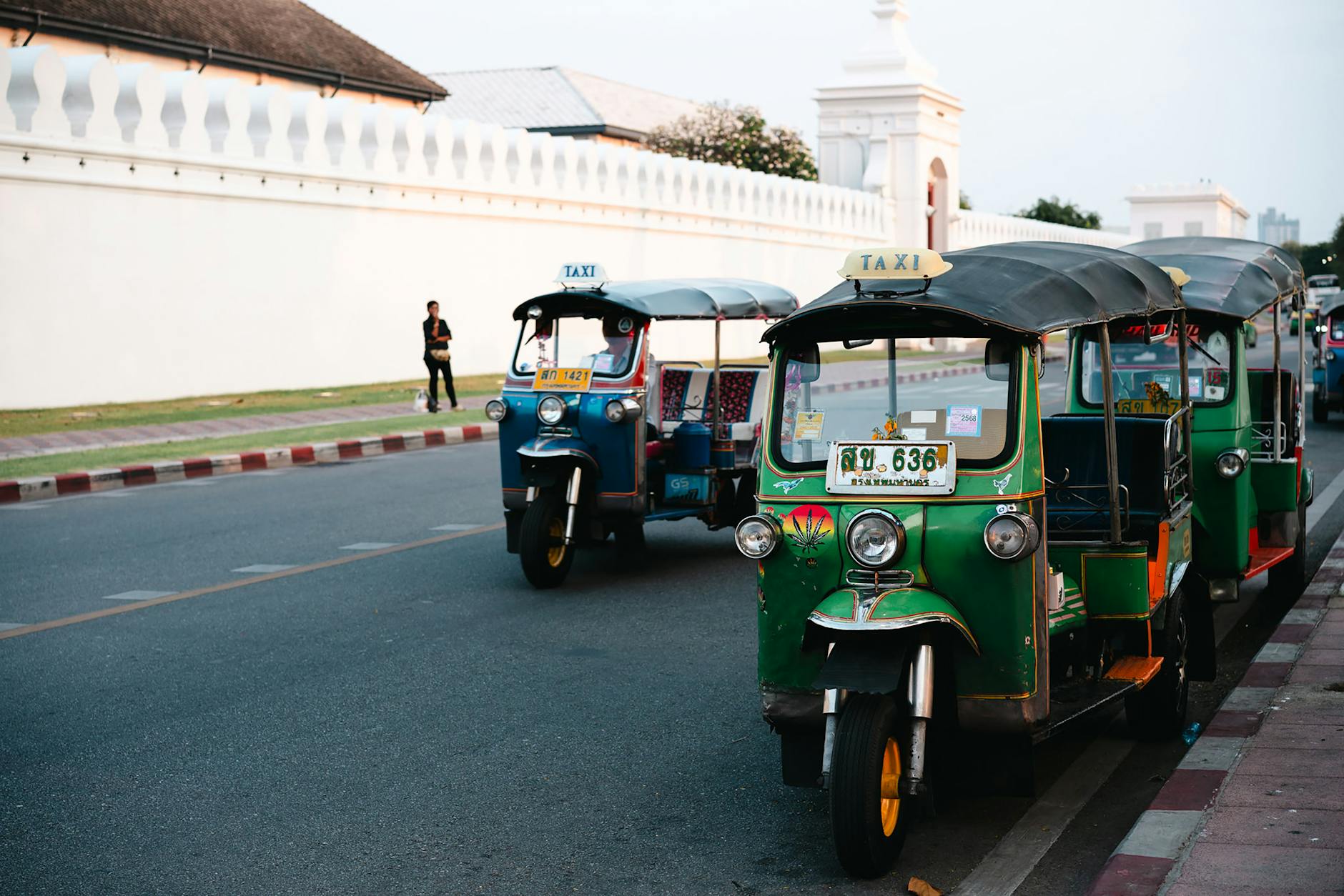
- Tuk-tuks: three-wheeled motorized taxis, usually negotiated rather than metered.
- Motorcycle taxis: fast but higher-risk short-distance rides.
- Local vans: shared minibuses or route vans.
- Hotel shuttles: common in resort areas.
- Shared beach, pier, or airport transfers: common in Phuket, Krabi, and island gateways.
- Bangkok river and canal corridors.
- Island routes in the Gulf of Thailand and Andaman Sea.
- Longtail links to Railay and other boat-only coastal areas.
- Ferries between mainland piers and islands such as Koh Samui, Koh Phangan, Koh Tao, Koh Larn, Koh Phi Phi, Koh Lanta, and others.
2. How to choose the right mode
2.1 The best mode depends on distance and geography
Thailand's transport decision-making is strongly geographic.
For Bangkok and nearby day trips, rail, taxis, vans, buses, and river boats often work well. For Chiang Mai, flights are fastest, overnight trains are comfortable and popular, and buses are cheaper. For Phuket and Krabi, flights are usually most convenient because neither destination is served directly by Thailand's mainline rail network. For Koh Samui, travelers choose between flying directly to the island or using bus/train/flight connections to Surat Thani or nearby mainland piers plus ferry. For Pattaya, road transport from Bangkok and Suvarnabhumi Airport is usually the main method. For Hua Hin, train, coach, taxi, and private car are all practical.
2.2 A practical mode-selection matrix
| Travel need | Usually best option | Why |
|---|---|---|
| Bangkok airport to central city from Suvarnabhumi | Airport Rail Link, taxi, or app car | Rail avoids traffic; taxi/app handles luggage and door-to-door travel. |
| Bangkok sightseeing near rail corridors | BTS/MRT/river boats | Faster than taxis during traffic. |
| Bangkok Old City and riverside attractions | MRT + Chao Phraya boats + taxi/tuk-tuk for final leg | Rail coverage is weaker in parts of the historic core. |
| Bangkok to Chiang Mai | Flight or overnight train | Flight saves time; train can save a hotel night and is scenic. |
| Bangkok to Phuket/Krabi | Flight or long-distance bus | No direct rail; bus is cheaper but long. |
| Bangkok to Hua Hin | Train, coach, taxi, or car | Multiple practical choices; train station is central. |
| Mainland to islands | Ferry/speedboat/longtail | Essential mode; schedules depend on route and weather. |
| Phuket beach-to-beach travel | App car/taxi/private car/Smart Bus where route fits | Public transport is limited and traffic can be slow. |
| Koh Samui local movement | Songthaew, taxi/app, rental car, or licensed motorbike rider | Public transport is informal and route-dependent. |
| Very short local trip in hot weather | Motorbike taxi or short app/taxi ride | Efficient but safety varies. |
| Family with luggage | Taxi/app/private transfer | Reduces transfer stress. |
| Wheelchair or mobility-limited travel outside Bangkok | Prearranged accessible transfer | Informal modes and piers are often difficult. |
2.3 The three rules that prevent most transport problems
First, separate long-distance planning from local last-mile planning. Buying a flight or train ticket is only half the task. You also need to understand how to get from airport, rail station, or pier to your actual hotel.
Second, do not assume English signage, card payment, or app availability everywhere. Tourist areas are manageable, but local transport often still depends on cash, Thai-language route knowledge, or informal negotiation.
Third, do not rent a scooter casually. In beach towns and islands, scooters look like freedom. They can also become the most expensive and dangerous decision of a trip if the rider is unlicensed, uninsured, inexperienced, or riding without a helmet.
3. Domestic flights and airports
3.1 Why domestic flights matter
Thailand is long north-to-south. A route that looks manageable on a map may be a full-day or overnight overland trip. Bangkok to Chiang Mai, Bangkok to Phuket, Bangkok to Krabi, and Bangkok to Surat Thani/Koh Samui gateways are all routes where flying can save significant time.
Domestic flights are especially useful for:
3.2 Bangkok's two-airport problem
Many visitors underestimate the importance of Bangkok's airport split.
Suvarnabhumi Airport (BKK) is the main international gateway and also handles many domestic flights. It has Airport Rail Link access to the city, official taxi facilities, buses, vans, intercity coaches, car rental, and airport transport services.
Don Mueang Airport (DMK) is also a major domestic and regional airport. It is farther from many tourist hotel zones than it first appears because Bangkok traffic can be severe. DMK access is possible by taxi, app car, buses, and rail connections, but it is not connected to the Airport Rail Link. Travelers connecting between BKK and DMK must allow generous time.
The biggest mistake is booking one flight into BKK and another out of DMK with a tight connection. The airports are far apart in practical travel time, and cross-city traffic can ruin a connection.
3.3 Suvarnabhumi Airport access
The Airport Rail Link connects Suvarnabhumi Airport with the city, including Makkasan and Phaya Thai. Airport rail is useful for solo travelers, people with light luggage, and travelers staying near rail connections. It avoids road congestion and links into Bangkok's broader rail network.
A taxi or app car is better when:
Official Suvarnabhumi taxi guidance notes meter-based taxi fares plus airport surcharge and possible baggage charges. Tolls are normally paid by the passenger when expressways are used.
3.4 Regional airports
Thailand's regional airports vary in how easy they are to use after arrival.
3.5 Airport transfer advice
For airport arrivals, travelers should decide before landing whether they want speed, cost savings, or simplicity.
- Short trips of 7–10 days.
- Combining Bangkok with both northern and southern Thailand.
- Travelers with children or older companions.
- People with limited tolerance for overnight buses.
- Itineraries involving islands, ferries, or transfers.
- You have heavy luggage.
- You arrive late.
- Your hotel is not near rail.
- You are traveling as a family or group.
- You are going directly to a destination outside central Bangkok.
- Chiang Mai Airport is close to the city, and airport bus/shuttle services, taxis, songthaews, and app cars are common.
- Phuket Airport is in the north of the island, far from many beach areas; transfers can be expensive and slow.
- Krabi Airport serves Krabi Town, Ao Nang, Railay access points, and island transfers, but onward movement often requires shuttle bus, minivan, taxi, or boat.
- Koh Samui Airport is on the island and convenient for Samui itself, but flights are often more expensive than mainland-plus-ferry alternatives.
- Surat Thani Airport is a major mainland gateway for Koh Samui, Koh Phangan, and Koh Tao via combined bus/ferry routes.
- Speed: taxi, app car, private transfer, or direct hotel transfer.
- Cost savings: airport rail, airport bus, public bus, or shared van.
- Simplicity: prebooked transfer or official airport taxi.
- Large luggage: avoid crowded rail at peak times and local songthaews unless you are comfortable handling bags.
- Late arrivals: check whether buses, airport rail, ferries, and hotel reception are still operating.
4. Intercity rail
4.1 Role of the rail system
Thailand's conventional railway network is not a Japanese-style high-frequency national system. It is slower, more limited, and more variable. But it remains important because it connects Bangkok with many regions, offers lower-cost travel, and provides comfortable overnight and scenic journeys.
Official State Railway of Thailand channels provide timetable information and online reservation access through SRT D-Ticket.
4.2 Main traveler-useful routes
The most useful routes for typical visitors include:
4.3 Bangkok rail terminals matter
Bangkok railway operations are split among different stations. Many long-distance trains use Krung Thep Aphiwat Central Terminal, while some services may still involve Hua Lamphong, Thon Buri, or other stations depending on route and train type. Travelers should not simply tell a taxi driver "train station" or assume that an old guidebook station is correct. Always check the station name on the ticket and in the official SRT schedule.
4.4 Train classes and comfort
Thai trains usually include combinations of ordinary seats, air-conditioned seats, sleepers, and different carriage classes depending on route. Overnight sleepers can be a good value because they combine transport and accommodation, but popular routes sell out during holidays and peak seasons.
Travelers should bring:
4.5 Strengths and weaknesses of Thai rail
Strengths
Weaknesses
4.6 When not to use the train
Rail is often not ideal when:
- Bangkok–Ayutthaya: easy day trip by train.
- Bangkok–Chiang Mai: popular overnight route, with sleeper options.
- Bangkok–Hua Hin: practical, scenic, and central arrival.
- Bangkok–Surat Thani: gateway for Koh Samui, Koh Phangan, and Koh Tao via bus/ferry transfer.
- Bangkok–Nong Khai: useful for northeastern Thailand and Laos connections.
- Bangkok–Pattaya/eastern lines: possible, but road transport is usually more frequent and convenient for most visitors.
- A light layer for air-conditioned coaches.
- Snacks and water, especially on long routes.
- Earplugs or headphones for overnight travel.
- A small lock or cable for peace of mind with luggage.
- Printed or offline ticket details.
- Less stressful than roads for some long trips.
- Scenic routes, especially toward the north and south.
- Good for overnight travel.
- Useful for Hua Hin and some central/northern routes.
- Lower-cost options for locals and budget travelers.
- Slower than flying.
- Limited coverage for beach provinces like Phuket and Krabi.
- Timetables can be less frequent than buses.
- Delays can happen.
- Stations may not be near beach resorts or final destinations.
- You are on a short trip and time is precious.
- Your final destination is Phuket, Krabi, or an island requiring multiple transfers.
- You need guaranteed same-day ferry connections after a long-distance train.
- You have large luggage and multiple local transfers.
- You are traveling during a holiday period without advance booking.
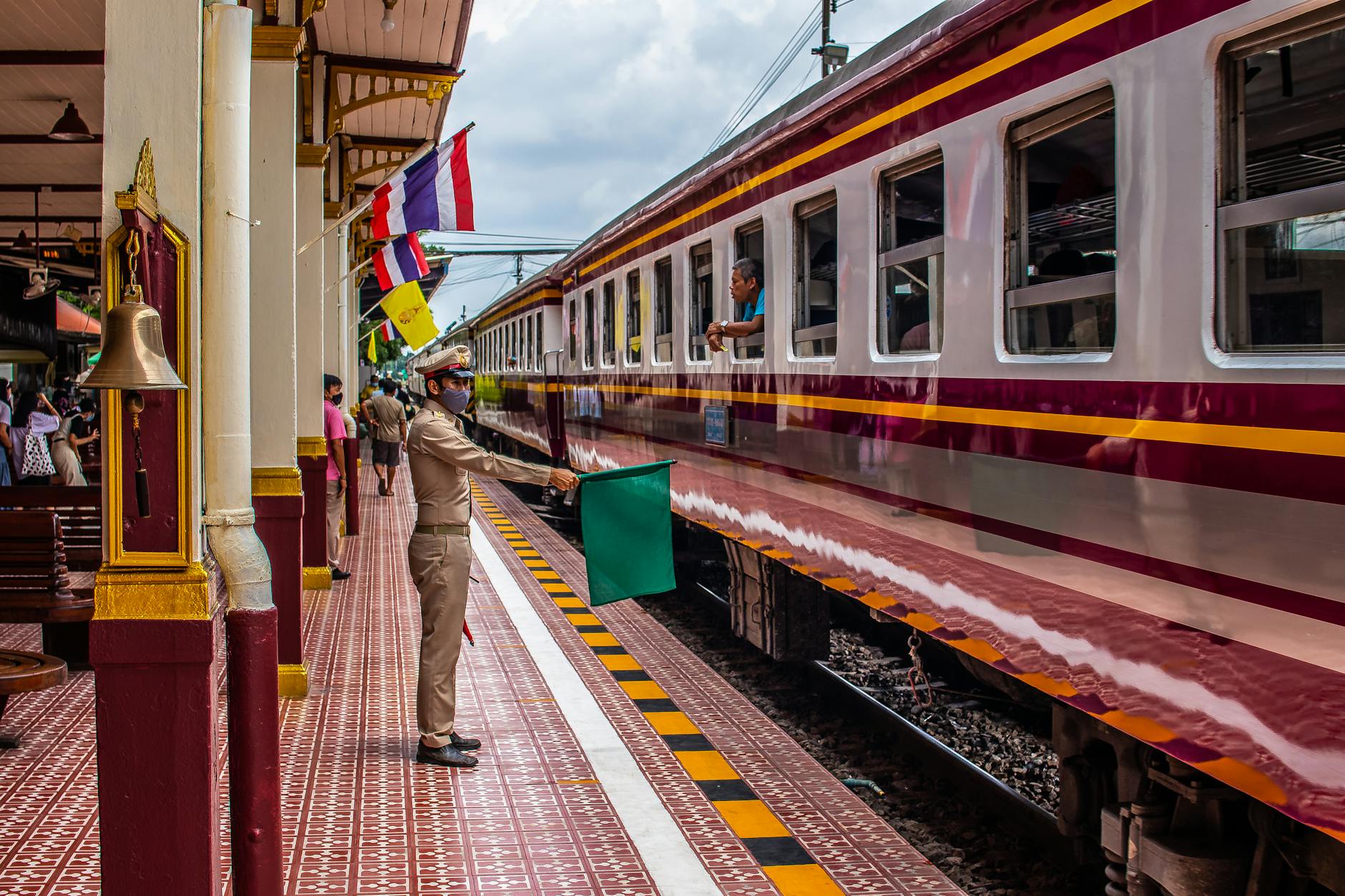
5. Intercity buses, coaches, and minivans
5.1 Why buses are essential
Buses reach far more places than trains. They are essential for routes where rail is absent, inconvenient, or too slow. They are also important for locals because they provide affordable links between provinces, districts, and villages.
The Transport Company operates an official national bus platform and booking-related services, while private companies operate many routes from Bangkok and provincial terminals.
5.2 Bangkok bus terminals
Bangkok has several major long-distance bus terminals, and choosing the correct one matters.
Actual operator, departure point, and terminal can vary. Always check the ticket confirmation instead of relying only on route assumptions.
5.3 Coach categories
Thai intercity road services commonly include:
5.4 Minivans: useful but imperfect
Minivans are common on routes from Bangkok to nearby provinces and within tourist regions. They can be fast and frequent, but they have drawbacks:
For locals, minivans are a normal part of regional commuting. For visitors with large bags, they are often less comfortable than a coach or train.
5.5 Night buses
Night buses are common for long distances. They save a hotel night and can be cheaper than flights, but they are not ideal for everyone. Sleep quality varies. Air conditioning can be cold. Rest stops can be confusing. Arrival times can be very early. Road safety standards and driving style may vary by operator.
A good practice is to book reputable operators, avoid the cheapest unknown overnight service if possible, and keep valuables with you rather than under the bus.
- Mo Chit / Northern Bus Terminal: northern, northeastern, and many central routes.
- Ekkamai / Eastern Bus Terminal: eastern seaboard routes, including many services toward Pattaya and Rayong.
- Sai Tai Mai / Southern Bus Terminal: southern and western routes.
- Ordinary buses: cheaper, slower, more stops.
- Air-conditioned buses: standard intercity option.
- VIP buses: larger seats, fewer passengers, often used overnight.
- Minivans/minibuses: frequent and fast on shorter routes, but cramped.
- Shared tourist transfers: common in island and beach routes.
- Combined bus/ferry tickets: common for Koh Samui, Koh Phangan, Koh Tao, Koh Phi Phi, and other islands.
- Limited luggage space.
- Less legroom.
- Less predictable comfort.
- Potentially aggressive driving.
- Multiple pickup/drop-off points.
- Confusing terminal locations.
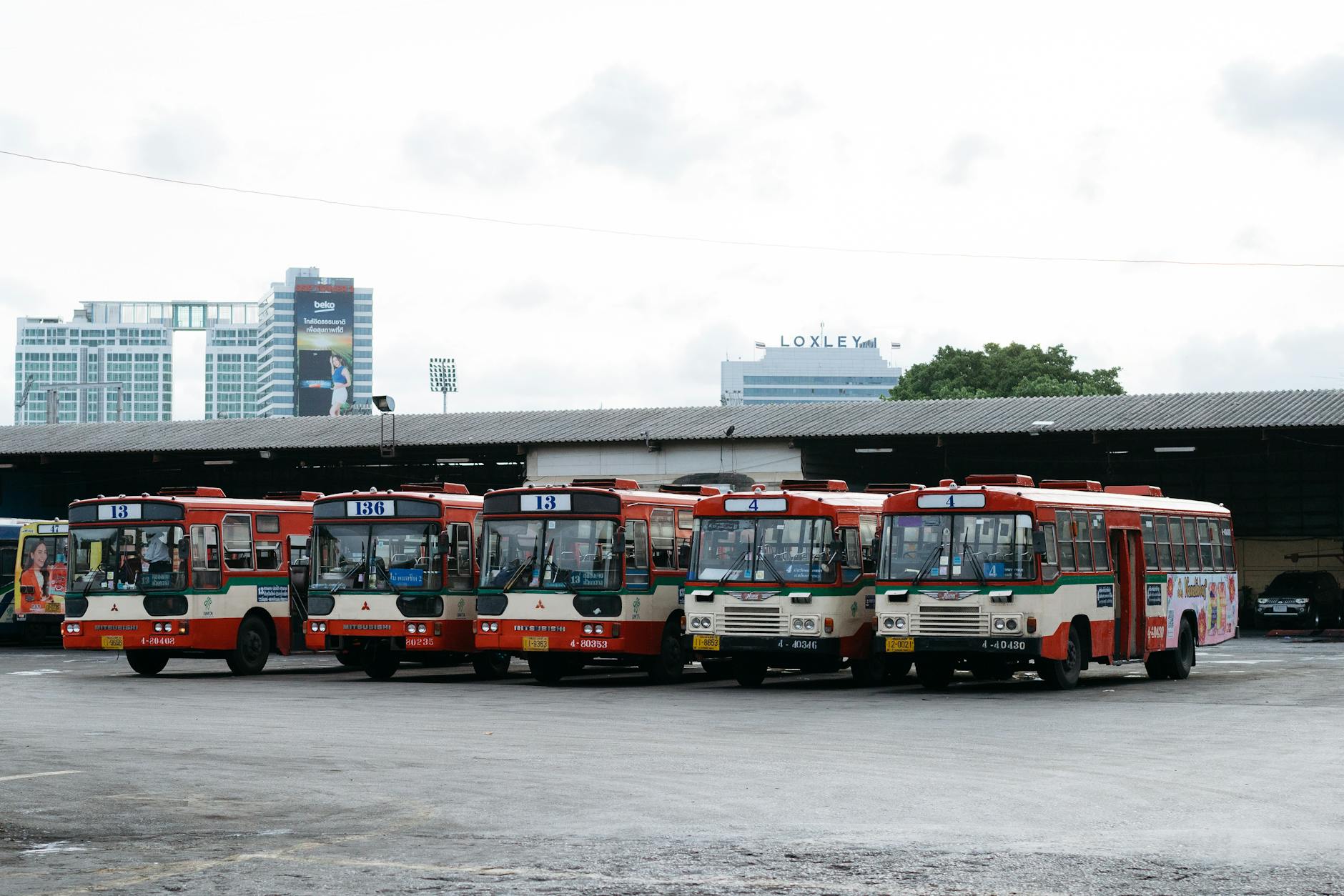
6. Urban and local public transport
6.1 Bangkok is the exception
Bangkok has a large rail and bus network, plus river and canal boats. It is the only city in this analysis where urban rail should usually be the backbone of daily movement. The Tourism Authority of Thailand describes BTS Skytrain as a safe, comfortable, and convenient way to move around Bangkok, especially because it avoids surface traffic.
6.2 Outside Bangkok, local transport is more informal
In Chiang Mai, Phuket, Krabi, Koh Samui, Pattaya, and Hua Hin, there is no single all-purpose metro or bus system. Travelers use a blend of:
This is flexible but requires more local judgment.
6.3 Songthaews
A songthaew is usually a pickup truck or larger vehicle with bench seating. The word is often translated as "two rows," referring to the benches in the back. Songthaews can operate in two different ways:
The same vehicle may operate in both modes. This causes confusion. If you ask a driver to take you somewhere specific, the driver may treat it as a private fare rather than a shared route fare.
6.4 Tuk-tuks
Tuk-tuks are iconic but not always economical. They are useful for short trips, novelty rides, and areas where taxis are scarce, but fares should be agreed before departure. In Bangkok and tourist-heavy areas, tuk-tuks may be more expensive than taxis or app cars.
Avoid "cheap tour" offers that detour to shops, gem stores, suit stores, or commission stops. Several government travel advisories warn travelers about taxi and tuk-tuk scams, including drivers taking passengers to shops rather than the intended destination.
6.5 Motorcycle taxis
Motorcycle taxis are fast for short trips through traffic, especially in Bangkok. They are also higher risk. They are best for short, low-luggage trips by riders who accept the risk and wear a helmet. They are not appropriate for most families, large luggage, older travelers, or anyone uncomfortable on a motorbike.
6.6 Local buses
Local bus quality varies. Bangkok has many city buses, including older non-air-conditioned vehicles and newer air-conditioned/electric services. Phuket has airport buses, Smart Bus routes, and local songthaew-style buses. Chiang Mai has limited public bus/shuttle services. Smaller resort towns often have only partial local bus coverage.
Local buses are cheapest but require patience, route knowledge, and tolerance for heat, traffic, and uncertain waiting times.
- Songthaews.
- Tuk-tuks.
- Motorcycle taxis.
- Local buses or beach buses where available.
- App cars.
- Taxis.
- Private transfers.
- Rental cars or scooters.
- Boats in coastal and island areas.
- As fixed-route shared transport: you board along a known route and pay a standard fare.
- As a private or semi-private charter: you negotiate a destination and price.
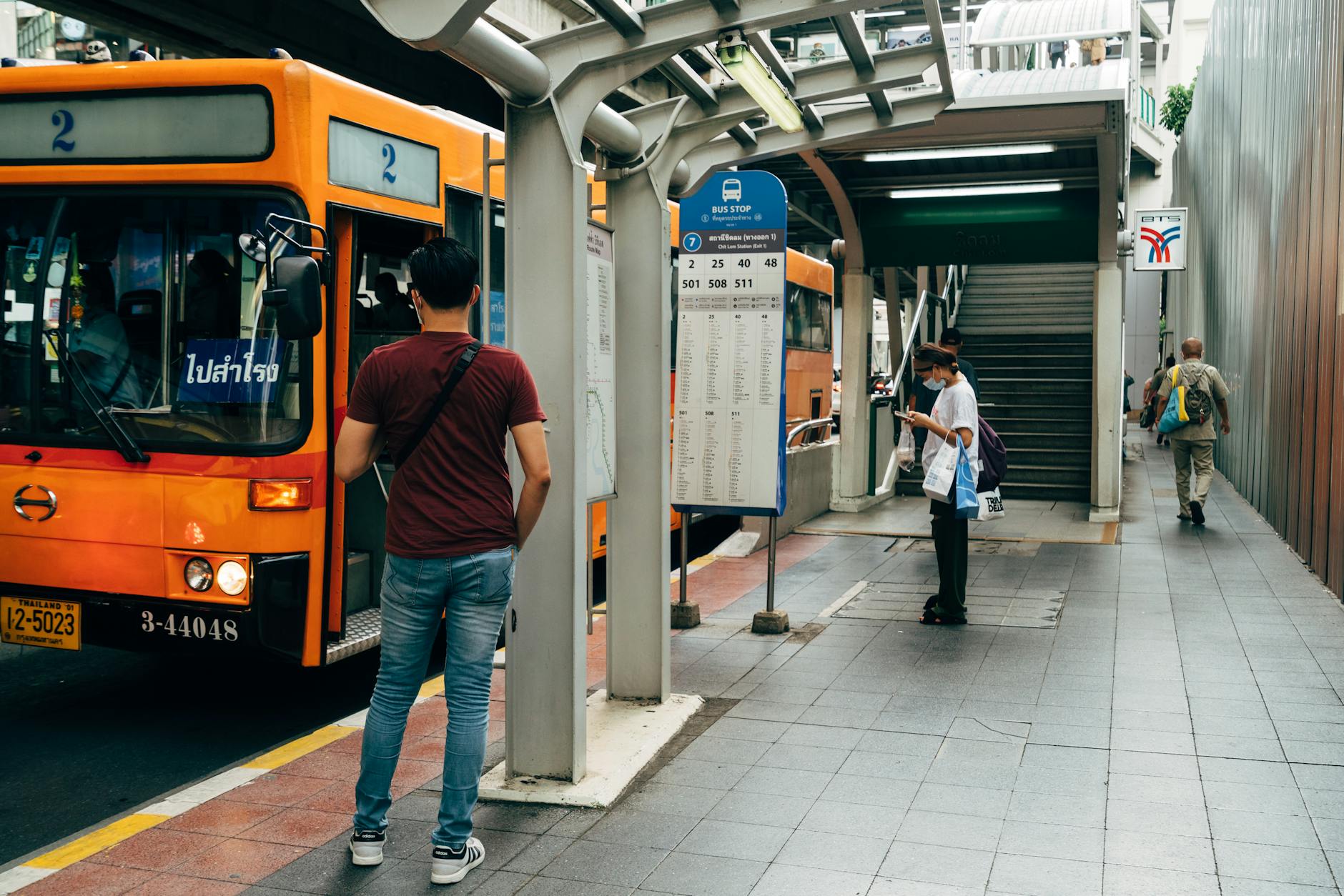
7. Taxis, ride-hailing, tuk-tuks, and motorcycle taxis
7.1 Metered taxis
In Bangkok, metered taxis are plentiful but not always straightforward. A driver may refuse a trip, claim the meter is unavailable, request a flat fare, or avoid heavily congested areas. This is frustrating for both visitors and locals.
Good practice:
7.2 Airport taxis
Airport taxis are usually more orderly than street taxis. At Suvarnabhumi, official taxi information notes base metered fares plus airport surcharge and potential baggage fees. For groups or heavy luggage, this can be worth the extra cost compared with rail transfers.
7.3 Ride-hailing apps
Grab is the most recognized app among foreign visitors. Bolt is also common in many Thai cities and may be cheaper where available. MuvMi operates electric tuk-tuk ride-sharing in parts of Bangkok and is useful in some neighborhoods.
Apps are useful because they:
Apps are not perfect because:
7.4 Tuk-tuks and negotiation
Tuk-tuks work best for short, agreed-price trips. They are not usually the cheapest mode. They are also less comfortable in heat, rain, traffic pollution, and congestion.
A fair approach is to ask the hotel or a local what a typical fare should be, negotiate before departure, and avoid multi-stop "shopping" arrangements unless you genuinely want them.
7.5 Motorcycle taxis and app motorbikes
Motorcycle taxis are a local solution to congestion. They are useful for one person with little or no luggage. They are risky in rain and heavy traffic. Travelers should wear a helmet and avoid motorcycle taxis for longer trips, highways, or after drinking.
- Ask for the meter before getting in or immediately after entering.
- Use an app when possible for price transparency.
- Carry small cash notes.
- Expect tolls to be paid separately by the passenger.
- Avoid taxis parked directly outside major tourist traps if they quote inflated flat fares.
- Reduce language friction.
- Show approximate or fixed prices.
- Provide route tracking.
- Support cashless or in-app payment where configured.
- Offer car, taxi, motorbike, or van options depending on city.
- Prices surge in rain, rush hour, and tourist zones.
- Drivers may cancel.
- Pickup points at airports, malls, and piers can be confusing.
- Coverage may be weak on islands or late at night.
- Local taxi rules may affect pickup behavior.
8. Ferries, speedboats, river boats, and longtail boats
8.1 Boats are part of the transport system
In Thailand, boats are not just leisure activities. They are practical transport in Bangkok, Krabi, Phuket, Pattaya, Koh Samui, and many island routes.
The Tourism Authority of Thailand's national transport guidance includes travel by land, air, and boat, and specifically lists public transport modes such as bus, train, sky train, subway, van, and songthaew.
8.2 Bangkok river and canal boats
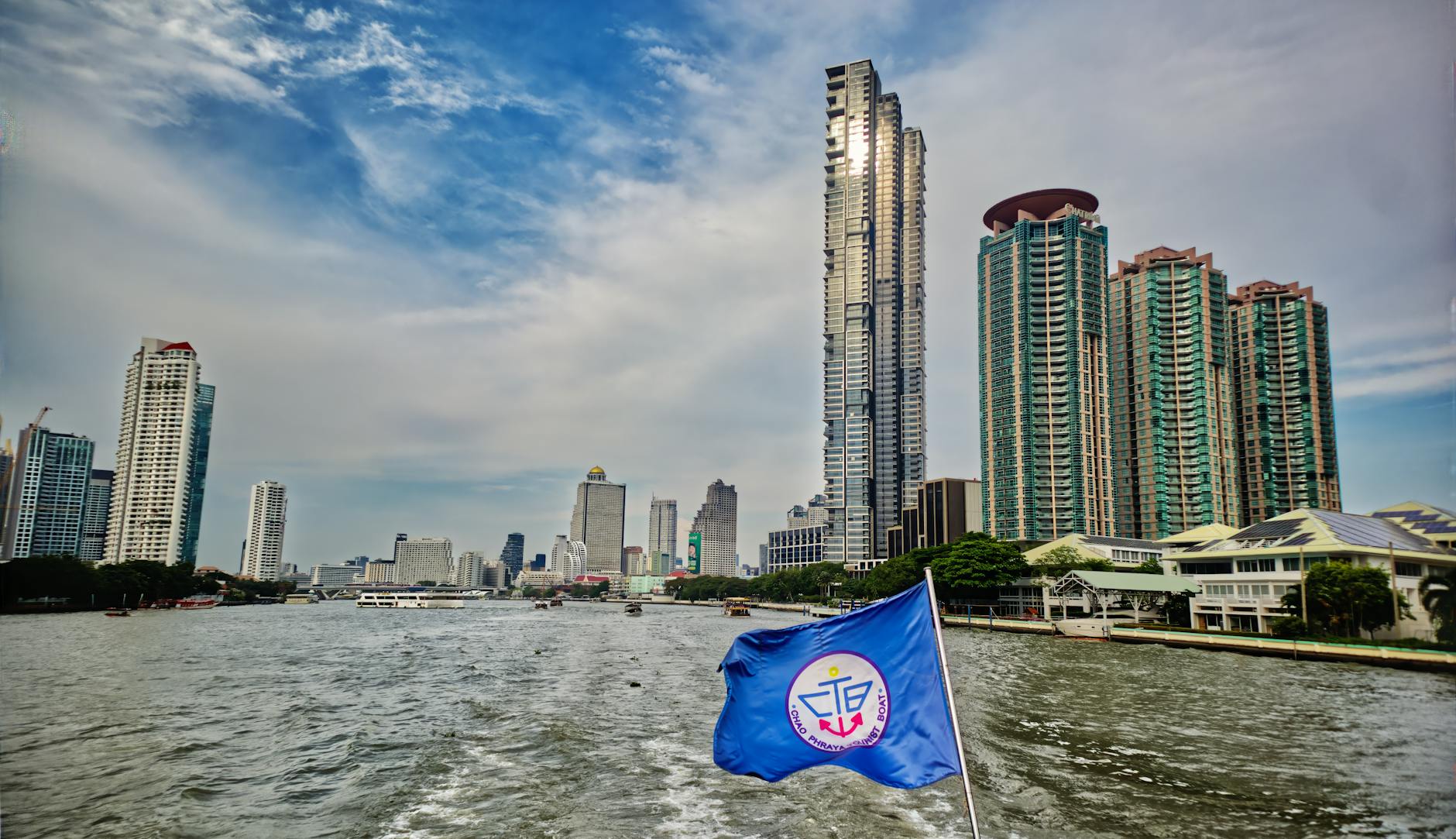
Bangkok's river boats are useful for the Chao Phraya corridor, especially for riverside hotels, the Grand Palace area, Wat Arun, Tha Maharaj, Phra Athit/Khao San access, Chinatown, ICONSIAM, and Sathorn/Saphan Taksin connections.
Chao Phraya Express Boat operates public river services on the Chao Phraya River, while the Chao Phraya Tourist Boat offers a visitor-friendly hop-on/hop-off style route serving major piers and attractions.
Canal boats and local feeder boats can be fast but are less beginner-friendly due to boarding style, splashing, route complexity, and limited English information.
8.3 Coastal ferries and island boats
Coastal and island routes use several boat types:
8.4 Weather and seasonality
Boat schedules are more vulnerable than trains or planes. Weather, sea state, wind, tides, and safety decisions can delay or cancel services. This matters most when connecting to flights.
A good rule: do not schedule a same-day international flight immediately after an island ferry unless the timing has a large buffer and there is an alternate route.
8.5 Luggage and boarding
Boat travel can involve stairs, floating pontoons, beach landings, wet feet, narrow gangways, and manual luggage handling. Hard-shell rolling bags are less convenient on sand, piers, and longtail boats. A backpack or soft-sided bag can be easier in Krabi, Railay, Phi Phi, Koh Lipe, and similar beach-transfer environments.
- Large ferries: slower, more stable, carry many passengers and sometimes vehicles.
- High-speed catamarans: faster, more expensive, sometimes rougher in choppy seas.
- Speedboats: fast but can be uncomfortable in rough water.
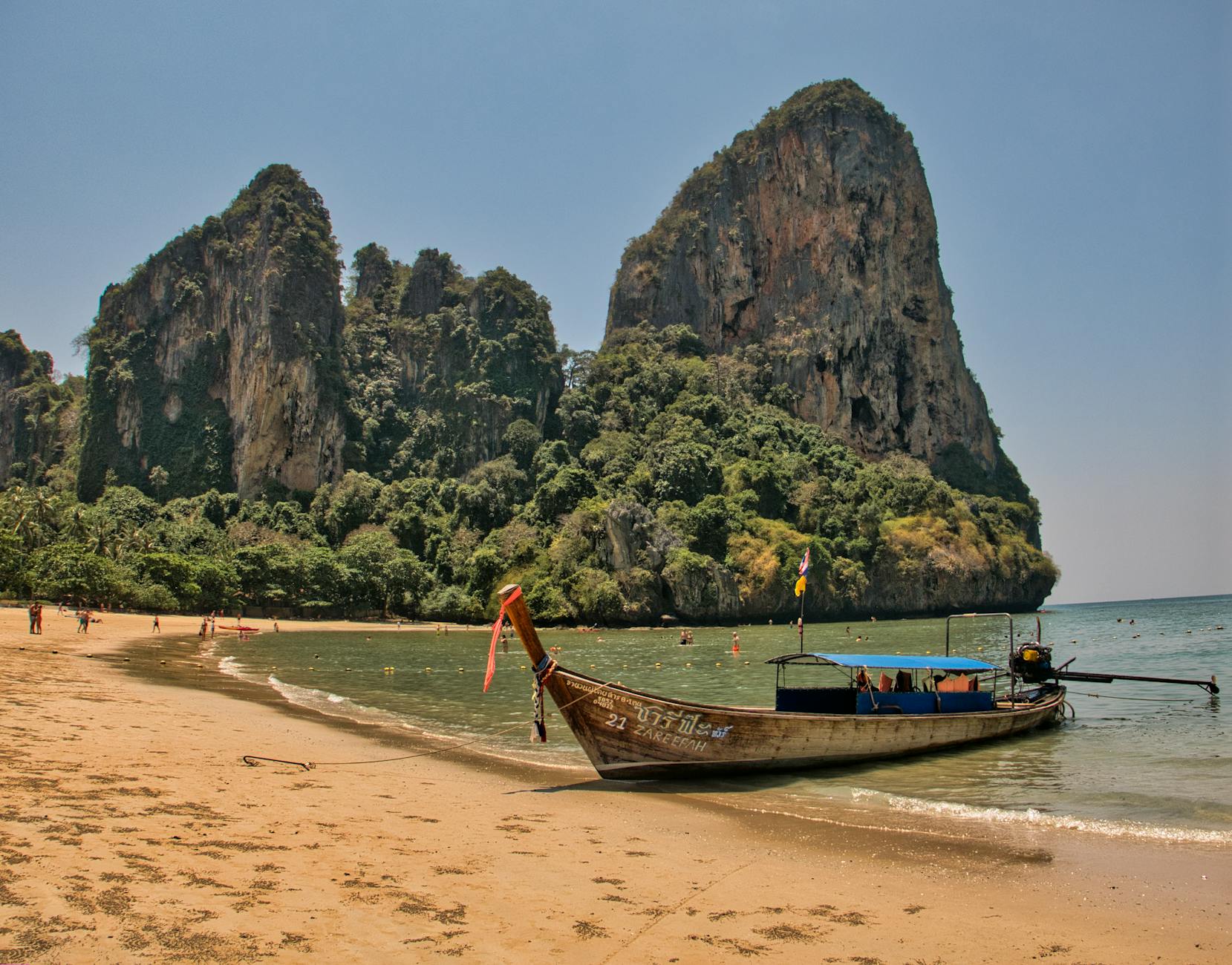
- Longtail boats: common for short coastal hops, beach landings, and Railay-style access.
- Private charter boats: flexible but costly.
9. Private vehicles, rental cars, and motorbikes
9.1 Driving basics
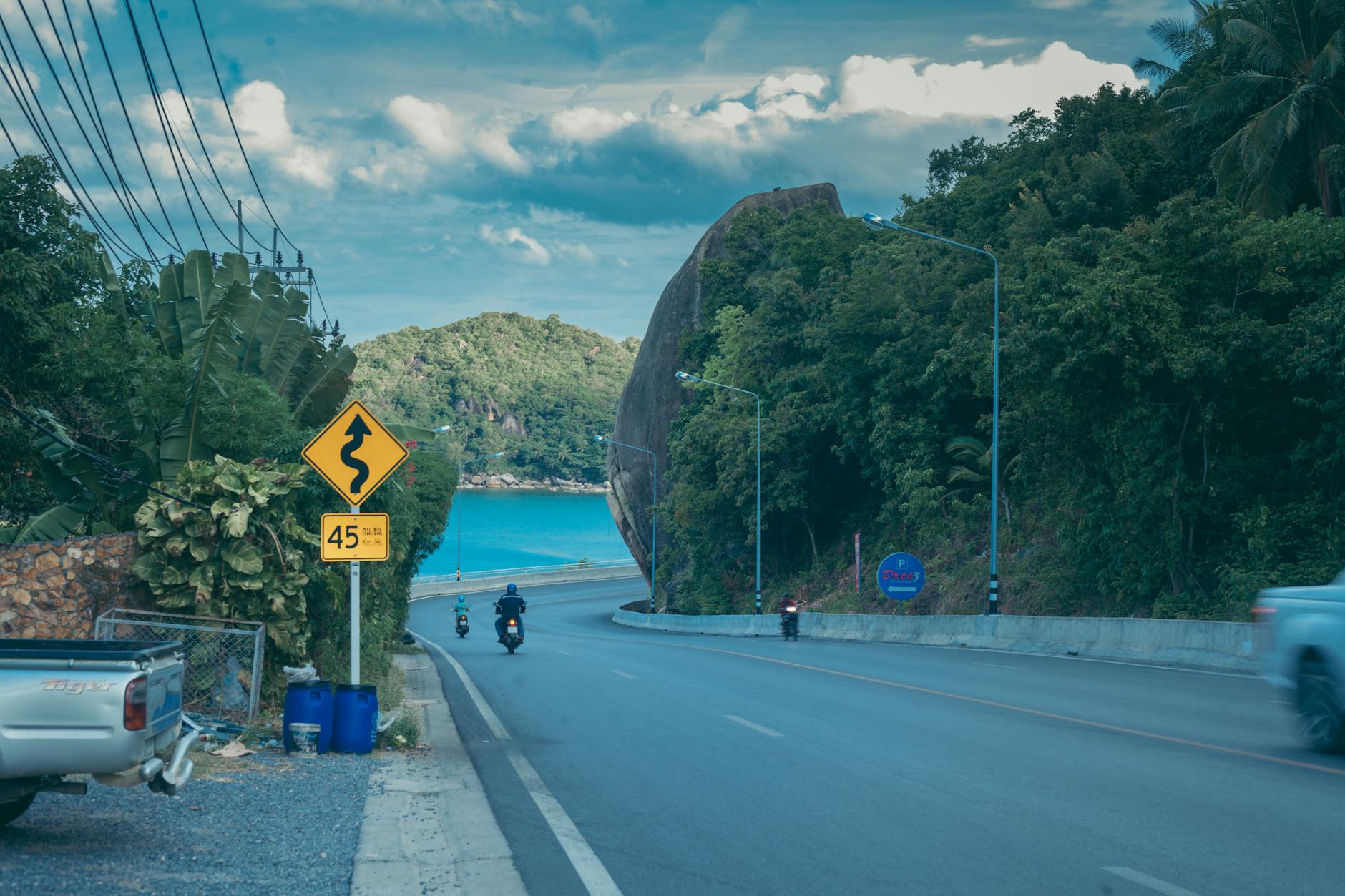
Thailand drives on the left. Road conditions vary from expressways and urban arterials to narrow island roads, mountain roads, and rural lanes. Driving can be practical outside Bangkok, but visitors need to be honest about their skill, licensing, and tolerance for local traffic behavior.
The Thai government has published guidance indicating that eligible foreign drivers should have a valid International Driving Permit or qualifying ASEAN license, and the Royal Thai Embassy in London states that the law requires an international driving license for driving a vehicle or motorcycle in Thailand.
9.2 Rental cars
Rental cars can be useful for:
Rental cars are less useful in central Bangkok because of congestion, parking difficulty, one-way systems, tolls, and stressful driving conditions.
9.3 Motorbikes and scooters
Scooters are widely available and often cheap, especially in Chiang Mai, Phuket, Krabi, Koh Samui, and smaller beach towns. They are also one of the largest risk categories for visitors.
Major concerns:
A scooter is not a beginner training tool. If you would not ride a motorbike legally at home, do not learn in Thai traffic.
9.4 Police checkpoints and insurance
Police checkpoints are common in tourist areas. Foreign riders may be asked for a helmet, license, International Driving Permit, and sometimes rental documents. Fines are an inconvenience; invalid insurance after a crash is the real danger.
9.5 Parking and local driving friction
Parking varies by city. Bangkok parking is difficult and often expensive. Chiang Mai Old City has narrow roads and limited space. Phuket and Koh Samui beach areas can be congested. Hua Hin and Pattaya can become crowded on weekends and holidays. Hotel parking should be confirmed before renting a car.
- Families.
- Travelers staying in spread-out beach regions.
- Day trips from Hua Hin, Chiang Mai, Phuket, or Krabi.
- Rural sightseeing.
- Travelers uncomfortable negotiating with local transport.
- You need a valid motorcycle license and appropriate International Driving Permit.
- Travel insurance may not cover crashes if you are unlicensed or violating policy terms.
- Helmets are legally required and should always be worn.
- Road surfaces can be sandy, wet, steep, or poorly lit.
- Dogs, potholes, trucks, drunk drivers, and sudden rain are common risks.
- Rental shops may request passports as security; government travel advice warns against handing over your passport as a deposit.
10. Payments, ticketing, and route planning
10.1 There is no single national transport card
Thailand does not have one nationwide public-transport card that works across trains, buses, boats, and local vehicles. Bangkok has several electronic systems, but they are not fully unified. Outside Bangkok, cash remains essential.
10.2 Bangkok cards and contactless payment
The Rabbit card is associated mainly with BTS and some other services. BTS states that Rabbit card issuance has a fee and top-ups can be made at BTS and participating service points.
The MRT system has been moving toward broader EMV contactless bank-card acceptance. MRTA announced that contactless EMV payment would apply across all four MRT lines under MRTA, with full implementation from June 1, 2026.
Visitors should still be cautious: BTS, MRT, Airport Rail Link, SRT commuter services, buses, boats, and private transport may use different payment systems. Always check the specific operator.
10.3 Cash still matters
Carry small baht notes and coins for:
Large notes can be inconvenient for low fares.
10.4 QR payments and foreign visitors
Thai QR payment is extremely common among locals, but many foreign visitors cannot use it unless they have a compatible Thai bank account or supported international payment arrangement. Do not rely on QR payment unless you have tested it in advance.
10.5 Route planning tools
Useful tools include:
The key is to confirm important legs with primary sources when missing a connection would be costly.
- Songthaews.
- Tuk-tuks.
- Motorcycle taxis.
- Local buses.
- Small piers.
- Public toilets at stations or terminals.
- Rural markets and food stops.
- Some minivans and local transfers.
- Google Maps for general routing, walking, traffic, and transit approximations.
- Operator websites for official train, bus, ferry, and airport schedules.
- Grab/Bolt for taxi pricing and pickup estimates.
- SRT D-Ticket for train schedules and tickets.
- Ferry operator websites for island schedules.
- Hotel or guesthouse staff for local songthaew and pier logistics.
11. Accessibility, luggage, children, and older travelers
11.1 Accessibility is uneven
Bangkok rail is more accessible than most other Thai transport, but station elevator locations, transfer distances, and platform crowding can still be difficult. Outside Bangkok, accessibility is much less predictable.
Songthaews, tuk-tuks, motorcycle taxis, longtail boats, beach piers, and older buses are often difficult for wheelchair users or travelers with limited mobility. Visitors needing reliable accessibility should prearrange private transfers and confirm vehicle type.
11.2 Luggage strategy
Thailand rewards light packing. Large rolling luggage is manageable at airports and hotels, but it becomes a problem on:
For beach and island itineraries, soft-sided luggage or backpacks are often easier.
11.3 Families with children
Families should prioritize direct transfers over complicated low-cost connections. Heat, traffic, and crowded stations make children tired quickly. In Bangkok, rail is efficient but may involve stairs, long walks, and peak-hour crowding. In island destinations, private transfers reduce stress.
11.4 Older travelers
Older travelers may find Thailand easy if they use taxis, app cars, private transfers, domestic flights, and hotels near transport. They may find it difficult if they rely heavily on songthaews, tuk-tuks, boats, or walking in heat.
11.5 Travelers with medical needs
Traffic delays can be serious in Bangkok, Phuket, Pattaya, and holiday routes. Travelers with medical appointments, mobility limitations, or tight airport timing should add generous buffers.
- BTS/MRT stairs and crowded trains.
- River piers.
- Longtail boats.
- Songthaews.
- Minivans.
- Ferries with gangways or beach landings.
- Old sidewalks.
12. Common risks, scams, and friction points
12.1 Road accidents
Road safety is the most serious transport concern. Foreign government travel advice repeatedly warns about road accidents in Thailand, especially involving motorcycles, and notes that road accidents are common in tourist areas such as Phuket, Pattaya, and Koh Samui.
Practical advice:
12.2 Taxi and tuk-tuk scams
Common problems include:
Use official stands, apps, hotel-arranged transport, or clearly negotiated fares.
12.3 Jet ski and vehicle damage disputes
In beach areas, rental damage disputes can occur with scooters, cars, jet skis, and boats. Photograph the vehicle before use, check scratches and tire condition, avoid leaving a passport as deposit, and understand the excess/deductible.
12.4 Holiday congestion
Thai public holidays, New Year, Songkran, long weekends, school holidays, and major local festivals can produce severe congestion, sold-out trains/buses, full flights, and hotel transfer delays.
Book ahead during holidays and avoid tight same-day connections.
12.5 Rain and flooding
Rain can disrupt taxis, roads, ferries, walking routes, and app availability. Bangkok roads may flood locally after heavy rain. Island ferries and speedboats can be delayed or canceled during poor sea conditions. A rainstorm at 5 p.m. can change a 20-minute Bangkok taxi trip into a 90-minute trip.
- Avoid scooters unless licensed and experienced.
- Wear a real helmet, not a decorative one.
- Do not ride after drinking.
- Avoid night riding in rain or on unfamiliar rural/island roads.
- Check insurance conditions before renting.
- Refusal to use meter.
- Inflated flat fares.
- Claims that an attraction is closed.
- Detours to commission shops.
- Fake "special" tours.
- Overpriced airport or pier transfers.
13. Local residents' transportation concerns
Thailand's transport system is not only a tourist system. Local residents face daily issues that visitors may only experience briefly.
13.1 Congestion and commute time
Bangkok congestion affects work, school, delivery logistics, health appointments, and family schedules. Even with rail expansion, many districts remain car-, bus-, or motorcycle-dependent for the last mile.
13.2 Cost burden
Transport costs are uneven. A Bangkok office worker near rail may spend a predictable amount on transit. A worker who depends on motorcycle taxis, vans, and transfers may pay a larger share of income. In resort areas, locals may face tourist-inflated taxi markets.
13.3 Last-mile gaps
A station or bus stop does not automatically solve mobility. The final kilometer may require walking in heat, crossing dangerous roads, taking a motorcycle taxi, or paying for a short ride.
13.4 Safety exposure
Many locals use motorcycles because they are affordable and flexible. This exposes riders to high crash risk, rain, air pollution, and heat. Delivery riders and commuters are especially exposed.
13.5 Informality and uncertainty
Informal transport provides flexibility but can also create uncertainty about fares, route stability, operating hours, and service quality. Visitors experience this as confusion; locals experience it as daily negotiation.
13.6 Accessibility and equity
People with disabilities, older residents, parents with strollers, and low-income residents often face uneven access. Bangkok rail expansion helps some corridors, but many local systems are not fully accessible.
14. Recommended mobility strategies by traveler type
14.1 First-time visitor
Use rail in Bangkok, flights for long distances, official airport taxis or apps for airport transfers, and hotel-arranged or app-based transport when arriving in unfamiliar destinations. Avoid renting a scooter.
14.2 Budget traveler
Use trains, buses, minivans, songthaews, local buses, and shared airport transfers. Keep small cash. Accept that savings may cost time and comfort. Confirm final stops before boarding.
14.3 Family traveler
Use direct airport transfers, taxis, app cars, domestic flights, and private day-trip drivers. Avoid multi-transfer itineraries with heavy luggage. Stay near transit in Bangkok and near your main beach/town in resort areas.
14.4 Beach and island traveler
Prioritize hotel location and ferry timing. Add weather buffers. Pack luggage that can handle piers and boats. Do not schedule tight ferry-to-flight connections.
14.5 Long-stay visitor or digital nomad
Learn local songthaew routes, use apps, consider bicycle or walking only where infrastructure supports it, and be disciplined about scooter legality and insurance. Choose accommodation near grocery, coworking, and transport corridors.
14.6 Mobility-limited traveler
Use prearranged private transfers, accessible hotels, and carefully selected routes. Bangkok rail may work for some trips, but informal transport and boat travel can be difficult. Confirm elevators, pier access, and vehicle type in advance.
Bangkok
1. System overview
Bangkok is Thailand's most complex and capable transport city. It has BTS Skytrain, MRT, Airport Rail Link, SRT Red Line commuter rail, buses, taxis, ride-hailing, motorcycle taxis, tuk-tuks, Chao Phraya river boats, canal boats, vans, and pedestrian links. It also has extreme traffic, long transfer walks, fragmented payment systems, and intense rush-hour crowding.
Bangkok is the one Thai city where visitors should usually build their daily transport around rail and boats first, then use taxis/apps for gaps.
2. What is unique about Bangkok
Bangkok's defining transport feature is the contrast between modern grade-separated rail and congested street traffic. A trip that takes 15 minutes by BTS or MRT can take an hour by taxi during peak traffic or rain. Conversely, some historic and riverside areas are not perfectly served by rail, so boats and taxis remain important.
The city also has multiple rail operators and payment systems. BTS, MRT, Airport Rail Link, SRT Red Line, buses, and boats do not function as one fully integrated fare network. This is improving, especially with contactless payment expansion on MRT lines, but travelers should still expect separate tickets or payment methods depending on mode.
3. Main useful modes
#### BTS Skytrain
BTS is excellent for Sukhumvit, Silom, Siam, Chatuchak/Mo Chit access, many shopping districts, and many hotel areas. It avoids traffic and is usually the easiest system for first-time visitors.
Rabbit card is useful for repeat BTS rides. BTS explains that Rabbit cards are issued with a card fee and can be topped up at BTS and participating locations.
Strengths:
Weaknesses:
#### MRT
MRT is essential for many cross-city trips and for areas not served by BTS. The Blue Line is especially useful because it links major areas and improves access to Chinatown, Hua Lamphong, the Old City edge, Chatuchak, and transfer points.
MRTA announced EMV contactless payment expansion across all four MRT lines under MRTA, with full implementation from June 1, 2026. This matters for visitors because contactless bank cards can reduce ticket-machine friction, though compatibility and foreign card fees should still be checked.
#### Airport Rail Link
Airport Rail Link connects Suvarnabhumi Airport with Makkasan and Phaya Thai, where travelers can transfer to MRT/BTS corridors. It is often the fastest budget option from BKK into the city, especially for solo travelers with manageable luggage.
#### SRT Red Line
The Red Line is useful for some commuter and airport-adjacent trips, especially involving Don Mueang Airport and northern Bangkok corridors. It is less central for most tourist sightseeing than BTS/MRT but important for residents and some airport movements.
#### River boats
The Chao Phraya river system is one of Bangkok's most useful and underappreciated transport layers. It is especially good for:
Chao Phraya Express Boat operates public river services, and the Chao Phraya Tourist Boat serves major piers on a visitor-friendly route.
River boats are less convenient during heavy rain, for travelers with mobility limitations, or when piers are crowded.
#### Canal boats
Canal boats can be fast for certain east-west corridors but are more challenging for first-time visitors. Boarding can be quick, boats can be crowded, and splashing is common. They are better for confident travelers or residents familiar with the route.
#### City buses
Bangkok buses are cheap and extensive but harder for visitors. Routes can be complex, traffic delays are common, and comfort varies. They are important for locals and budget travelers, but not usually the fastest option for first-time visitors.
#### Taxis and app cars
Taxis and apps fill gaps in the rail network. They are useful late at night, in rain, for luggage, and for door-to-door trips. They are poor choices for crossing the city during rush hour if rail is available.
#### Motorcycle taxis
Motorcycle taxis are common at the ends of BTS/MRT lines and neighborhood entrances. They solve the last 500 meters to 2 kilometers. They are fast but risky and not appropriate with luggage.
#### Tuk-tuks and MuvMi
Traditional tuk-tuks are mostly useful for short novelty rides or routes where the price is agreed. MuvMi-style electric tuk-tuk ride-sharing can be practical in some central neighborhoods, especially for short hops not worth a full taxi.
4. Airport access
#### Suvarnabhumi Airport
Best options:
#### Don Mueang Airport
Best options:
5. Payment strategy
A practical Bangkok setup:
6. Key traveler concerns
#### Traffic
Traffic is Bangkok's defining transport constraint. Do not plan around map distance. Plan around time of day, weather, and rail access.
#### Rush hour crowding
BTS and MRT can be heavily crowded on weekday mornings and evenings. Avoid large luggage then if possible.
#### Transfers
Rail transfers may involve long walks, stairs, separate fare gates, and street-level crossings. Allow time.
#### Rain
Rain affects everything: taxi availability, traffic, walking comfort, motorcycle taxis, and app pricing.
#### Old City access
The Grand Palace, Wat Pho, Khao San Road, and some historic areas are better accessed by MRT plus walking, river boat, taxi, or tuk-tuk rather than BTS alone.
7. Local resident perspective
For Bangkok residents, transport quality depends heavily on where home and work are located relative to rail. A resident near BTS/MRT may have a manageable commute. A resident in a rail gap may depend on buses, vans, motorcycle taxis, and long transfers. Expansion of rail helps, but last-mile access, fare cost, heat, and congestion remain major issues.
8. Best Bangkok strategy
Stay near BTS, MRT, Airport Rail Link, or a useful river pier. Use rail for long cross-city movement, boats for river corridors, and taxis/apps for short final legs. Avoid road travel during rush hour unless necessary.
- Fast and frequent.
- Air-conditioned.
- English signage.
- Good for shopping, hotels, and business districts.
- Avoids street congestion.
- Crowded at peak times.
- Not always close to Old City attractions.
- Separate payment system from many other modes.
- Elevators may require detours.
- Large luggage is awkward at rush hour.
- Sathorn/Saphan Taksin.
- ICONSIAM.
- Chinatown/Ratchawongse.
- Pak Khlong Talat flower market.
- Wat Arun.
- Tha Chang/Grand Palace area.
- Tha Maharaj.
- Phra Athit/Khao San area.
- Airport Rail Link for speed and low cost.
- Official taxi for luggage and door-to-door convenience.
- App car/Grab where pickup rules and pricing make sense.
- Private transfer for families, late arrivals, or first-time visitors.
- Taxi/app car for convenience.
- SRT Red Line connections where the destination fits.
- Airport buses for budget access to selected areas.
- Private transfer if connecting between airports or arriving late.
- Rabbit card for frequent BTS use.
- Contactless bank card or MRT card/token for MRT, depending on current acceptance and card compatibility.
- Cash for buses, boats, tuk-tuks, motorcycle taxis, and small fares.
- Grab/Bolt with card or cash backup.
- Small notes for taxis and boat piers.
Chiang Mai
1. System overview
Chiang Mai is Thailand's main northern city and a major tourism, education, and expat center. Its transport system is much less formal than Bangkok's. There is no metro or urban rail. Movement depends on walking, red songthaews, tuk-tuks, taxis, app cars, scooters, bicycles, airport shuttles, and regional buses.
The city is easier than Bangkok in scale but less predictable in formal public transport.
2. Arrival and intercity access
#### By air
Chiang Mai Airport is close to the city. Depending on traffic and hotel location, the airport-to-city trip can be short. Airport transport includes taxis, app cars, shuttle/bus services, and local vehicles.
Chiang Mai Airport information lists a public bus fare of 30 baht per trip for Chiang Mai Bus public transport, and airport shuttle bus information includes a route serving the airport, Nimmanhaemin, Huay Kaew, and the city moat at a listed 40 baht fare.
#### By train
Bangkok–Chiang Mai is one of Thailand's most popular long-distance rail routes, especially for overnight sleepers. The train station is east of the Old City, requiring a local transfer.
#### By bus
Chiang Mai's Arcade bus terminal area handles many interprovincial buses. It is important for locals and budget travelers and connects Chiang Mai with Bangkok, northern provinces, and other regions.
3. Main local modes
#### Walking
The Old City is walkable in small sections, especially around temples, markets, cafes, and guesthouses. But heat, uneven sidewalks, moat roads, and traffic crossings limit how much walking is comfortable.
#### Red songthaews
Red songthaews, often called rot daeng or red trucks, are the signature local transport mode. They operate as shared taxis and semi-private vehicles. Practical local guides describe them as common converted pickup-style shared transport in Chiang Mai.
How to use them:
The key confusion is pricing. A simple shared route fare is cheaper than a private charter. If you ask for a far or unusual destination, the driver may quote a higher private fare.
#### Tuk-tuks
Tuk-tuks are common for short tourist trips. They are more expensive than songthaews but easier when you want direct service and do not want to wait.
#### Ride-hailing
Grab and Bolt are useful in Chiang Mai, especially between Nimman, Old City, riverside, airport, and suburban locations. App cars reduce negotiation but may be harder to get during rain, festivals, or peak demand.
#### Scooters
Scooters are very common among residents, expats, and tourists. They are also risky. Chiang Mai has moat traffic, fast arterial roads, mountain roads toward Doi Suthep, and police checkpoints. Riders should be licensed, insured, helmeted, and experienced.
#### Bicycles
Cycling can work in the Old City and quiet neighborhoods, but it is not a citywide solution for most visitors. Heat, traffic, and air quality matter.
4. Doi Suthep and mountain access
Doi Suthep is one of Chiang Mai's most important attractions. It is not a casual walk from the city. Travelers usually use shared songthaews, tours, private cars, or licensed motorbike/car rentals. Mountain roads require caution, especially in rain.
5. Seasonal concerns
Chiang Mai has a burning/smoky season that can affect walking, cycling, scooter riding, and general comfort. Air quality should be checked during the dry-season haze period. Rainy season can also affect mountain roads and scooter safety.
6. Local resident perspective
Residents rely heavily on motorcycles, private cars, songthaews, and app transport. The lack of a high-capacity urban rail network means congestion grows around Nimman, Old City gates, schools, markets, and tourist corridors. Students and workers often use motorbikes because they are affordable and flexible.
7. Best Chiang Mai strategy
Stay in the area where you will spend most time: Old City for temples and markets, Nimman for cafes/nightlife/coworking, riverside for a quieter stay, or outside town only if you have transport arranged. Use songthaews and apps for most local trips. Avoid learning to ride a scooter in Chiang Mai traffic.
- Flag one down.
- Tell the driver your destination.
- Confirm the fare if it is not obvious.
- Get in the back if the driver agrees.
- Press the buzzer or signal when you want to stop.
- Pay when you exit.
Phuket
1. System overview
Phuket is a large island province, not a compact beach town. Transport is one of the biggest practical issues for visitors. Distances are longer than they look, the airport is in the north, major beach areas are spread along the west coast, Phuket Town is inland/east, and traffic can be heavy.
There is no urban rail system. Visitors rely on airport buses, Phuket Smart Bus, local songthaews, taxis, app cars, hotel shuttles, private transfers, rental cars, scooters, and boats.
2. What is unique about Phuket
Phuket's key transport problem is that the island's attractions are spread across separate zones:
Moving between these areas can be slow and expensive. Choosing the wrong base can create daily transport frustration.
3. Airport access
Phuket International Airport is far from many popular beach areas. Transfers to Patong, Kata, Karon, Rawai, or Phuket Town can take much longer in traffic than the map suggests.
Options include:
The Phuket Smart Bus official information describes a route from Phuket International Airport to Rawai passing many beaches, with a listed 100 baht fare. Airport Bus Phuket lists service between the airport and Phuket city center, with airport-city fares shown up to 100 baht depending on stop.
4. Main local modes
#### Phuket Smart Bus
The Smart Bus is one of the most useful public transport options for visitors staying along the west coast. It connects the airport with beach areas and Rawai, but it is not a fast door-to-door system. It is best for budget travelers, solo travelers, and visitors whose hotels are near the route.
Strengths:
Weaknesses:
#### Airport Bus Phuket
Airport Bus Phuket is useful for travelers going to Phuket Town rather than west-coast beaches. It is cheaper than taxis but less direct for beach resorts.
#### Local songthaew-style buses
Phuket has local blue bus/songthaew routes traditionally connecting Phuket Town with beach areas. They are cheap but slow, limited in evening operation, and often require travel through Phuket Town rather than beach-to-beach movement.
#### Taxis and app cars
Taxis and app cars are often the simplest option but can be expensive compared with other Thai destinations. They are useful for families, groups, heavy luggage, late nights, pier transfers, and multi-stop days.
#### Scooters and rental cars
Scooters are common but dangerous for inexperienced riders. Phuket roads include steep hills, sharp curves, heavy tourist traffic, rain, and nightlife-related risk. Rental cars can be useful for families and experienced drivers but parking and traffic should be considered.
5. Boats and piers
Phuket is a major departure point for islands and coastal destinations, including Koh Phi Phi, Koh Yao Noi/Yai, Krabi/Ao Nang/Railay, Koh Lanta, Similan/Surin trips, and other excursions. Piers matter. Rassada Pier, Bang Rong Pier, Chalong Pier, Ao Po, and other piers serve different destinations.
Travelers should confirm:
6. Key traveler concerns
#### High transport costs
Phuket is often more expensive for taxis and transfers than visitors expect. Budget travelers should choose accommodation near the beach/town where they want to spend most time.
#### Traffic
Traffic around Patong, Chalong, Phuket Town, airport roads, and beach corridors can be heavy. Rain worsens delays.
#### Nightlife movement
Late-night travel from Patong to other beaches can be expensive. Staying in Patong for nightlife or arranging transport in advance is often better than improvising at 2 a.m.
#### Scooter crashes
Phuket is one of the places where scooter rental is most tempting and most risky. Hills, wet roads, and inexperienced riders are a bad combination.
7. Local resident perspective
Locals often rely on motorbikes, private cars, and work-related pickups because public transport coverage is limited. Traffic congestion, parking, tourist-season pressure, and road safety are daily issues. Tourist transport pricing also affects local mobility and labor movement.
8. Best Phuket strategy
Pick your base carefully. Use Smart Bus or airport bus if the route fits; otherwise use taxi/app/private transfer for airport and pier moves. Do not plan daily beach-hopping by public transport unless you have time and patience. Avoid scooters unless properly licensed and experienced.
- Airport and northern beaches.
- Patong.
- Karon and Kata.
- Rawai and Nai Harn.
- Phuket Town/Old Town.
- Chalong.
- Rassada Pier and other island departure points.
- Bang Tao, Laguna, Kamala, Surin, and west-coast resort areas.
- Airport taxi.
- App car where available.
- Shared minivan.
- Hotel transfer.
- Phuket Smart Bus along the west coast.
- Airport Bus Phuket to Phuket Town.
- Affordable compared with taxis.
- Useful airport-to-beach link.
- Serves many west-coast tourist areas.
- Slow in traffic.
- Limited usefulness if your hotel is far from stops.
- Not ideal for large luggage plus hot walks.
- Less convenient for late-night nightlife returns.
- Correct pier.
- Check-in time.
- Transfer pickup time.
- Whether hotel transfer is included.
- Whether the boat is ferry, speedboat, or catamaran.
- Weather policy.
Krabi
1. System overview
Krabi is a province and transport gateway, not a single compact city. The most important visitor zones are Krabi Airport, Krabi Town, Ao Nang, Noppharat Thara, Railay, island piers, and offshore destinations such as Koh Phi Phi, Koh Lanta, Hong Islands, and others.
Krabi has no direct mainline railway station, so travelers arrive by air, bus, minivan, private car, or ferry/boat connection. Rail travelers usually connect through stations such as Surat Thani or Trang depending on route and onward plan.
2. What is unique about Krabi
Krabi's defining transport feature is the split between land and boat access. Ao Nang is a road-accessible beach base. Railay is nearby but boat-only. Islands require ferries or speedboats. Krabi Town is cheaper and more local but farther from many beach activities.
This means that a hotel that looks geographically close may involve a boat transfer, pier timing, or difficult luggage movement.
3. Arrival and airport access
Krabi Airport connects travelers to Krabi Town, Ao Nang, pier areas, and island transfers. Common options include:
Public airport buses and shuttles between Krabi Airport, Krabi Town, and Ao Nang are commonly listed around 150 baht to Ao Nang in practical traveler resources, though fares should always be checked locally.
4. Main local modes
#### Songthaews and local pickups
Songthaews connect Krabi Town, Ao Nang, Noppharat Thara, and some nearby areas. They are useful for budget travel but may have limited evening service and unclear stops for first-time visitors.
#### Taxis and private transfers
Taxis and private transfers are common for airport, pier, hotel, and day-trip movement. They are more expensive than local transport but much easier with luggage.
#### Scooters
Scooters are common in Ao Nang and surrounding areas. Risks include rain, hills, tourist traffic, and unfamiliar roads. Licensing and insurance concerns apply.
#### Walking
Ao Nang's beach strip is walkable in sections, but heat, traffic, and hotel distance matter. Krabi Town is more walkable for markets and local life. Railay is walkable once there, but paths, sand, stairs, and luggage can be awkward.
5. Boat transport
#### Railay
Railay is one of the clearest examples of boat-as-public-transport in Thailand. It is connected to Ao Nang and other points by longtail boats. Practical traveler sources describe Ao Nang–Railay longtail boats as departing when full during daytime, with common per-person fares around 100 baht in normal daytime conditions.
Travelers should remember:
#### Islands and ferries
Ao Nang, Krabi, and nearby piers connect with Phi Phi, Phuket, Koh Lanta, and island tours. Operators such as Ao Nang Travel & Tour publish ferry and transfer routes linking Ao Nang/Railay with Phuket, Phi Phi, Koh Lanta, and related destinations.
6. Key traveler concerns
#### Geography confusion
Krabi Town, Ao Nang, Railay, and island resorts are different transport environments. Choosing the wrong base can add daily transfers.
#### Boat dependence
Railay and many islands are not suitable for travelers who need guaranteed road access at all hours.
#### Weather
Sea conditions affect speedboats, longtails, and ferries. Add buffers before flights.
#### Luggage
Boat transfers with large luggage can be awkward. Pack for sand, piers, stairs, and wet landings.
7. Local resident perspective
Locals rely on motorcycles, pickups, songthaews, private cars, and tourism-related vans. The economy depends heavily on airport, pier, and tour transport. Seasonal tourism affects traffic, income, and service frequency.
8. Best Krabi strategy
Decide whether you want Ao Nang convenience, Railay scenery, Krabi Town local value, or island isolation. Use airport transfers for arrival. Use longtails and ferries with weather buffers. Do not treat Krabi as a single walkable destination.
- Airport shuttle bus.
- Shared minivan.
- Taxi.
- App car where available.
- Private hotel transfer.
- Boats may wait for enough passengers.
- After-dark fares can be higher.
- Low tide can require walking in shallow water or over uneven ground.
- Luggage can get wet.
- Weather can delay boats.
Koh Samui
1. System overview
Koh Samui is a large island with no rail and limited formal public transport. Movement depends on airport transfers, ferries, taxis, songthaews, app cars where available, rental cars, scooters, hotel shuttles, and private drivers.
Samui's transport experience depends heavily on where you stay. Chaweng, Lamai, Bophut/Fisherman's Village, Maenam, Choeng Mon, Lipa Noi, Nathon, and remote hillside resorts all have different transport realities.
2. Arrival options
#### By air
Flying directly to Koh Samui is the simplest way to arrive. It avoids mainland transfers and ferries. It is often more expensive than flying to Surat Thani or Nakhon Si Thammarat and taking a bus/ferry combination.
#### By ferry
Ferries connect Koh Samui with mainland piers such as Don Sak and with nearby islands such as Koh Phangan and Koh Tao depending on operator and route. Lomprayah publishes scheduled high-speed ferry routes and timetables across the Gulf island network.
Ferry operators and routes vary by pier. Always confirm the pier on both the mainland and Samui side.
3. Main local modes
#### Songthaews
Songthaews operate along parts of the island ring road and between major beach areas. They are useful in daytime but less predictable at night. Practical local guides describe typical songthaew fares in the 50–150 baht range depending on distance and context, with the strong advice to confirm price before boarding.
#### Taxis and app cars
Taxis are available but can be expensive, and meter use is not always reliable. App coverage may exist but can be weaker than Bangkok or Chiang Mai. Resorts can arrange transfers, but prices may be high.
#### Rental cars
Rental cars are useful for families, remote villas, and travelers who want to explore beaches, waterfalls, viewpoints, and restaurants independently. Roads vary, and hillside villas can involve steep access roads.
#### Scooters
Scooters are common but risky. Samui roads include sand, rain, hills, dogs, potholes, nightlife traffic, and inexperienced tourist riders. A scooter should only be used by licensed, insured, experienced riders.
4. Ferry and pier considerations
Koh Samui has multiple pier areas, including Nathon, Lipa Noi, Maenam/Pralarn, Bangrak, and others depending on operator. The wrong pier can add a long taxi transfer.
When booking a ferry, confirm:
5. Key traveler concerns
#### Expensive local transport
Koh Samui can be expensive for taxis compared with mainland cities. Visitors staying far from restaurants or beaches may spend much more than expected.
#### Limited late-night transport
Night transport can be costly and less available, especially outside Chaweng, Lamai, and Fisherman's Village areas.
#### Resort isolation
A beautiful remote resort may require a taxi for every meal and activity. This is fine for a retreat, but bad for travelers who want spontaneous exploration.
#### Weather and ferries
Ferry delays can affect flights and onward plans. Do not schedule tight ferry-to-flight transfers.
6. Local resident perspective
Residents rely heavily on motorcycles, pickups, and private vehicles. Transport costs, road safety, ferry reliability, tourism seasonality, and access to schools/work/healthcare are major everyday concerns.
7. Best Koh Samui strategy
Choose your base carefully. Stay in Chaweng, Lamai, or Bophut/Fisherman's Village if you want easier access to restaurants and nightlife. Use hotel transfers or prebooked transport for arrival. Rent a car only if comfortable driving left-side island roads. Avoid scooters unless licensed and experienced.
- Mainland pier.
- Samui arrival pier.
- Whether hotel transfer is included.
- Luggage policy.
- Weather disruption rules.
- Connection time to flights.
Pattaya
1. System overview
Pattaya is a coastal city and entertainment/resort area on Thailand's eastern seaboard. It has no metro system. Local transport is built around songthaew-style baht buses, motorcycle taxis, taxis, app cars, walking in central areas, and buses from Bangkok and Suvarnabhumi Airport.
Pattaya's transport is easy once you understand the baht bus loops, but confusing before then.
2. Arrival from Bangkok and Suvarnabhumi
Pattaya is usually reached by road. Options include:
The official Airport Pattaya Bus service lists service between Suvarnabhumi Airport and Jomtien Bus Station, with departures from Level 1 Gate 8 and a listed fare of 170 baht on its published service information.
3. Baht buses
Baht buses are Pattaya's defining local transport mode. They are songthaew-style pickup trucks operating on common routes such as:
The basic idea is simple: hop on along the route, press the buzzer when you want to get off, then pay the route fare. The complication is that if you ask the driver for a specific destination or negotiate before boarding, the ride may become a private charter at a higher price.
Local reporting and travel resources noted a baht bus fare increase beginning April 10, 2026, with typical route fares moving into the 15–20 baht range depending on route/distance.
4. Taxis, apps, and motorcycle taxis
Taxis and app cars are useful for:
Motorcycle taxis are common and fast for short hops but carry the usual motorcycle risk.
5. Walking
Central Pattaya and parts of Jomtien are walkable in sections, but heat, traffic, sidewalks, nightlife crowds, and road crossings limit comfort. Walking can be pleasant along beach promenades but less pleasant inland.
6. Koh Larn transport
Koh Larn is a popular island day trip from Pattaya. Boats depart from Bali Hai Pier. Options usually include public ferries and faster speedboats. Public ferries are cheaper and slower; speedboats are faster and more expensive.
Travelers should check current pier schedules and fares on arrival because published times and prices can change, and 2026 reporting indicated changes to Pattaya–Koh Larn ferry fares.
7. Key traveler concerns
#### Baht bus confusion
The most common mistake is turning a shared route ride into a negotiated private ride. If you want the route fare, board on the route without asking for a special trip, then pay when you exit.
#### Nightlife pricing
Late-night transport can become more expensive around nightlife zones. App availability and baht bus frequency vary.
#### Traffic and road safety
Central Pattaya can be congested, especially on weekends, holidays, and event nights. Motorbike and pedestrian risk are real.
#### Hotel location
A hotel near a baht bus route is much easier than one tucked far inland or on a hill unless you plan to use taxis/apps.
8. Local resident perspective
Residents and workers rely on motorbikes, baht buses, pickup trucks, and private vehicles. Tourism peaks affect congestion, fares, parking, and commute reliability. Baht buses are essential for low-cost movement but can be inconsistent from a user's perspective.
9. Best Pattaya strategy
Learn the baht bus routes on day one. Use exact cash. Stay near Beach Road, Second Road, Jomtien routes, or your main activity zone. Use the Suvarnabhumi airport bus if it fits your schedule and luggage. Use app/taxi/private transfer for late-night or cross-city trips.
- Direct airport bus from Suvarnabhumi.
- Coach from Bangkok bus terminals.
- Minivan.
- Taxi or private car.
- App/private transfer.
- Train on limited schedules, less commonly used by visitors.
- Beach Road.
- Second Road.
- Pattaya Klang/Central Pattaya connections.
- Jomtien routes.
- Naklua routes.
- Luggage.
- Hotels away from baht bus routes.
- Late-night travel.
- Trips to surrounding areas.
- Families and groups.
Hua Hin
1. System overview
Hua Hin is a coastal resort town south of Bangkok. It is smaller and calmer than Bangkok or Pattaya, but transport still matters because the town stretches along the coast and Phetkasem Road. There is no metro. Visitors use trains, coaches, taxis, songthaews, tuk-tuks, motorbike taxis, rental cars, bicycles, walking, hotel shuttles, and private drivers.
Hua Hin is one of the Thai destinations where train travel remains especially practical because the station is central and the route from Bangkok is well established.
2. Arrival from Bangkok and Suvarnabhumi
#### Train
Bangkok–Hua Hin is a classic Thai rail route. Trains serve Hua Hin station, which is near the town center. Practical rail guides list multiple daily trains from Bangkok-area stations to Hua Hin, with some faster services taking roughly three to four hours depending on train and departure station.
The train is useful for travelers staying near central Hua Hin or who enjoy rail travel. It is less ideal for travelers staying far south/north of town with heavy luggage unless they arrange a local transfer.
#### Airport coach
The official airport coach service between Suvarnabhumi and Hua Hin publishes scheduled daily departures and route information. This is one of the most convenient options for visitors arriving internationally and going straight to Hua Hin.
#### Taxi/private car
Taxi and private car are fastest door-to-door for families, luggage, golf trips, resort stays, and late arrivals. Weekend and holiday traffic from Bangkok can be heavy.
3. Main local modes
#### Walking
Central Hua Hin is walkable around the station, night market, beach access points, and some hotel areas. However, heat, traffic, uneven sidewalks, and the length of the town limit walking as a full transport strategy.
#### Songthaews
Songthaews operate along main roads and are useful for budget movement between central areas, markets, beaches, and some shopping zones. Routes and operating hours may not be obvious to first-time visitors.
#### Tuk-tuks and taxis
Tuk-tuks and taxis are common for short trips. Agree on price before boarding if there is no meter.
#### Motorbike taxis
Motorbike taxis are useful for short solo trips but carry the usual safety concerns.
#### Rental cars and private drivers
A car or driver is useful for day trips to:
4. Key traveler concerns
#### Weekend traffic
Hua Hin is a major Bangkok weekend escape. Roads can be crowded on Friday evenings, Sunday returns, long weekends, and holidays.
#### Linear geography
The town stretches along the coast and main road. A hotel can be "in Hua Hin" but still require transport to the night market, central beach, malls, or restaurants.
#### Limited late-night public transport
Late-night movement may depend on taxis, tuk-tuks, hotel transport, or private arrangements.
#### Crossing roads
Phetkasem Road and other main roads can be difficult to cross comfortably. Do not assume a short map distance is a pleasant walk.
5. Local resident perspective
Residents rely on private vehicles, motorcycles, local shared transport, and regional buses/trains. Tourism and weekend traffic affect everyday mobility, parking, and local road safety. Workers commuting from surrounding areas may depend on motorbikes and pickups.
6. Best Hua Hin strategy
Use train or airport coach for Bangkok/Hua Hin access if the schedule fits. Stay central if you want to walk to markets, restaurants, and beach areas. Use a car, driver, or tour for national parks and out-of-town attractions. Avoid tight returns to Bangkok airports on Sunday afternoons or holidays.
Thailand's transportation system is flexible, extensive, and often very practical, but it rewards informed choices. The country is not difficult to travel through; it is difficult to travel through efficiently if you assume every city works like Bangkok or every beach area works like a compact resort.
The national pattern is clear: fly when distance is large, use trains where rail is strong, use buses where rail is absent, use boats where geography requires them, and use taxis/apps/songthaews for local movement. The city pattern is equally clear: Bangkok is rail-first; Chiang Mai is songthaew/app/scooter-heavy; Phuket is spread-out and transfer-costly; Krabi is land-plus-boat; Koh Samui is island-road and ferry dependent; Pattaya is baht-bus based; and Hua Hin is train/coach plus local road transport.
The strongest advice for travelers is to plan the last mile as seriously as the long-distance leg. The strongest advice for locals and long-stay visitors is to understand that transport cost, safety, and reliability vary block by block, not just city by city. In Thailand, the right hotel location, the right transfer choice, and the discipline to avoid unsafe scooter use can make the difference between a smooth trip and a stressful one.
: Tourism Authority of Thailand, "Around Thailand," national transport overview. https://www.tourismthailand.org/Articles/plan-your-trip-around-thailand
: Tourism Authority of Thailand, "Around Cities," Bangkok BTS and city transport overview. https://www.tourismthailand.org/Articles/plan-your-trip-around-cities
: State Railway of Thailand, official homepage and timetable resources. https://www.railway.co.th/home/Index
: State Railway of Thailand, D-Ticket online booking. https://dticket.railway.co.th/
: The Transport Co., Ltd., official English homepage and bus booking portal. https://transport.co.th/home/en/home-en/
: Suvarnabhumi Airport, official transportation guide. https://suvarnabhumi.airportthai.co.th/service/airport-guide/detail/Transportation_BKK
: Bangkok Airport Rail Link information, airport-city rail connection details. https://www.bangkokairportonline.com/bangkok-airport-rail-link/
: Suvarnabhumi Airport official taxi fare guidance, including base fare, airport surcharge, and baggage fee notes. https://suvarnabhumi.airportthai.co.th/service/airport-guide/detail/Transportation_BKK
: Public Relations Department of Thailand, Ministry of Transport foreign driving license guidance. https://thailand.prd.go.th/en/content/category/detail/id/2874/iid/341038
: Royal Thai Embassy, London, "Driving in Thailand" guidance. https://london.thaiembassy.org/en/publicservice/84710-driving-in-thailand
: Australian Government Smartraveller, Thailand travel advice, driving and road safety section. https://www.smartraveller.gov.au/destinations/asia/thailand
: Grab Thailand, transport services overview. https://www.grab.com/th/en/transport/
: BTS, Rabbit card issuing and top-up information. https://www.bts.co.th/eng/tickets/ticket-rabbit-issuing.html
: Mass Rapid Transit Authority of Thailand, EMV contactless payment across MRT lines announcement, 2026. https://www.mrta.co.th/en/news-release/33436
: Chao Phraya Express Boat, official site. https://www.chaophrayaexpressboat.com/?lang=en
: Chao Phraya Tourist Boat, official tourist boat route and pier information. https://chaophrayatouristboat.com/tourist_boat
: Chiang Mai International Airport, Chiang Mai Bus public transport information. https://chiangmai.airportthai.co.th/service/transportation/detail/139
: Chiang Mai International Airport, airport shuttle bus information. https://chiangmai.airportthai.co.th/service/transportation/detail/145
: Chiang Mai Traveller, Chiang Mai public transport and songthaew overview. https://www.chiangmaitraveller.com/chiang-mai-public-transport-songthaew/
: Phuket Smart Bus, official airport-to-Rawai beach route information. https://phuketsmartbus.com/phuket-smart-bus-eng/
: Airport Bus Phuket, official airport-city bus information and fare table. https://www.airportbusphuket.com/
: Phuket.net, local bus and songthaew overview. https://www.phuket.net/visit-phuket/about/tips/getting-around/buses/
: Krabi Nature, Krabi transportation overview noting lack of direct railway access. https://krabinature.com/transportation/
: Wise, Krabi Airport to Ao Nang transport guide. https://wise.com/my/blog/krabi-airport-to-ao-nang
: Travelfish, Railay Beach transport information including longtail boat access. https://www.travelfish.org/transport/thailand/southern_thailand/krabi/railay_beach/all
: Ao Nang Travel & Tour, ferry and transfer route information. https://www.aonangtravel.co.th/
: Lomprayah High Speed Ferries, official site. https://www.lomprayah.com/
: Lomprayah, official timetable page. https://www.lomprayah.com/time-table
: MyKeyThai, Koh Samui transport and songthaew fare guidance. https://mykeythai.com/journal/guides/getting-around-koh-samui
: Airport Pattaya Bus, official Suvarnabhumi–Pattaya/Jomtien bus service information. https://airportpattayabus.com/
: Pattaya Unlimited, Pattaya baht bus fare and route guidance including 2026 fare update. https://www.pattayaunlimited.com/getting-around-pattaya/
: Bangkok Post, Pattaya–Koh Larn ferry fare update coverage, 2026. https://www.bangkokpost.com/thailand/general/3225483/fares-for-pattayakoh-larn-ferries-going-up
: Airport Hua Hin Bus, official Suvarnabhumi–Hua Hin coach service. https://airporthuahinbus.com/
: Thai Train Guide, Bangkok to Hua Hin train route information. https://www.thaitrainguide.com/routes/bangkok-to-hua-hin/
- Pranburi.
- Khao Sam Roi Yot National Park.
- Phraya Nakhon Cave.
- Vineyards.
- Golf courses.
- Waterparks.
- Secluded beaches.