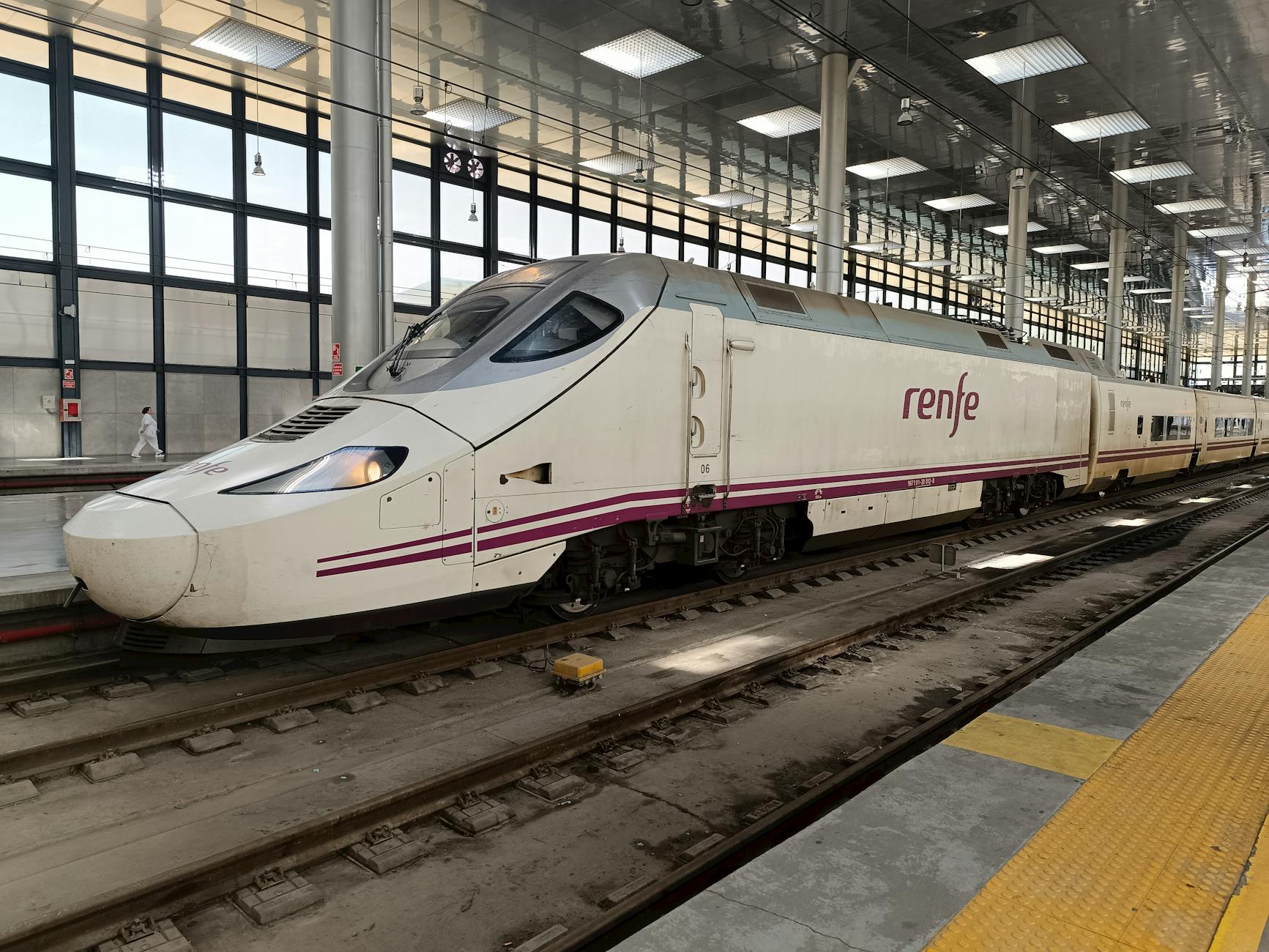
*A practical analysis for visitors, foreign residents, and local users* Prepared: April 21, 2026
Scope and audience
This paper explains how transportation in Spain works in practice. It is written for travelers planning a trip, foreign residents trying to understand daily mobility, and locals comparing tradeoffs between trains, buses, cars, taxis, bicycles, airports, and city transit systems.
The first part covers the national-scale patterns that apply across Spain. The second part goes city by city for:
Spain is one of Europe’s strongest rail countries, but it is not one unified transit system. The country combines high-speed national rail, regional commuter rail, local metros, municipal buses, airport links, taxis, app-based private-hire vehicles, intercity coaches, ferries, private cars, bike systems, walking networks, and increasingly regulated e-scooters. For a visitor, the biggest mistake is assuming that the same ticket, card, app, airport strategy, or station logic works everywhere.
- Madrid
- Barcelona
- Seville
- Valencia
- Málaga
- Alicante
- Granada
Contents
- [Executive summary](#executive-summary)
- [Part I — National-scale transportation in Spain](#part-i--national-scale-transportation-in-spain)
- [1. The Spanish transportation model](#1-the-spanish-transportation-model)
- [2. The practical decision framework](#2-the-practical-decision-framework)
- [3. Tickets, fare cards, apps, and payment fragmentation](#3-tickets-fare-cards-apps-and-payment-fragmentation)
- [4. National and long-distance rail](#4-national-and-long-distance-rail)
- [5. Commuter and regional rail](#5-commuter-and-regional-rail)
- [6. Intercity and regional buses](#6-intercity-and-regional-buses)
- [7. Private vehicles, rental cars, driving rules, and parking](#7-private-vehicles-rental-cars-driving-rules-and-parking)
- [8. Taxis, ride-hailing, and private-hire vehicles](#8-taxis-ride-hailing-and-private-hire-vehicles)
- [9. Urban metros, trams, and municipal buses](#9-urban-metros-trams-and-municipal-buses)
- [10. Airports and airport access](#10-airports-and-airport-access)
- [11. Ferries and coastal transport](#11-ferries-and-coastal-transport)
- [12. Walking, cycling, scooters, and micro-mobility](#12-walking-cycling-scooters-and-micro-mobility)
- [13. Accessibility, families, luggage, and personal security](#13-accessibility-families-luggage-and-personal-security)
- [14. Seasonality, strikes, festivals, and disruption management](#14-seasonality-strikes-festivals-and-disruption-management)
- [15. Main concerns for residents and locals](#15-main-concerns-for-residents-and-locals)
- [16. Recommended strategies by traveler type](#16-recommended-strategies-by-traveler-type)
- [Part II — City-by-city analysis](#part-ii--city-by-city-analysis)
- [Madrid](#madrid)
- [Barcelona](#barcelona)
- [Seville](#seville)
- [Valencia](#valencia)
- [Málaga](#málaga)
- [Alicante](#alicante)
- [Granada](#granada)
- [Comparative city matrix](#comparative-city-matrix)
- [Practical itineraries and modal choices](#practical-itineraries-and-modal-choices)
- [References](#references)
Executive summary
Spain is easiest to understand if you separate long-distance movement from local movement. Long-distance travel is often best by rail, especially between Madrid, Barcelona, Seville, Valencia, Málaga, Alicante, Zaragoza, Córdoba, and other cities connected to Spain’s high-speed network. Local travel is city-specific: Madrid and Barcelona have large multi-operator metropolitan systems; Valencia, Seville, Málaga, Alicante, and Granada each have their own mix of metro, tram, bus, commuter rail, airport links, and historic-center constraints.
For visitors, the most important national rule is this: do not rent a car for the main city-to-city route unless your itinerary genuinely needs rural access, mountain access, coastal flexibility, or luggage-heavy travel. In the cities covered here, rail and buses are usually cheaper, easier, and less stressful than driving and parking. A car becomes useful for Andalusian hill towns, the Alpujarras, the Costa Tropical, inland Valencia province, the Costa Blanca outside the tram corridor, some beaches, national parks, and rural accommodation.
Spain’s strengths are substantial. The high-speed rail network is fast and comfortable. Madrid and Barcelona have excellent metro coverage. Valencia and Seville are highly walkable and cycle-friendly. Málaga has one of the country’s most useful airport rail links. Alicante’s tram gives unusually good coastal access for a medium-sized city. Granada’s buses solve the steep-hill problem that walking alone cannot solve.
Spain’s frictions are also predictable. Fare systems are fragmented. There is no single nationwide urban transit card. A ticket bought for one city’s metro will not work in another city. Even within one city, airport supplements, special airport tickets, tourist cards, commuter rail, metro, tram, and bus tickets may have different rules. Train stations can be confusing because major cities sometimes have more than one long-distance station. Madrid’s two-station issue — Atocha and Chamartín — is the classic example. Barcelona’s airport access is another common trap because the airport metro, airport rail, Aerobús, commuter rail, and regular integrated tickets do not all behave the same way.
For residents, the central issues are different: commuting reliability, the quality of Cercanías/Rodalies services, congestion, parking scarcity, low-emission zones, fare policy changes, accessibility gaps, night-service coverage, tourist crowding, and the impact of public works. For locals, transportation is not just about whether the metro exists; it is about whether the line is reliable at 7:45 a.m., whether a transfer is protected from weather, whether the elevator works, whether a monthly pass is available, and whether a road restriction or festival closure changes the route.
A practical rule for first-time visitors is:
- Use high-speed rail for Madrid–Barcelona, Madrid–Seville, Madrid–Valencia, Madrid–Málaga, Madrid–Alicante, Barcelona–Valencia, and many Andalusia combinations.
- Use metro and buses inside Madrid and Barcelona.
- Use walking plus local buses/trams/metro in Seville, Valencia, Málaga, Alicante, and Granada.
- Use airport rail or metro where available: Madrid has metro, bus, commuter rail, taxi, and VTC options; Barcelona has airport metro, rail from T2, and airport bus; Valencia has metro; Málaga has a direct commuter rail link; Seville relies heavily on the EA airport bus or taxi; Alicante relies mainly on the C6 airport bus; Granada relies on airport bus or taxi.
- Use rental cars only where the itinerary moves beyond the practical reach of trains and buses.
1. The Spanish transportation model
Spain is a highly urbanized country with a transportation system shaped by four forces: a strong national rail network, large metropolitan transit authorities, long-distance coach operators, and the continuing importance of private cars outside dense city centers.
At a national scale, the main categories are:
The most important practical feature is that Spain has excellent intercity rail but decentralized local transit. You can ride a high-speed train from Madrid to Barcelona with a simple reserved ticket, but once you arrive in Barcelona, you must understand Barcelona’s own integrated fare system. Then in Valencia, you need Valencia’s SUMA logic. In Seville, the metro and bus systems have different operating logic. In Granada, buses and the metro solve different geographic problems. Spain rewards travelers who plan mode by mode instead of assuming one national pattern.
- High-speed and long-distance rail: Renfe operates AVE, Avlo, Alvia, Euromed, Intercity, Avant, Media Distancia, and Cercanías/Rodalies-type services. Private or semi-private high-speed competitors also operate on major corridors, especially OUIGO España and iryo.
- Commuter rail: Renfe Cercanías and Rodalies serve metropolitan regions such as Madrid, Barcelona, Valencia, Málaga, Seville, and Alicante/Murcia areas.
- Local urban transport: metro, tram, light rail, municipal buses, night buses, bike-share, and local fare cards. These are governed locally, so the user experience varies sharply.
- Intercity buses and coaches: Alsa and other operators connect cities, airports, towns, villages, coastlines, and mountain areas that rail does not serve well.
- Private vehicles: rental cars, private cars, motorcycles, mopeds, taxis, and private-hire vehicles. Cars remain critical for rural travel but are increasingly inconvenient in historic cores, dense districts, and low-emission zones.
- Air travel: Spain has major international airports, with Madrid-Barajas and Barcelona-El Prat as the two largest intercontinental gateways. Aena manages Spain’s main airports and provides airport-specific ground access information.
- Ferries: ferries matter for the Balearic Islands, Canary Islands, Ceuta, Melilla, Morocco, Algeria, and some Mediterranean itineraries. They are less important for the specific inland city list in this paper but still relevant for Barcelona, Valencia, Alicante-region, Málaga-region, and southern-coast travel.
2. The practical decision framework
When to use high-speed rail
Use rail for most major city-to-city movements on the Spanish mainland. The strongest corridors for this paper are:
High-speed rail is usually the best balance of time, comfort, predictability, and city-center arrival. It avoids airport security time, baggage drop time, car rental formalities, and urban parking.
When to use ordinary trains or commuter rail
Use commuter or regional rail for metropolitan trips, airport links, and nearby towns. Examples:
Commuter rail is not always as polished or reliable as AVE high-speed service. It is often very useful, but the visitor should check live departures and platform information.
When to use intercity buses
Use intercity buses where rail is weak, absent, too expensive, or indirect. Buses are especially important for:
Spain’s coach network is robust, but stations can be outside the old center and some journeys are slower because of road congestion.
When to use a rental car
Rent a car when your trip genuinely benefits from flexibility. Good use cases include:
Bad use cases include:
A rental car in a Spanish city often becomes a liability: expensive parking, low-emission restrictions, narrow streets, taxi/bus lanes, traffic cameras, hotel access restrictions, and heavy fines for mistakes.
When to use taxis or VTC services
Use taxis or private-hire vehicles for:
Taxis are heavily regulated and generally reliable in Spain. App-based private-hire availability varies by city and by local rules. Madrid is generally flexible. Barcelona is more regulated and politically sensitive. Andalusian and Mediterranean cities vary.
When to walk
Spanish city centers are often best experienced on foot. Walking is ideal for:
Walking is not always easy in summer. Heat, sun exposure, hills, cobblestones, crowded sidewalks, and festival closures matter.
- Madrid to Barcelona
- Madrid to Seville
- Madrid to Valencia
- Madrid to Málaga
- Madrid to Alicante
- Madrid to Granada
- Barcelona to Valencia
- Barcelona to Madrid to Andalusia, if timing works
- Seville to Córdoba/Madrid/Málaga/Granada combinations, depending on schedule
- Málaga to Madrid and Córdoba
- Valencia to Madrid and Barcelona
- Madrid Cercanías to suburban stations and Madrid Airport T4
- Barcelona Rodalies to airport T2 and nearby towns
- Valencia Cercanías for regional towns and the metropolitan edge
- Málaga Cercanías C1 for airport, Torremolinos, Benalmádena, and Fuengirola
- Alicante TRAM for the coast north of the city
- Airports without direct rail
- Smaller towns in Andalusia
- Coastal towns not on the rail corridor
- Granada–Málaga and Granada–airport connections
- Alicante-region towns beyond the core rail network
- Mountain areas, rural routes, and beach towns
- Late-night or budget travel when rail is not practical
- Rural Andalusia and white villages
- Sierra Nevada, Alpujarras, and Costa Tropical routes from Granada
- Costa Blanca towns outside Alicante’s easy tram/bus radius
- Valencian countryside and beaches away from the urban network
- Natural parks, rural hotels, wineries, and remote beaches
- Family trips with luggage and multiple stops
- Central Madrid
- Central Barcelona
- Historic Seville
- Old-town Granada
- Central Valencia during events
- A short city-only itinerary
- Late-night arrivals
- Airport transfers with heavy luggage
- Groups of three or four
- Travelers with mobility needs
- Rain, heat, or safety concerns
- Connections where public transport is indirect
- Madrid’s central neighborhoods
- Barcelona’s Gothic Quarter, Eixample, Born, and waterfront sections
- Seville’s old center, Santa Cruz, Cathedral area, and Triana
- Valencia’s old town and Turia Garden
- Málaga’s historic center and port
- Alicante’s center, marina, and Postiguet beach
- Granada’s center, Albaicín approaches, Realejo, and Alhambra surroundings, with caution about hills
3. Tickets, fare cards, apps, and payment fragmentation
Spain does not have a single nationwide local transit card. This is the most important ticketing fact for travelers.
A typical traveler may use:
This fragmentation is not a defect unique to Spain; it is common in countries where local transport is managed regionally. But it catches visitors because Spain’s national rail is so smooth that people expect the same simplicity at the city level.
National rail apps and operator websites
For long-distance rail, use the operator’s official app or website when possible:
Third-party ticket platforms can be convenient, but official operator channels are best for changes, cancellations, luggage policy details, passenger data, disruption notices, and loyalty or discount handling.
City transit apps
Use city-specific apps for live service, route planning, and ticket rules. Examples include:
Google Maps, Apple Maps, Citymapper, and Moovit can be useful, but they are not always enough during festivals, strikes, road closures, or temporary service changes.
Fare discounts and temporary policies
Spain has periodically used fare reductions and monthly-pass subsidies as transport policy. For 2026, Renfe describes a “Single Pass” system for unlimited travel on Cercanías and selected regional services for a defined period, with youth and child conditions. Alsa also describes the “Abono Único” for state-owned bus lines and some rail uses.
For visitors, the practical lesson is not to build an itinerary around a subsidy unless you have confirmed eligibility, documentation, purchase method, route validity, and dates. For residents, these passes can be valuable, but they require closer attention to official terms than a standard tourist ticket.
- A Renfe ticket for long-distance rail
- A Madrid public transport card or tourist pass in Madrid
- T-mobilitat or Hola Barcelona in Barcelona
- A TUSSAM card or local ticket in Seville
- SUMA tickets in Valencia
- Málaga-area transport cards or single tickets in Málaga
- Móbilis/TAM and TRAM tickets in Alicante
- Granada urban bus and metro tickets in Granada
- Separate airport tickets in some places
- Contactless bank card payment on some buses, trams, airport buses, and ticket machines
- Renfe for AVE, Avlo, Alvia, Euromed, Media Distancia, Avant, Cercanías, and other Renfe services.
- OUIGO España for its low-cost high-speed services on selected corridors.
- iryo for its high-speed services between major cities such as Madrid, Barcelona, Zaragoza, Valencia, Seville, Málaga, Córdoba, and others.
- Metro de Madrid and EMT Madrid
- TMB and T-mobilitat in Barcelona
- TUSSAM and Metro Sevilla
- EMT Valencia and Metrovalencia
- EMT Málaga, Metro Málaga, and the Málaga transport consortium
- TRAM d’Alacant and Alicante/Vectalia tools
- Granada urban mobility tools and Metro de Granada
4. National and long-distance rail
Spain’s long-distance rail system is one of the country’s most visitor-friendly assets. It links many of the cities in this paper directly or with one transfer.
Main rail categories
Common rail categories include:
The exact train type matters because luggage, seat selection, cancellation rules, flexibility, café service, and boarding procedures can differ.
Reserved seating and advance booking
Most long-distance trains require a specific train and seat reservation. Treat them more like air tickets than like a metro ride. A ticket for a 10:30 AVE is not automatically valid on the 11:00 AVE.
For popular routes, book early when:
Station timing and security
Large stations such as Madrid Atocha, Madrid Chamartín, Barcelona Sants, Seville Santa Justa, Valencia Joaquín Sorolla, Málaga María Zambrano, Alicante-Terminal, and Granada require more time than a small station. Long-distance trains may have security-style luggage screening or controlled boarding. It is not as time-consuming as an airport, but arriving two minutes before departure is a bad plan.
Allow extra time when:
Luggage on trains
Renfe’s standard luggage policy allows up to three pieces per passenger with combined size and weight limits, subject to ticket type and special rules. Renfe’s published luggage information lists standard hand-luggage allowances and separate conditions for special luggage such as bicycles and scooters.
Important practical points:
Combinado Cercanías
Renfe long-distance tickets often include a local commuter-rail add-on called Combinado Cercanías. Renfe explains that this can allow travel on Cercanías or Rodalies services around the long-distance journey, with time limits before and after the long-distance trip.
This is valuable but often misunderstood. It is not a universal metro pass. It usually applies to the relevant commuter rail network, not every bus, metro, or tram in the city. It can be useful for reaching a main rail station from a suburban station or continuing onward after a long-distance train.
Competition on high-speed routes
Spain’s high-speed market now includes more than one operator on some corridors. This can lower fares and increase schedule options, but it also creates complexity:
A practical approach is to compare Renfe, OUIGO, and iryo for major routes, then choose based on departure time, station, baggage, and cancellation rules — not only price.
- AVE: high-speed long-distance trains operated by Renfe.
- Avlo: Renfe’s lower-cost high-speed product, with more restrictive luggage and optional extras.
- Alvia: long-distance trains that may use both high-speed and conventional track.
- Euromed: long-distance Mediterranean corridor service.
- Intercity: long-distance or semi-long-distance services with varying speeds and comfort.
- Avant: medium-distance high-speed regional services.
- Media Distancia: regional trains.
- Cercanías/Rodalies: commuter/suburban rail.
- OUIGO and iryo: high-speed competitors on selected corridors.
- Traveling on Friday afternoons or Sunday evenings
- Traveling around Spanish public holidays
- Traveling during Easter week, summer, Christmas, or long weekends
- Traveling between Madrid and Barcelona
- Traveling to Andalusia during spring festival season
- Traveling with family, bikes, or large luggage
- You do not know the station layout
- You must collect or change tickets
- You have luggage or children
- You are taking a first train of the trip
- You are transferring from metro to train
- You are using a station with major works or temporary gate changes
- Your train departs from a city with more than one relevant long-distance station
- Large suitcases are common but not infinite. Do not assume a train has unlimited airline-style baggage storage.
- Low-cost train products may have stricter luggage rules.
- Bikes, scooters, skis, and oversized items need special attention.
- Keep valuables with you; do not leave passports, phones, or wallets in a suitcase at the end of the carriage.
- Boarding with too much luggage is physically difficult at busy stations even if it is technically allowed.
- Not every operator serves every city.
- Luggage rules differ.
- Ticket flexibility differs.
- Station use can differ.
- Some low-cost tickets charge extra for changes, seat choice, or large baggage.
- A cheap fare is not always the best fare if the schedule is awkward or the station is inconvenient.
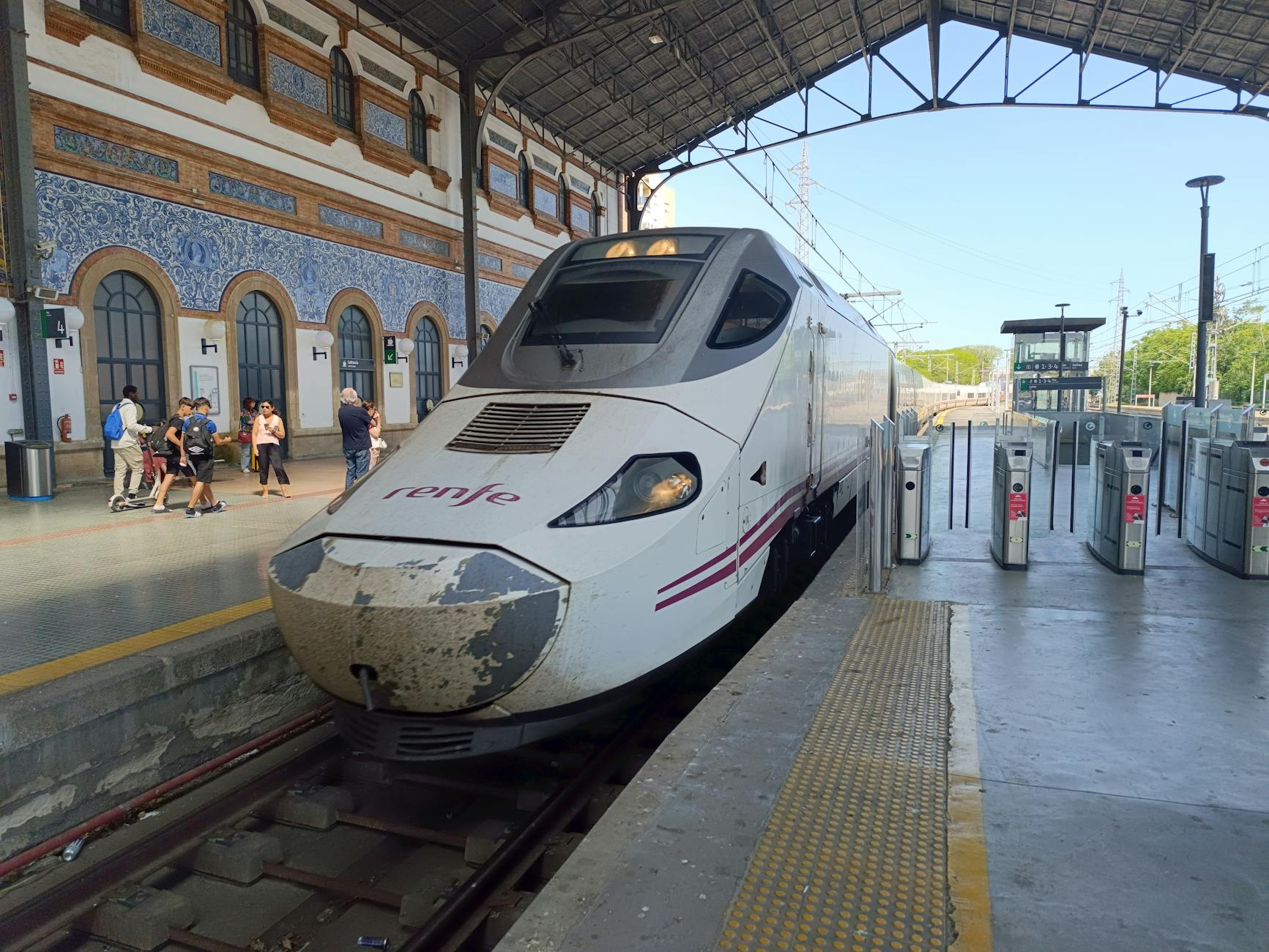
5. Commuter and regional rail
Spain’s commuter rail networks are called Cercanías in most regions and Rodalies in Catalonia. They are extremely useful but should not be confused with high-speed rail.
Strengths
Commuter rail is good for:
Examples relevant to this paper include Madrid Cercanías, Barcelona Rodalies, Valencia Cercanías, Málaga Cercanías, Seville Cercanías, and the Alicante/Murcia rail area.
Weaknesses
Commuter rail can be vulnerable to:
In Barcelona especially, Rodalies reliability is a frequent public issue and a local concern. Visitors should check live departure information rather than assuming a printed timetable will hold during disruptions.
How to use it well
- Airport links, where available
- Suburban hotels
- Day trips to nearby towns
- Connecting to long-distance stations
- Commuting from outer neighborhoods
- Avoiding road traffic
- Delays and infrastructure problems
- Platform changes
- Crowding at commuter peaks
- Limited late-night service
- Less tourist-oriented signage than metro systems
- Confusion between similarly named stations
- Zone-based fare confusion
- Know the line number, destination, and direction.
- Confirm whether you need Cercanías/Rodalies, metro, tram, or long-distance rail.
- Check whether your long-distance ticket includes Combinado Cercanías.
- Keep the ticket until after exiting; ticket gates may require it.
- At airports, confirm which terminal the rail station serves.
- Avoid tight connections if the commuter leg is not frequent.
6. Intercity and regional buses
Spain’s bus network fills the gaps that rail cannot cover. For many smaller towns, beaches, airports, and mountain destinations, buses are the real public transport backbone.
Main uses
Intercity buses are useful for:
Alsa is one of Spain’s best-known long-distance and regional bus operators. It publishes routes, schedules, ticket rules, luggage policies, and airport services.
Ticketing
For longer trips, book online or through the operator app when possible. Bus stations may have ticket offices or machines, but availability varies. For local and airport buses, contactless card payment may be available on some routes, but do not assume it universally.
Luggage
Coach luggage is usually stored underneath the bus, while small bags can come aboard. Alsa publishes free luggage limits and options for additional luggage. For airport buses, luggage handling is usually easier than on city buses but less flexible than a taxi.
Practical concerns
- Granada airport access
- Granada–Málaga trips when rail timing is poor
- Seville airport access
- Smaller Andalusian towns
- Costa del Sol destinations not served by the C1 commuter rail
- Alicante-region towns not on the tram line
- Rural or coastal day trips
- Late-night travel where rail is sparse
- Bus stations can be separate from train stations.
- Some cities have more than one bus station or terminal.
- Rural routes may have limited frequency on Sundays and holidays.
- Road congestion affects reliability, especially near airports and beaches.
- Some routes require seat reservations; others are local-style boarding.
- A “bus” in Spain may mean a local municipal bus, regional coach, airport express, or long-distance coach — they are not all ticketed the same way.
7. Private vehicles, rental cars, driving rules, and parking
Driving in Spain is straightforward on highways but can become difficult in dense historic cities.
Driving documents
Foreign drivers need to ensure their license is valid for driving in Spain. Spain’s traffic authority, the DGT, explains conditions for driving with foreign permits, including language, international convention, translation, and residency issues.
Practical steps:
Low-emission zones and environmental rules
Spain has expanded low-emission zones, known as Zonas de Bajas Emisiones or ZBE. The national climate framework requires larger municipalities to implement sustainable mobility measures, and cities increasingly use low-emission restrictions, access-control cameras, and resident-priority zones.
The DGT classifies vehicles using environmental labels based on efficiency and emissions. For foreign vehicles, the DGT explains that Spain cannot issue Spanish environmental stickers to foreign-registered vehicles, while some countries’ labels may have recognized equivalences.
Practical implications:
Parking
Parking is often the hardest part of driving in Spanish cities.
Common issues:
A good rule: if you sleep in a major city center, either choose a hotel with confirmed parking or return the rental car before entering the city.
Tolls, roads, and fuel
Spain has a strong highway network. Some roads are tolled, while others are free. Fuel stations are common on highways and near towns, but rural routes require planning. Manual-transmission rentals are more common and cheaper than automatics; reserve early if you need an automatic.
Driving style and safety
Spanish highways are generally orderly, but city driving can be intense. Watch for:
Do not drink and drive. Spain enforces alcohol limits and speed controls. For visitors, the best strategy is simple: use rail for city-to-city travel, then rent a car only when leaving the transit-rich corridor.
- Check whether your license is accepted as-is.
- Carry a passport or ID when renting or driving.
- Consider an International Driving Permit if your license is not in Spanish or not clearly covered.
- Residents should check exchange or Spanish license requirements.
- Confirm rental-company age, deposit, credit-card, and insurance rules.
- A rental car may be allowed where an older private car is not.
- Foreign drivers should not guess about ZBE access.
- Hotel garages inside restricted areas may require the hotel to register the plate.
- Navigation apps may not prevent every restricted-zone violation.
- Fines can arrive long after the trip.
- Madrid and Barcelona are especially important for low-emission and access-restriction planning.
- Historic centers have narrow streets and restricted access.
- Street parking may be metered, resident-only, or time-limited.
- Underground garages are expensive but safer and simpler.
- Hotel parking can be costly and must be reserved.
- Beach cities fill garages quickly in summer.
- Old-town Granada and Seville are especially bad places to improvise with a car.
- Bus lanes
- Taxi lanes
- Motorcycle filtering
- Roundabouts
- Speed cameras
- Pedestrian crossings
- One-way street systems
- Narrow old-town corners
- Tram tracks
- Delivery vehicles blocking lanes
- Tourists stepping off sidewalks in historic areas
8. Taxis, ride-hailing, and private-hire vehicles
Taxis
Spanish taxis are regulated by municipality or region. They usually use meters, official ranks, posted airport rules, and licensed vehicle markings. At airports and major stations, use official taxi ranks rather than accepting offers from people inside terminals.
Advantages:
Concerns:
VTC and ride-hailing
Private-hire vehicles, commonly called VTC in Spain, include services booked through apps such as Uber, Cabify, Bolt, or local providers. Availability depends heavily on local regulation. Madrid is typically more flexible than Barcelona. Some airport pages specify VTC pickup zones, such as Madrid-Barajas.
Practical advice:
- Door-to-door service
- Good for luggage
- Useful late at night
- Safer during rain, heat, or after events
- Often worth the cost for groups
- Airport fares can have supplements or fixed zones.
- Card acceptance is increasingly common but should still be confirmed.
- Strikes or local protests can affect service.
- Queue times can be long after major events.
- Some historic centers have access restrictions even for taxis.
- Compare taxi and app price before committing.
- At airports, follow official VTC pickup signs.
- Do not expect app pickup in every small town or during every festival.
- In heavily regulated cities, taxis may be easier than VTC.
- During strikes or peak events, public transport may be more reliable.
9. Urban metros, trams, and municipal buses
Urban transport in Spain works best when treated as local infrastructure, not national infrastructure.
Metros
Metros are strongest in Madrid and Barcelona. Valencia, Seville, Málaga, and Granada have metro/light-rail systems of different scales. Alicante uses an extensive tram-train system rather than a classic heavy metro.
Metro systems are usually best for:
Potential problems:
Trams and light rail
Trams are important in Valencia, Alicante, Barcelona, Seville, Granada, and some metropolitan suburbs. They are often easier to board with luggage or strollers than buses, but they may be slower than metro or rail.
Municipal buses
Buses are the most complete local mode in many cities. They reach places metros do not. In Seville, Granada, Alicante, Málaga, and Valencia, buses are essential for local life. In Madrid and Barcelona, buses complement the metro and handle cross-neighborhood trips.
Bus concerns:
- Predictable movement across dense districts
- Avoiding traffic
- Airport access where a line exists
- Commuting
- High-frequency tourist corridors
- Airport supplements or special tickets
- Night-service gaps
- Crowding at rush hour
- Elevator outages
- Pickpocketing in tourist-heavy stations
- Line works during summer or holidays
- Traffic affects reliability.
- Some stops serve multiple routes with different directions.
- Night buses have different route numbers and stop patterns.
- Contactless bank-card acceptance is not universal.
- Driver-sold tickets may not give transfers.
- Historic-center detours are common during festivals.
10. Airports and airport access
Airport access in Spain is city-specific. This is where many visitors waste money or time.
Strong airport transit examples
Bus-reliant airport examples
Airport strategy
Before arrival, answer four questions:
In Spain, the cheapest airport route is not always the best. A €5–€7 airport bus can be excellent. But after midnight, with luggage, in heat or rain, a taxi may be the smartest choice.
- Madrid-Barajas: metro, EMT Airport Express, municipal buses, Cercanías to T4, taxis, and VTC.
- Barcelona-El Prat: airport metro L9 Sud, airport rail from T2 via Rodalies, airport buses, taxis, and VTC.
- Valencia Airport: Metrovalencia lines connect the airport with the city.
- Málaga-Costa del Sol Airport: Cercanías C1 gives fast rail access to Málaga city, María Zambrano station, and Costa del Sol towns.
- Seville Airport: the EA airport bus is the main public transport link between airport, Santa Justa, Prado de San Sebastián, and Plaza de Armas.
- Alicante-Elche Miguel Hernández Airport: the C6 bus is the key city-airport connection, with links to central Alicante and TRAM transfer points.
- Granada-Jaén Airport: Alsa airport buses connect the airport with Granada city and key stops such as Gran Vía, Palacio de Congresos, and the bus station.
- Which terminal do I land at?
- Is there rail, metro, tram, bus, taxi, or VTC access from that terminal?
- Does my ticket or pass include the airport route?
- What is the backup plan if I arrive late or with luggage?
11. Ferries and coastal transport
Ferries are not the main transport mode for the cities in this paper, but they matter in Spain overall. Passenger traffic through Spanish ports is significant, and ferry operators connect mainland ports with the Balearic Islands, Canary Islands, North Africa, and other routes.
Relevant ferry use cases:
Ferries are useful when:
They are less useful when time is tight. Check port location carefully; some ferry ports are not convenient to the city center without taxi, metro, tram, or bus planning.
- Barcelona to Balearic Islands
- Valencia to Balearic Islands
- Dénia/Alicante-region access to Ibiza or other islands
- Málaga or Andalusian coast connections where available
- Car transport to islands
- Pet-friendly or luggage-heavy island travel
- You want to bring a car.
- You have more luggage than a flight allows comfortably.
- You are traveling with pets.
- You prefer an overnight or scenic journey.
- Flight prices are high.
12. Walking, cycling, scooters, and micro-mobility
Walking
Walking is central to Spanish urban life. Many city centers have pedestrianized streets, plazas, compact old quarters, and dense dining areas. Visitors often underestimate how much they can do on foot.
Walking is best in:
Walking is hardest in:
Cycling
Spain’s cycling quality varies dramatically by city. Valencia and Seville are among the easier cities in this paper for cycling. Barcelona has extensive cycling infrastructure but heavy traffic and tourist density. Madrid has improved infrastructure but remains more challenging because of scale, gradients, traffic, and climate. Málaga and Alicante are pleasant in sections but require caution on mixed streets. Granada’s hills limit casual cycling in the historic areas.
Bike-share systems and rental shops can be useful, but visitors should check:
Scooters and personal mobility vehicles
Spain regulates personal mobility vehicles, known as VMP. The DGT publishes certification rules for VMPs, including phased requirements for certified vehicles.
Practical rules vary locally, but the broad advice is:
For travelers, e-scooters can create more risk than benefit in unfamiliar traffic. They are best for experienced riders in cities with clear lanes and legal parking.
- Central Madrid neighborhoods
- Barcelona’s Eixample, Gothic Quarter, Born, Gràcia, and waterfront
- Seville’s old center and riverfront
- Valencia’s old town and Turia Garden
- Málaga’s center and port
- Alicante’s waterfront and castle-area approaches
- Granada’s center, Realejo, and selected Albaicín routes
- Granada’s steep quarters
- Summer Seville and Córdoba-type heat, with Seville especially relevant here
- Long beach-to-center transfers in Valencia, Málaga, and Alicante
- Barcelona with luggage on stairs or crowded metro transfers
- Madrid during late-night suburban returns
- Whether registration requires a local phone number or ID
- Whether a short-term pass exists
- Whether helmets are required or recommended
- Whether bikes can use bus lanes or cycle lanes
- Where bikes may be parked
- Whether the system works near the hotel and destination
- Do not ride e-scooters on sidewalks.
- Do not ride with two people on one scooter.
- Do not use headphones or a phone while riding.
- Use cycle lanes where required or available.
- Park only where allowed.
- Expect enforcement in dense tourist areas.
- Do not assume rental scooters are available in every city.
13. Accessibility, families, luggage, and personal security
Accessibility
Spain has made major improvements in transport accessibility, but the lived experience varies.
Renfe and Adif provide the Acerca assistance service for passengers with disabilities or reduced mobility. Aena also provides airport assistance for passengers with reduced mobility.
Practical accessibility issues:
Families with children
Families should consider:
Valencia, Seville, Málaga, and Alicante are often family-friendly on foot, but distances to beaches, stations, and attractions still matter.
Luggage
The most common visitor mistake is overpacking for a trip that involves multiple train stations, metros, and old-town hotels.
Luggage advice:
Personal security
Spain is generally safe for travelers, but transit-related petty theft is a real concern in tourist-heavy zones.
Highest-risk situations:
Security practices:
- Not every metro entrance has an elevator.
- Historic centers may have cobblestones and steep slopes.
- Old-town streets can be too narrow for standard taxis to stop at the exact door.
- Some tram and metro systems are easier than older metro stations.
- Elevators may be out of service.
- Station-to-street accessibility can be more important than train accessibility.
- Book assistance in advance for long-distance rail when needed.
- Whether stroller access is practical at the station
- Whether an elevator is available
- Whether a bus or taxi is easier with tired children
- Whether summer heat makes midday walking unrealistic
- Whether the hotel is near a direct line to major sights
- Whether festival crowds make the metro or bus uncomfortable
- Use smaller rolling bags when changing cities by rail.
- Avoid very large suitcases if using metro stairs.
- Keep valuables on your body or in a small bag.
- Do not leave luggage unattended in stations.
- Check luggage rules for low-cost rail products.
- Confirm whether the hotel is on a pedestrian or restricted-access street.
- For airport transfers with heavy luggage, taxis can be worth it.
- Crowded metro cars in Madrid and Barcelona
- Barcelona airport and Sants station transfers
- Madrid Atocha, Sol, Gran Vía, and airport links
- Tourist buses and crowded bus stops
- Street performances and distraction situations
- Restaurant terraces near major sights
- Beach-to-transit movement with bags
- Keep passport and spare cards separate from your wallet.
- Use front pockets or cross-body bags.
- Do not place a phone on a café table near the street.
- Do not hang bags on chair backs.
- Watch luggage on trains during station stops.
- Ignore unsolicited “help” at ticket machines unless from staff.
14. Seasonality, strikes, festivals, and disruption management
Spain’s transport experience changes significantly by season and event calendar.
Summer
Summer creates heat, crowds, beach congestion, and luggage-heavy travel. In Seville and inland Andalusia, midday walking can be genuinely punishing. In Barcelona, Valencia, Málaga, and Alicante, beach and airport traffic increase. Air-conditioned transit becomes not just convenient but important.
Easter and spring festivals
Semana Santa affects Seville and Granada especially. Processions can close streets, reroute buses, block taxis, and make walking the only realistic option in parts of the old center. Seville’s Feria also changes transport flows and taxi demand.
Valencia Fallas
Fallas is one of Spain’s biggest urban-disruption events. Streets close, crowds move at unusual hours, buses detour, metro and rail services may be reinforced or crowded, and taxis can be difficult near event zones.
Major sporting and concert events
Football matches, concerts, festivals, and demonstrations can temporarily overwhelm stations and buses. In Madrid and Barcelona, use metro where possible, but plan extra time after the event.
Strikes and public works
Spain has periodic transit strikes, operator-specific disruptions, and infrastructure works. Do not rely exclusively on one app. Check the operator’s official website or app on the day of travel, especially for:
- Airport transfers
- Long-distance rail
- Rodalies/Cercanías connections
- Early-morning trains
- Festival days
- Sunday or holiday travel
15. Main concerns for residents and locals
Residents experience transportation differently from visitors.
Reliability
For locals, a metro line that runs every few minutes is valuable only if it works during commuting hours. Cercanías and Rodalies reliability is a major issue in several metropolitan areas. Delays, capacity constraints, line works, and station access can matter more than theoretical network coverage.
Affordability
Monthly passes, youth discounts, fare subsidies, and resident cards are major household issues. Spain’s recent fare policies have created useful discounts but also complexity and changing rules.
Housing and commuting
As city centers become expensive, residents move farther out. This increases dependence on commuter rail, suburban buses, and park-and-ride facilities. Madrid and Barcelona show this most clearly, but the pattern also appears in Valencia, Málaga, Seville, Alicante, and Granada.
Congestion and parking
Local drivers face low-emission zones, fewer surface parking spaces, resident-only zones, delivery restrictions, and more competition from pedestrians and cyclists. These policies can improve city life but frustrate residents who need cars for work, family, or suburban travel.
Accessibility and equity
Transport equity includes more than wheelchair access. It includes late-night service for service workers, reliable buses for outer neighborhoods, affordable monthly passes, safe walking routes, shaded stops in hot cities, and access to hospitals, universities, and job centers.
Tourism pressure
Tourism adds stress in Barcelona, Seville, Granada, Málaga, Valencia, and Alicante. Visitors cluster on specific transit lines, fill airport buses, slow station circulation with luggage, and crowd historic-center streets. Locals often judge transport not by visitor convenience but by whether daily life is being crowded out.
16. Recommended strategies by traveler type
First-time visitor, city-only itinerary
Use rail between cities and public transit or walking within cities. Do not rent a car. Stay near a metro, tram, or major bus corridor. Use taxis only for airport luggage or late-night transfers.
Family with children
Use high-speed trains for long distances. Choose hotels near direct transit. In Seville, Granada, Valencia, Málaga, and Alicante, choose central accommodation that reduces transfers. Use taxis strategically in heat or after long days.
Traveler with mobility limitations
Prioritize hotels near accessible stations. Book Renfe/Adif assistance when needed. Check elevator status for metro systems. Use taxis for hill cities and historic cores. Granada, old Seville, and parts of Barcelona’s old city require special planning.
Budget traveler
Book trains early, compare Renfe/OUIGO/iryo, use buses where rail is expensive, buy multi-trip local cards when staying several days, and avoid taxis except for safety or time-critical situations. Do not buy tourist passes automatically; compare them to actual trip count.
Rural and coastal explorer
Use rail to reach the nearest major hub, then rent a car for rural legs. Consider Málaga for Costa del Sol access, Alicante for Costa Blanca, Granada for mountains, Valencia for countryside and beaches, and Seville for inland Andalusia. Return the car before entering Madrid or Barcelona if possible.
Resident or long-stay visitor
Learn the local pass system, not just the tourist ticket. Use city apps. Study low-emission restrictions if driving. Consider bike-share or cycling in Valencia, Seville, and parts of Barcelona. For commuting, test the route during actual commute hours before choosing housing.
Madrid
The local transportation logic
Madrid is Spain’s central rail, road, air, and administrative hub. It has one of Europe’s largest metro systems, a large municipal bus network, extensive Cercanías commuter rail, major intercity rail stations, a major international airport, taxis, VTC services, bike-share, and strong walking corridors in the center.
Madrid works best when visitors understand its layered structure:
The city is large, so walking alone is not enough. But central Madrid is highly walkable once you are in the right district.
Metro, buses, and public transport cards
Madrid’s metro is the most important visitor mode. It connects central neighborhoods, museums, shopping districts, football areas, business districts, and airport access via Line 8. Metro de Madrid’s fare information explains the public transport card and airport supplement rules.
Madrid also has a tourist travel pass that provides unlimited travel for selected zones and durations. This can be convenient for visitors who expect heavy metro and bus use, especially when staying several days. It is not always cheaper than pay-as-you-go or multi-trip tickets, but it reduces friction.
EMT buses fill gaps that the metro does not cover. They are useful for:
Airport access: Madrid-Barajas
Madrid-Barajas is unusually well connected. Main options include:
Visitor concern: Madrid Airport has multiple terminals. T4 is separated from T1/T2/T3. Always check terminal before choosing metro, train, taxi, or bus.
Long-distance rail: Atocha and Chamartín
Madrid’s biggest rail trap is station confusion. The two key long-distance stations are:
Do not assume “Madrid” means Atocha. Read the ticket. Build the itinerary around the exact station name.
Cercanías can connect Atocha and Chamartín, but station transfers still take time. With luggage, children, or a first visit, allow a cushion.
Taxis and VTC
Madrid is one of Spain’s easier cities for app-based private-hire vehicles. Taxis are abundant, and VTC services are often available. Airport taxis and VTC pickups are well organized, but after big events, queues can be long.
Taxis are useful for:
Private cars and low-emission zones
Madrid is one of Spain’s least pleasant cities for tourist driving. Parking is expensive, traffic is heavy, and environmental/access restrictions matter. A visitor staying in central Madrid should almost never rent a car until leaving the city.
Key concerns:
Use a rental car for trips outside Madrid, not for moving within Madrid.
Walking, cycling, and scooters
Madrid’s center is walkable and lively. Retiro, Paseo del Prado, Sol, Plaza Mayor, Palacio Real, Gran Vía, Chueca, Malasaña, and La Latina are good walking areas.
BiciMAD, Madrid’s electric bike-share system, can be useful for experienced urban riders, and the city provides information on the system for public use. But Madrid is large, hilly in places, and traffic-heavy. Casual riders should be conservative.
E-scooters and bikes require attention to local rules, parking, and traffic conditions. Do not ride on crowded sidewalks.
Main visitor concerns
Main local concerns
Best Madrid strategy
Stay near a metro station. Use metro and walking for most city travel. Use EMT or taxi when the metro route is indirect. For the airport, choose the option by terminal, luggage, and time of day. For onward rail, verify Atocha vs Chamartín before booking hotels and transfers.
- Metro for most city travel
- EMT buses for surface routes, late-night coverage, and neighborhood links
- Cercanías for suburbs, airport T4, and station-to-station connections
- Long-distance rail from Atocha and Chamartín
- Airport Express, metro, Cercanías, taxi, or VTC for airport access
- Walking for central districts such as Sol, Gran Vía, Letras, Retiro, Chueca, Malasaña, La Latina, and Salamanca
- Cross-center routes
- Retiro and museum district access
- Neighborhood-to-neighborhood travel
- Night buses
- Airport routes
- Short trips where walking is possible but tiring
- Metro Line 8 to/from airport stations, with an airport supplement.
- EMT Airport Express between the airport and central Madrid. EMT states that the Airport Express operates 24 hours, serves airport terminals and central stops such as Cibeles/Atocha depending on time, and has a special fare.
- Regular EMT airport buses, including routes such as 101 and 200, depending on terminal and destination.
- Cercanías to Airport T4, useful if your terminal is T4 or if you can use the airport shuttle between terminals.
- Taxi, using official taxi ranks.
- VTC, with airport-designated pickup zones.
- Madrid-Puerta de Atocha / Atocha-Almudena Grandes: historically the main station for many AVE routes to Barcelona, Valencia, Seville, Málaga, and the south/east, though assignments can change.
- Madrid-Chamartín Clara Campoamor: major station for northern routes, some Levante/east-coast services, and increasing high-speed traffic.
- Late-night airport arrivals
- Heavy luggage
- Group transfers
- Rain or heat
- Trips not well served by metro
- ZBE rules and central access restrictions
- Hotel plate registration if staying in a restricted zone
- Garage height limits and cost
- Bus and taxi lanes
- Delivery and resident-only streets
- Congestion around M-30 and central arteries
- Confusing Atocha vs Chamartín rail departures
- Airport terminal confusion
- Airport supplement/ticket misunderstandings
- Pickpocketing in crowded metro and tourist zones
- Late-night return planning
- Large station walking distances
- Heat in summer
- ZBE and parking fines for drivers
- Commute crowding
- Housing pushes to suburbs
- Metro works and line closures
- Cercanías reliability
- Parking and access restrictions
- Night bus coverage
- Air quality and congestion
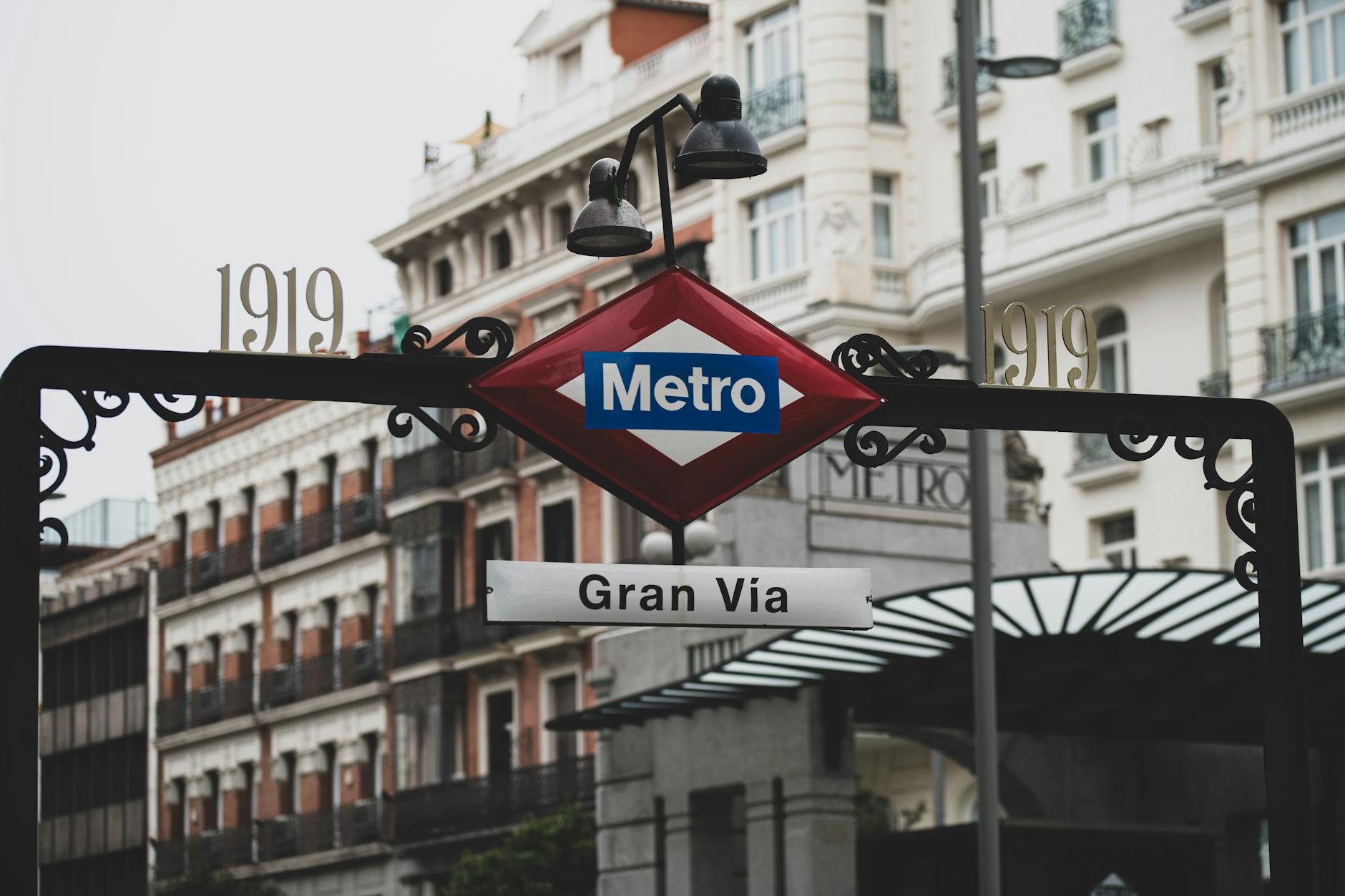
Barcelona
The local transportation logic
Barcelona has one of Spain’s densest and most complex urban transport systems. It includes TMB metro and buses, FGC rail, Rodalies commuter rail, TRAM, airport metro, airport rail, airport buses, taxis, VTC, bike lanes, and strong pedestrian districts.
Barcelona’s key lesson is that not all rail-looking things are the same:
The fare system is integrated in many ways, but airport rules and ticket types still catch visitors.
Metro, T-mobilitat, and tickets
Barcelona’s metro is the backbone for most visitors. TMB publishes current ticket and fare information, including single tickets, integrated tickets, airport tickets, and tourist products.
The T-mobilitat system is the regional platform for many integrated public transport tickets in the Barcelona area.
Important ticket concepts:
The practical issue is not only price. It is whether the ticket works at the airport gate. Barcelona is one of the cities where a visitor should check airport-ticket validity before arrival.
Airport access: Barcelona-El Prat
Main public options:
Barcelona Airport is a classic example where the fastest option depends on your hotel location. For Sants or Passeig de Gràcia, rail can be excellent if you are at or can reach T2. For other districts, L9 plus a transfer, airport bus, or taxi may be better.
Rail stations
The main long-distance rail station is Barcelona Sants. Other important stations include Passeig de Gràcia, Estació de França, and commuter rail stops, but most high-speed and long-distance travelers will use Sants.
Visitor concerns at Sants:
Buses and surface transport
TMB buses are useful where metro lines do not provide direct service, especially for neighborhood-to-neighborhood trips and hillside areas. Barcelona also has night buses, but route patterns differ from daytime travel.
For tourists, buses can be scenic but slower. In peak traffic or tourist areas, metro is usually more reliable.
Montjuïc, funicular, and cable car confusion
Barcelona has two different Montjuïc-related systems that visitors confuse:
If your pass says it includes public transport, do not automatically assume it includes every aerial cable car or tourist attraction service.
Taxis, VTC, and regulation
Taxis are plentiful and often the simplest solution with luggage. VTC availability exists but is more regulated and politically sensitive than in Madrid. During airport peaks, festivals, cruise arrivals, or late-night events, taxi queues and app prices can be high.
Private cars and parking
Barcelona is a bad city for casual visitor driving. The city has low-emission restrictions, heavy traffic, limited parking, bus lanes, one-way grids, tourist congestion, and expensive garages. The Eixample grid is logical, but that does not make parking easy.
Use a car only for trips outside the city, such as rural Catalonia, Costa Brava areas not well served by transit, or multi-stop countryside itineraries. Avoid driving into the Gothic Quarter, Born, or beach/tourist zones.
Walking, cycling, and scooters
Barcelona is excellent for walking in many areas: Eixample, Gothic Quarter, Born, Gràcia, Barceloneta, waterfront, and parts of Montjuïc. It is also a strong cycling city, but traffic, tourists, delivery vehicles, and scooter rules require attention.
E-scooter enforcement and parking rules are stricter than many visitors expect. Riding on sidewalks or parking carelessly can create fines and conflict.
Main visitor concerns
Main local concerns
Best Barcelona strategy
Use metro for most urban travel, walk within districts, and choose airport access based on terminal and hotel location. For a short tourist stay with heavy transit use, Hola Barcelona can reduce friction. For occasional rides, understand T-mobilitat ticket rules. Keep valuables secure in transit.
- TMB metro is the urban metro.
- FGC is a separate rail/metro-like regional operator.
- Rodalies is commuter rail.
- TRAM is the tram network.
- L9 Sud is the airport metro line.
- R2 Nord is the airport rail line serving Terminal 2.
- T-casual: a multi-trip ticket commonly used by occasional riders, but not always valid for every airport use.
- T-usual: a frequent-user pass; TMB notes that it is valid for airport metro stations.
- Hola Barcelona Travel Card: a visitor-oriented unlimited pass for 2–5 days that includes airport metro access but excludes some tourist-specific services such as the Montjuïc Cable Car.
- Airport metro ticket: a special ticket for L9 Sud airport metro access when your pass does not cover it.
- L9 Sud airport metro: connects both airport terminals to the metro network, but often requires transfers to reach central tourist areas.
- Rodalies R2 Nord airport rail: serves the airport rail station at Terminal 2 and connects with Barcelona rail stations such as Sants and Passeig de Gràcia; Terminal 1 passengers must account for the terminal transfer.
- Airport buses: commonly used for direct central access.
- Taxi: convenient with luggage or late arrivals.
- VTC: available but subject to local regulations and pickup rules.
- Busy station circulation
- Pickpocketing risk
- Need to distinguish metro, Rodalies, and long-distance areas
- Airport transfer decisions
- Crowding during holidays and weekends
- Montjuïc Funicular: part of the metro-style public transport system and integrated into normal transport logic.
- Montjuïc Cable Car: a separate tourist cable car with separate ticketing, not simply a metro ride.
- Ticket validity for airport metro
- Terminal 1 vs Terminal 2 airport rail access
- Pickpocketing on metro, Sants, airport routes, and tourist corridors
- Crowding in Gothic Quarter and Sagrada Família areas
- Confusing Rodalies vs metro vs FGC
- Montjuïc funicular vs cable car
- VTC/taxi regulation and airport pickup details
- Rodalies reliability and infrastructure delays
- Tourism crowding on central lines
- Housing and commute pressure
- Bike/scooter conflicts
- Taxi/VTC regulatory tension
- Airport and cruise-port surges
- Accessibility gaps in older stations
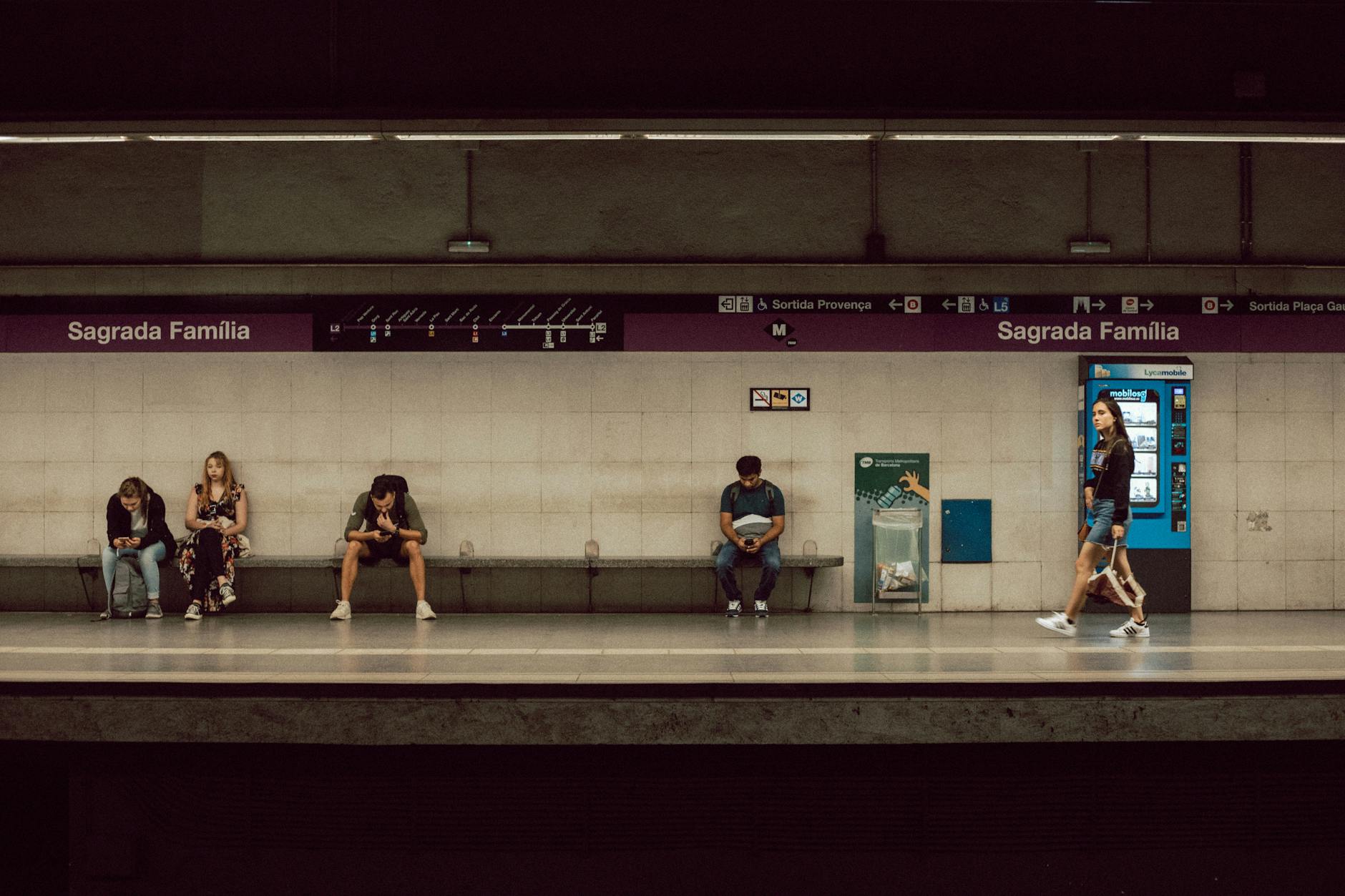
Seville
The local transportation logic
Seville is a walking-first historic city with buses, tram, a single metro line, commuter rail, bike infrastructure, taxis, and a bus-based airport connection. The old center is dense, beautiful, and often awkward for cars.
Unlike Madrid or Barcelona, Seville does not require a metro for every visitor movement. Many major sights are close enough to walk:
But heat, luggage, hotel location, and festival closures can change the equation.
Buses, tram, and TUSSAM
TUSSAM operates Seville’s city buses and tram. Its airport and city transport information is essential for practical movement.
Local buses are useful for:
The tram is useful in the central corridor but is not a citywide solution.
Metro Sevilla
Seville’s metro is useful but limited. Line 1 crosses the metropolitan area and is valuable for some suburbs, university areas, Nervión, and certain hotel locations. Metro Sevilla’s fare system uses zone or “jump” logic, with different ticket types.
For visitors staying in the historic center, the metro may be less important than walking, buses, and taxis. For residents and commuters, it is much more important.
Airport access
Seville Airport is primarily connected by the EA airport bus and taxi. Aena and TUSSAM describe the EA line between the airport and city points such as Santa Justa, Prado de San Sebastián, and Plaza de Armas, with a special airport fare.
Practical airport guidance:
Rail and bus stations
Santa Justa is Seville’s main rail station. It handles high-speed and long-distance rail to Madrid, Córdoba, Málaga connections, and other destinations. It is not in the old center but is close enough by taxi, bus, or a longer walk depending on luggage.
Important bus stations include:
Do not assume all buses leave from the same station.
Private cars and parking
Seville’s historic center is not a good place to drive. Streets are narrow, access can be restricted, and parking is expensive. If arriving by rental car, choose accommodation with confirmed parking or park outside the core.
Driving is more useful for:
Walking, cycling, and heat
Seville is one of Spain’s great walking cities, but heat is a serious transportation factor. In summer, a 25-minute walk at midday can be a bad decision. Plan around shade, water, taxis, buses, and evening movement.
Seville is also a strong cycling city with relatively flat terrain and bike lanes. Bike-share or rentals can be useful, but old-center crowds require care.
Festivals and disruption
Semana Santa and Feria de Abril can transform the city. Streets close, bus routes detour, taxis become hard to obtain, and walking routes may be blocked by processions or crowds. During these events, transportation planning becomes event planning.
Main visitor concerns
Main local concerns
Best Seville strategy
Walk inside the historic center, use buses or taxis for longer trips and heat, use the EA bus for airport access when it fits, and do not drive in the old center unless your hotel has a clear plan. During Semana Santa or Feria, confirm every route on the day.
- Cathedral and Giralda
- Alcázar
- Santa Cruz
- Archivo de Indias
- Arenal
- Triana
- Plaza de España
- María Luisa Park
- Metropol Parasol/Las Setas
- Reaching neighborhoods outside the old center
- Getting to bus and rail stations
- Avoiding long walks in heat
- Crossing between Triana, Nervión, Macarena, and central areas
- Night movement where available
- Use EA bus if your hotel or rail/bus connection is near its corridor.
- Use taxi if arriving late, traveling with children, or staying deep in the old center.
- Check the bus stop location carefully; festival closures can change surface travel.
- Plaza de Armas for many regional/intercity routes
- Prado de San Sebastián for some services and local connections
- White villages
- Rural Andalusia
- Doñana-area travel with planning
- Itineraries linking Seville, Córdoba, Ronda, Cádiz, and smaller towns where schedules are inconvenient
- Heat and walking fatigue
- Airport bus vs taxi decision
- Santa Justa station not being in the old center
- Plaza de Armas vs Prado bus-station confusion
- Festival closures
- Narrow streets and difficult taxi access to some hotels
- Limited metro coverage for old-center tourists
- Metro expansion and coverage
- Heat at bus stops
- Parking pressure
- Festival disruptions
- Tourist crowding in the old center
- Cross-river commuting
- Bus reliability in traffic
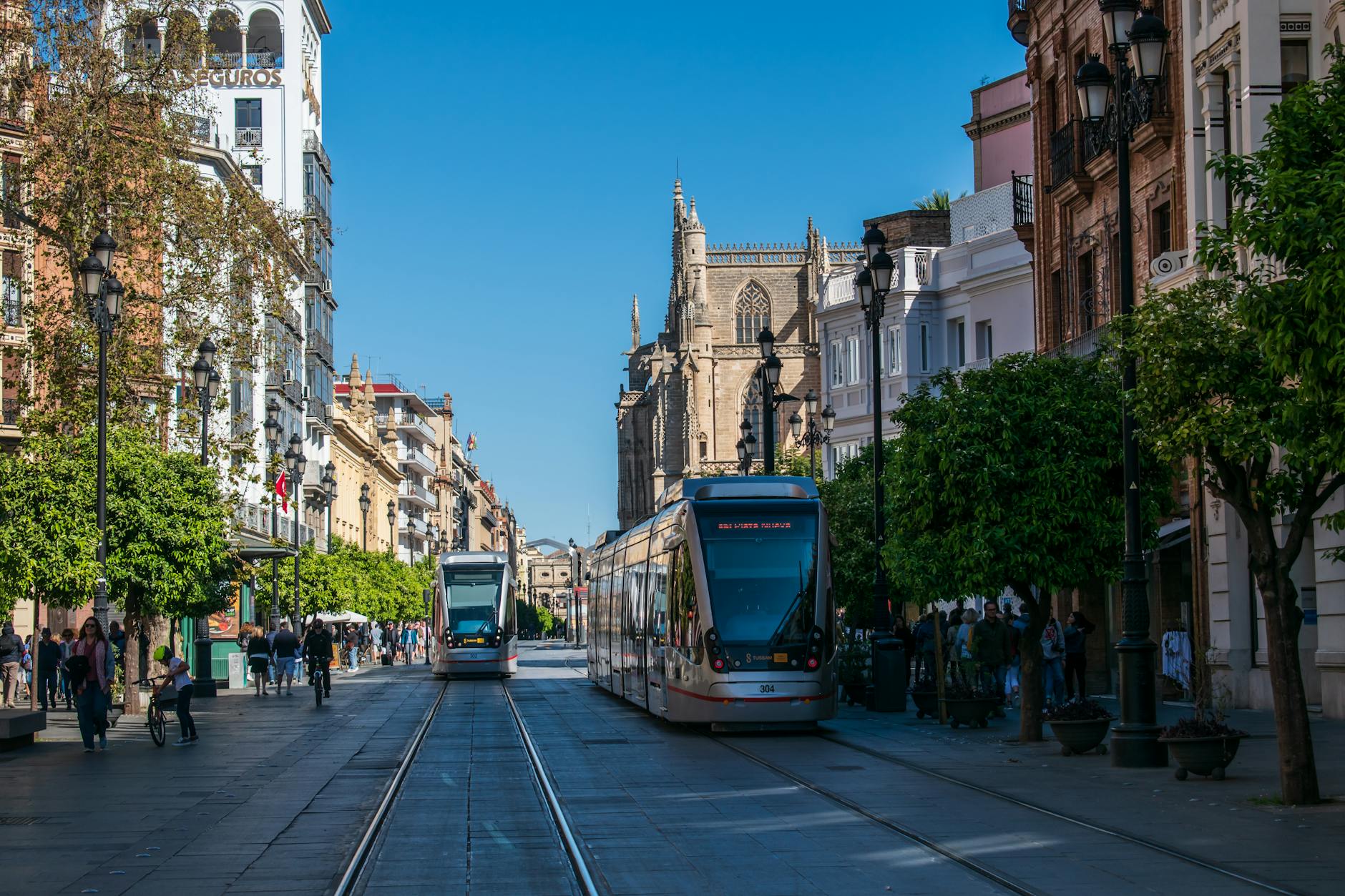
Valencia
The local transportation logic
Valencia is a highly livable city with a strong combination of walking, cycling, metro, tram, municipal buses, commuter rail, and airport metro access. It is flatter and easier to cycle than Madrid or Granada, and it has one of Spain’s best urban green corridors: the Turia Garden.
Transport is organized around:
SUMA and local ticketing
Metrovalencia explains that SUMA tickets coordinate travel across Metrovalencia, EMT, MetroBus, and Cercanías in the metropolitan area, depending on ticket type and zones. This integration makes Valencia easier than many cities once the traveler understands zones and ticket products.
Temporary fare reductions and policies may change by date; Metrovalencia publishes temporary fare information and validity rules.
For visitors, SUMA is useful when combining metro, tram, bus, and commuter rail. For a single short stay in the old center, walking and a few single trips may be enough.
Metrovalencia and tram
Metrovalencia is useful for:
The tram is especially relevant for beach and northern/eastern urban routes. Check the line, direction, and whether a transfer is needed.
EMT buses
EMT Valencia buses are essential for routes not directly served by metro or tram. EMT publishes fare and ticket information for city bus travel.
Buses are useful for:
Airport access
Valencia has one of the easiest airport public-transport links in Spain. Aena states that Metrovalencia lines connect the airport with central Valencia and other areas, with the airport station located inside the terminal area.
For most visitors, metro is the default airport option unless arriving very late, traveling with heavy luggage, or staying somewhere poorly connected.
Rail stations
Valencia has two station names visitors must understand:
The stations are near each other but not identical. Some itineraries require a station transfer. Build in time and check the exact ticket station.
Private cars and parking
Valencia is easier to drive than Barcelona or Madrid, but central parking is still a constraint. A car is useful for beaches and towns outside the metropolitan network, Albufera-area exploration, countryside, and multi-stop regional trips. It is less useful inside the city.
During Fallas, driving and parking become much harder. Road closures, crowds, fireworks, and temporary restrictions can make transit or walking the only sane option.
Walking, cycling, and Valenbisi-style mobility
Valencia is one of the best cities in Spain for cycling. It is flat, has the Turia Garden, and has improving bike infrastructure. Visitors can combine walking, cycling, and transit effectively.
Good walking and cycling areas:
Cycling is often faster than transit for medium-distance cross-city trips, especially when avoiding transfers.
Main visitor concerns
Main local concerns
Best Valencia strategy
Use metro for airport and longer cross-city trips, buses for gaps, walking in the old center, and cycling where comfortable. For high-speed rail, check whether the train uses Joaquín Sorolla or Estació del Nord. During Fallas, treat transport planning as a major part of the trip.
- Metrovalencia metro and tram lines
- EMT Valencia municipal buses
- Cercanías Valencia regional rail
- MetroBus metropolitan buses
- SUMA integrated ticketing across several transport modes
- Airport metro
- Walking and cycling
- Airport access
- City-center movement
- Beach and port-area access via tram/metro combinations
- University areas
- Suburban movement
- Connections to main stations
- Old town to City of Arts and Sciences
- Beach access depending on location
- Cross-town travel
- Late-night or neighborhood trips
- Reaching places where metro lines require indirect transfers
- Estació del Nord: the historic central station, used by many regional and local services.
- Joaquín Sorolla: the high-speed/long-distance station for many AVE and long-distance services.
- Old town
- Turia Garden
- Ruzafa
- City of Arts and Sciences
- Marina and beach areas, with distance planning
- Confusing Estació del Nord and Joaquín Sorolla
- Underestimating distance from old town to beach
- Zone logic for SUMA tickets
- Fallas closures and crowds
- Airport metro ticket planning
- Hot weather and sun exposure
- Cross-city commute reliability
- Beach and port connectivity
- Cycling safety and conflicts
- Fallas disruption
- Suburban service frequency
- Parking and low-emission policy development
Málaga
The local transportation logic
Málaga has transformed from a pass-through airport city into a major urban destination. Its transportation system is built around a walkable historic center, a strong airport commuter rail line, a growing metro/light-rail network, municipal buses, regional buses, taxis, and Costa del Sol connections.
Málaga’s key advantage is the Cercanías C1 line, which links the airport, Málaga city, María Zambrano station, and Costa del Sol towns such as Torremolinos, Benalmádena, and Fuengirola.
Walking and central movement
Central Málaga is highly walkable. The historic center, cathedral, Picasso Museum area, Alcazaba, Roman Theatre, port, Muelle Uno, and Malagueta beach are reachable on foot for many visitors. The center has pedestrianized areas and is generally easier without a car.
Walking concerns:
Metro Málaga
Metro Málaga provides light-metro service across important urban corridors. It is useful for university, western, and metropolitan destinations, and for some trips where bus travel is slower. Metro Málaga publishes tickets, fares, timetables, and line-map information.
For a first-time visitor staying in the historic center, the metro may be less central than walking, buses, and C1 rail. For residents, students, and commuters, it is more important.
Buses and regional transport
Municipal buses cover the urban area. Regional buses are critical for places not served by C1 rail, especially:
Málaga’s transport consortium publishes fare and regional transport information for the broader area.
Airport access
Málaga-Costa del Sol Airport is one of Spain’s best public-transport airports. Aena states that the C1 train connects the airport with Málaga city and Costa del Sol stops, with very short travel times to Málaga María Zambrano and Málaga Centro-Alameda.
Main options:
Rail station
Málaga María Zambrano is the main long-distance rail station. It handles AVE/high-speed services to Madrid and connections to other cities. It is adjacent to transport options and close to the city center, but not the same as the old-town pedestrian core.
Private cars
A car is not needed for central Málaga. It becomes useful for:
Parking in central Málaga can be expensive and stressful. Beach and port areas can be congested in peak season.
Main visitor concerns
Main local concerns
Best Málaga strategy
Use C1 for the airport and Costa del Sol towns it serves. Walk in the center. Use buses or taxis for gaps. Rent a car only for destinations outside rail/bus convenience. Check whether your coastal destination is actually on the C1 line.
- Heat in summer
- Cruise-ship and weekend crowds
- Hills near Gibralfaro
- Distance from some hotels to beach or station
- Cobblestones and old streets with luggage
- Marbella
- Estepona
- Nerja
- Some inland towns
- Granada connections, depending on itinerary
- C1 Cercanías train: best for central Málaga, María Zambrano, Torremolinos, Benalmádena, and Fuengirola.
- Airport buses: useful for selected routes and areas not reached by train.
- Taxi/VTC: good for late arrivals, heavy luggage, or destinations outside train coverage.
- Rural Andalusia
- Caminito del Rey access, depending on booking and rail/bus options
- White villages
- Costa del Sol towns beyond the C1 line
- Multi-stop beach routes
- Family trips with luggage
- Assuming C1 serves all Costa del Sol destinations; it does not reach Marbella or Estepona.
- Confusing María Zambrano with Centro-Alameda.
- Underestimating summer airport and beach crowds.
- Overusing taxis when the airport train is simple.
- Driving into the center without parking.
- Heat and hills near Gibralfaro.
- Airport and tourism pressure
- Housing and commuting along the coast
- Need for better west-coast rail beyond Fuengirola
- Congestion on coastal roads
- Metro expansion and integration
- Cruise-day crowding
Alicante
The local transportation logic
Alicante is a compact Mediterranean city with a strong coastal tram system, municipal buses, a major airport bus, taxis, and a central rail station for long-distance travel. Its unique feature is the TRAM d’Alacant, which connects the city with beaches and coastal towns north of Alicante.
The visitor should think of Alicante as three overlapping transport geographies:
TRAM d’Alacant
TRAM d’Alacant is Alicante’s most distinctive transport mode. It is useful for:
TRAM d’Alacant publishes fares, zones, and ticket information. Temporary fare policies are also published separately.
The main central hub is Luceros, with other useful stops near the market, marina, and beach corridors.
Buses and Móbilis/TAM logic
Alicante’s bus system, operated through local providers such as Vectalia, covers city and airport routes. Vectalia publishes fare and pass information for Alicante, including multi-trip and airport-related products.
The Móbilis/TAM-style card system is useful for repeat riders, but a short-stay visitor may only need a few single trips, the airport bus, and tram tickets.
Airport access
The C6 airport bus is the key public link between Alicante city and Alicante-Elche Miguel Hernández Airport. Alicante tourism describes the C6 as connecting the airport with central Alicante stops and TRAM connections. Aena also provides airport bus information for Alicante.
Practical airport points:
Rail station
Alicante-Terminal is the main rail station. It serves long-distance and high-speed trains, especially to Madrid and other Spanish destinations. It is close enough to the center for taxi, bus, or a moderate walk depending on luggage and hotel location.
Walking and hills
Central Alicante is easy to walk: marina, Explanada de España, Postiguet beach, shopping streets, old town, and market areas are close together. The exception is Santa Bárbara Castle, which involves elevation. Use lifts, taxis, buses, or careful walking depending on heat and ability.
Private cars and parking
A car can be useful for Costa Blanca exploration, inland villages, and beach-hopping outside the tram corridor. It is less useful inside central Alicante and beach parking areas.
Parking concerns:
Main visitor concerns
Main local concerns
Best Alicante strategy
Walk in the center, use TRAM for beaches and coastal towns, use C6 for the airport, and rent a car only for places not well served by TRAM or bus. Stay near Luceros, Mercado, the marina, or a TRAM stop if coastal access matters.
- Central Alicante: walkable city center, marina, Postiguet beach, old town, castle area.
- Coastal tram corridor: San Juan beach, El Campello, Villajoyosa, Benidorm, Altea, Calpe, Dénia connections depending on line and transfer.
- Airport corridor: C6 airport bus and taxis, because there is no simple direct rail link from airport terminal to central Alicante equivalent to Málaga’s C1.
- Beaches north of the center
- San Juan beach
- El Campello
- Benidorm connections
- Coastal day trips
- Avoiding beach parking
- The C6 is usually the default budget choice.
- It connects with central locations and TRAM transfer points.
- Contactless payment is available on certain airport/tourist bus services according to local operator information.
- Taxis are straightforward and use official airport taxi services.
- Do not assume there is a direct airport train like Málaga.
- Summer beach demand
- Central garages and meters
- Festival or event closures
- Narrow streets in older areas
- Traffic near the port and beachfront
- Assuming every beach or coastal town is easily reached without checking TRAM line timing
- Missing the C6 airport-bus stop
- Confusing airport bus, city bus, and TRAM tickets
- Beach crowding in summer
- Castle access and heat
- Long waits for coastal connections late in the evening
- Airport access without rail
- Beach-season congestion
- TRAM frequency and coastal growth
- Parking pressure
- Tourism concentration around beaches and old town
- Heat exposure at stops
Granada
The local transportation logic
Granada is one of Spain’s most distinctive transport cities because geography matters so much. The center is walkable, but hills, old streets, restricted areas, and major monuments make transportation planning important. The city combines urban buses, hill minibuses, a light metro, taxis, intercity buses, a rail station, and an airport bus.
Granada’s key transport fact is simple: walking is beautiful but not always practical. Albaicín, Sacromonte, and the Alhambra area involve slopes, cobblestones, restricted streets, and crowd flows.
Urban buses and hill routes
Granada’s urban bus network is essential. The city’s mobility portal provides route, fare, map, and service information for urban buses.
Buses are important for:
Small buses and minibuses are especially relevant in narrow hill districts where normal buses cannot operate easily.
Metro de Granada
Granada’s metro is a light-rail system serving a metropolitan corridor. It is useful for:
It is not a complete solution for the Alhambra, Albaicín, or Sacromonte. Visitors should treat it as a metropolitan spine, then use walking, buses, or taxis for the hill destinations.
Airport access
Granada-Jaén Airport is smaller than Madrid, Barcelona, Málaga, Valencia, or Alicante. Alsa operates airport bus services linking the terminal with Granada city stops, including central and bus-station areas. Alsa’s Granada station information also describes airport connections and timing coordination with flights.
For visitors:
Rail and bus stations
Granada has a rail station served by long-distance and regional trains, including high-speed services, but frequency and routing are not as dense as Madrid, Barcelona, Valencia, Seville, or Málaga. Check schedules carefully rather than assuming hourly high-speed options.
Granada’s bus station is important for:
The bus station is not in the old center; plan tram, bus, or taxi access.
Alhambra access
The Alhambra is not a casual flat walk from every hotel. Some visitors enjoy walking up, but many should use bus, taxi, or a planned route. Ticket times are strict, and late arrival can be a serious problem. Build in margin.
Transport advice:
Private cars and access restrictions
Granada is one of the worst cities in this paper for casual old-town driving. Restricted access, narrow streets, hotel access rules, hills, and cameras can create fines and stress.
A car is useful for:
But it is usually a bad tool inside central Granada. If you must bring a car, ask the hotel for exact driving instructions and plate-registration procedures.
Walking, hills, and heat
Granada is spectacular on foot, but physical effort matters. Albaicín and Sacromonte are steep. Summer sun and winter cold can both affect walking. Shoes matter more than fashion.
Good walking areas:
Main visitor concerns
Main local concerns
Best Granada strategy
Choose accommodation carefully. Use buses or taxis for Alhambra, Albaicín, and Sacromonte when hills or timing matter. Use metro for metropolitan corridor trips, not as a full tourist solution. Do not drive into the old center without exact hotel guidance.
| City | Best everyday mode for visitors | Best airport mode | Main rail-station issue | Car usefulness | Biggest transport trap |
|---|---|---|---|---|---|
| Madrid | Metro + walking | Metro, Airport Express, Cercanías T4, taxi/VTC depending terminal | Atocha vs Chamartín | Low in city, high for rural day trips | Wrong station or airport terminal |
| Barcelona | Metro + walking | L9 airport metro, R2 from T2, airport bus, taxi depending hotel | Sants vs Rodalies/metro confusion | Low in city | Airport ticket validity and pickpockets |
| Seville | Walking + bus/taxi | EA airport bus or taxi | Santa Justa outside old center | Low in old center, moderate for rural Andalusia | Heat and festival closures |
| Valencia | Metro/tram/bus + cycling | Metrovalencia | Estació del Nord vs Joaquín Sorolla | Moderate outside city | Fallas disruption and beach distance |
| Málaga | Walking + C1 rail + bus | C1 rail | María Zambrano vs Centro-Alameda | Moderate/high for coast beyond rail | Assuming C1 reaches Marbella/Estepona |
| Alicante | Walking + TRAM + bus | C6 airport bus or taxi | Alicante-Terminal near but separate from hotel areas | Moderate for Costa Blanca | Assuming airport has direct rail |
| Granada | Walking + bus/taxi + metro corridor | Airport bus or taxi | Bus station and rail station outside old core | High for mountains/rural, low in city | Hills and restricted driving |
- Alhambra access
- Albaicín and Sacromonte approaches
- Bus station connections
- Rail station connections
- Suburban districts
- Avoiding steep climbs
- Night or heat fatigue
- Suburban movement
- University and residential areas
- Bus station and rail station access, depending on exact stop
- Commuting
- Avoiding road congestion on its corridor
- Airport bus is the main budget option.
- Taxi is easier with luggage, late arrivals, or a hill hotel.
- Flight schedules are more limited than at Málaga.
- Some travelers use Málaga Airport for wider international options, then continue by bus, train, or car.
- Málaga connections
- Airport connections
- Sierra Nevada and regional routes
- Andalusian towns
- Long-distance buses
- Do not schedule a tight airport/train arrival before an Alhambra entry time.
- Use a taxi if the bus route is unclear and time matters.
- Wear appropriate shoes for walking down after visiting.
- Expect crowds around bus stops and entrances.
- Sierra Nevada
- Alpujarras
- Costa Tropical
- Rural Granada province
- Multi-stop Andalusian road trips
- Cathedral and central streets
- Realejo
- Carrera del Darro, with crowd awareness
- Selected Albaicín viewpoints if physically comfortable
- Alhambra descent routes
- Underestimating hills
- Driving into restricted areas
- Tight Alhambra timing
- Bus station not being central
- Airport having limited flight options
- Confusing metro usefulness with old-town access
- Luggage in cobbled, steep streets
- Hill-neighborhood access
- Bus reliability through narrow streets
- Tourism pressure around Albaicín and Alhambra
- Metro expansion and integration
- Parking restrictions
- Airport connectivity
- Student and commuter flows
Madrid + Barcelona
Best long-distance mode: high-speed rail. Compare Renfe, OUIGO, and iryo. In Madrid, verify Atocha or Chamartín. In Barcelona, expect Sants. Within cities, use metro and walking. Do not rent a car.
Madrid + Seville + Granada
Use high-speed rail Madrid–Seville. For Seville–Granada, compare rail and bus schedules. In Seville, walk and use taxis/buses. In Granada, use buses/taxis for hills and Alhambra. A car is optional only if adding rural Andalusia.
Madrid + Valencia + Alicante
Use high-speed/long-distance rail. In Valencia, use metro from airport and SUMA transport for local movement. In Alicante, use TRAM for beaches and C6 for airport. A rental car is useful only for Costa Blanca or inland villages beyond transit.
Barcelona + Valencia + Alicante
Use Mediterranean corridor rail where schedules fit. In Barcelona, solve airport and metro ticket rules. In Valencia, know Joaquín Sorolla vs Estació del Nord. In Alicante, build beach trips around TRAM timing.
Málaga + Granada + Seville
Use rail and buses depending on schedule. Málaga airport is a strong gateway because of C1 rail and international flights. Granada may require bus connections. Seville’s airport is bus/taxi based. A rental car is useful if adding Ronda, white villages, Alpujarras, Sierra Nevada, or Costa Tropical.
City-only Andalusia trip
For Seville, Málaga, and Granada city centers, do not rent a car. Use rail/bus between cities, then walking, buses, taxis, and local metro/tram systems within each city. Rent a car only after finishing the old-center portion.
Spain is one of the easiest countries in Europe for a rail-based trip, but it is not a one-card transit country. The best traveler is flexible: rail for long distances, city-specific cards for local networks, buses where rail is absent, taxis for luggage and difficult geography, walking for historic centers, and rental cars only for places public transport cannot serve well.
For the cities in this paper:
The strongest overall strategy is to treat transportation as part of itinerary design, not as an afterthought. In Spain, where you sleep determines whether your trip feels smooth. A hotel beside the right metro, tram, bus, or rail corridor can save hours. A hotel in a beautiful but restricted old-town lane can be perfect for walking and terrible for luggage. A cheap airport route can be excellent in daylight and unwise at midnight. A rental car can unlock the countryside and ruin the city center.
Plan by mode, city, station, airport terminal, and neighborhood. Spain rewards that discipline.
: Renfe, official English site: https://www.renfe.com/es/en
: OUIGO España, official English site: https://www.ouigo.com/en/
: iryo, destinations: https://iryo.eu/en/destinations
: Renfe Cercanías/Suburban rail: https://www.renfe.com/es/en/suburban
: Alsa, official English site: https://www.alsa.com/en
: Aena passenger information: https://www.aena.es/en/passengers/passengers.html
: Baleària, official English site: https://www.balearia.com/en
: Renfe regulations and 2026 Single Pass information: https://www.renfe.com/es/en/regulations
: Alsa Abono Único information: https://www.alsa.com/bonos/abono-unico
: Renfe luggage policy: https://www.renfe.com/es/en/travel/informacion-util/luggage/politica-de-equipajes
: Renfe special luggage: https://www.renfe.com/es/en/travel/informacion-util/luggage/equipajes-especiales
: Renfe bicycles and non-electric scooters: https://www.renfe.com/es/en/travel/informacion-util/luggage/bicycles-and-kick-scooters-_non-electric_)
: Renfe ticket information including Combinado Cercanías: https://www.renfe.com/es/en/travel/prepare-your-trip/billetes-ave-y-largadistancia/all-tickets
: Alsa luggage information: https://www.alsa.com/en/web/bus/faqs/luggage
: DGT, driving in Spain with a foreign permit: https://www.dgt.es/nuestros-servicios/permisos-de-conducir/permisos-extranjeros-y-de-fuerzas-y-cuerpos-de-seguridad/conducir-con-un-permiso-extranjero/
: Spanish transport ministry observatory, decarbonization and low-emission-zone framework: https://otle.transportes.gob.es/en/informes-anuales-monograficos/descarbonizacion-transporte/3/2
: DGT environmental label information: https://www.dgt.es/nuestros-servicios/tu-vehiculo/tus-vehiculos/distintivo-ambiental/
: DGT, environmental labels and foreign vehicles: https://www.dgt.es/muevete-con-seguridad/viaja-seguro/conduce-en-el-extranjero/
: Aena Madrid-Barajas VTC access: https://www.aena.es/en/adolfo-suarez-madrid-barajas/getting-there/vtc.html
: Aena reduced-mobility passenger assistance: https://www.aena.es/pmr/inicio?lang=en
: Renfe/Adif Acerca assistance service: https://www.renfe.com/es/en/travel/informacion-util/servicio-de-asistencia/what-is-it
: DGT personal mobility vehicle certification information: https://www.dgt.es/nuestros-servicios/para-colaboradores-y-empresas/vehiculos-de-movilidad-personal-vmp/certificaciones/
: Puertos del Estado, port traffic and passenger context: https://www.puertos.es/en/comunication/ports-general-interest-recorded-record-figures-general-cargo-and-teus-2025
: Metro de Madrid fares: https://www.metromadrid.es/en/viaja-en-metro/titulos-y-tarifas/tarifas
: Madrid tourist travel pass: https://www.esmadrid.com/en/madrid-tourist-travel-pass
: EMT Madrid airport transport information: https://www.emtmadrid.es/Aeropuerto?lang=en-GB
: Renfe Madrid Cercanías lines: https://www.renfe.com/es/en/suburban/suburban-madrid/lines
: BiciMAD official information: https://www.bicimad.com/en
: TMB Barcelona transport ticket fares: https://www.tmb.cat/en/barcelona-fares-metro-bus/transport-ticket-fares
: T-mobilitat fares: https://t-mobilitat.atm.cat/en/web/t-mobilitat/fares
: TMB T-usual ticket information: https://www.tmb.cat/en/barcelona-fares-metro-bus/t-usual
: TMB Hola Barcelona Travel Card: https://www.tmb.cat/en/barcelona-fares-metro-bus/tickets-visit-barcelona/barcelona-travel-card-hola-bcn
: TMB airport metro ticket: https://www.tmb.cat/en/barcelona-fares-metro-bus/aeroport-ticket
: TMB metro to Barcelona Airport: https://www.tmb.cat/en/visit-barcelona/public-transport/metro-airport
: Rodalies R2 Nord airport rail line: https://rodalies.gencat.cat/en/sobre-rodalies/linies-i-estacions/servei_rodalia_barcelona/r2s/index.html
: TMB Montjuïc Funicular: https://www.tmb.cat/en/barcelona/other-transport-tmb/montjuic-funicular
: TMB Montjuïc Cable Car: https://www.tmb.cat/en/barcelona/other-transport-tmb/montjuic-cable-car
: TUSSAM Seville official site: https://www.tussam.es/en
: TUSSAM Seville airport bus information: https://www.tussam.es/en/descubre-sevilla/how-get-here
: Metro Sevilla fares and tickets: https://www.metro-sevilla.es/horarios-y-tarifas?section=titulosMetro
: Aena Seville airport bus information: https://www.aena.es/en/sevilla/getting-there/bus.html
: Metrovalencia fares and SUMA ticket information: https://www.metrovalencia.es/en/fares/
: Metrovalencia temporary fares: https://www.metrovalencia.es/en/our-temporary-fares/
: EMT Valencia fares and tickets: https://www.emtvalencia.es/wp/en/rates-and-titles/
: Aena Valencia Airport underground/metro information: https://www.aena.es/en/valencia/como-llegar/underground.html
: Metro Málaga tickets and fares: https://metromalaga.es/en/tickets-and-fares/
: Metro Málaga timetable: https://metromalaga.es/en/timetable/
: Metro Málaga lines and maps: https://metromalaga.es/en/lines-maps/
: Aena Málaga-Costa del Sol Airport train information: https://www.aena.es/en/malaga-costa-del-sol/getting-there/trains.html
: Renfe Málaga Cercanías: https://www.renfe.com/es/en/suburban/suburban-malaga
: Aena Málaga-Costa del Sol Airport bus information: https://www.aena.es/en/malaga-costa-del-sol/getting-there/bus.html
: Málaga metropolitan transport consortium fares: https://ctmam.es/en/fares/
: Alicante Tourism public transport information: https://alicanteturismo.com/en/public-transport/
: Aena Alicante-Elche Miguel Hernández Airport bus information: https://www.aena.es/en/alicante-elche-miguel-hernandez/how-to-get-there/bus.html
: Aena Alicante-Elche Miguel Hernández Airport taxi information: https://www.aena.es/en/alicante-elche-miguel-hernandez/how-to-get-there/taxi.html
: Vectalia Alicante fares and passes: https://alicante.vectalia.es/en/bonos-y-tarifas/
: Vectalia Alicante contactless payment information: https://alicante.vectalia.es/contactless/en
: TRAM d’Alacant fares: https://www.tramalacant.es/en/fares/
: TRAM d’Alacant temporary fares: https://www.tramalacant.es/en/fares/temporary-fares/
: Granada urban bus and mobility information: https://www.movilidadgranada.com/busurbano_index.php?idioma=en
: Alsa Granada-Jaén airport service: https://www.alsa.com/en/airports/granada-jaen
: Alsa Granada bus station information: https://www.alsa.com/en/bus-stations/granada-station
- Madrid is a metro-and-rail hub where station names matter.
- Barcelona is a dense integrated-transit city where airport ticket rules and pickpocket awareness matter.
- Seville is a walking city where heat, festivals, and the airport bus shape decisions.
- Valencia is a balanced metro/tram/bus/cycling city with excellent airport metro access.
- Málaga is a walkable city with an unusually useful airport/coast commuter rail line.
- Alicante is a coastal tram city with a bus-based airport link.
- Granada is a hill-and-heritage city where buses, taxis, and access restrictions matter as much as rail.