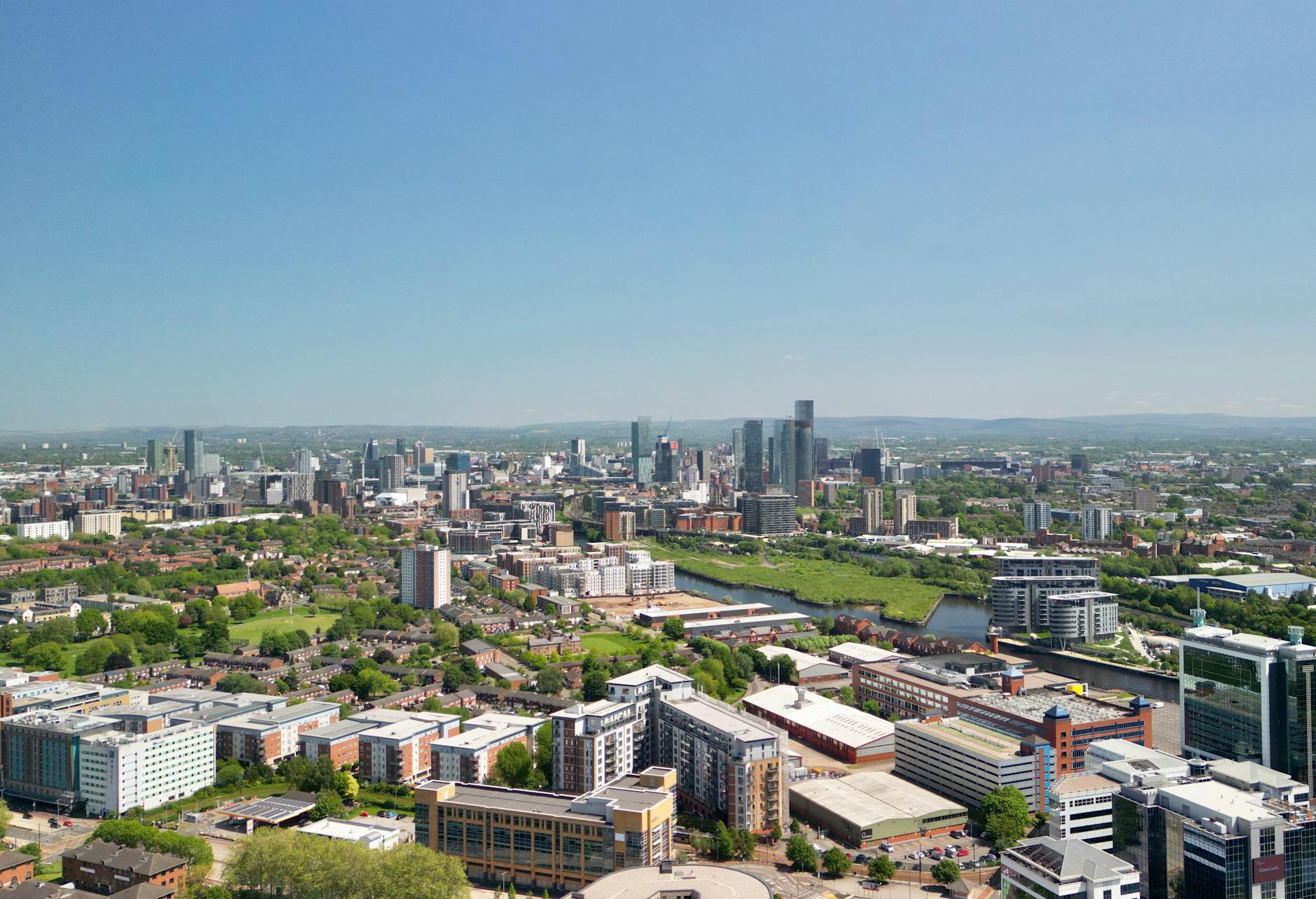
An investor or deal-team trip to Manchester is not a standard business visit with a finance label attached. The traveler may be moving between a target company, fund office, law firm, corporate adviser, lender, management presentation, site visit, and private dinner in a short window. Manchester can support that work well because its rail links, airport access, hotel base, commercial districts, universities, media cluster, and outer business zones are all close enough to combine. It can also punish loose planning when the team assumes every address is equally central. The practical question is where the transaction actually lives. A meeting in Spinningfields is not the same operating problem as a session around Deansgate, Piccadilly, Oxford Road, Salford Quays, MediaCity, Trafford, the airport corridor, or a site outside the core. Short deal travel depends on judgment, confidentiality, and timing. The plan should protect where people sleep, where documents are handled, where private calls happen, how the team reaches each room, and when there is enough quiet space to decide what the trip has changed.
Start with the transaction map
Deal travel should begin with the transaction map, not the hotel shortlist. A Manchester trip can involve a fund meeting near Spinningfields, an adviser or law-firm session near Deansgate, a management presentation around Piccadilly, a university or health-related contact near Oxford Road, a media or technology meeting in Salford Quays or MediaCity, and a facility visit toward Trafford, the airport corridor, or another outer site. Those locations can fit inside a short itinerary, but they do not create the same risk.
The team should rank every location by decision value, confidentiality, and tolerance for lateness. A courtesy call can absorb more friction than a management presentation, lender session, diligence review, signing-sensitive meeting, or site inspection. If the trip has several important nodes, decide which one controls the hotel choice and which meetings can move. The best itinerary is the one that protects the highest-value decision points, not the one that looks neat on a map.
- Map target, fund, adviser, lender, counsel, dinner, and site-visit locations before booking.
- Treat Spinningfields, Deansgate, Piccadilly, Oxford Road, Salford Quays, MediaCity, Trafford, and airport-area sites as distinct operating zones.
- Give management presentations, diligence sessions, and site visits stronger buffers than lower-stakes calls.

Plan arrival around the first decision point
Investor arrivals should be planned backward from the first meaningful obligation. A same-day management dinner, lender call, adviser preparation session, or target presentation leaves little room for baggage delay, traffic, hotel check-in, device setup, or a rushed review of the latest documents. Manchester Airport, Piccadilly rail arrival, Victoria, Oxford Road, and driving from another UK city can all work, but the right option depends on the first meeting and the reset time the team needs.
A traveler stepping directly from a flight or train into a management meeting may be present but not ready. Build margin for showers, secure connectivity, document access, wardrobe recovery, and internal alignment. For outer sites, a prearranged car may be more practical than improvising with taxis or transit. For central adviser meetings, rail and walking can be efficient when the route is already proven. The arrival plan should reduce uncertainty before the first conversation that matters.
- Choose airport, rail, or car arrival by the first high-value obligation, not by habit.
- Leave reset time before management presentations, lender calls, negotiation sessions, and formal adviser meetings.
- Use prearranged transport when site geography, team size, luggage, rain, or document sensitivity makes improvisation fragile.

Make adviser and diligence-room logistics explicit
Diligence depends on practical details that are easy to ignore until the room fails the work. The team may need visitor badges, private rooms, screen access, guest Wi-Fi, printing, secure document review, space for counsel, and a place to step out for internal alignment. A law-firm office, adviser conference room, target-company boardroom, hotel meeting room, or serviced office can all be useful, but each has limits that should be known before the day begins.
Confirm who controls each room, when access starts, how laptops connect to screens, whether materials can be printed, whether calls can be taken privately, and where the team can debrief afterward. A diligence session that ends late afternoon may still require two hours of synthesis before dinner. If every minute is booked with movement, the team may leave Manchester with notes but without judgment.
- Confirm room access, badges, screen connection, guest Wi-Fi, printing, and private debrief space.
- Protect time after diligence meetings to sort open issues while memory is fresh.
- Avoid relying on hallways, lobbies, or cafes for internal alignment on sensitive points.

Treat adviser meetings as operating sessions
Manchester deal work can involve lawyers, corporate-finance advisers, accountants, lenders, university contacts, public-sector stakeholders, property advisers, and technical specialists who are not always in the same district as the target. These sessions should not be treated as interchangeable office calls. Each one may carry a different confidentiality standard, document need, stakeholder mix, and tolerance for delay.
Before the trip, define what each adviser meeting must settle. Is the team testing valuation, legal exposure, customer risk, funding structure, tax treatment, property assumptions, technology diligence, or management credibility? That answer determines who needs to attend, what documents are carried, whether counsel should join by video, and how much private time the team needs afterward. The value of a short deal trip is not the number of rooms visited. It is the quality of the decisions those rooms make possible.
- Define the decision purpose of each adviser meeting before travel.
- Match attendees, documents, remote counsel, and debrief time to the issue being tested.
- Leave private time after complex sessions so the team can convert advice into transaction judgment.

Choose a hotel that can support confidential work
A deal-team hotel is part bedroom, part workroom, part transport node, and part privacy control. It should support quiet calls, strong connectivity, late document review, food after meetings, reliable vehicle pickup, laundry or pressing, and enough desk space to work without turning the lobby into a transaction room. A prominent address can still be wrong if the room is poor for documents or the location forces repeated movement across the city.
The base should follow the transaction map. Spinningfields or Deansgate may work for central finance, adviser, and dinner-heavy schedules. Piccadilly may be stronger for rail-linked days. Salford Quays or MediaCity can make sense when the target or key contacts are west of the centre. An airport-area hotel may be reasonable for a one-night site visit or very early departure but can be weak for central meetings. The right hotel helps the team arrive, regroup, work privately, and sleep enough to evaluate the deal clearly.
- Prioritize desk quality, quiet, Wi-Fi, call privacy, food, laundry, and vehicle access before booking.
- Choose Spinningfields, Deansgate, Piccadilly, Salford Quays, MediaCity, or airport-area lodging according to the transaction map.
- Avoid hotels that force sensitive calls, document review, or team alignment into public areas.

Use dinners and informal meetings carefully
Manchester can be useful for management dinners, adviser debriefs, founder conversations, and private relationship-building, but the right dinner is not simply the most impressive reservation. The venue should fit the purpose: privacy, noise level, table spacing, route back to the hotel, dietary handling, seniority, and whether serious work must happen afterward. A late dinner can build trust, but it can also weaken the next morning's diligence if it is poorly placed.
Informal meetings should have a defined purpose. A lunch can test chemistry with a management team. A coffee can clarify one sensitive point without reopening the whole agenda. A dinner can surface concerns that no one wants to raise in a boardroom. Decide who captures the useful points, what should not be discussed in public, and whether the location protects the next obligation.
- Choose dinners by privacy, conversation quality, route, relationship stage, and next-day obligations.
- Give informal meals a purpose: chemistry, clarification, adviser debrief, or sensitive issue testing.
- Plan how the team will capture useful points without turning a private meal into a visible document session.

When to order a short-term travel report
A solo investor with one familiar Manchester adviser meeting may not need a custom report. A report becomes more useful when the trip includes a target company, management presentation, facility visit, several advisers, lender or counsel calls, confidential dinners, senior principals, airport-to-meeting pressure, or movement between central Manchester and outer business zones. Those are the trips where a generic city guide misses the real operating questions.
The report should test the transaction map, hotel base, arrival logic, car and rail options, site-visit sequence, confidential work requirements, dinner choices, current disruption risks, and the recovery windows needed for analysis after each major session. The value is a transaction-aware operating brief: a way to protect timing, confidentiality, and judgment while moving through Manchester for work where the most important moment may not be the most visible meeting.
- Order when target geography, advisers, site visits, confidential dinners, or tight arrival timing make improvisation expensive.
- Provide target addresses, adviser locations, hotel candidates, arrival mode, site-visit rules, and meeting sequence.
- Use the report to protect timing, confidentiality, and decision quality rather than to replace commercial diligence.