*A practical analysis for visitors, foreign residents, and local users* Prepared: April 21, 2026
Scope and audience
This paper explains how transportation works in Canada at both the national and city scale. The first part covers the countrywide transport model: domestic aviation, intercity rail, regional rail, urban transit, coaches, ferries, rental cars, roads, winter conditions, airport access, payment systems, accessibility, and disruption patterns. The second part applies those principles to the Canadian destinations we currently cover: Toronto, Montreal, Vancouver, Quebec City, Victoria, Banff, Calgary, and Halifax.
Canada is not a country where one transport answer works everywhere. It is too large, too regionally varied, and too unevenly served for that. The main challenge is not simply choosing between train and car. It is understanding which parts of the country are genuinely transit-strong, which parts are aviation-driven, which parts are seasonal, and which destinations stop working elegantly the moment the traveler assumes that Canada is a denser European-style rail country than it actually is.
Contents
- Executive summary
- Part I - National transportation in Canada
- 1. The Canadian transportation model
- 2. The practical decision framework
- 3. Domestic aviation
- 4. Intercity rail
- 5. Commuter and regional rail
- 6. Urban metros, subways, light rail, streetcars, and buses
- 7. Intercity coaches and private shuttles
- 8. Ferries and water transport
- 9. Private vehicles, rental cars, highways, parking, and fuel
- 10. Taxis, ride-hailing, transfers, and hotel cars
- 11. Walking, cycling, weather, and seasonality
- 12. Tickets, fare media, apps, and payment fragmentation
- 13. Accessibility, luggage, families, and older travelers
- 14. Winter, wildfire, construction, and disruption management
- 15. Main concerns for residents and local users
- 16. Recommended strategies by traveler type
- Part II - City and destination analysis
- Toronto
- Montreal
- Vancouver
- Quebec City
- Victoria
- Banff
- Calgary
- Halifax
- Practical multi-stop route examples
- References
Executive summary
Canada is a country of strong local transport systems inside selected metropolitan areas, but weak national continuity outside a few corridors. The country is excellent for city-by-city travel when the route is realistic. It becomes awkward when travelers expect high-frequency rail between all major destinations or assume that large distances can be handled casually without flights, long drives, or careful sequencing.
The national travel logic is straightforward:
Canada works best when the traveler picks a lane. A city-heavy Ontario-Quebec trip can be mostly rail-and-transit. Vancouver and Victoria can be done with urban transit plus ferries. Calgary and Banff often become much easier with a car or structured shuttle logic. Halifax can work as a compact city break, but wider Atlantic exploration usually pushes the traveler toward road-based movement. The weak Canada trip is overextended. The strong Canada trip is regionally coherent.
- Use domestic flights for long Canadian distances, especially when crossing regions or trying to combine east and west on one trip.
- Use intercity rail selectively, not romantically. Rail is strongest in the Windsor-Quebec City corridor and weaker as a nationwide default.
- Use urban transit confidently in Toronto, Montreal, and Vancouver, and more selectively in Calgary.
- Use ferries as core infrastructure in coastal British Columbia rather than treating them as side attractions.
- Use rental cars deliberately for the Rockies, national-park movement, smaller Atlantic routes, and destinations where transit exists but does not control the trip well.
- Use ride-hailing, taxis, and hotel transfers tactically for airport arrivals, late nights, weather events, and luggage-heavy moves.
- Plan around winter, construction, and wildfire season, which can materially alter timing, road confidence, and regional air reliability.
- Assume fare systems are fragmented. Canada does not offer one elegant national ticketing layer. Each city and operator tends to run its own cards, apps, fare logic, and transfer rules.
1. The Canadian transportation model
Canada is a large, sparse, federal country with transport systems that are often strong locally and inconsistent nationally. That is the core operating fact. The country is not built around one unified passenger mobility strategy in the way Japan or Switzerland are. Instead, it runs on overlapping layers:
This creates a country where travelers need to think structurally. The question is not "Does Canada have public transport?" It clearly does. The better question is "At what geographic scale does public transport remain elegant before the trip should switch to air, ferry, shuttle, or car?"
- Domestic aviation for national reach. Air travel is the practical spine for long-distance movement.
- Intercity rail for selected corridors. Rail matters, but mainly in parts of Central Canada and on specialty routes.
- Province-by-province and city-by-city public transit. The user experience changes sharply between metro areas.
- Road transport as the fallback and often the default. Outside the biggest cities and best corridors, road movement carries the trip.
- Marine transport in selected regions. Ferries matter in coastal British Columbia and in some Atlantic settings.
2. The practical decision framework
Choose flights for scale
If the trip crosses major Canadian regions, flying is usually the adult answer. Toronto to Vancouver, Montreal to Calgary, or Halifax to Banff are not rail problems in any practical short-trip sense. They are aviation problems.
Choose rail for selected urban corridors
Rail is strongest when the route sits inside the more populated eastern corridor and the traveler values city-center to city-center convenience. It can work well for combinations such as Toronto, Montreal, and Quebec City, but expectations still need to stay realistic on speed and frequency compared with top-tier global rail systems.
Choose transit inside the right cities
Toronto, Montreal, and Vancouver support serious no-car travel. Calgary supports a more mixed model, especially if the itinerary stays close to the core and CTrain-served areas. Quebec City and Halifax are workable on foot plus bus and occasional taxi. Banff is the clearest example of a destination where local shuttle logic matters more than classic urban transit.
Choose ferries when the geography demands them
In British Columbia, ferries are not decorative. They are a basic part of how movement works between mainland and island destinations. A traveler going between Vancouver and Victoria should understand ferry timing as part of the route itself, not as an afterthought.
Choose a car when the destination is beautiful, dispersed, or weather-sensitive
The more the trip depends on mountain views, national-park timing, flexible scenic stops, outlying neighborhoods, or multiple small-town links, the stronger the case for a car becomes. Canada is full of destinations that look manageable on a map and are technically connected, but become slower, colder, and less graceful without private vehicle flexibility.
3. Domestic aviation
Domestic aviation is the country's most important national passenger mode. Canada is simply too large for most travelers to treat air travel as optional when combining provinces or moving between east, central, west, and Atlantic destinations.
For visitors, flights are especially important for:
The practical downside is that Canadian air travel is often efficient in principle but vulnerable to weather, network ripple effects, and airport friction. Winter storms, de-icing, wildfire smoke, summer thunderstorm patterns, and constrained peak periods can all affect reliability. The stronger traveler builds buffer when a same-day onward meeting, cruise, wedding event, or remote lodge check-in depends on the flight landing exactly on time.
Airport strategy matters in Canada because several cities have good but not magical airport access. A downtown rail link can make the trip feel easy. A suburban airport hotel, late-night arrival, ski luggage, or family group can change the equation quickly.
- east-west movement
- short trips with more than one region
- Rockies access from other provinces
- preserving energy on premium or business itineraries
- winter routing where long road or rail exposure is unattractive
4. Intercity rail
Canadian rail travel is best approached as a selective tool, not a universal backbone. Rail is strongest where population density supports more useful frequencies and where city-center arrival matters. It is weaker as a national all-purpose travel solution.
The rail advantage is clear when:
The rail disadvantage appears when:
Canada can absolutely reward rail, but only on the right trip shape. The weak move is building a national itinerary on wishful rail thinking. The strong move is using rail where it actually simplifies the day and switching to air or road where it does not.
- the traveler wants downtown-to-downtown movement
- the route stays inside the better-served eastern corridor
- airport transfers would erase flight time gains
- the trip benefits from a calmer work-on-board environment
- the route is geographically long
- frequency is limited
- the traveler assumes European or Japanese timing discipline
- connections beyond the station still require taxis or suburban pickups
5. Commuter and regional rail
Commuter and regional rail matter most around the biggest metropolitan areas. Their importance is less about tourism romance and more about how they change the reach of a city without requiring a car.
Toronto uses commuter rail and regional bus layers to widen the practical metro map. Montreal and Vancouver also benefit from suburban and regional connections that make airport access, business-district movement, and selected satellite trips more manageable.
For a visitor, commuter rail is usually strongest in three cases:
For residents, commuter systems are part of daily life and housing choice. The main frustrations are familiar ones: peak loads, service changes, line-specific outages, transfer friction, and construction phases that make a theoretically good line feel temporarily compromised.
- staying outside the absolute core but still wanting car-light access
- making airport or convention-center moves
- adding a nearby satellite stop without converting the whole trip into a driving itinerary
6. Urban metros, subways, light rail, streetcars, and buses
Canadian urban transit is not one thing. It ranges from strong, all-day multimodal systems in the largest metros to functional but thinner networks in smaller cities.
The basic pattern is:
The main mistake visitors make is importing one city's rules into another. Canada is fragmented enough that every destination has its own transit personality, payment method, and threshold where a taxi suddenly becomes sensible.
- Toronto: subway, streetcar, bus, regional overlays, and dense downtown coverage
- Montreal: metro and bus system with a particularly strong inner-city logic
- Vancouver: rapid transit, buses, and marine links with unusually good no-car usability
- Calgary: light rail plus buses, stronger for some urban corridors than others
- Quebec City and Halifax: bus-led systems where route planning matters more
- Banff: shuttle- and seasonal-destination logic rather than traditional city transit

7. Intercity coaches and private shuttles
Buses and coaches in Canada matter most where rail is thin, flights are excessive, or tourist demand supports targeted regional links. Coach travel is often more useful regionally than nationally.
Private shuttles are especially important in:
The coach problem in Canada is not that buses are impossible. It is that they are uneven. Travelers should verify whether a route is a robust year-round public option, a seasonal tourism shuttle, or a thin service that leaves little margin for delay or changed plans.
- mountain destinations
- airport-to-resort transfers
- seasonal visitor corridors
- university and event traffic
- routes where scheduled public service exists but is inconvenient
8. Ferries and water transport
Marine transport matters in very specific parts of Canada. British Columbia is the clearest example. Ferries there are a functional transport layer for island-mainland connections and shape how visitors reach places such as Victoria.
Water transport in urban contexts can also matter, but usually as a supplement rather than the system core. The practical lesson is simple: if the route involves coastal British Columbia, treat the ferry schedule with the same seriousness you would treat a train or flight departure. A late arrival at the terminal can distort the whole day.
9. Private vehicles, rental cars, highways, parking, and fuel
Canada is a country where driving remains structurally important. Even where public transport is usable, the car often returns as the best answer the moment the itinerary expands beyond a core city.
Rental cars are strongest for:
Rental cars are weakest for:
Driving in Canada is usually not technically difficult. The bigger issues are weather, fatigue, distance illusion, urban parking cost, downtown one-way systems, and winter confidence. A summer drive through Alberta and a winter arrival in a snowstorm are completely different propositions, even if the road rules are the same.
- Banff and wider Rockies exploration
- mixed urban-nature itineraries
- families with heavy gear
- photographers and scenic-route travelers
- Atlantic loops beyond one main city
- travelers who want control over timing in shoulder season
- central Toronto
- central Montreal
- central Vancouver
- short, high-density city breaks where parking becomes dead weight
10. Taxis, ride-hailing, transfers, and hotel cars
Point-to-point car services are part of the normal transport mix in every covered Canadian destination, but their role changes by city.
They are especially useful for:
In the largest cities, ride-hailing and taxis often function as a practical supplement to otherwise strong transit. In smaller or more destination-led places, they can become the bridge that keeps a no-car trip viable at all.
The smart Canadian pattern is not ideological. It is hybrid. Do the bulk of the day by transit, walking, ferry, or shuttle where that works best, then use a car service for the parts of the day where weather, fatigue, terrain, or timing would otherwise degrade the trip.
- airport arrivals
- very early departures
- bad-weather nights
- luggage-heavy hotel changes
- neighborhoods with awkward bus logic
- travelers with mobility constraints
11. Walking, cycling, weather, and seasonality
Canada is deeply seasonal, and transportation quality changes with the season more than many travelers expect. A neighborhood that feels walkable and easy in June may feel windy, icy, or simply much less pleasant in January.
Walking is strongest in:
Walking is weaker when:
Cycling exists in many Canadian cities, but it is highly city-specific and season-dependent. A visitor should treat it as an optional layer rather than assuming it is the country's main urban transport strength.
- compact historic districts
- dense downtown hotel zones
- waterfront or park-connected areas in temperate months
- mixed-use central neighborhoods in Montreal, Toronto, and Vancouver
- snow and ice reduce confidence
- distances are suburban rather than urban
- hills or waterfront weather change the effort level
- the route assumes shoulder-season comfort that the actual day does not provide
12. Tickets, fare media, apps, and payment fragmentation
Canada does not offer one universal rider experience. Payment systems are fragmented across agencies and provinces. Some cities support simple tap-and-go logic. Others still lean more heavily on local cards, local apps, or operator-specific fare rules.
The practical rules are:
This fragmentation is inconvenient but manageable. The main risk is not catastrophic failure. It is low-grade friction: wrong ticket product, weak transfer understanding, or unnecessary time spent solving fare issues after landing.
- check the local fare method before arrival
- do not assume your last Canadian city's transit card works in the next one
- confirm airport-specific fare supplements where relevant
- screenshot or preload the official local app if the system depends on it
13. Accessibility, luggage, families, and older travelers
Canada is generally workable for travelers with additional needs, but the quality of the experience depends heavily on the specific city, station vintage, winter conditions, and whether the trip assumes too many transfers.
The strongest approach for users with luggage, strollers, or mobility constraints is usually:
Older travelers and families often do very well in Canada when the route is disciplined. The trouble starts when a trip is built by map optimism rather than real effort.
- reduce transfer count
- prioritize direct airport access where available
- avoid ambitious same-day cross-city moves
- use taxis or hotel cars when weather is poor
- verify elevator access when rail stations are older or under maintenance
14. Winter, wildfire, construction, and disruption management
Canadian transport is shaped by disruption in a very Canadian way. Winter is obvious, but it is not the only factor. Wildfire smoke, road closures, ferry delays, summer construction, and big-event congestion can also materially alter the trip.
Key operational realities:
A good Canada traveler builds margin. A weak one runs every transfer tight and then acts surprised when the country behaves like a large northern federation with real weather.
- winter affects air, road, rail, and walking conditions
- mountain travel requires more caution than urban travel
- construction season can reshape central-city traffic and airport access
- wildfire season can affect western itineraries even when the traveler is not entering a fire zone directly
15. Main concerns for residents and local users
Locals in Canada usually do not complain that transport is impossible. They complain that it is uneven. The recurring issues are:
That local perspective matters because it explains the traveler experience too. Canada often works well in pockets, not because every layer is perfect, but because smart users combine the right modes for the right geography.
- housing and job geography outrunning transit convenience
- airport and commuter reliability under bad weather
- long suburban trip times
- fragmented fare systems
- weak national alternatives to flying
- the cost and necessity of car ownership outside the best-served cores
16. Recommended strategies by traveler type
First-time city traveler
Choose one Canadian region, not the whole country. Stay central. Use transit heavily in the biggest cities. Avoid unnecessary rental cars.
Luxury or high-comfort traveler
Use premium airport transfers, central hotels, business-class rail where sensible, and tactical flights to preserve energy. Canada rewards convenience spending because distances and weather can punish sloppy transitions.
Budget traveler
Concentrate on one corridor or one city pair. Overland movement can be rewarding, but only when the route is realistic. Chasing national breadth on a budget usually creates exhaustion rather than value.
Family traveler
Mix transit with selective car services. In mountain or park destinations, consider a rental car or structured shuttle. In big cities, avoid carrying family logistics through too many transfers.
Business traveler
Default to flights for inter-regional travel, rail for the best short corridor hops, and hotel-proximate movement in the largest downtowns. Protect the schedule from weather and airport uncertainty.
Toronto
Toronto is Canada's biggest city and one of the country's strongest transit environments, but it is also a city where scale can wear people down. The subway, streetcar, bus, commuter overlays, and airport rail access make it possible to do a serious no-car trip. The catch is that Toronto is large, often congested, and full of trips that are technically easy but longer than a visitor first imagines.
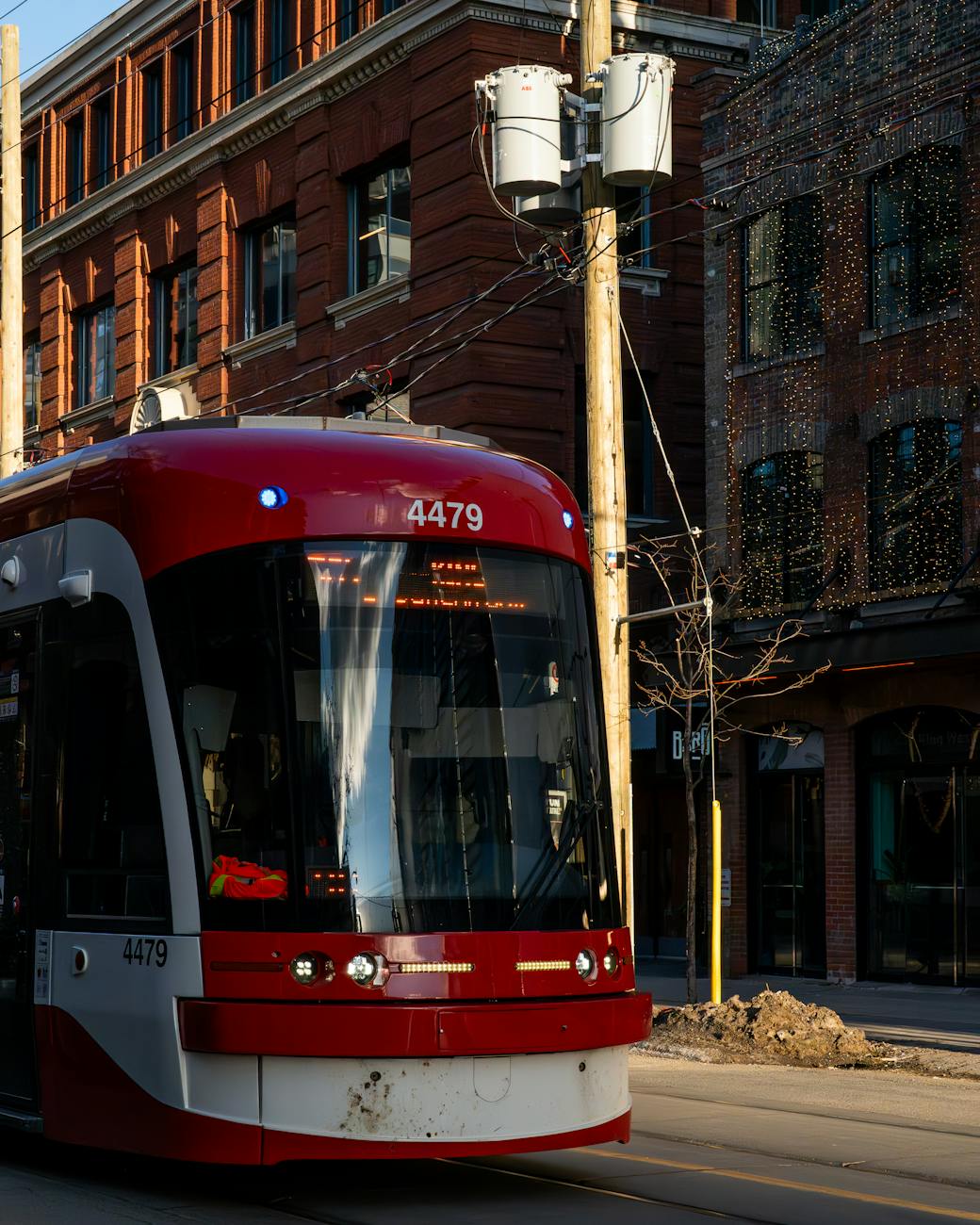
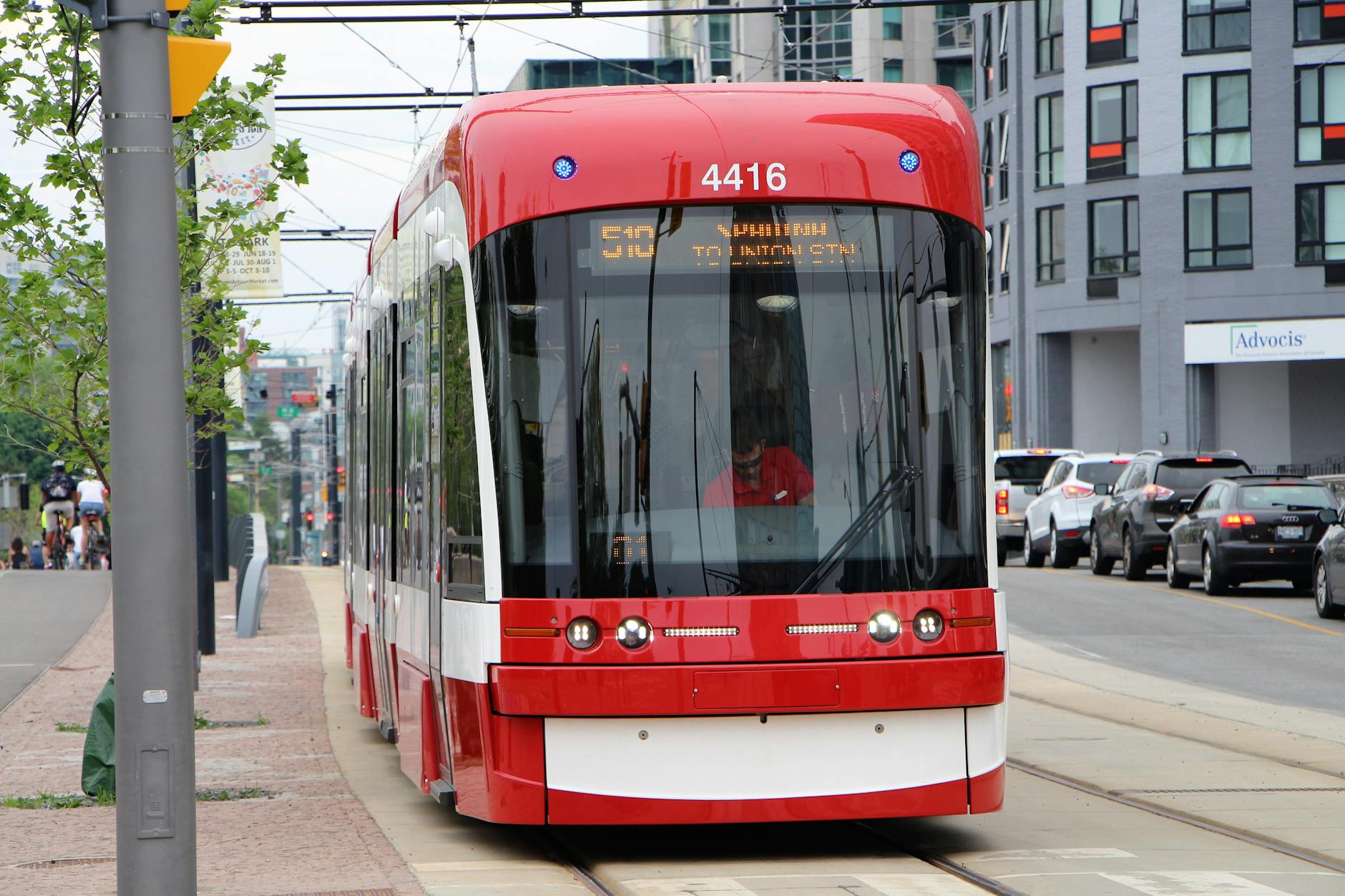
For most travelers, central Toronto is best handled by a combination of subway, streetcar, walking, and occasional taxi or ride-hail. The streetcar network is part of the city's identity and is genuinely useful, especially for downtown movement. The subway does the heavier structural work. Airport access is good enough that many travelers can land and stay car-free immediately.
Toronto punishes unnecessary driving. Downtown parking, traffic, event congestion, and general urban friction make rental cars feel like liabilities unless the trip is actually leaving the city. The strongest Toronto strategy is to stay central, group neighborhoods intelligently, and treat a car as an escape tool for outer-day trips, not as the base mode.
Montreal
Montreal has one of the cleanest urban transit logics in the country. The metro gives the city a strong inner framework, buses fill gaps effectively, and many of the neighborhoods travelers most want to use reward walking. The city often feels more naturally car-light than visitors expect.
Montreal works best when the traveler leans into district-based movement. Central neighborhoods, historic areas, dining districts, and cultural zones can be stitched together well by metro and foot. This makes it especially good for travelers who want a city break that feels active but not overengineered.
Driving is usually unnecessary for a core Montreal stay and can actively worsen the trip. The city is better experienced by staying close to the urban heart and using rail, metro, and walking. If the wider Quebec route begins after Montreal, the traveler can add rail or a car later rather than carrying that burden through the city center.
Vancouver
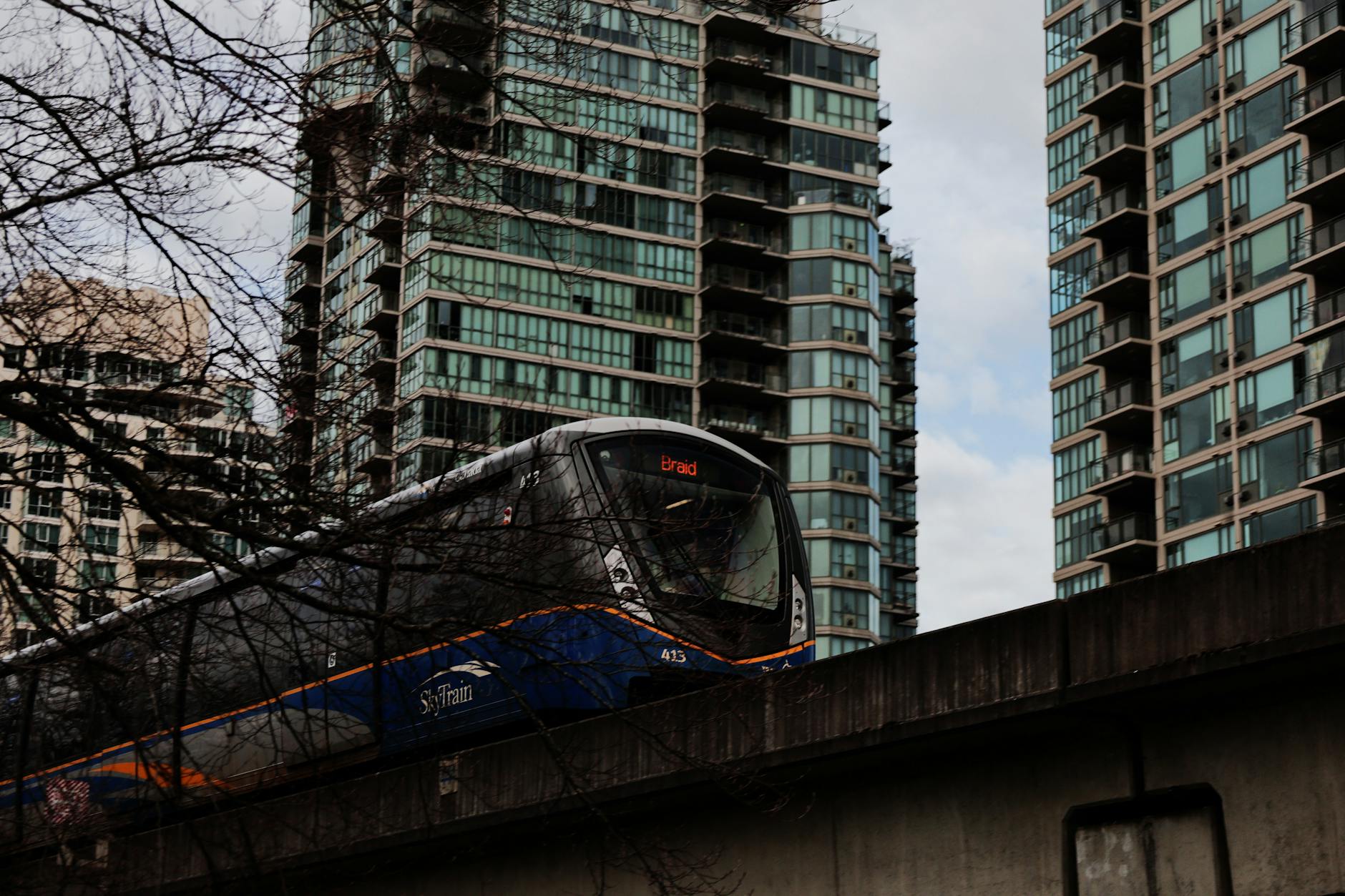
Vancouver is one of the easiest Canadian cities for a no-car traveler. Rapid transit, buses, compact central districts, and the city's relatively graceful physical layout make it unusually usable by North American standards. The city is also one of the places where transit and scenery coexist well, which improves the emotional experience of getting around.
The main Vancouver transport strength is composure. Airport access is strong, central neighborhoods link well, and many travelers can handle the bulk of the trip by rail, bus, and walking. The city also acts as a staging point for ferries and regional movement, which means good transport planning here has an outsize effect on wider British Columbia itineraries.
Driving in central Vancouver is often unnecessary. The case for a rental car rises only when the trip moves into mountain, coastal, or multi-stop regional territory. As a city-only or city-plus-Victoria trip, Vancouver can work very well without one.
Quebec City
Quebec City is smaller, more compact, and more dependent on walking plus bus logic than Montreal or Toronto. It can be a very satisfying no-car destination, but only if the traveler understands that the old-city core, terrain, and seasonal conditions shape the day more than big-network transit does.
The city works well for travelers who choose their base carefully and accept a simpler movement pattern: walking, selected bus trips, and occasional taxis when needed. This is not a place where one rides complex rapid transit lines all day. It is a place where a good hotel location reduces the need for transport heroics.
Quebec City becomes more complicated when the trip expands into broader regional touring. At that point, a car may make sense. But for the city itself, staying well and moving compactly is often the better answer.
Victoria
Victoria is shaped by the fact that it is both a city and part of a ferry-mediated island geography. The city center itself can be pleasant and manageable on foot, with buses and occasional taxis filling in the rest. The bigger transport question is not usually how to move inside central Victoria. It is how to move between Vancouver-area departure points, ferry terminals, and the island end of the route.
Because of that, Victoria works best when the traveler thinks in chained segments: urban transit or taxi to the ferry, ferry crossing, onward bus or car movement, then a compact city stay. If those segments are timed intelligently, the trip feels elegant. If they are treated casually, the journey can become surprisingly cumbersome.
A car is optional for a central Victoria stay, but it becomes more attractive if the itinerary widens beyond the city into broader Vancouver Island exploration.
Banff
Banff is one of the clearest examples in our Canadian coverage of a place where destination transport logic matters more than classic city transport logic. The town itself is manageable, but the full Banff experience depends on how the traveler reaches trailheads, viewpoints, lakes, ski infrastructure, and surrounding park areas.
Shuttles, seasonal services, tour transfers, and structured local mobility can work very well here, especially in peak tourist periods when parking stress becomes part of the destination. But Banff is also one of the strongest cases for a rental car if the traveler wants flexibility, sunrise or sunset timing, broad scenic coverage, or shoulder-season independence.
The weak Banff trip is underplanned and assumes that mountain mobility will behave like downtown mobility. The strong Banff trip accepts that the transport system is part of the park strategy, not just a neutral background service.

Calgary
Calgary is a hybrid case. The city has meaningful transit, especially through the CTrain and core urban bus networks, but it is still a city where the car remains structurally important for many daily patterns. For a visitor staying in or near the center, a no-car stay can work. For a broader urban-and-Rockies trip, Calgary often becomes the pickup point for a rental vehicle.
Calgary's main strength is as a transition city. It can function as a city break in its own right, but it also serves as the operational gateway to Banff and the wider mountain region. That means transportation planning in Calgary should often be judged not only by how well it serves downtown, but by how cleanly it launches the next stage of the trip.
For many travelers, the best Calgary strategy is split-phase: transit, walking, and occasional taxis while in the city, then car or structured shuttle once the Rockies portion begins.
Halifax
Halifax is compact enough in its central areas to reward a disciplined no-car stay. Waterfront movement, downtown lodging, and a manageable urban core make walking more valuable here than travelers sometimes expect. Bus use can supplement that, but the city is often best experienced through base selection and compact geography rather than transit complexity.
Halifax changes character when the itinerary expands beyond the core city. The wider Atlantic appeal often lies in drives, coastal detours, secondary towns, and landscape-based movement that is much easier by car. This means Halifax is either a strong car-light city break or the starting point for a road trip. It is less often a place where a visitor wants to stay indefinitely in the middle ground between those two modes.
The clean Halifax trip picks one identity early.
Practical multi-stop route examples
Toronto + Montreal + Quebec City
This is one of the strongest Canadian no-car combinations. It works because the cities themselves reward central stays and because the intercity links are more realistic here than in many other Canadian combinations. The route favors travelers who value urban time over national breadth.
Vancouver + Victoria
This works well when the traveler respects the ferry structure. Vancouver can be handled with transit. Victoria can be handled with a compact city strategy. The quality of the trip depends on how well the ferry legs and terminal transfers are integrated.
Calgary + Banff
This is one of the clearest split-mode itineraries in Canada. Calgary can support a partly transit-based stay. Banff often benefits from either a rental car or a serious shuttle plan. Treating both places with the same transport assumptions usually weakens the trip.
Halifax + Atlantic road extension
Halifax can begin as a walkable city stay, but once the route expands into wider Atlantic Canada, the car often becomes the best tool. This is a good example of how a Canadian itinerary can sensibly shift modes mid-trip.
References
- Official airport, transit agency, ferry operator, rail operator, and municipal transportation resources should be checked for live operational details before travel.
- In Canada, weather, construction, and regional service changes can materially alter practical movement even when the underlying transport logic remains stable.